Eclesiastés 4
Translation for Translators · Toca un versículo para ver sus referencias cruzadas.
Other things that he found hard to understand/accept
1I thought some more about all the suffering that people are caused to experience on the earth [MTY].
I saw the tears of people who were ◄oppressed/treated cruelly►
and who had no one to comfort/encourage them.
Those who oppressed them had power,
and there was absolutely no one who was able to comfort those who were being oppressed.
2So I thought that those who are already dead are more fortunate
than those who are still alive.
3And those who have not been born yet
are more fortunate than those who are still alive and those who have died,
because those who have not been born have not seen all the evil things that are done on the earth.
4I also thought about all the hard work that people do and the skills that they have. And I thought about how they compete with each other because they are envious of others, and I concluded that this also is something that is not accomplishing anything useful, like chasing the wind.
5Foolish people refuse to work;
they sit idly, with their hands folded, and do not work.
So they ruin themselves.
6So I say, “It is better to be content with not having much money,
than to work very hard and try to get a lot of money,
which is as useless as chasing the wind.”
7I thought about something else that happens on the earth [MTY] that seems senseless.
8There are men who live alone;
they do not have a wife or children or any brothers living with them;
every day they work very hard, without stopping, to get a lot of money,
but they are never satisfied with the things that they have.
They never ask themselves,
“Why am I working very hard to earn more money?
Why am I not doing things that would cause me to be happy?”
What they do also seems senseless.
9Having someone work with you is better than being by yourself all the time.
If you have a friend, he can help you to do your work.
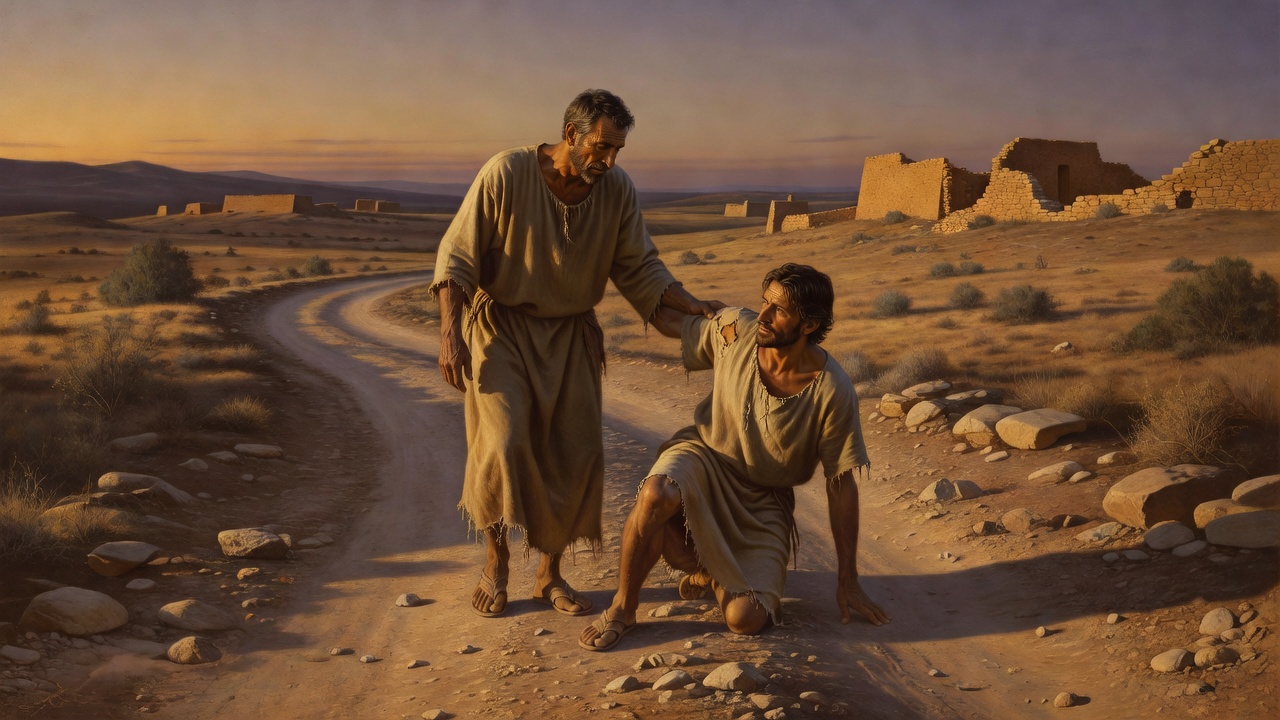
10If you fall down, he can help you get up again.
But if you fall down when you are alone, it will be difficult for you,
because there will be no one to help you stand up.
11Similarly, if two people sleep together,
they can keep each other warm.
But someone who sleeps alone will certainly not [RHQ] be warm.
12Someone who is alone can easily be attacked and defeated by another person,
but two people can help each other and ◄resist/defend themselves against► someone who attacks them.
Three people can defend themselves even more easily,
like a rope that is made from three cords is harder to break than a rope made from two cords.
When a poor young man becomes king
13A young man who is poor but wise is a better person than a foolish old king who refuses to pay attention when people try to give him good advice. 14It is possible for a young man like that to succeed and some day become king, even if his parents were poor or even if he was in prison some of the time. 15But then some other young man becomes king, and everyone ◄starts to support/is pleased with► him. 16Large crowds of people crowd around him. But after a few years, they will reject him, too. So it is all senseless, like chasing after the wind.
¿Sabías que…?
Opresión, Compañerismo y la Fama Pasajera
- Eclesiastés destaca el valor práctico del compañerismo en la vida cotidiana, explicando que dos trabajadores obtienen mejor fruto de su labor, pueden levantarse mutuamente tras una caída, darse calor al dormir y resistir juntos a los agresores.Fuentes: el propio texto bíblico
- El texto contrasta la miseria del trabajo solitario con la serenidad de la moderación, señalando que algunos acumulan riquezas sin descanso a pesar de no tener compañero, hijo o hermano con quien compartirlas.Fuentes: el propio texto bíblico
- El pasaje ilustra la naturaleza fugaz del reconocimiento político a través de un joven pobre y sabio que sale de la prisión para reinar en lugar de un monarca necio, alcanzando una gran popularidad que luego es olvidada por las siguientes generaciones.Fuentes: el propio texto bíblico
Notas escritas con ayuda de IA a partir de fuentes abiertas (Theographic Bible Metadata, CC BY-SA 4.0; Easton’s Bible Dictionary, dominio público) y revisadas antes de publicarse.
Créditos y licencia de esta traducción
Translation for Translators
A Bible Translation for Bible Translators which makes implied information explicit in the text as an aid to the translator who may need that information to correctly translate into a particular language.
Copyright © 2008-2017 Ellis W. Deibler, Jr.
Language: English
Dialect: American
This translation is made available to you under the terms of the
Creative Commons Attribution Share-Alike license 4.0.
You have permission to share and redistribute this Bible translation in any format and to make reasonable revisions and adaptations of this translation, provided that:
You include the above copyright and source information.
If you make any changes to the text, you must indicate that you did so in a way that makes it clear that the original licensor is not necessarily endorsing your changes.
If you redistribute this text, you must distribute your contributions under the same license as the original.
Pictures included with Scriptures and other documents on this site are licensed just for use with those Scriptures and documents.
For other uses, please contact the respective copyright owners.
Note that in addition to the rules above, revising and adapting God's Word involves a great responsibility to be true to God's Word. See Revelation 22:18-19.
2026-10-02
Fuente: http://ebible.org/eng-t4t/ · eBible.org