Jeremías 24
Revised Version with Apocrypha (1895) · Toca un versículo para ver sus referencias cruzadas.
The Good and Bad Figs
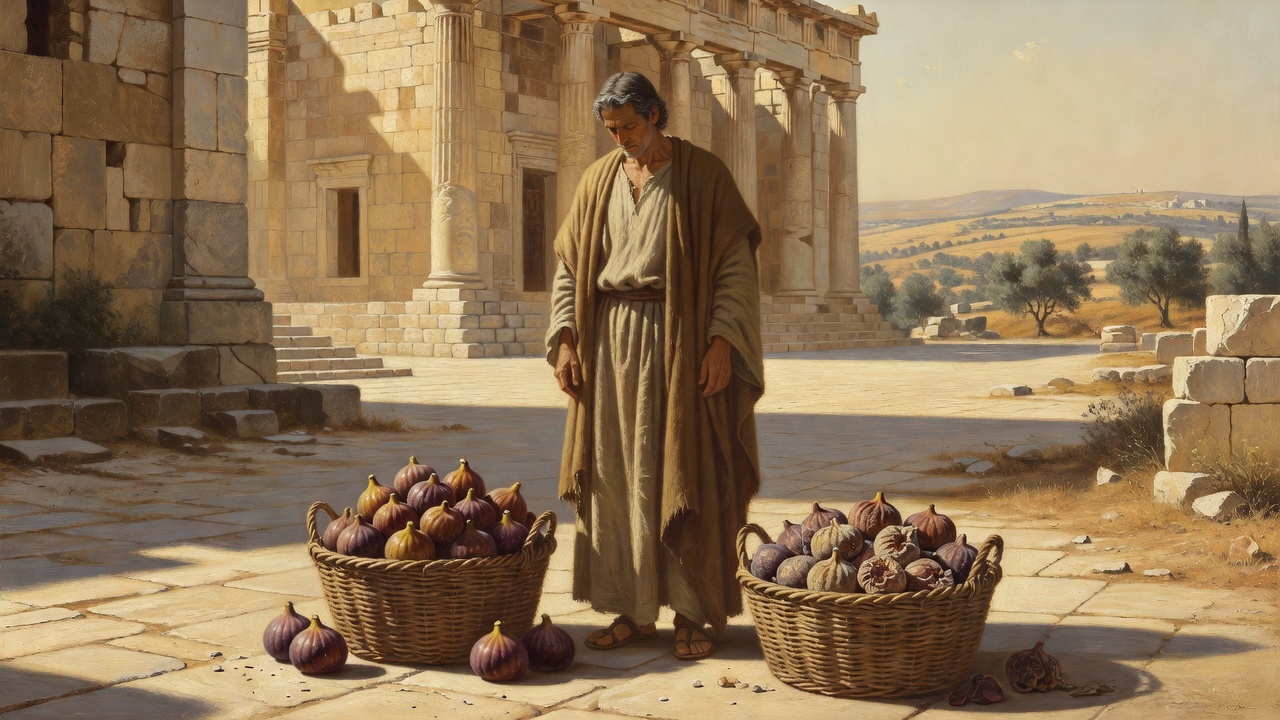
1The LORD shewed me, and, behold, two baskets of figs set before the temple of the LORD; after that Nebuchadrezzar king of Babylon had carried away captive Jeconiah the son of Jehoiakim, king of Judah, and the princes of Judah, with the craftsmen and smiths, from Jerusalem, and had brought them to Babylon. 2One basket had very good figs, like the figs that are first ripe: and the other basket had very bad figs, which could not be eaten, they were so bad. 3Then said the LORD unto me, What seest thou, Jeremiah? And I said, Figs; the good figs, very good; and the bad, very bad, that cannot be eaten, they are so bad. 4And the word of the LORD came unto me, saying, 5Thus saith the LORD, the God of Israel; Like these good figs, so will I regard the captives of Judah, whom I have sent out of this place into the land of the Chaldeans, for good. 6For I will set mine eyes upon them for good, and I will bring them again to this land: and I will build them, and not pull them down; and I will plant them, and not pluck them up. 7And I will give them an heart to know me, that I am the LORD: and they shall be my people, and I will be their God: for they shall return unto me with their whole heart. 8And as the bad figs, which cannot be eaten, they are so bad; surely thus saith the LORD, So will I give up Zedekiah the king of Judah, and his princes, and the residue of Jerusalem, that remain in this land, and them that dwell in the land of Egypt: 9I will even give them up to be tossed to and fro among all the kingdoms of the earth for evil; to be a reproach and a proverb, a taunt and a curse, in all places whither I shall drive them. 10And I will send the sword, the famine, and the pestilence, among them, till they be consumed from off the land that I gave unto them and to their fathers.
¿Sabías que…?
Las Dos Cestas de Higos
- Jeremías recibió esta visión después de que el rey Nabucodonosor de Babilonia deportara al rey Jeconías (también llamado Joaquín), junto con los magistrados, artesanos y herreros de Jerusalén. Posteriormente, Nabucodonosor colocó a Sedequías como rey sobre la población restante en Judá.Fuentes: el propio texto bíblico · Jehoiachin · Zedekiah · Nebuchadnezzar
- En la visión presentada ante el templo, la cesta de higos excelentes y madurados tempranamente simboliza a los exiliados llevados a Babilonia. El Señor promete preservarlos, darles un corazón para conocerlo y devolverlos a su tierra.Fuentes: el propio texto bíblico
- En contraste, la cesta de higos podridos e incomestibles simboliza al rey Sedequías, a sus dignatarios y al remanente que permaneció en Judá o se refugió en Egipto. En lugar de hallar seguridad, son advertidos de calamidad, hambre, peste y escarnio entre las naciones.Fuentes: el propio texto bíblico · Zedekiah · Egypt
Notas escritas con ayuda de IA a partir de fuentes abiertas (Theographic Bible Metadata, CC BY-SA 4.0; Easton’s Bible Dictionary, dominio público) y revisadas antes de publicarse.
Lugares de este capítulo
- Babylon · 32.543, 44.422 · versículo 1
- Jerusalem · 31.777, 35.234 · versículos 1, 8
- Chaldea · 30.962, 46.104 · versículo 5
- Egypt · 30.129, 31.308 · versículo 8
Solo aparecen lugares identificados con alta confianza (90 % o más según las fuentes académicas reunidas por OpenBible). Mapa de la época: DARE (Digital Atlas of the Roman Empire), CC BY 4.0; mapa actual: © colaboradores de OpenStreetMap; lugares: OpenBible.info (CC BY 4.0).
Créditos y licencia de esta traducción
Revised Version with Apocrypha (1895)
The Revised Version of the Holy Bible (1895) with Apocrypha
Public Domain
Language: English
Dialect: archaic British
This work is in the Public Domain. You may copy and use it freely.
2026-10-02
Títulos de sección adaptados de la Berean Standard Bible (dominio público); no forman parte del texto bíblico de esta traducción.
Fuente: http://ebible.org/eng-rv/ · eBible.org