Salmos 48
LXX2012: Septuagint in American English 2012 · Toca un versículo para ver sus referencias cruzadas.
(49) For the end, a Psalm for the sons of Core.
Broken Bondage
1Hear these words, all you⌃ nations, listen, all you⌃ that dwell upon the earth:
2both the sons of mean men, and sons of great men; the rich and poor man together.
3My mouth shall speak of wisdom; and the meditation of my heart shall bring forth understanding.
4I will incline my ear to a parable: I will open my riddle on the harp.
5Therefore should I fear in the evil day? the iniquity of my heel shall compass me.
6They that trust in their strength, and boast themselves in the multitude of their wealth—
7A brother does not redeem, shall a man redeem? he shall not give to God a ransom for himself,
8or the price of the redemption of his soul, though he labor for ever,
9and live to the end, so that he should not see corruption.
10When he shall see wise men dying, the fool and the senseless one shall perish together; and they shall leave their wealth to strangers.
11And their sepulchres are their houses for ever, even their tabernacles to all generations: they have called their lands after their own names.
12And man being in honor, understands not: he is compared to the senseless cattle, and is like to them.
13This their way is an offense to them: yet afterwards men will commend their sayings. Pause.
14They have laid them as sheep in Hades; death shall feed on them; and the upright shall have dominion over them in the morning, and their help shall fail in Hades from their glory.
15But God shall deliver my soul from the power of Hades, when he shall receive me. Pause.
16Fear not when a man is enriched, and when the glory of his house is increased.
17For he shall take nothing when he dies; neither shall his glory descend with him.
18For his soul shall be blessed in his life: he shall give thanks to you when you do well to him.
19Yet he shall go in to the generation of his fathers; he shall never see light.
20Man that is in honor, understands not: he is compared to the senseless cattle, and is like them.
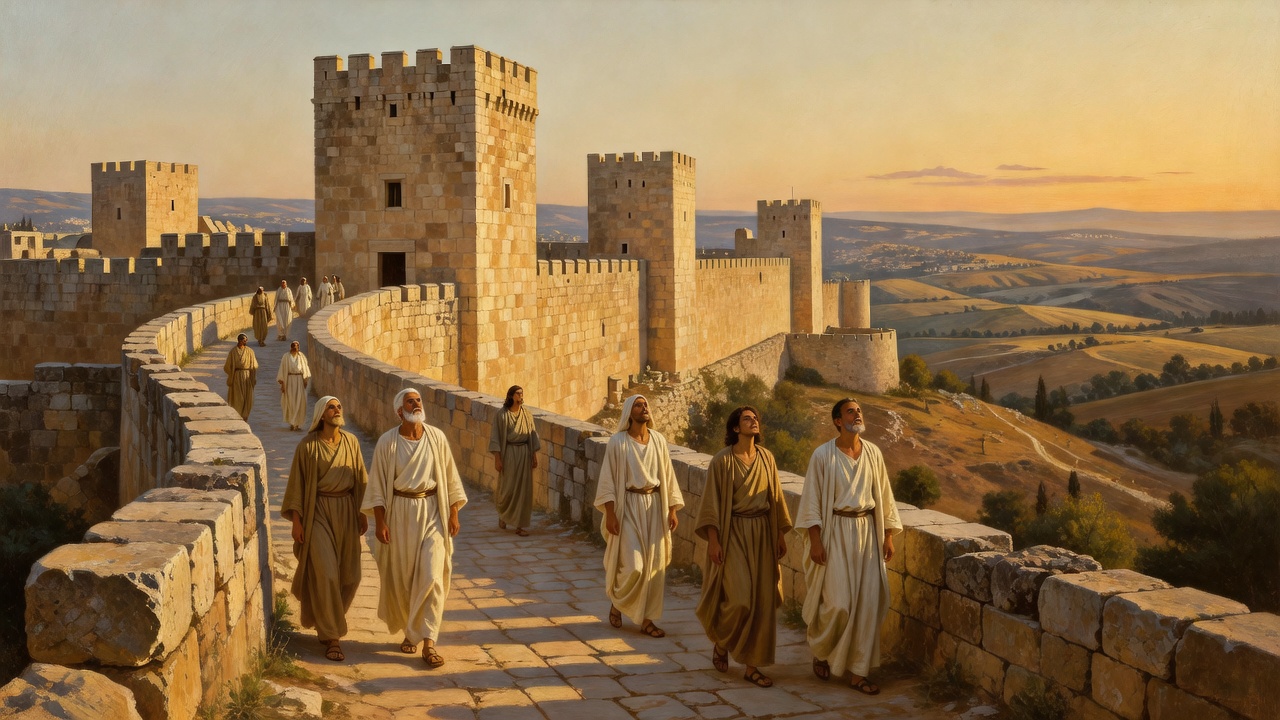
¿Sabías que…?
Sión, la Ciudad del Gran Rey
- El monte Sión, originalmente la colina fortificada al sureste de Jerusalén tomada por David a los jebuseos, llegó a ser la Ciudad de David y el lugar de su alcázar. En el Salmo 48, se le celebra como la santa montaña de Dios, ensalzada y protegida frente al avance de reyes enemigos.Fuentes: el propio texto bíblico · Mount Zion · Zion
- El salmo ilustra el poder divino destrozando fuerzas enemigas como un viento del este que naufraga las naves de Tarsis. Muchos especialistas identifican Tarsis con un lejano puerto comercial fenicio en el suroeste de España, aunque otras fuentes antiguas propusieron lugares como Cartago o puertos en el oriente.Fuentes: el propio texto bíblico · Tarshish
- Se invita a los fieles a recorrer el perímetro de Sión, contar sus torres y examinar sus murallas y fortalezas. Esta inspección de las defensas de la ciudad tenía el propósito de transmitirse a las generaciones venideras como testimonio del amparo de Dios.Fuentes: el propio texto bíblico
Notas escritas con ayuda de IA a partir de fuentes abiertas (Theographic Bible Metadata, CC BY-SA 4.0; Easton’s Bible Dictionary, dominio público) y revisadas antes de publicarse.
Lugares de este capítulo
- Mount Zion · 31.772, 35.229 · versículos 2, 11
- Zaphon · Hoy: Jebel Aqra · 35.953, 35.969 · versículo 2
- Jerusalem · 31.777, 35.234 · versículo 3
- Zion · Hoy: Jerusalem · 31.777, 35.234 · versículo 12
Solo aparecen lugares identificados con alta confianza (90 % o más según las fuentes académicas reunidas por OpenBible). Mapa de la época: DARE (Digital Atlas of the Roman Empire), CC BY 4.0; mapa actual: © colaboradores de OpenStreetMap; lugares: OpenBible.info (CC BY 4.0).
Créditos y licencia de esta traducción
LXX2012: Septuagint in American English 2012
The Septuagint with Apocrypha, translated from Greek to English by Sir Lancelot C. L. Brenton and published in 1885, with some language updates (American English)
Public Domain
Language: English
Dialect (if applicable): American
Language in English: English
Translation by:
Sir Lancelot Charles Lee Brenton
Michael Paul Johnson
LXX2012: Septuagint in English 2012
This is a translation of the Old Testament and Apocrypha/Deuterocanon from Hebrew to Greek to 19th Century British English, with some updates of spelling and word usage to contemporary American English. The original English translation was done by Sir Lancelot Charles Lee Brenton and published by Samuel Bagster & Sons, Ltd., in London in 1851. It has entered the Public Domain due to the passage of sufficient time. In the process of scanning and typing the text, the original poetry and prose formatting, as well as peripheral material like introductions and notes, have been omitted.
This edition of the Septuagint has some language updates. Brenton's word order and punctuation has been mostly retained, meaning that quotation marks are not used, and sentences within quotes may not start with capital letters, as was standard usage in 1851. Names transliterated from Greek to those transliterated from Hebrew in the common English Bibles often differ. These language updates are dedicated to the Public Domain by the author of those edits, Michael Paul Johnson. Therefore this edition may be freely copied, published, etc.
Before considering making changes to the text of this work, I recommend that you consult with God, because this is really His Book.
If you find errors in the text, please report them so that we can correct them.
Donations to help with the expenses of operating this web site and thus help others have free access to the Word of God may be made to us, but are not required. Please see http://MLJohnson.org/partner/ for more about that.
Títulos de sección adaptados de la Berean Standard Bible (dominio público); no forman parte del texto bíblico de esta traducción.
Fuente: http://ebible.org/eng-lxx2012/ · eBible.org