Proverbios 9
LXX2012: Septuagint in American English 2012 · Toca un versículo para ver sus referencias cruzadas.
The Way of Wisdom
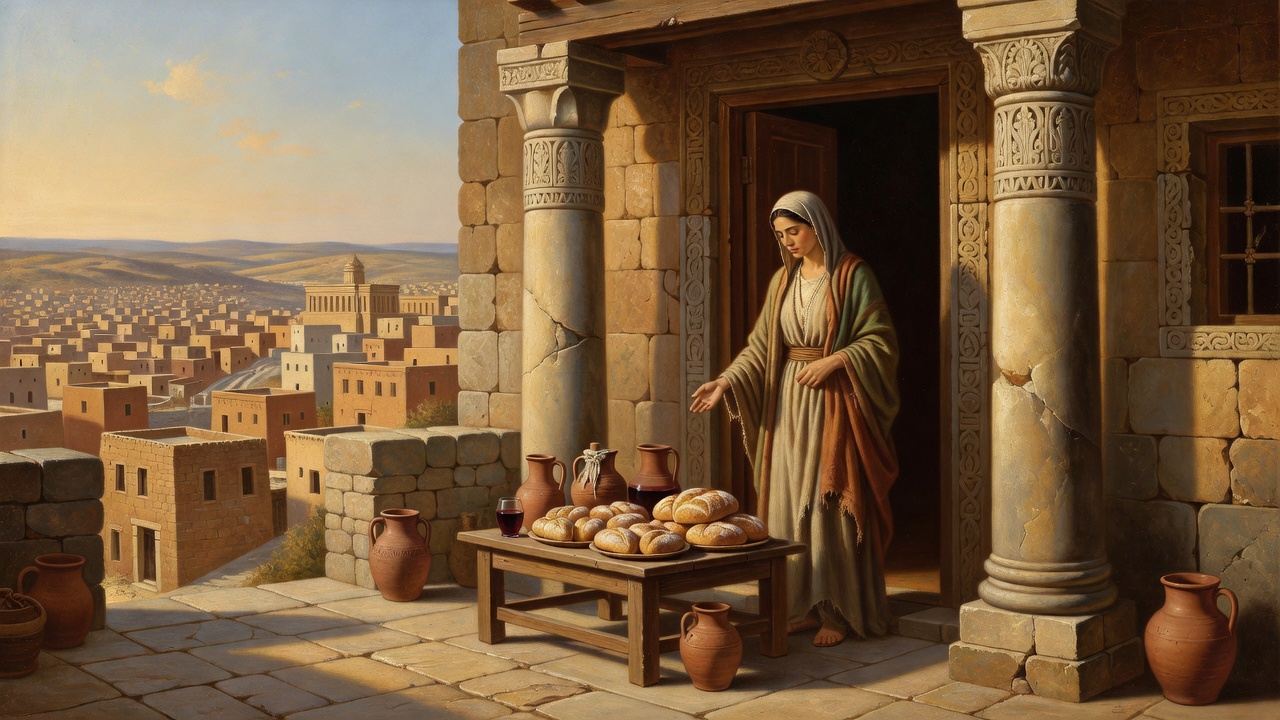
1Wisdom has built a house for herself, and set up seven pillars. 2She has killed her beasts; she has mingled her wine in a bowl, and prepared her table. 3She has sent forth her servants, calling with a loud proclamation to the feast, saying, 4Whoso is foolish, let him turn aside to me: and to them that lack understanding she says, 5Come, eat of my bread, and drink wine which I have mingled for you. 6Leave folly, that you⌃ may reign for ever; and seek wisdom, and improve understanding by knowledge. 7He that reproves evil men shall get dishonor to himself; and he that rebukes an ungodly man shall disgrace himself. 8Rebuke not evil men, lest they should hate you: rebuke a wise man, and he will love you. 9Give an opportunity to a wise man, and he will be wiser: instruct a just man, and he will receive more instruction. 10The fear of the Lord is the beginning of wisdom, and the counsel of saints is understanding: for to know the law is the character of a sound mind. 11For in this way you shall live long, and years of your life shall be added to you. 12Son, if you be wise for yourself, you shall also be wise for your neighbors; and if you should prove wicked, you alone will bear the evil. He that stays himself upon falsehoods, attempts to rule the winds, and the same will pursue birds in their fight: for he has forsaken the ways of his own vineyard, and he has caused the axles of his own husbandry to go astray; and he goes through a dry desert, and a land appointed to drought, and he gathers barrenness with his hands.
The Way of Folly
13A foolish and bold woman, who knows not modesty, comes to lack a morsel. 14She sits at the doors of her house, on a seat openly in the streets, 15calling to passers by, and to those that are going right on their ways; 16saying, Whoso is most senseless of you, let him turn aside to me; and I exhort those that lack prudence, saying, 17Take and enjoy secret bread, and the sweet water of theft. 18But he knows that mighty men die by her, and he falls in with a snare of hell. But hasten away, delay not in the place, neither fix your eye upon her: for thus shall you go through strange water; but do you abstain from strange water, and drink not of a strange fountain, that you may live long, and years of life may be added to you.
¿Sabías que…?
Las Invitaciones de la Sabiduría y la Necedad
- Proverbios 9 contrasta dos figuras personificadas, la Sabiduría y la Necedad, quienes ofrecen banquetes rivales. Ambas mujeres proclaman invitaciones públicas desde las alturas de la ciudad, apelando directamente a los simples y a los faltos de juicio para que elijan entre sus caminos.Fuentes: el propio texto bíblico
- Los dos banquetes ofrecen resultados radicalmente opuestos. La Sabiduría invita a entrar en una casa sostenida por siete columnas labradas para comer su carne, beber vino mezclado y alcanzar la vida, mientras que la Necedad ofrece seductoramente agua robada y pan secreto, ocultando que sus invitados terminan en las profundidades del sepulcro.Fuentes: el propio texto bíblico
- El capítulo resalta respuestas opuestas a la corrección: reprender al burlador produce afrenta y odio, mientras que instruir al sabio aumenta su entendimiento. El fundamento del verdadero discernimiento se describe como el temor del SEÑOR y el conocimiento del Santo.Fuentes: el propio texto bíblico
Notas escritas con ayuda de IA a partir de fuentes abiertas (Theographic Bible Metadata, CC BY-SA 4.0; Easton’s Bible Dictionary, dominio público) y revisadas antes de publicarse.
Créditos y licencia de esta traducción
LXX2012: Septuagint in American English 2012
The Septuagint with Apocrypha, translated from Greek to English by Sir Lancelot C. L. Brenton and published in 1885, with some language updates (American English)
Public Domain
Language: English
Dialect (if applicable): American
Language in English: English
Translation by:
Sir Lancelot Charles Lee Brenton
Michael Paul Johnson
LXX2012: Septuagint in English 2012
This is a translation of the Old Testament and Apocrypha/Deuterocanon from Hebrew to Greek to 19th Century British English, with some updates of spelling and word usage to contemporary American English. The original English translation was done by Sir Lancelot Charles Lee Brenton and published by Samuel Bagster & Sons, Ltd., in London in 1851. It has entered the Public Domain due to the passage of sufficient time. In the process of scanning and typing the text, the original poetry and prose formatting, as well as peripheral material like introductions and notes, have been omitted.
This edition of the Septuagint has some language updates. Brenton's word order and punctuation has been mostly retained, meaning that quotation marks are not used, and sentences within quotes may not start with capital letters, as was standard usage in 1851. Names transliterated from Greek to those transliterated from Hebrew in the common English Bibles often differ. These language updates are dedicated to the Public Domain by the author of those edits, Michael Paul Johnson. Therefore this edition may be freely copied, published, etc.
Before considering making changes to the text of this work, I recommend that you consult with God, because this is really His Book.
If you find errors in the text, please report them so that we can correct them.
Donations to help with the expenses of operating this web site and thus help others have free access to the Word of God may be made to us, but are not required. Please see http://MLJohnson.org/partner/ for more about that.
Títulos de sección adaptados de la Berean Standard Bible (dominio público); no forman parte del texto bíblico de esta traducción.
Fuente: http://ebible.org/eng-lxx2012/ · eBible.org