Proverbios 21
LXX2012: Septuagint in American English 2012 · Toca un versículo para ver sus referencias cruzadas.
The King’s Heart
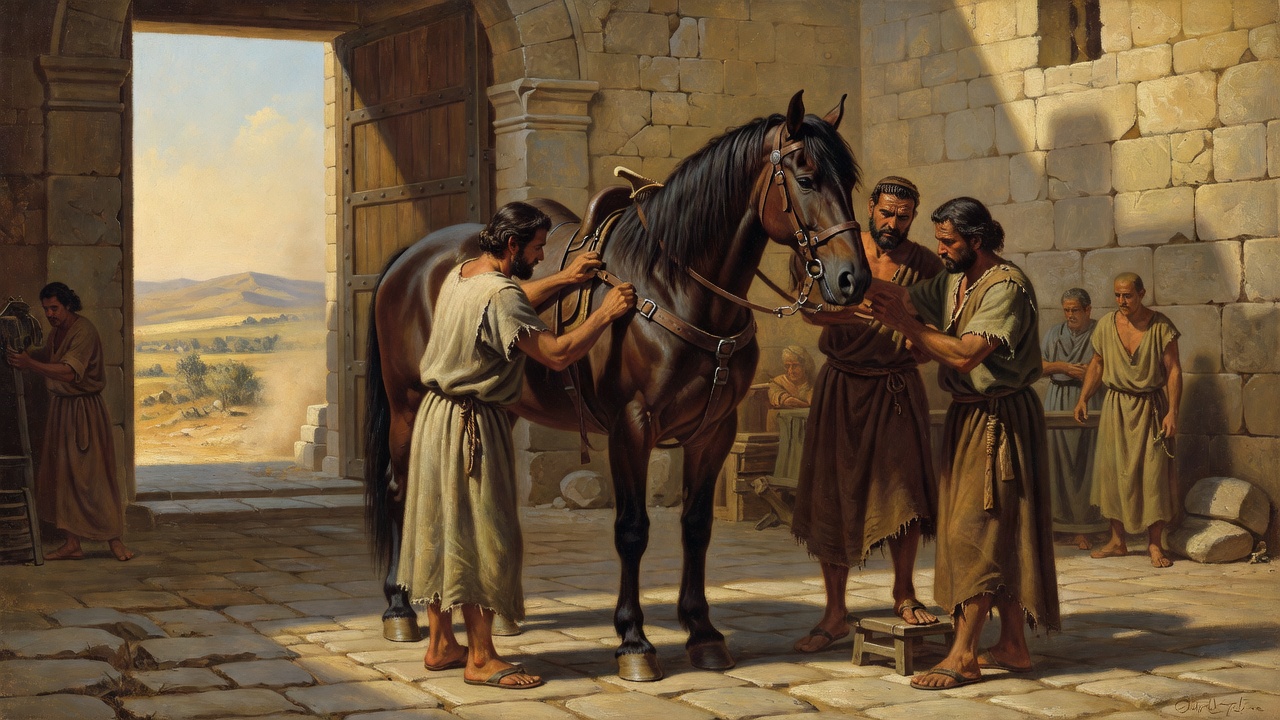
1As a rush of water, so is the king's heart in God's hand: he turns it wherever he may desire to point out. 2Every man seems to himself righteous; but the Lord directs the hearts. 3To do justly and to speak truth, are more pleasing to God than the blood of sacrifices. 4A high-minded man is stout-hearted in his pride; and the lamp of the wicked is sin. 6He that gathers treasures with a lying tongue pursues vanity on to the snares of death. 7Destruction shall lodge with the ungodly; for they refuse to do justly. 8To the froward God sends froward ways; for his works are pure and right. 9It is better to dwell in a corner on the house-top, than in plastered rooms with unrighteousness, and in an open house. 10The soul of the ungodly shall not be pitied by any man. 11When an intemperate man is punished the simple becomes wiser: and a wise man understanding will receive knowledge. 12A righteous man understands the hearts of the ungodly: and despises the ungodly for their wickedness. 13He that stops his ears from hearing the poor, himself also shall cry, and there shall be none to hear him. 14A secret gift calms anger: but he that forbears to give stirs up strong wrath. 15It is the joy of the righteous to do judgment: but a holy man is abominable with evil-doers. 16A man that wanders out of the way of righteousness, shall rest in the congregation of giants. 17A poor man loves mirth, loving wine and oil in abundance; 18and a transgressor is the abomination of a righteous man. 19It is better to dwell in a wilderness than with a quarrelsome and talkative and passionate woman. 20A desirable treasure will rest on the mouth of the wise; but foolish men will swallow it up. 21The way of righteousness and mercy will find life and glory. 22A wise man assaults strong cities, and demolishes the fortress in which the ungodly trusted. 23He that keeps his mouth and his tongue keeps his soul from trouble. 24A bold and self-willed and insolent man is called a pest: and he that remembers injuries is a transgressor. 25Desires kill the sluggard; for his hands do not choose to do anything. 26An ungodly man entertains evil desires all the day: but the righteous is unsparingly merciful and compassionate. 27The sacrifices of the ungodly are abomination to the Lord, for they offer them wickedly. 28A false witness shall perish; but an obedient man will speak cautiously. 29An ungodly man impudently withstands with his face; but the upright man himself understands his ways. 30There is no wisdom, there is no courage, there is no counsel against the ungodly. 31A horse is prepared for the day of battle; but help is of the Lord.
¿Sabías que…?
Soberanía Divina y Vida Justa
- Proverbios 21 enfatiza que la soberanía divina gobierna el poder humano y los conflictos, afirmando que el corazón del rey es guiado por el SEÑOR como una corriente de agua y que la victoria en la batalla pertenece a Dios y no a los caballos de guerra.Fuentes: el propio texto bíblico
- El capítulo sitúa la conducta ética por encima de la práctica ritual, enseñando que practicar la justicia y el derecho es más aceptable para el SEÑOR que ofrecer sacrificios.Fuentes: el propio texto bíblico
- Los proverbios contrastan la diligencia constante con las actitudes apresuradas o perezosas, señalando que los planes cuidadosos producen abundancia, mientras que la prisa y negarse a trabajar conducen a la pobreza.Fuentes: el propio texto bíblico
Notas escritas con ayuda de IA a partir de fuentes abiertas (Theographic Bible Metadata, CC BY-SA 4.0; Easton’s Bible Dictionary, dominio público) y revisadas antes de publicarse.
Créditos y licencia de esta traducción
LXX2012: Septuagint in American English 2012
The Septuagint with Apocrypha, translated from Greek to English by Sir Lancelot C. L. Brenton and published in 1885, with some language updates (American English)
Public Domain
Language: English
Dialect (if applicable): American
Language in English: English
Translation by:
Sir Lancelot Charles Lee Brenton
Michael Paul Johnson
LXX2012: Septuagint in English 2012
This is a translation of the Old Testament and Apocrypha/Deuterocanon from Hebrew to Greek to 19th Century British English, with some updates of spelling and word usage to contemporary American English. The original English translation was done by Sir Lancelot Charles Lee Brenton and published by Samuel Bagster & Sons, Ltd., in London in 1851. It has entered the Public Domain due to the passage of sufficient time. In the process of scanning and typing the text, the original poetry and prose formatting, as well as peripheral material like introductions and notes, have been omitted.
This edition of the Septuagint has some language updates. Brenton's word order and punctuation has been mostly retained, meaning that quotation marks are not used, and sentences within quotes may not start with capital letters, as was standard usage in 1851. Names transliterated from Greek to those transliterated from Hebrew in the common English Bibles often differ. These language updates are dedicated to the Public Domain by the author of those edits, Michael Paul Johnson. Therefore this edition may be freely copied, published, etc.
Before considering making changes to the text of this work, I recommend that you consult with God, because this is really His Book.
If you find errors in the text, please report them so that we can correct them.
Donations to help with the expenses of operating this web site and thus help others have free access to the Word of God may be made to us, but are not required. Please see http://MLJohnson.org/partner/ for more about that.
Títulos de sección adaptados de la Berean Standard Bible (dominio público); no forman parte del texto bíblico de esta traducción.
Fuente: http://ebible.org/eng-lxx2012/ · eBible.org