Eclesiastés 4
LXX2012: Septuagint in American English 2012 · Toca un versículo para ver sus referencias cruzadas.
The Evil of Oppression
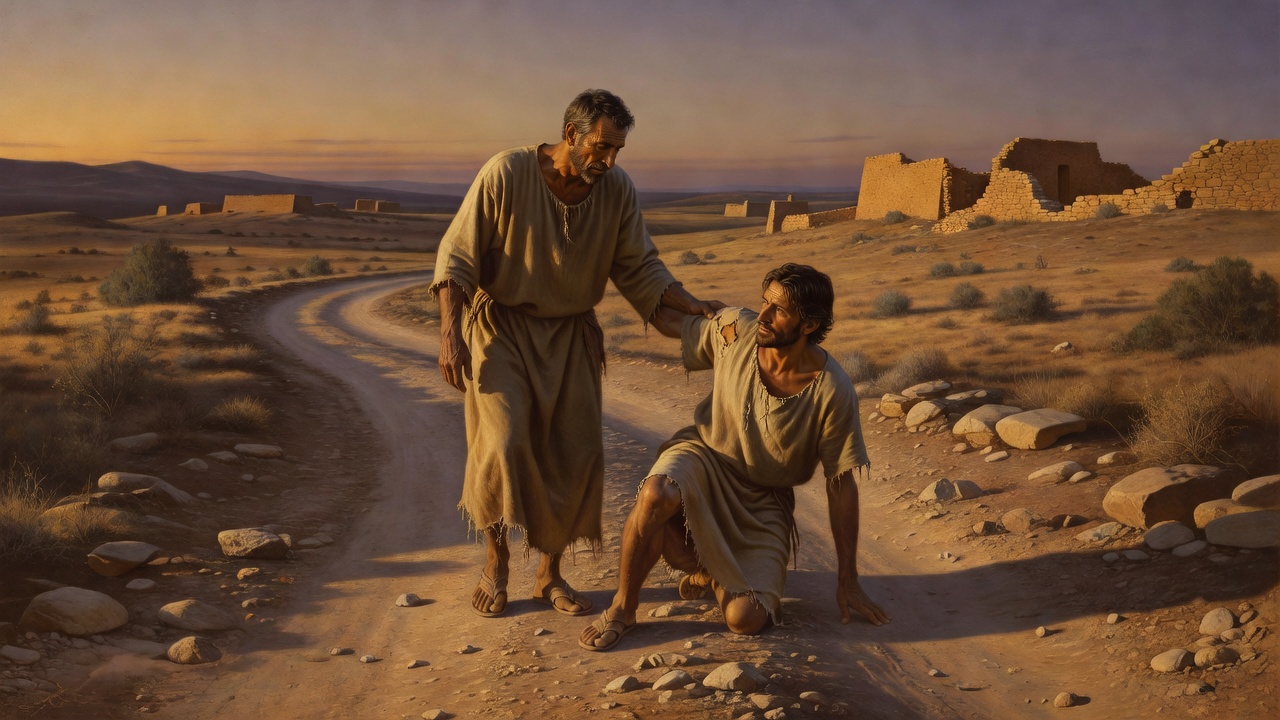
1So I returned, and saw all the oppressions that were done under the sun: and behold the tear of the oppressed, and they had no comforter; and on the side of them that oppressed them was power; but they had no comforter: 2and I praised all the dead that had already died more than the living, as many as are alive until now. 3Better also than both these is he who has not yet been, who has not seen all the evil work that is done under the sun. 4And I saw all labor, and all the diligent work, that this is a man's envy from his neighbor. This is also vanity and waywardness of spirit. 5The fool folds his hands together, and eats his own flesh. 6Better is a handful of rest than two handfuls of trouble and waywardness of spirit. 7So I returned, and saw vanity under the sun. 8There is one alone, and there is not a second; yes, he has neither son nor brother: yet there is no end to all his labor; neither is his eye satisfied with wealth; and for whom do I labor, and deprive my soul of good? this is also vanity, and an evil trouble. 9Two are better than one, seeing they have a good reward for their labor. 10For if they fall, the one will lift up his fellow: but woe to him that is alone when he falls, and there is not a second to lift him up. 11Also if two should lie together, they also get heat: but how shall one be warmed alone? 12And if one should prevail against him, the two shall withstand him; and a threefold cord shall not be quickly broken.
The Futility of Power
13Better is a poor and wise child than an old and foolish king, who knows not how to take heed any longer. 14For he shall come forth out of the house of the prisoners to reign, because he also that was in his kingdom has become poor. 15I saw all the living who were walking under the sun, with the second youth who shall stand up in each one's place. 16There is no end to all the people, to all who were before them: and the last shall not rejoice in him: for this also is vanity and waywardness of spirit. 17Keep your foot, whenever you go to the house of God; and when you are near to hear, let your sacrifice be better than the gift of fools: for they know not that they are doing evil.
¿Sabías que…?
Opresión, Compañerismo y la Fama Pasajera
- Eclesiastés destaca el valor práctico del compañerismo en la vida cotidiana, explicando que dos trabajadores obtienen mejor fruto de su labor, pueden levantarse mutuamente tras una caída, darse calor al dormir y resistir juntos a los agresores.Fuentes: el propio texto bíblico
- El texto contrasta la miseria del trabajo solitario con la serenidad de la moderación, señalando que algunos acumulan riquezas sin descanso a pesar de no tener compañero, hijo o hermano con quien compartirlas.Fuentes: el propio texto bíblico
- El pasaje ilustra la naturaleza fugaz del reconocimiento político a través de un joven pobre y sabio que sale de la prisión para reinar en lugar de un monarca necio, alcanzando una gran popularidad que luego es olvidada por las siguientes generaciones.Fuentes: el propio texto bíblico
Notas escritas con ayuda de IA a partir de fuentes abiertas (Theographic Bible Metadata, CC BY-SA 4.0; Easton’s Bible Dictionary, dominio público) y revisadas antes de publicarse.
Créditos y licencia de esta traducción
LXX2012: Septuagint in American English 2012
The Septuagint with Apocrypha, translated from Greek to English by Sir Lancelot C. L. Brenton and published in 1885, with some language updates (American English)
Public Domain
Language: English
Dialect (if applicable): American
Language in English: English
Translation by:
Sir Lancelot Charles Lee Brenton
Michael Paul Johnson
LXX2012: Septuagint in English 2012
This is a translation of the Old Testament and Apocrypha/Deuterocanon from Hebrew to Greek to 19th Century British English, with some updates of spelling and word usage to contemporary American English. The original English translation was done by Sir Lancelot Charles Lee Brenton and published by Samuel Bagster & Sons, Ltd., in London in 1851. It has entered the Public Domain due to the passage of sufficient time. In the process of scanning and typing the text, the original poetry and prose formatting, as well as peripheral material like introductions and notes, have been omitted.
This edition of the Septuagint has some language updates. Brenton's word order and punctuation has been mostly retained, meaning that quotation marks are not used, and sentences within quotes may not start with capital letters, as was standard usage in 1851. Names transliterated from Greek to those transliterated from Hebrew in the common English Bibles often differ. These language updates are dedicated to the Public Domain by the author of those edits, Michael Paul Johnson. Therefore this edition may be freely copied, published, etc.
Before considering making changes to the text of this work, I recommend that you consult with God, because this is really His Book.
If you find errors in the text, please report them so that we can correct them.
Donations to help with the expenses of operating this web site and thus help others have free access to the Word of God may be made to us, but are not required. Please see http://MLJohnson.org/partner/ for more about that.
Títulos de sección adaptados de la Berean Standard Bible (dominio público); no forman parte del texto bíblico de esta traducción.
Fuente: http://ebible.org/eng-lxx2012/ · eBible.org