Juan 1
God's Living Word · Toca un versículo para ver sus referencias cruzadas.
Acerca de este libro
Acerca de Juan
- El Diccionario Bíblico de Easton (1897) atribuye el Evangelio de Juan al apóstol Juan y afirma que probablemente se escribió en Éfeso hacia el año 90 d.C. Señala que, tras la destrucción de Jerusalén en el año 70 d.C., Éfeso se convirtió en un centro de la vida y la actividad cristianas en Oriente, y que desde cerca de 1820 se hicieron muchos intentos de negar que Juan fuera el autor.Fuentes: Easton: John, Gospel of
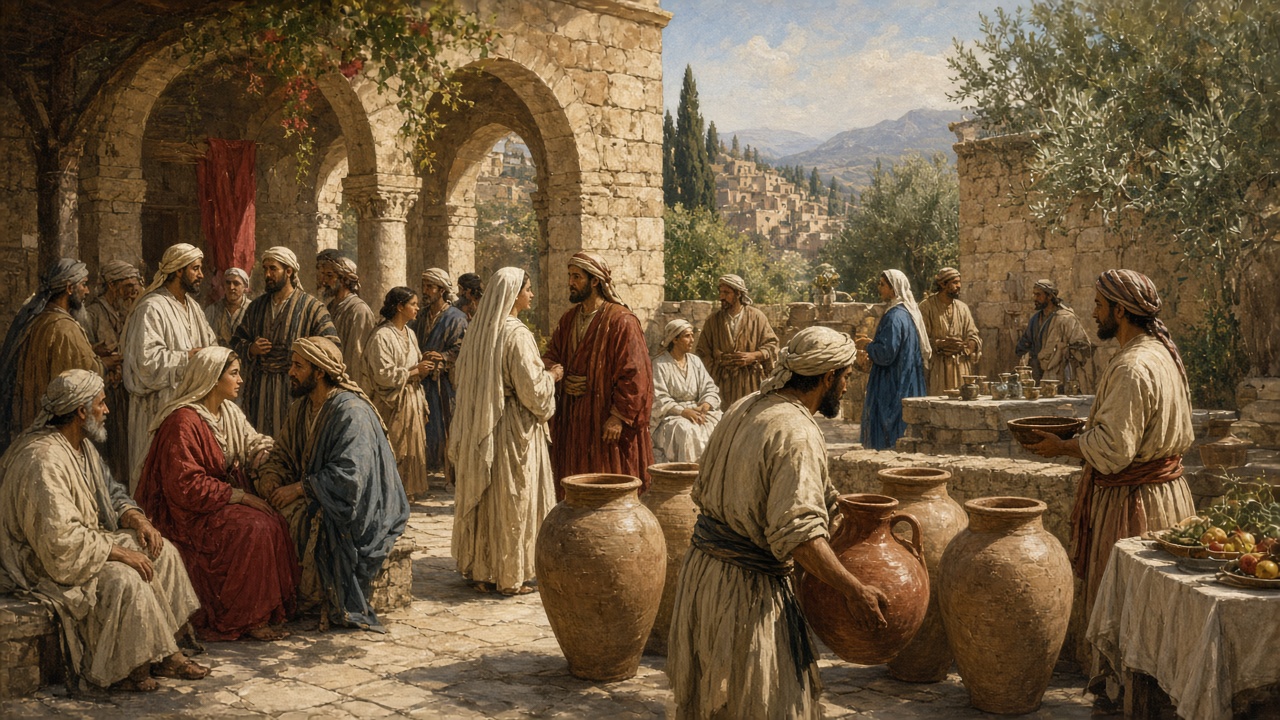
- El relato se sitúa en tiempos de Poncio Pilato, sexto procurador romano de Judea del año 26 al 36 d.C., con sede en Cesarea y que subía a menudo a Jerusalén. Judea era entonces la más meridional de las tres divisiones de Palestina, distinta de Galilea y Samaria, y formaba parte de la provincia romana de Siria; el Evangelio también sitúa una boda en Caná, una ciudad de Galilea cerca de Capernaúm.Fuentes: Pontius Pilate · Judea · Cana
- Después del prólogo (1:1-5), Easton dice que la narración histórica comienza en el versículo 6 y se divide en dos partes. La primera (1:6 hasta el capítulo 12) sigue el ministerio público desde que Juan el Bautista presentó a Jesús hasta el cierre de ese ministerio. La segunda (capítulos 13 a 21) lo presenta en la vida privada con sus seguidores inmediatos (13-17) y luego relata sus sufrimientos y las apariciones a los discípulos después de la resurrección (18-21).Fuentes: Easton: John, Gospel of
- Easton enumera cuatro rasgos distintivos: la relación del Hijo con el Padre, la relación de Cristo con los creyentes, el anuncio del Espíritu Santo como Consolador y el lugar destacado que se da al amor en el carácter cristiano. El diccionario afirma que el Evangelio se dirigía principalmente a los cristianos.Fuentes: Easton: John, Gospel of
- Easton señala que en otro tiempo se supuso que Juan escribió para suplir omisiones de los tres primeros evangelios, pero dice que no hay evidencia de ello. Citando a Reuss, describe el libro más bien como una presentación histórica de la fe cristiana centrada en la persona de Cristo, que retrata la oposición del mundo a la verdad revelada en él y la bienaventuranza espiritual de los pocos que se entregan a él como Luz de la vida.Fuentes: Easton: John, Gospel of
Notas escritas con ayuda de IA a partir de fuentes abiertas (Theographic Bible Metadata, CC BY-SA 4.0; Easton’s Bible Dictionary, dominio público) y revisadas antes de publicarse.
The Beginning
1In the beginning was the Word, and the Word was with God, and the Word was God. 2He was in the beginning with God. 3Everything was made through Him, and without Him nothing was made that was made. 4In Him was life, and that life was the light of mankind. 5The light shines in the darkness, but the darkness hasn’t overcome it.
The Witness of John
6There was a man sent from God, whose name was John. 7This man came as a witness, to testify about the light, that all through him might believe. 8He wasn’t that light, but was sent as a witness of that light. 9The true light that enlightens everyone was coming into the world.
10The Word was in the world, and though the world was made through Him, the world didn’t recognize Him. 11He came to His own, and those who were His own didn’t receive Him. 12But as many as received Him, to them He gave the right to become God’s children, to those who believe in His name: 13who were born, not of blood, nor of the will of the flesh, nor of the will of man, but of God.
The Word Became Flesh
14The Word became flesh and lived among us, and we saw His glory, the glory as of the only Son of the Father, full of grace and truth. 15John testified about Him. He cried out, saying, “This was He who I told you about when I said, ‘He who comes after me has surpassed me because He was before me.’” 16From His fullness we have all received grace upon grace. 17The Law was given through Moses, but grace and truth came through Jesus Christ. 18No one has ever seen God, but God’s only born Son, who is near to the heart of His Father, has made Him known.
The Mission of John the Baptist
19Now this is the testimony of John, when the Jews sent priests and Levites from Jerusalem to ask him, “Who are you?” 20He confessed, and didn’t deny, but confessed, “I’m not the Christ.” 21They asked him, “Then who are you? Are you Elijah?”
He said, “I am not.”
“Are you the Prophet?”
He answered, “No.”
22Then they asked him, “Who are you? Give us an answer to take back to those who sent us. What do you say about yourself?” 23John replied in the words of Isaiah the prophet, “I am the voice of one calling in the desert, ‘Make straight the way for the Lord.’” 24Now those who were sent were Pharisees. 25They asked him, saying, “Why then do you baptize if you aren’t the Christ, nor Elijah, nor the Prophet?”
26John answered them, saying, “I baptize with water, but One stands among you that you don’t know. 27It is He who, coming after me, is preferred before me, whose sandal strap I’m not worthy to untie.” 28This all happened at Bethany on the other side of the Jordan, where John was baptizing.
Jesus the Lamb of God
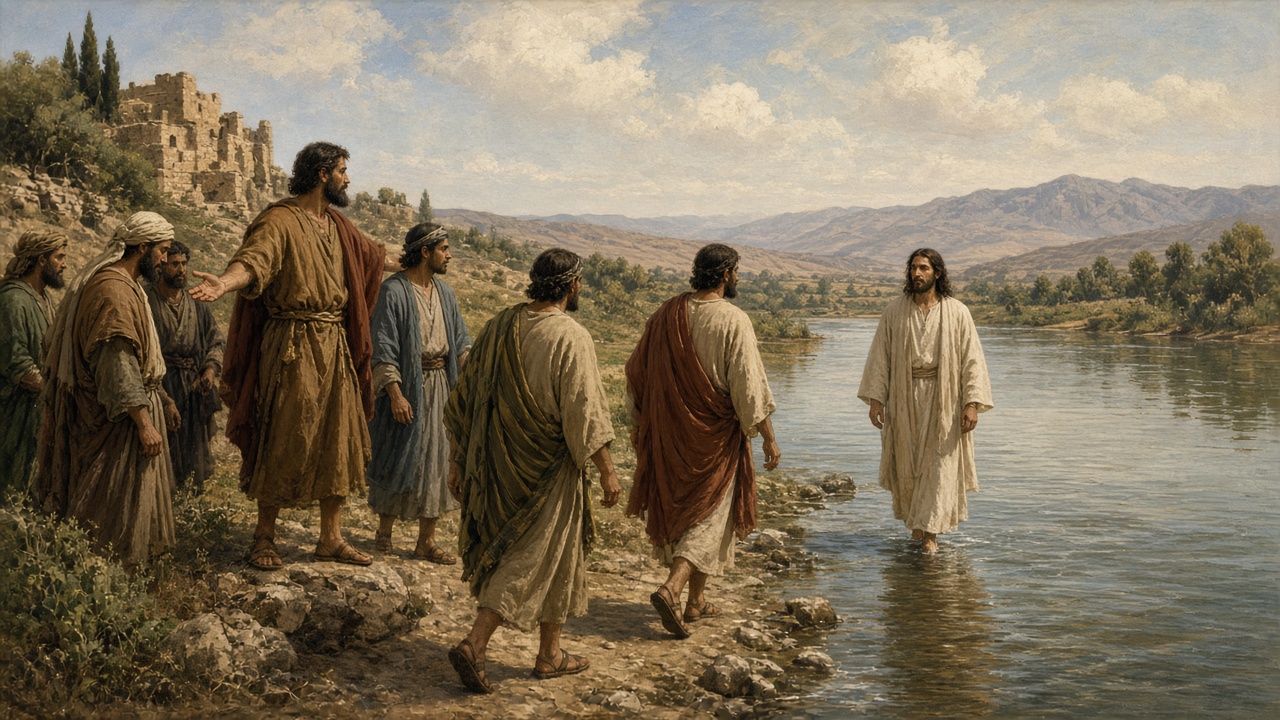
29The next day, John saw Jesus coming toward him, and said, “Look! God’s Lamb who takes away the sin of the world! 30This is the One I meant when I said, ‘A man who comes after me is preferred before me because He existed before me.’ 31I didn’t know Him, but the reason I came baptizing with water was that He might be revealed to Israel.” 32John testified, saying, “I saw the Spirit descending from Heaven like a dove, and He remained upon Him. 33I wouldn’t have known Him, but He who sent me to baptize with water told me, ‘Whoever you see the Spirit descending upon, and remaining on Him, this is He who baptizes with the Holy Spirit.’ 34I have seen and I testify that this is God’s Son.”
The First Disciples
35The next day, John again stood with two of His disciples. 36When he saw Jesus passing by, he said, “Look, God’s Lamb!” 37The two disciples heard him say this, and they followed Jesus. 38Jesus turned, and seeing them following, asked them, “What are you looking for?” They said to Him, “Rabbi” (which, when translated, means Teacher), “Where are You staying?”
39He told them, “Come and see.” They came and saw where He was staying, and spent that day with Him. It was about the tenth hour. 40Andrew, Simon Peter’s brother, was one of the two who heard what John had said and who had followed Jesus. 41The first thing Andrew did was to find his brother, Simon, and tell him, “We have found the Messiah” (that is, translated, the Christ).
42Andrew brought Simon to Jesus. Jesus looked at him, and said, “You are Simon the son of Jonah. You will be called Cephas” (which is translated Peter).
Jesus Calls Philip and Nathanael
43The next day Jesus decided to leave for Galilee. Finding Philip, he told him, “Follow me.” 44Philip was from Bethsaida, the city of Andrew and Peter. 45Philip found Nathanael and told him, “We have found Him who Moses in the Law, and also the prophets, wrote about — Jesus of Nazareth, the son of Joseph.”
46Nathanael asked Philip, “Can anything good come out of Nazareth?”
Philip told Nathanael, “Come and see.”
47Jesus saw Nathanael coming toward Him, and said of Nathanael, “Look! An Israelite indeed, who has no deceit in him!”
48Nathanael asked Him, “How do You know me?”
Jesus answered, “Before Philip called you, when you were under the fig tree, I saw you.”
49Nathanael answered, “Rabbi, You are God’s Son. You are the King of Israel.”
50Jesus said to him, “Because I told you that I saw you under the fig tree, do you believe? You will see greater things than these.” 51And He told him, “Most assuredly, I tell you, you will see Heaven opened, and God’s angels ascending and descending on the Son of Man.”
¿Sabías que…?
El Verbo, el testimonio de Juan y los primeros discípulos
- Cuando los judíos de Jerusalén enviaron sacerdotes y levitas para preguntar quién era, Juan negó ser el Cristo, Elías o el Profeta, y se describió, con palabras de Isaías, como una voz que clama en el desierto. Era de ascendencia sacerdotal: su padre, Zacarías, pertenecía a la clase de Abías, y su madre, Elisabet, era de las hijas de Aarón. Una nota sobre el acontecimiento sitúa este testimonio en el año 27 d.C.Fuentes: el propio texto bíblico · John the Baptist · John's Witness
- Todo esto sucedió en Betania, al otro lado del Jordán, donde Juan estaba bautizando. Una nota sobre el lugar registra que la Revised Version lee aquí Betania en lugar de Betabara, con la autoridad de los manuscritos más antiguos, y que el nombre parece haber sido el de un lugar al este del Jordán.Fuentes: el propio texto bíblico · Bethany
- Andrés, entonces discípulo de Juan y natural de Betsaida, oyó a Juan llamar a Jesús el Cordero de Dios, lo siguió y es descrito como el primero de los discípulos de Jesús; después llevó a su hermano Simón. Felipe encontró a Natanael y le habló de Jesús de Nazaret, y Natanael preguntó si de allí podía salir algo bueno, una ciudad que no se menciona en el Antiguo Testamento. Natanael, de Caná de Galilea, es llamado un israelita en quien no hay engaño y, como este Evangelio nunca nombra a Bartolomé, se lo ha identificado con él.Fuentes: el propio texto bíblico · Andrew · Nathanael · Nazareth
Notas escritas con ayuda de IA a partir de fuentes abiertas (Theographic Bible Metadata, CC BY-SA 4.0; Easton’s Bible Dictionary, dominio público) y revisadas antes de publicarse.
Lugares de este capítulo
- Jerusalem · 31.777, 35.234 · versículo 19
- Jordan · Hoy: Jordan River · 31.761, 35.558 · versículo 28
- Galilee · 32.760, 35.527 · versículo 43
- Nazareth · 32.702, 35.298 · versículos 45, 46
Solo aparecen lugares identificados con alta confianza (90 % o más según las fuentes académicas reunidas por OpenBible). Mapa de la época: DARE (Digital Atlas of the Roman Empire), CC BY 4.0; mapa actual: © colaboradores de OpenStreetMap; lugares: OpenBible.info (CC BY 4.0).
Créditos y licencia de esta traducción
God's Living Word
God's Living Word—a translation of John and John's Letters into modern English
copyright © 1996 Michael Paul Johnson
Language: English
Dialect: American
Translation by: Michael Paul Johnson
This translation is made available to you under the terms of the
Creative Commons Attribution-No Derivatives license 4.0.
You may share and redistribute this Bible translation or extracts from it in any format, provided that:
You include the above copyright and source information.
You do not make any derivative works that change any of the actual words or punctuation of the Scriptures.
Pictures included with Scriptures and other documents on this site are licensed just for use with those Scriptures and documents.
For other uses, please contact the respective copyright owners.
2018-08-24
Títulos de sección adaptados de la Berean Standard Bible (dominio público); no forman parte del texto bíblico de esta traducción.
Fuente: http://ebible.org/eng-glw/ · eBible.org