Isaías 15
American Standard Version (1901) · Toca un versículo para ver sus referencias cruzadas.
The Burden against Moab
1The burden of Moab.
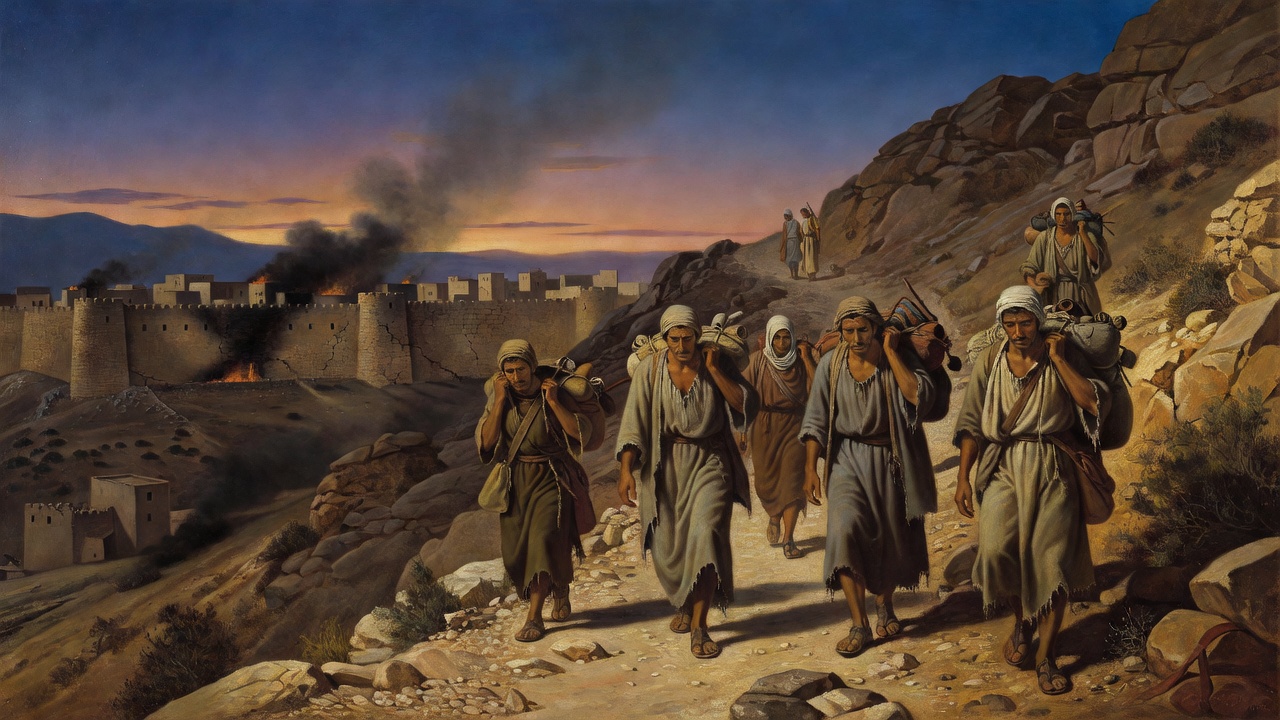
For in a night Ar of Moab is laid waste, and brought to nought; for in a night Kir of Moab is laid waste, and brought to nought. 2They are gone up to Bayith, and to Dibon, to the high places, to weep: Moab waileth over Nebo, and over Medeba; on all their heads is baldness, every beard is cut off. 3In their streets they gird themselves with sackcloth; on their housetops, and in their broad places, every one waileth, weeping abundantly. 4And Heshbon crieth out, and Elealeh; their voice is heard even unto Jahaz: therefore the armed men of Moab cry aloud; his soul trembleth within him. 5My heart crieth out for Moab; her nobles flee unto Zoar, to Eglath-shelishi-yah: for by the ascent of Luhith with weeping they go up; for in the way of Horonaim they raise up a cry of destruction. 6For the waters of Nimrim shall be desolate; for the grass is withered away, the tender grass faileth, there is no green thing. 7Therefore the abundance they have gotten, and that which they have laid up, shall they carry away over the brook of the willows. 8For the cry is gone round about the borders of Moab; the wailing thereof unto Eglaim, and the wailing thereof unto Beer-elim. 9For the waters of Dimon are full of blood; for I will bring yet more upon Dimon, a lion upon them of Moab that escape, and upon the remnant of the land.
¿Sabías que…?
La Profecía sobre Moab
- Moab era una región ubicada al este del Mar Muerto y del río Jordán, que incluía antiguos asentamientos como Ar, Quir y Medeba. En este capítulo, el profeta lamenta la repentina destrucción nocturna y el llanto que recorre las ciudades y los lugares altos moabitas.Fuentes: Moab · Medeba · el propio texto bíblico
- El texto retrata rituales tradicionales de duelo practicados en la región en tiempos de calamidad. Ante la devastación, los habitantes de Moab se rapan la cabeza, se cortan la barba y se visten de cilicio mientras lloran en las plazas y sobre las azoteas.Fuentes: el propio texto bíblico
- La ciudad de Dibón, situada al norte del río Arnón y al este del Mar Muerto, también recibe el nombre de Dimón en Isaías 15:9. El oráculo ilustra la gravedad de la invasión al describir las aguas de Dimón llenas de sangre mientras los fugitivos huyen.Fuentes: Dibon · el propio texto bíblico
Notas escritas con ayuda de IA a partir de fuentes abiertas (Theographic Bible Metadata, CC BY-SA 4.0; Easton’s Bible Dictionary, dominio público) y revisadas antes de publicarse.
Lugares de este capítulo
- Moab · Hoy: Moab 1 · 31.181, 35.701 · versículos 1, 2, 4, 5, 8, 9
- Dibon · Hoy: Tall Dhiban · 31.502, 35.777 · versículo 2
- Medeba · Hoy: Madaba · 31.716, 35.795 · versículo 2
Solo aparecen lugares identificados con alta confianza (90 % o más según las fuentes académicas reunidas por OpenBible). Mapa de la época: DARE (Digital Atlas of the Roman Empire), CC BY 4.0; mapa actual: © colaboradores de OpenStreetMap; lugares: OpenBible.info (CC BY 4.0).
Créditos y licencia de esta traducción
American Standard Version (1901)
The American Standard Version of the Holy Bible, first published in 1901.
Public Domain
Language: English
Dialect: Archaic American
This public domain Bible translation is brought to you courtesy of eBible.org.
If you would like to make a donation to help keep free Bible access like this going, please visit https://eBible.org/give.php .
2026-10-02
Títulos de sección adaptados de la Berean Standard Bible (dominio público); no forman parte del texto bíblico de esta traducción.
Fuente: http://ebible.org/eng-asv/ · eBible.org