Salmos 80
Brenton Septuagint Translation · Toca un versículo para ver sus referencias cruzadas.
Hear Us, O Shepherd of Israel
1For the end, a Psalm for Asaph, concerning the wine-presses.
2Rejoice ye in God our helper; shout aloud to the God of Jacob. 3Take a psalm, and produce the timbrel, the pleasant psaltery with the harp. 4Blow the trumpet at the new moon, in the glorious day of your feast.
5For this is an ordinance for Israel, and a statute of the God of Jacob. 6He made it to be a testimony in Joseph, when he came forth out of the land of Egypt: he heard a language which he understood not.
7He removed his back from burdens: his hands slaved in making the baskets. 8Thou didst call upon me in trouble, and I delivered thee; I heard thee in the secret place of the storm: I proved thee at the water of Strife. Pause. 9Hear, my people, and I will speak to thee, O Israel; and I will testify to thee: if thou wilt hearken to me; 10there shall be no new god in thee; neither shalt thou worship a strange god. 11For I am the Lord thy God, that brought thee out of the land of Egypt: open thy mouth wide, and I will fill it. 12But my people hearkened not to my voice; and Israel gave no heed to me. 13So I let them go after the ways of their own hearts: they will go on in their own ways.
14If my people had hearkened to me, if Israel had walked in my ways, 15I should have put down their enemies very quickly, and should have laid my hand upon those that afflicted them. 16The Lord's enemies should have lied to him: but their time shall be for ever. 17And he fed them with the fat of wheat; and satisfied them with honey out of the rock.
¿Sabías que…?
Una oración por la vid devastada
- El salmo menciona específicamente a Efraín, Benjamín y Manasés, tribus estrechamente unidas por descender de Raquel a través de José y Benjamín. Durante la travesía por el desierto, estas tres tribus acampaban y marchaban juntas en el lado occidental del tabernáculo.Fuentes: Benjamin (patriarch) · Manasseh (son of Joseph) · el propio texto bíblico
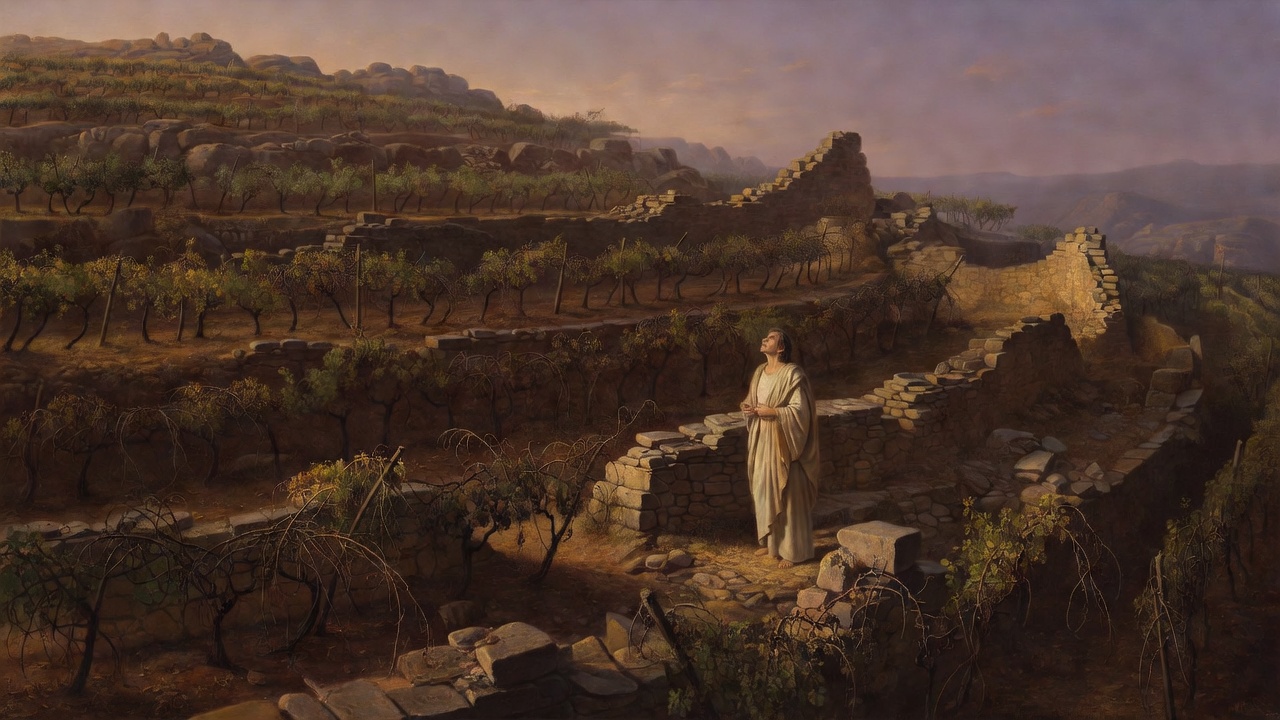
- El autor emplea una amplia alegoría que compara a la nación de Israel con una vid sacada de Egipto y trasplantada en Canaán. El canto lamenta que los muros protectores del viñedo hayan sido derribados, dejando la planta frutal expuesta a las fieras del campo y a los caminantes.Fuentes: Egypt · el propio texto bíblico
- Este poema forma parte de una colección que abarca desde el Salmo 73 hasta el 83 atribuida a Asaf. El relato bíblico presenta a Asaf como un destacado músico levita en la época del rey David, cuyo gremio o descendencia continuó su tradición en el culto del templo.Fuentes: Asaph (Levite) · el propio texto bíblico
Notas escritas con ayuda de IA a partir de fuentes abiertas (Theographic Bible Metadata, CC BY-SA 4.0; Easton’s Bible Dictionary, dominio público) y revisadas antes de publicarse.
Lugares de este capítulo
- Egypt · 30.129, 31.308 · versículo 8
- Euphrates · Hoy: Euphrates River · 31.004, 47.442 · versículo 11
- Great Sea · Hoy: Mediterranean Sea · 31.805, 34.170 · versículo 11
Solo aparecen lugares identificados con alta confianza (90 % o más según las fuentes académicas reunidas por OpenBible). Mapa de la época: DARE (Digital Atlas of the Roman Empire), CC BY 4.0; mapa actual: © colaboradores de OpenStreetMap; lugares: OpenBible.info (CC BY 4.0).
Créditos y licencia de esta traducción
Translation of the Greek Septuagint into English by Sir Lancelot Charles Lee Brenton
Published in 1851, and now in the Public Domain.
If you find errors in the text, please report them so that we can correct them.
Títulos de sección adaptados de la Berean Standard Bible (dominio público); no forman parte del texto bíblico de esta traducción.
Fuente: http://ebible.org/eng-Brenton/ · eBible.org