Levítico 1
Brenton Septuagint Translation · Toca un versículo para ver sus referencias cruzadas.
Acerca de este libro
Sobre Levítico
- El Diccionario Bíblico de Easton (1897) presenta Levítico como el tercer libro del Pentateuco y como el tercer libro de Moisés. El nombre, usado en la Vulgata siguiendo la LXX, refleja el tema principal del libro: el servicio levítico.Fuentes: Easton: Leviticus
- Easton afirma que todas las ordenanzas del libro fueron entregadas en el espacio de un mes, el primer mes del segundo año después del Éxodo. En la entrada sobre el Sinaí, llamado también Horeb, dice que los hebreos llegaron a esa región montañosa en el tercer mes después del Éxodo y permanecieron acampados cerca de un año entero, y que todo Levítico registra lo que ocurrió allí.Fuentes: Easton: Leviticus · Mount Sinai
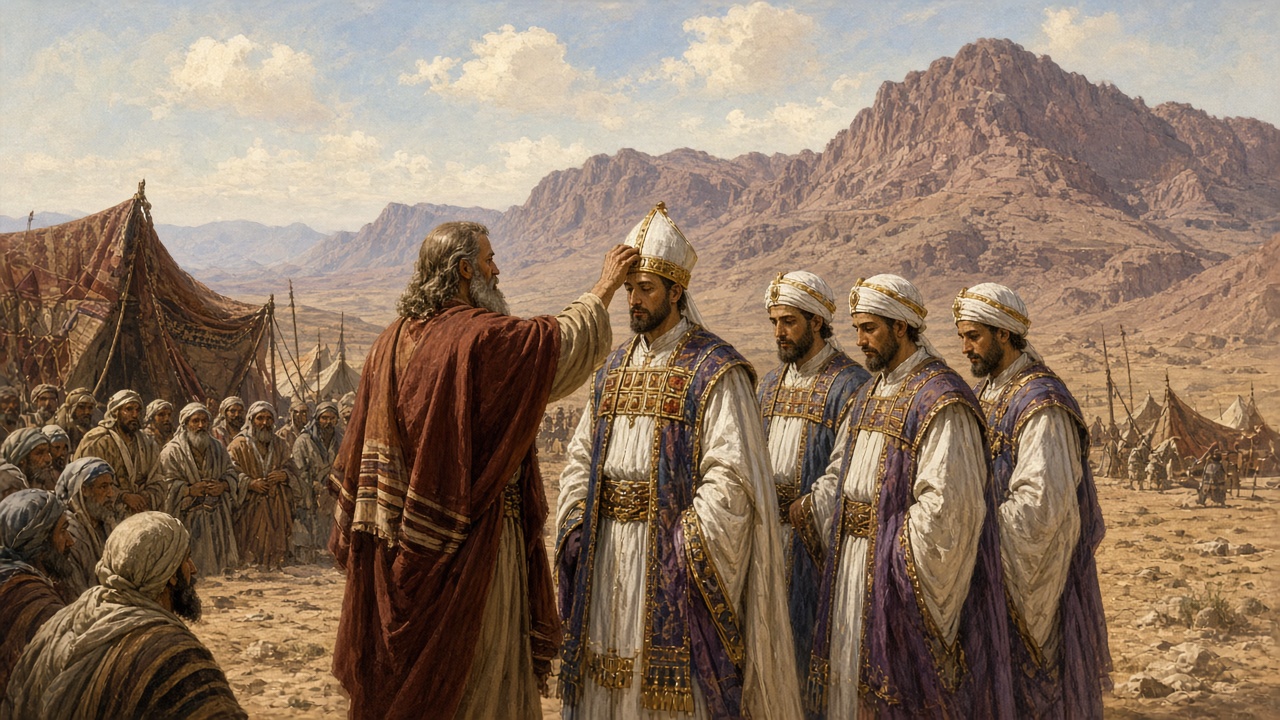
- Los capítulos 1 a 7 dan leyes sobre holocaustos, ofrendas de cereales y ofrendas de acción de gracias, luego sobre ofrendas por el pecado y ofrendas por la culpa, y sobre los deberes de los sacerdotes al ofrecer sacrificios. Los capítulos 8 a 10 relatan la consagración de Aarón y de sus hijos, la primera ofrenda de Aarón por sí mismo y por el pueblo, y la muerte de Nadab y Abiú, que fueron heridos de muerte y enterrados fuera del campamento tras ofrecer fuego extraño, es decir, fuego común no tomado del gran altar de bronce. Los capítulos 11 a 16 tratan de la pureza y de los sacrificios y ordenanzas para apartar la impureza.Fuentes: Easton: Leviticus · Nadab · Abihu
- Easton describe los capítulos 17 a 20 como leyes que marcan la separación entre Israel y los demás pueblos. Otras leyes tratan de la pureza personal de los sacerdotes y de su consumo de las cosas santas, de las ofrendas sin defecto y de la debida celebración de las grandes fiestas en los capítulos 23 y 25. Siguen promesas y advertencias acerca de la obediencia, el libro cierra con una sección sobre votos, y Easton observa que Dios es quien habla de manera directa en casi todo el libro.Fuentes: Easton: Leviticus
- En los ritos del capítulo 16, un macho cabrío queda asociado con Azazel, término que la Authorized Version traduce como scapegoat y que la Revised Version deja como Azazel. Easton informa que algunos intérpretes judíos lo toman como un lugar en el desierto, a unas doce millas al este de Jerusalén, mientras otros lo toman como un espíritu maligno o incluso Satanás, y también señala un significado de raíz: separación.Fuentes: Azazel
Notas escritas con ayuda de IA a partir de fuentes abiertas (Theographic Bible Metadata, CC BY-SA 4.0; Easton’s Bible Dictionary, dominio público) y revisadas antes de publicarse.
Laws for Burnt Offerings
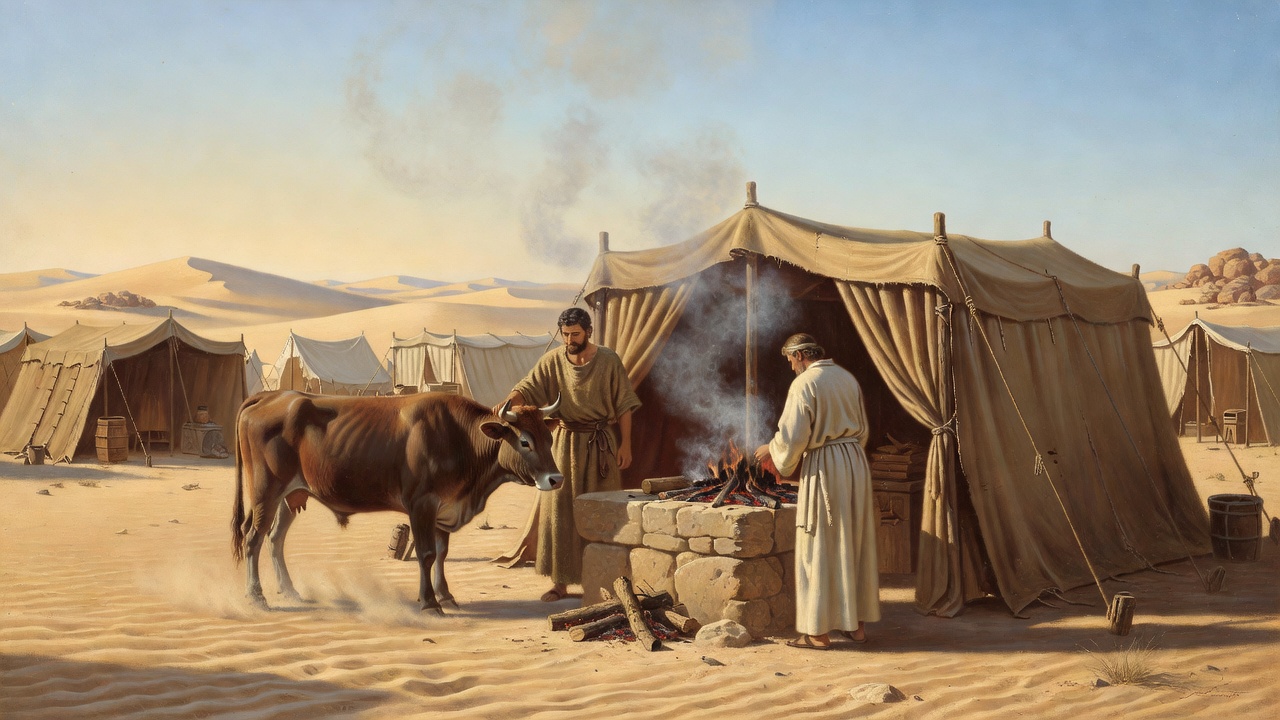
1And the Lord called Moses again and spoke to him out of the tabernacle of witness, saying, Speak to the children of Israel, and thou shalt say to them, 2If any man of you shall bring gifts to the Lord, ye shall bring your gifts of the cattle and of the oxen and of the sheep. 3If his gift be a whole-burnt-offering, he shall bring an unblemished male of the herd to the door of the tabernacle of witness, he shall bring it as acceptable before the Lord. 4And he shall lay his hand on the head of the burnt-offering as a thing acceptable for him, to make atonement for him. 5And they shall slay the calf before the Lord; and the sons of Aaron the priests shall bring the blood, and they shall pour the blood round about on the altar, which is at the doors of the tabernacle of witness. 6And having flayed the whole burnt-offering, they shall divide it by its limbs. 7And the sons of Aaron the priests shall put fire on the altar, and shall pile wood on the fire. 8And the sons of Aaron the priests shall pile up the divided parts, and the head, and the fat on the wood on the fire, the wood which is on the altar. 9And the entrails and the feet they shall wash in water, and the priests shall put all on the altar: it is a burnt-offering, a sacrifice, a smell of sweet savour to the Lord. 10And if his gift be of the sheep to the Lord, or of the lambs, or of the kids for whole-burnt-offerings, he shall bring it a male without blemish. 11And he shall lay his hand on its head; and they shall kill it by the side of the altar, toward the north before the Lord, and the sons of Aaron the priests shall pour its blood on the altar round about. 12And they shall divide it by its limbs, and its head and its fat, and the priests shall pile them up on the wood which is on the fire, on the altar. 13And they shall wash the entrails and the feet with water, and the priest shall bring all the parts and put them on the altar: it is a burnt-offering, a sacrifice, a smell of sweet savour to the Lord. 14And if he bring his gift, a burnt-offering to the Lord, of birds, then shall he bring his gift of doves or pigeons. 15And the priest shall bring it to the altar, and shall wring off its head; and the priest shall put it on the altar, and shall wring out the blood at the bottom of the altar. 16And he shall take away the crop with the feathers, and shall cast it forth by the altar toward the east to the place of the ashes. 17And he shall break it off from the wings and shall not separate it, and the priest shall put it on the altar on the wood which is on the fire: it is a burnt-offering, a sacrifice, a sweet-smelling savour to the Lord.
¿Sabías que…?
El Holocausto
- Las instrucciones para el holocausto se adaptaban a distintas capacidades materiales, permitiendo ofrendas del ganado vacuno, del rebaño (ovejas o cabras) o de aves (tórtolas o pichones). En el caso del ganado y del rebaño, se requería un macho sin defecto.Fuentes: el propio texto bíblico
- El ritual establecía una clara división de funciones entre el oferente y los sacerdotes. El adorador presentaba el animal, ponía su mano sobre la cabeza de este para expiación, lo degollaba, lo desollaba y lavaba sus partes internas, mientras que los hijos de Aarón rociaban la sangre y quemaban toda la ofrenda sobre el altar.Fuentes: el propio texto bíblico · Aaron
Notas escritas con ayuda de IA a partir de fuentes abiertas (Theographic Bible Metadata, CC BY-SA 4.0; Easton’s Bible Dictionary, dominio público) y revisadas antes de publicarse.
Créditos y licencia de esta traducción
Translation of the Greek Septuagint into English by Sir Lancelot Charles Lee Brenton
Published in 1851, and now in the Public Domain.
If you find errors in the text, please report them so that we can correct them.
Títulos de sección adaptados de la Berean Standard Bible (dominio público); no forman parte del texto bíblico de esta traducción.
Fuente: http://ebible.org/eng-Brenton/ · eBible.org