Jeremías 29
Brenton Septuagint Translation · Toca un versículo para ver sus referencias cruzadas.
Jeremiah’s Letter to the Exiles
1Thus saith the Lord against the Philistines;
2Behold, waters come up from the north, and shall become a sweeping torrent, and it shall sweep away the land, and its fulness; the city, and them that dwell in it: and men shall cry and all that dwell in the land shall howl, 3at the sound of his rushing, at the sound of his hoofs, and at the rattling of his chariots, at the noise of his wheels: the fathers turned not to their children because of the weakness of their hands, 4in the day that is coming to destroy all the Philistines: and I will utterly destroy Tyre and Sidon, and all the rest of their allies: for the Lord will destroy the remaining inhabitants of the islands. 5Baldness is come upon Gaza; Ascalon is cast away, and the remnant of the Enakim.
6How long wilt thou smite, O sword of the Lord? how long will it be ere thou art quiet? return into thy sheath, rest, and be removed.
7How shall it be quiet, whereas the Lord has given it a commission against Ascalon, and against the regions on the sea-coast, to awake against the remaining countries!
¿Sabías que…?
La carta de Jeremías a los desterrados en Babilonia
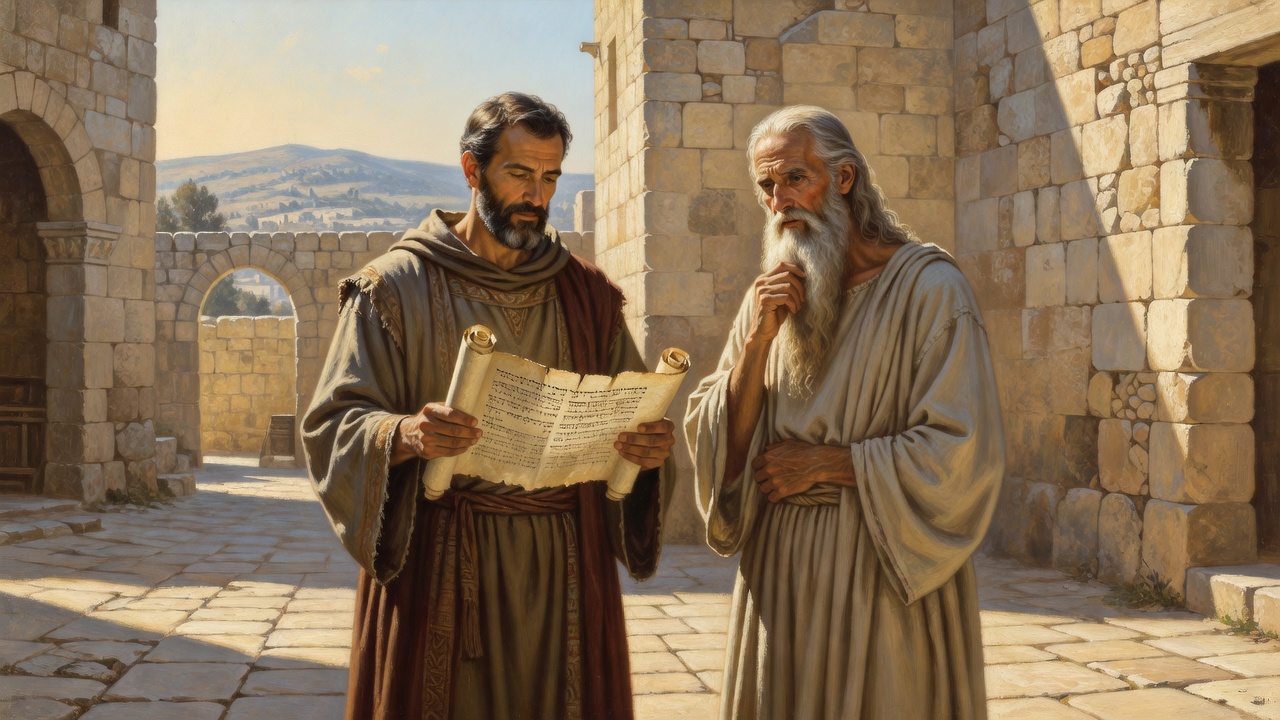
- Jeremías envió su carta a los exiliados por medio de Elasa hijo de Safán y Gemarías hijo de Hilcías, emisarios reales enviados por el rey Sedequías a Nabucodonosor en Babilonia. En lugar de esperar un regreso inmediato, se aconsejó a los deportados que construyeran casas, plantaran huertos, se casaran y oraran por la paz y bienestar de la ciudad donde habitaban.Fuentes: el propio texto bíblico · Elasah · Gemariah
- El profeta advirtió a la comunidad que no confiara en adivinos ni falsos profetas que anunciaban un pronto fin del cautiverio. La advertencia señalaba que el exilio bajo el dominio babilónico se extendería por setenta años antes de que Dios los restaurara en Jerusalén.Fuentes: el propio texto bíblico
- El capítulo registra un intercambio de cartas entre Jerusalén y Babilonia. Un profeta opositor llamado Semaías el nehelamita envió cartas desde Babilonia al sacerdote Sofonías en Jerusalén, exigiendo que se pusiera a Jeremías en cepos por instar a los deportados a establecerse para una estancia prolongada.Fuentes: el propio texto bíblico · Shemaiah · Zephaniah
Notas escritas con ayuda de IA a partir de fuentes abiertas (Theographic Bible Metadata, CC BY-SA 4.0; Easton’s Bible Dictionary, dominio público) y revisadas antes de publicarse.
Lugares de este capítulo
- Babylon · 32.543, 44.422 · versículos 1, 3, 4, 8, 10, 15, 16, 20, 21, 22, 24, 28, 31
- Jerusalem · 31.777, 35.234 · versículos 1, 2, 4, 16, 20, 25
Solo aparecen lugares identificados con alta confianza (90 % o más según las fuentes académicas reunidas por OpenBible). Mapa de la época: DARE (Digital Atlas of the Roman Empire), CC BY 4.0; mapa actual: © colaboradores de OpenStreetMap; lugares: OpenBible.info (CC BY 4.0).
Créditos y licencia de esta traducción
Translation of the Greek Septuagint into English by Sir Lancelot Charles Lee Brenton
Published in 1851, and now in the Public Domain.
If you find errors in the text, please report them so that we can correct them.
Títulos de sección adaptados de la Berean Standard Bible (dominio público); no forman parte del texto bíblico de esta traducción.
Fuente: http://ebible.org/eng-Brenton/ · eBible.org