Jeremías 24
Brenton Septuagint Translation · Toca un versículo para ver sus referencias cruzadas.
The Good and Bad Figs
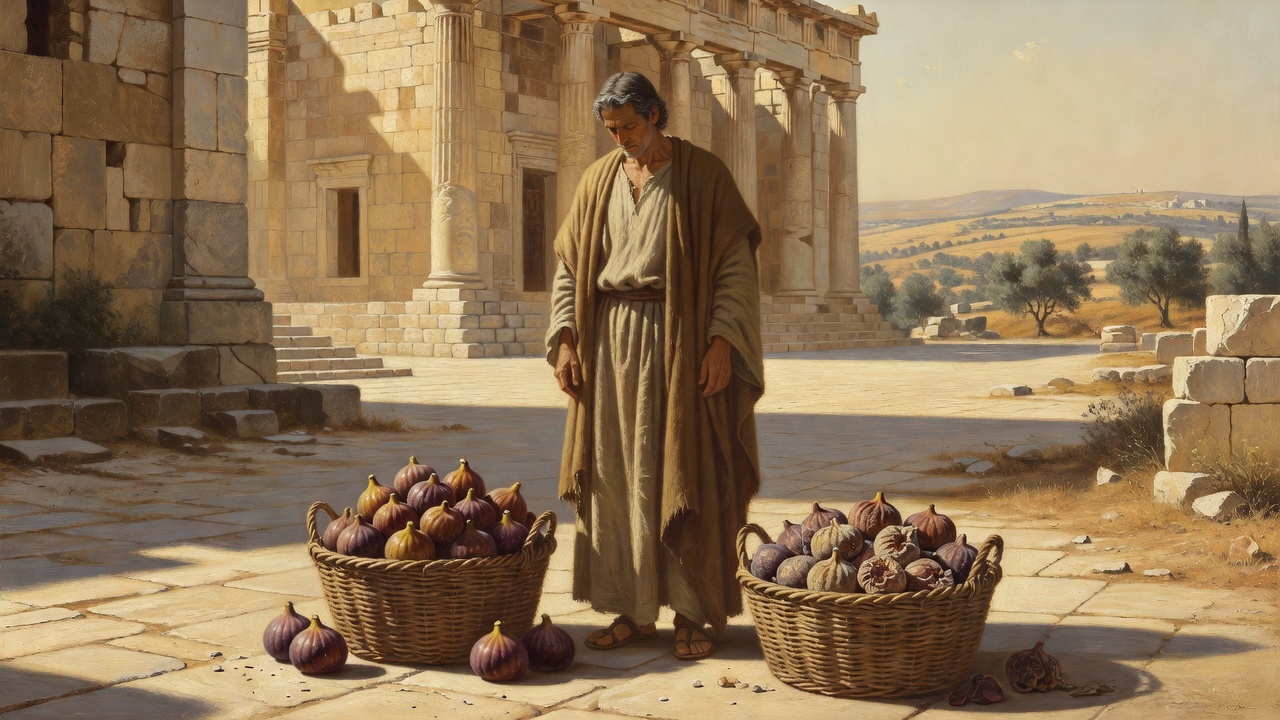
1The Lord shewed me two baskets of figs, lying in front of the temple of the Lord, after Nabuchodonosor king of Babylon had carried captive Jechonias son of Joakim king of Juda, and the princes, and the artificers, and the prisoners, and the rich men out of Jerusalem, and had brought them to Babylon. 2The one basket was full of very good figs, as the early figs; and the other basket was full of very bad figs, which could not be eaten, for their badness. 3And the Lord said to me, What seest thou, Jeremias? and I said, Figs; the good figs, very good; and the bad, very bad, which cannot be eaten, for their badness.
4And the word of the Lord came to me, saying, 5Thus saith the Lord, the God of Israel; As these good figs, so will I acknowledge the Jews that have been carried away captive, whom I have sent forth out of this place into the land of the Chaldeans for good. 6And I will fix mine eyes upon them for good, and I will restore them into this land for good: and I will build them up, and not pull them down; and I will plant them, and not pluck them up.
7And I will give them a heart to know me, that I am the Lord: and they shall be to me a people, and I will be to them a God: for they shall turn to me with all their heart.
8And as the bad figs, which cannot be eaten, for their badness; thus saith the Lord, So will I deliver Sedekias king of Juda, and his nobles, and the remnant of Jerusalem, them that are left in this land, and the dwellers in Egypt. 9And I will cause them to be dispersed into all the kingdoms of the earth, and they shall be for a reproach, and a proverb, and an object of hatred, and a curse, in every place whither I have driven them out. 10And I will send against them famine, and pestilence, and the sword, until they are consumed from off the land which I gave them.
¿Sabías que…?
Las Dos Cestas de Higos
- Jeremías recibió esta visión después de que el rey Nabucodonosor de Babilonia deportara al rey Jeconías (también llamado Joaquín), junto con los magistrados, artesanos y herreros de Jerusalén. Posteriormente, Nabucodonosor colocó a Sedequías como rey sobre la población restante en Judá.Fuentes: el propio texto bíblico · Jehoiachin · Zedekiah · Nebuchadnezzar
- En la visión presentada ante el templo, la cesta de higos excelentes y madurados tempranamente simboliza a los exiliados llevados a Babilonia. El Señor promete preservarlos, darles un corazón para conocerlo y devolverlos a su tierra.Fuentes: el propio texto bíblico
- En contraste, la cesta de higos podridos e incomestibles simboliza al rey Sedequías, a sus dignatarios y al remanente que permaneció en Judá o se refugió en Egipto. En lugar de hallar seguridad, son advertidos de calamidad, hambre, peste y escarnio entre las naciones.Fuentes: el propio texto bíblico · Zedekiah · Egypt
Notas escritas con ayuda de IA a partir de fuentes abiertas (Theographic Bible Metadata, CC BY-SA 4.0; Easton’s Bible Dictionary, dominio público) y revisadas antes de publicarse.
Lugares de este capítulo
- Babylon · 32.543, 44.422 · versículo 1
- Jerusalem · 31.777, 35.234 · versículos 1, 8
- Chaldea · 30.962, 46.104 · versículo 5
- Egypt · 30.129, 31.308 · versículo 8
Solo aparecen lugares identificados con alta confianza (90 % o más según las fuentes académicas reunidas por OpenBible). Mapa de la época: DARE (Digital Atlas of the Roman Empire), CC BY 4.0; mapa actual: © colaboradores de OpenStreetMap; lugares: OpenBible.info (CC BY 4.0).
Créditos y licencia de esta traducción
Translation of the Greek Septuagint into English by Sir Lancelot Charles Lee Brenton
Published in 1851, and now in the Public Domain.
If you find errors in the text, please report them so that we can correct them.
Títulos de sección adaptados de la Berean Standard Bible (dominio público); no forman parte del texto bíblico de esta traducción.
Fuente: http://ebible.org/eng-Brenton/ · eBible.org