Isaías 50
Brenton Septuagint Translation · Toca un versículo para ver sus referencias cruzadas.
Israel’s Sin
1Thus saith the Lord, Of what kind is your mother's bill of divorcement, by which I put her away? or to which debtor have I sold you? Behold, ye are sold for your sins, and for your iniquities have I put your mother away. 2Why did I come, and there was no man? why did I call, and there was none to hearken? Is not my hand strong to redeem? or can I not deliver? behold, by my rebuke I will dry up the sea, and make rivers a wilderness; and their fish shall be dried up because there is no water, and shall die for thirst. 3I will clothe the sky with darkness, and will make its covering as sackcloth.
The Servant’s Obedience
4The Lord even God gives me the tongue of instruction, to know when it is fit to speak a word: he has appointed for me early, he has given me an ear to hear: 5and the instruction of the Lord, even the Lord, opens mine ears, and I do not disobey, nor dispute. 6I gave my back to scourges, and my cheeks to blows; and I turned not away my face from the shame of spitting: 7but the Lord God became my helper; therefore I was not ashamed, but I set my face as a solid rock; and I know that I shall never be ashamed, 8for he that has justified me draws near; who is he that pleads with me? let him stand up against me at the same time: yea, who is he that pleads with me? let him draw nigh to me. 9Behold, the Lord, the Lord, will help me; who will hurt me? behold, all ye shall wax old as a garment, and a moth shall devour you.
10Who is among you that fears the Lord? let him hearken to the voice of his servant: ye that walk in darkness, and have no light, trust in the name of the Lord, and stay upon God. 11Behold, ye all kindle a fire, and feed a flame: walk in the light of your fire, and in the flame which ye have kindled. This has happened to you for my sake; ye shall lie down in sorrow.
¿Sabías que…?
El Siervo Obediente y la Reivindicación Divina
- En las costumbres legales del antiguo Cercano Oriente, el esposo emitía una carta de divorcio para formalizar la separación, y los deudores empobrecidos podían entregar a sus hijos en servidumbre. En Isaías 50:1, Dios utiliza estas metáforas jurídicas para demostrar que Israel no fue abandonado por una deuda divina ni por una anulación permanente del pacto, sino a causa de sus propias transgresiones.Fuentes: el propio texto bíblico
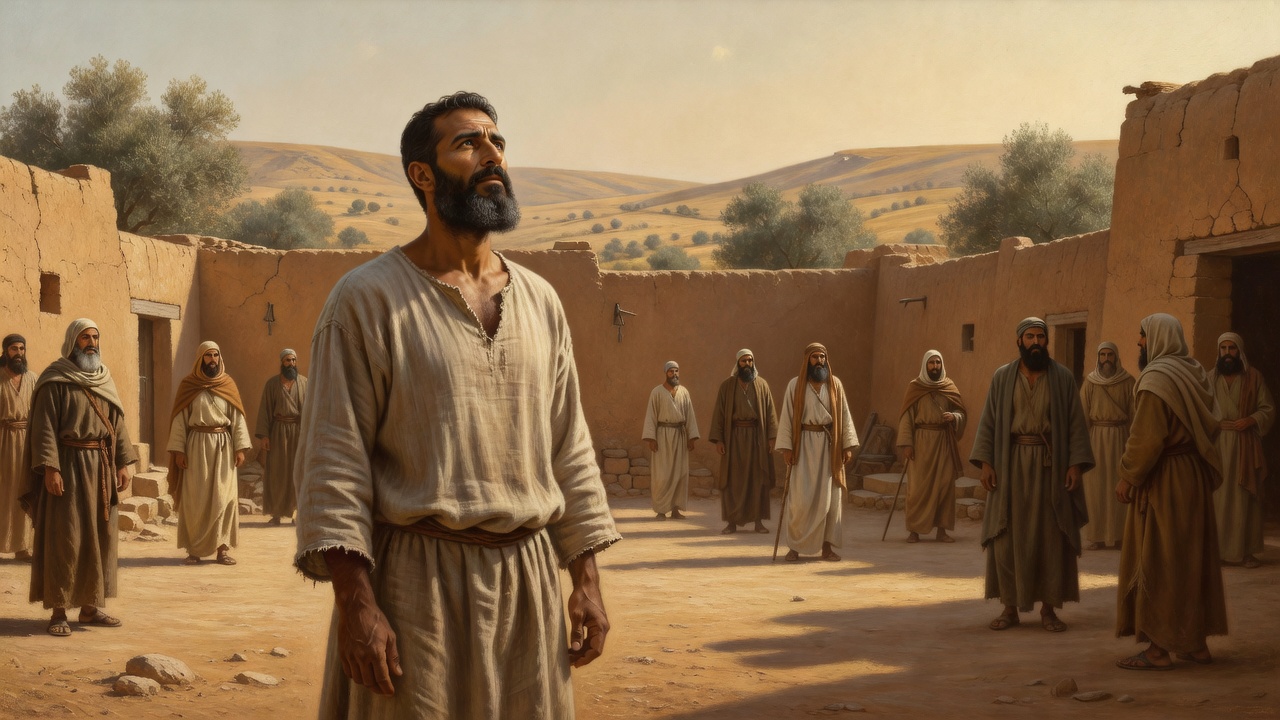
- El orador en Isaías 50:4–7 describe la actitud de un discípulo atento que soporta voluntariamente maltratos físicos, incluidos golpes, el arrancamiento de su barba y escupitajos. Poner el rostro 'como el pedernal' es una expresión vívida que denota una determinación inquebrantable y una firme confianza en Dios frente a la vergüenza pública y la hostilidad.Fuentes: el propio texto bíblico
Notas escritas con ayuda de IA a partir de fuentes abiertas (Theographic Bible Metadata, CC BY-SA 4.0; Easton’s Bible Dictionary, dominio público) y revisadas antes de publicarse.
Créditos y licencia de esta traducción
Translation of the Greek Septuagint into English by Sir Lancelot Charles Lee Brenton
Published in 1851, and now in the Public Domain.
If you find errors in the text, please report them so that we can correct them.
Títulos de sección adaptados de la Berean Standard Bible (dominio público); no forman parte del texto bíblico de esta traducción.
Fuente: http://ebible.org/eng-Brenton/ · eBible.org