Juan 4
Ekajuk Scriptures Bible Portions · Toca un versículo para ver sus referencias cruzadas.
Jisos, a nnenkal a Samaria
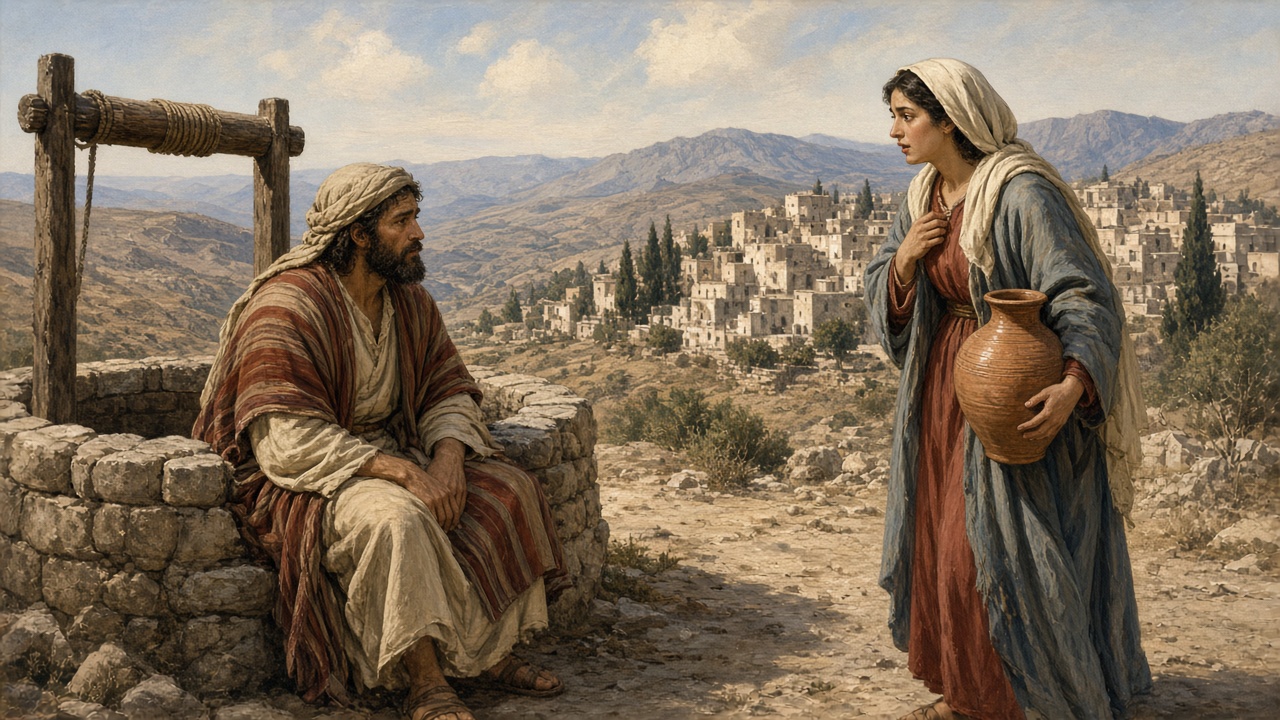
1Bab Farisi kehm wuku re, Jisos kpo wohngo ane alahb sehnge Jon, ane bao fere jo toon-e. 2Jol Jisos wohngem nne awohng awohng alahb, sehngem abatꞌtoono ebe ba ba jo lim ano. 3Ntul a Jisos sebe kan kahn ano me, á kehm tahme o Judea asongo go Galili. 4Tiki jolo re, á sehng go Samaria. 5Á kehm song rehng go ejahbe Samaria ajehng, ji bo jo lung re Sikar, ji jolo kohlo edi ndi ji Jekob ka mmon ewe Josef. 6Elbing alahb ni Jekob jolo ona. Eji Jisos ma lahng eljen, á kehm ba ji o elbing alahb nio. Ngare nyio jolo ngare efin. 7Owo nnenkal a Samaria kehm bake re á ba tuk alahb. Jisos kehm-e tongo re, “Ka-m alahb, me n wo!”
8Ngare nyio abatꞌtoono Jisos ebtahm go nla ejahbe re bo song gunu nsol alehke.
9Nnenkal a Samaria noo kehm-e faange re, “Jen ji wahnge a kp-m bahbe re, me n ka-a alahb, wo ji li na nne a Jus, gana me nne a Samaria?” Tibre Jus, a Samaria, bo kpehme kod abo.
10Jisos kehm-e faange re, “Li re a kpꞌkahne ayare nya Esowo kpo ka, fere kahn nne no kp-a bahbe re, wo ka-e alahb, á wo, kehn a m-e gboongo na, á ka-a alahb mao ma elkpin.”
11Mmonankal noo kehm-e bahbe re, “Nsoo, ejum limm, ji a bahke koko tuk alahb, gana elbing alahb nia kpꞌrahbe. Gan wo a bahke bele alahb mao ma elkpin? 12Anv, wo ga gbal sehnge Jekob, nso ejahre, no ka-r elbing alahb nia? Á jo wo alahb ana, a abon abon ebe, a atohkondi enye kpee.”
13Jisos kehm-e tongo re, “Nne awohng awohng no lꞌwo alahb maa, bahk-e kpe kor. 14Nne awohng awohng no lꞌwo alahb mao ma m bahk-e kake, ekor bahk-e tane. Alahb mao ma m bahk-e kake, bahke jo tub mbꞌbehl go ege atahng, fere gbo ebgba bi bahke jo fab, rehng go elkpin ni li go njinanjini.”
15Mmonankal noo kehm-e faange re, “Nsoo, ka-m alahb mao ma ekor bahk-m tane, eji n lꞌkꞌkpe ba a, ba tuk alahb elbing nia.”
16Jisos kehm-e tongo re, “Song, wo song lung nlum ewa, wahn ba!”
17Mmonankal noo kehm-e faange re, “Nlum awohng awohng n kpimm.”
Jisos kehm-e tongo re, “Wobbung etingitingi, eji a tongo re, nlum a kpimm. 18Wobbel alum na alon. Noo no a jehk-e etahk, etingitingi nlum ewa sang. A lohk-m tong etingitingi.”
19Mmonankal noo kehm-e tongo re, “Nsoo, me n lohko kahn re, wo nnyehnamahr wo. 20Babnso ejahre jo kake Esowo go ewong jia. Wahn Jus, ń kpo bung re, Go Jeusalem wo li edi ji fuumu re, ane jo ba, ba kak Esowo.”
21Jisos kehm-e tongo re, “Nnenkal, taame tv alum enyame nya n kpꞌbungu tong-a re, Ngare kpꞌbake nyi ń lꞌkꞌkpe kak Esowo Nsoo go ewong jia, jol go Jeusalem fvfo. 22Wahn aneb Samaria, ń kpo kak ejum ji ń kil elkahne. Wahr Jus, e kpo kak ji e kpꞌkahne. Tibre eltahre kpo lohng goji Jus. 23Ngare kpꞌbake nyi atingitingi abakake Esowo bahke jo kak Esowo Nsoo go etohko, a etingitingi. Tibre elkohn ane ana bao ba, Esowo Nsoo kpꞌsebe re bo kak-e. Ngare nyꞌnehm nyi ma rehng a. 24Esowo, etohko ji. Bao ba kp-e kake, bahke jo kak-e go etohko, a etingitingi.”
25Mmonankal noo kehm-e tongo re, “N kpꞌkahne re, Mesaya kpꞌbake. Mesaya ji bo kpo lung-e re Kraist lꞌba, á bahk-r tibi nsol kpee.”
26Jisos kehm-e faange re, “Me jia ji kpꞌbungu a na, me wo li Mesaya.”
27Tvtv ona abatꞌtoono Jisos kehm soro ba. Kpo bo esi area, eji bo nyehne re, á kpꞌbungu a nnenkal. Nnene jolem go bo ellong no bahbe Jisos re, “Jen ji a kpꞌsebe?” Jol bo we bahbem re, “Jen ji wahnge a kpꞌbungu a ne?”
28Nnenkal noo kehm soro tahm etulahb eje sa, tahm song rehng go nla ejahbe, song tong ane re, 29“Baan, wahn ba nyehn nne no ma-m tong nsol kpee, nyi n kpo lim. Ma ye wo li Mesaya nji!”
30Ane bao kehm soro lohng ejahbe jio, tahm song kpiri Jisos.
31Ngare nyꞌnehm nyi abatꞌtoono Jisos jo gboongo Jisos re, “Ntꞌtibi, ko nsol alehke, wo li me!”
32Á kehm tongo bo re, “N kpi nsol alehke nyi m bahke lehke, nyi ń kil elkahne.”
33Abatꞌtoono ebe kehm kehme elbahbe atemtem re, “Anv, nne ebko nsol alehke ba ka-ea?”
34Jisos kehm faange bo re, “Nsol alehke enyame li re, me n lim mbang nyi nne no tum-m no, fere gohro mal eltum ene. 35Wahn sang kpo kono elbungu re, ‘Ebsa nnyahng eni, ngare elkpake rehnga?’ N kp-n tongo re, wahn tab asamahr enyahne wahre, nyehn ana ebgbe ma kum, ngare ebrehng kpee, nyi elkpake. 36Nne no lꞌkpa, á kpo bel eltuuru. Á kpo kpu nsol nyio bum, jol go elkpin ni li go njinanjini, eji mbꞌbahme, a nkpꞌkpake, bo lꞌbel eyebatahng egom egom. 37Tibre jia ji bo kpo kono elbungu, lohko li go etingitingi re, ‘Nne noko bahm, noko kpa.’ 38M ma-n tum re, wahn song kpa egbe jio ji ń ki lim eltum anehng anehng. Ane bako ba ma lim eltum o, wahn ebba yel eltum nio, soro asi kpꞌlimi asongo.”
39Anebe Samaria gbalee ba lene ejahbe jio, kehm taame tv Jisos, tibre mmonankal noo bungu re, “Á tong-m nsol kpee nyi m ma lꞌlim.” 40Eji anebe Samaria bao ba goji Jisos, bo gboong-e re, á lub song kang a bo. Owo Jisos kehm song kang a bo nfung ebal. 41Ane gbalee kpe taame budu, tib go ege alum nya á bungu no. 42Bo kehm tongo mmonankal noo re, “Wahr ebtaame anv. Lohngem re, wahr ebtaame tib eji a tong-r no. Wahr ebtaame, tibre wahrfono antahng ebwuk. Wahr eblohko kahn go etingitingi re, ye wo li ntꞌtahre no njini.”
Ana Jisos limi mmon a ntubesi ejahbe, á nob eyam ebe
43Jisos kange kan nfung ebal o me, á kehm tahme go Galili. 44Tibre Jisos jo yiimi ntianse antahng antahng re, “Nnyehnamahr Esowo kpehme lub go ege ejahbe.” 45Eji Jisos ba no, ba rehng go Galili, anebe Galili jo vvr-e sehng, tib eji bo nyehne akpokosi nya á limi no go Jeusalem ngare elkak. Tibre bofono tꞌtob je elkak nio.
46Á kehm feere tahm go Kena ji Galili, ejahbe jio ji á ko alahb lim, siingi amahm. Ntubesi ejahbe awohng jolo go Kapenium, no mmon ewe jo yam. 47Á wuku kan re, Jisos eblohng go Judea ba go Galili, á kehm bake goji Jisos, ba gboong-e re, á je go Kapenium, song lim mmon ewe, á nob. Tibre mmon ewe nong go emel elkv.
48Owo Jisos kehm-e tongo re, “Tohko tiki jol re, ń nyehne akpokosi, ń kpehme tiki taame.”
49Ntubesi ejahbe noo kehm-e tongo re, “Nsoo, ba wahr tahm, mmon ewame yahke kpo.”
50Jisos kehm-e faange re, “Song, mmon ewa bahke kpini!” Nne noo kehm soro taame tv alum nya Jisos bungu no tong-e, kehm soro tahm eje.
51Eji á jo kehnge, alokeltum ebe kehm ba wan-e go mbang, kehm-e tongo re, “Mmon ewa kpeke li go elkpin.”
52Á kehm bahbe bo ngare nyi mmon ewe kehme elnobo. Bo kehm-e tongo re, “Nyaane ngare efin nkaranka anyehng, owo á nobo arumbum nyao.”
53Nde mmon kehm soro buumu tvtv re, ngare nyio nyi Jisos tong-e re, “Mmon ewa bahke kpini.” Yefono antahng kehm taame tv-e, a ane ba lene go ege a nlaaga kpee.
54Etoono nkpokosi nyi a, nyi Jisos kpe lim ngare nyio nyi á lohngo go Judea, feere go Galili.
¿Sabías que…?
Agua viva en Samaria
- Jesús dejó Judea para regresar a Galilea, y el Evangelio dice que tenía que pasar por Samaria. Bajo los romanos, en tiempos de Jesús, Judea era la más meridional de las tres divisiones de Palestina, distinta de Samaria y de Galilea, y el relato señala que los judíos no se trataban con los samaritanos.Fuentes: el propio texto bíblico · Judea
- Llegó a Sicar, cerca del terreno que Jacob había dado a su hijo José y, cansado del camino, se sentó junto al pozo de Jacob. El diccionario bíblico de Easton (1897) registra que, desde la época de las Cruzadas, Sicar solía identificarse con Siquem, pero que unas exploraciones la identificaron con 'Askar, un pequeño pueblo samaritano en la base sur de Ebal, aproximadamente una milla al norte del pozo.Fuentes: el propio texto bíblico · Sychar
- La mujer contrastó la adoración en este monte con la afirmación judía de que había que adorar en Jerusalén, y habló de un Mesías que había de venir, llamado Cristo. Cuando los discípulos volvieron de comprar comida en el pueblo, se sorprendieron de que Jesús estuviera hablando con una mujer.Fuentes: el propio texto bíblico
Notas escritas con ayuda de IA a partir de fuentes abiertas (Theographic Bible Metadata, CC BY-SA 4.0; Easton’s Bible Dictionary, dominio público) y revisadas antes de publicarse.
Lugares de este capítulo
- Galilee · 32.760, 35.527 · versículos 3, 43, 45, 46, 47, 54
- Judea · Hoy: Judea 1 · 31.777, 35.234 · versículos 3, 47, 54
- Samaria · Hoy: Samaria 2 · 32.276, 35.195 · versículos 4, 5, 7, 9
- Jerusalem · 31.777, 35.234 · versículos 20, 21, 45
- Mount Gerizim · 32.199, 35.273 · versículo 20
Solo aparecen lugares identificados con alta confianza (90 % o más según las fuentes académicas reunidas por OpenBible). Mapa de la época: DARE (Digital Atlas of the Roman Empire), CC BY 4.0; mapa actual: © colaboradores de OpenStreetMap; lugares: OpenBible.info (CC BY 4.0).
Créditos y licencia de esta traducción
Ekajuk Scriptures Bible Portions
Ekajuk: Ekajuk Scriptures Bible Portions (Bible)
copyright © 2024 Luke Initiative for Scripture Translation and The Seed Company
Language: Ekajuk
Contributor: Luke Initiative for Scripture Translation
This translation is made available to you under the terms of the
Creative Commons Attribution Share-Alike license 4.0.
You have permission to share and redistribute this Bible translation in any format and to make reasonable revisions and adaptations of this translation, provided that:
You include the above copyright and source information.
If you make any changes to the text, you must indicate that you did so in a way that makes it clear that the original licensor is not necessarily endorsing your changes.
If you redistribute this text, you must distribute your contributions under the same license as the original.
Pictures included with Scriptures and other documents on this site are licensed just for use with those Scriptures and documents.
For other uses, please contact the respective copyright owners.
Note that in addition to the rules above, revising and adapting God's Word involves a great responsibility to be true to God's Word. See Revelation 22:18-19.
2025-07-02
Fuente: http://ebible.org/eka/ · eBible.org