Juan 16
Ekajuk Scriptures Bible Portions · Toca un versículo para ver sus referencias cruzadas.
1N tong-n alum nyaa, eji ń lꞌkꞌgbo. 2Tibre bo bahke jo kam-n yehke go ero. Etingitingi, ngare kpꞌbake nyi nne awohng awohng no lꞌwul-n, á bahke tiri re, á kpi Esowo loko. 3Bo bahke jo lim ana, tibre bo m-e nehme kahn, jol Nsoo bo we nehme kahn. 4M ma-n tong nsol nyia re, eji ngare nyio lꞌbiingi nyi bo bahke limi ano, ń lꞌbuumu nsol nyi n tong-n no bada bo. Wahn n tongem nsol nyia go mbomannahb, tibre n jolo a nahne.
Eltum ni Etingi Etohko
5“Anv, n kpꞌtahme goji nne no tum-m no. Nne ewahne awohng awohng limm, no kp-m bahbe re, ‘Gan wo a kpꞌtahme?’ 6Alum nya m ma-n tong nya wahnge ndon ma-n jol go atahng gbalee. 7N kp-n tongo etingitingi re, bahke nobo a nahne sehng, n lꞌtahm. N tohko tahm, Nkakebo nehm ba. N lꞌtahm, m bahk-e tumu tv-n.
8“Á lꞌba, á bahke ba lennge ane ba li njini nyia bade ana abiafem li no, fere lennge bo bade ana eno alehke li no, go elam ji Esowo ji kpꞌbake. 9Abiafem nyao nya li nya bo kil taame tv-m. 10Eno alehke jio, jꞌjame ji. Tibre n kpꞌtahme goji Nsoo, bo m-e nehm kpe tiki nyehn. 11Elam jio ji li elam ji bo ma lam ntubesi no njini nyia.
12“N kpe kpi nsol tvv nyi n jol kpe bung a nahne. Anv, ngare nyia, kpꞌriidi re wahn kehm kahne.
13“Etingi Etohko jio lꞌba, á bahke jo tib-n mbang anyehng anyehng nyi etingitingi. Tibre á nehm jo bung alum nyanye go ege a nsahm. Ajehng ajehng ji á wuku no, jꞌnehm ji á bahke bungu. Á bahk-n lennge nsol nyi kpꞌbake go esꞌsong. 14Á bahke me ellub ka. Á bahke koko nsol nyꞌnyame, ba lennge ka-n.
15“Ejum ajehng ajehng ji Nsoo kpi no, tob li jꞌjame. Ana wo wahnge n tong-n re, á bahke koko jꞌjame, ba lennge ka-n.
Ndon, a eyebatahng
16“Mmongare ntiil ḿ m-e nehm kpe nyehn. Lꞌkpe kang mmongare noko, ḿ bahk-m kpe nyehn.”
17Abatꞌtoono ebe bandiki kehm kehme elbungu atemtem re, “Anv, alum nyaa lohngo renan, nya á kp-r tongo a re, ‘Mmongare ntiil ḿ m-e nehm kpe nyehn, lꞌkpe kang mmongare noko, ḿ bahk-m kpe nyehn,’ a ellum nehko ni kpe li re, ‘Tibre n kpꞌtahme goji Nsoo?’ ”
18Bo kehm bahbe re, “Anv, ‘mmongare ntiil’ lohngo renan? E nehme kahn ji á kpꞌsebe re á bung tong-r.”
19Jisos kꞌkahn re, bo kpꞌsebe re bo bahb-e. Owo á kehm tongo bo re, “M bungu re, ‘Mmongare ntiil ḿ m-e nehm kpe nyehn. Lꞌkang mmongare noko, ḿ bahk-m kpe nyehn.’ Ellum nia ni, ń kpꞌbahbe atemtem ana lohngo noa? 20Etingitingi, n kpꞌbungu tong-n re, Ḿ bahke lingi, fere jo ka agohrobi, gana njini bahke jo bel na eyebatahng. Ḿ bahke jo ji ndon ndon, ndon enyahne bahke fere siingi eyebatahng ka-n. 21Eji nnenkal yahke jel, á kpo nyehn erem, tibre ngare erem enye ebrehng, ngare nyi á ma jel mmon, á nehm kpe tiki buumu erem bi á nyehne no, tib go eyebatahng ji á ma jel mmon kak go njini nyia. 22Mbang nyꞌnehm nyi, ń li go ndon anv, ḿ bahk-m kpe nyehn. Ngare nyio ntim enyahne bahke gbale go eyebatahng. 23Efung bio me ń nehm kpe jo bahb ejumjum. Etingitingi, n kpꞌbungu tong-n re, Ajehng ajehng ji ń lꞌbahb Nsoo, á bahk-n kake tib go egama mbing. 24Jol tete sik anv, ń ka tiki bahb ejumjum go egama mbing. Bahben, ḿ bahke bele, goji eyebatahng ejahne lꞌkpe gbal go egahne atahng.
Ana Jisos ga njini nyia a
25“Alum nya m bungu tong-n, m bungu go ngaane. Ngare kpꞌbake nyi n lꞌkꞌkpe bung a nahne go ngaane. M bahke jo bung gbuul tong-n bada Nsoo. 26Afung nyao lꞌbiingi, ḿ bahke jo bahb Nsoo go egama mbing. Wahn n nehme tong re, m bahke jo bahb Nsoo ka-n. 27Tibre yefono Nsoo, wahn kp-e koro, tib eji me n kp-n koro, ḿ ma fere taame re, n lohng goji Nsoo ba. 28N lohng goji Nsoo ba go njini nyia. Anv, n kpꞌtahme njini nyia, feere goji Nsoo.”
29Abatꞌtoono ebe kehm-e tongo re, “Anv, a kpꞌbungu gbuul tong-r, go ngaane sang. 30Anv, wahr ebkahn re, a kpꞌkahne ejum ajehng ajehng. Kpeem fuumu re, nne awohng awohng bahb-a mbahbe. Owo wahng ka e ma taame re, a lohko lohng goji Esowo ba.”
31Jisos kehm faange bo re, “Anv wo, ḿ ma kehm rahng taama? 32Ngare kpꞌbake nyi nne awohng awohng ewahne bahk-m yaame sa, tahm go ege ejahbe. Ngare nyꞌnehm nyi a. Jol fvfo, n nehm tiki jol antahng. Nsoo noa a name. 33M bungu alum nyaa tong-n, eji ń lꞌbel elkoono tib go egame esi. Go njini nyia ḿ bahke jo bel afemfem. Kana jo tiiri, me n ga njini nyia.”
¿Sabías que…?
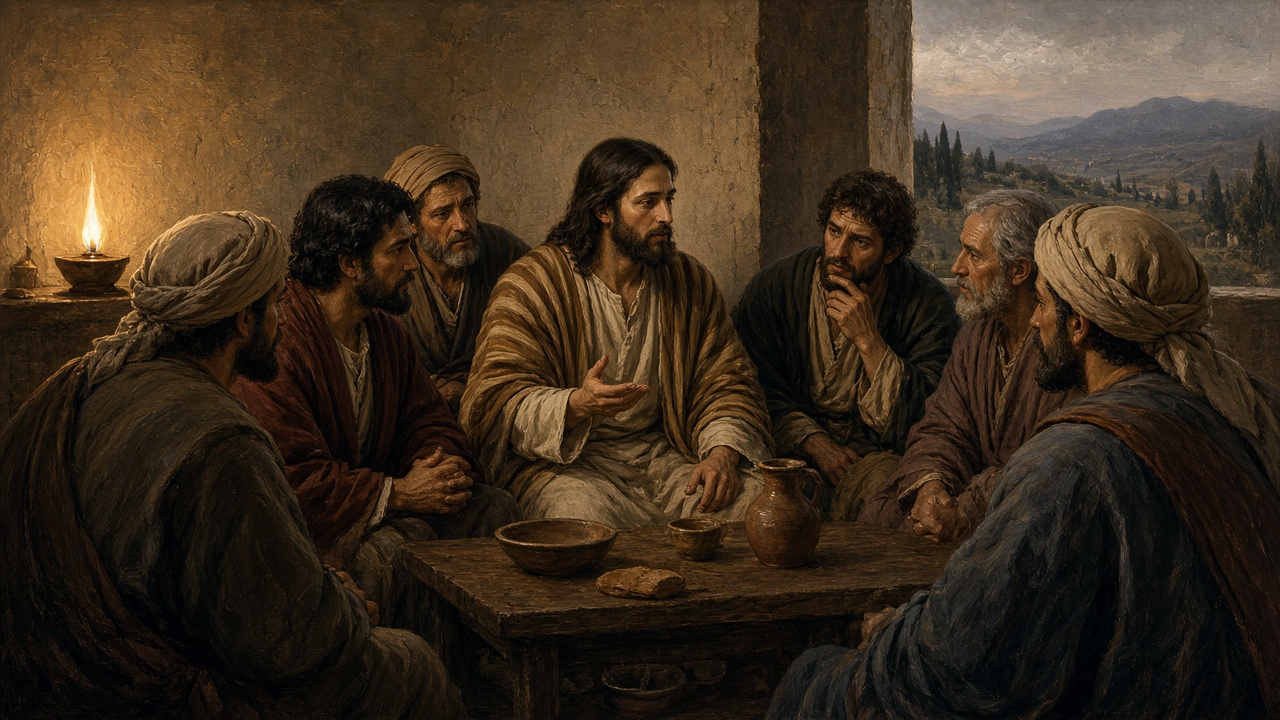
La partida, el Abogado y el gozo tras la tristeza
- Las notas de los acontecimientos sitúan este capítulo en el Discurso del Aposento Alto, un episodio de un día dentro de la Semana Santa, que esas notas presentan como un período de ocho días.Fuentes: Upper Room Discourse · Holy Week
- Jesús dice a los discípulos que los expulsarán de las sinagogas. Añade que viene un tiempo en que quien los mate pensará que está ofreciendo un servicio a Dios, porque no han conocido al Padre ni a él.Fuentes: el propio texto bíblico
- Él dice que es para el bien de ellos que se va, porque si no se va, el Abogado no vendrá. Cuando venga el Espíritu de verdad, los guiará a toda la verdad, no hablando por su propia cuenta, sino diciendo lo que oye y anunciando lo que ha de venir.Fuentes: el propio texto bíblico
Notas escritas con ayuda de IA a partir de fuentes abiertas (Theographic Bible Metadata, CC BY-SA 4.0; Easton’s Bible Dictionary, dominio público) y revisadas antes de publicarse.
Créditos y licencia de esta traducción
Ekajuk Scriptures Bible Portions
Ekajuk: Ekajuk Scriptures Bible Portions (Bible)
copyright © 2024 Luke Initiative for Scripture Translation and The Seed Company
Language: Ekajuk
Contributor: Luke Initiative for Scripture Translation
This translation is made available to you under the terms of the
Creative Commons Attribution Share-Alike license 4.0.
You have permission to share and redistribute this Bible translation in any format and to make reasonable revisions and adaptations of this translation, provided that:
You include the above copyright and source information.
If you make any changes to the text, you must indicate that you did so in a way that makes it clear that the original licensor is not necessarily endorsing your changes.
If you redistribute this text, you must distribute your contributions under the same license as the original.
Pictures included with Scriptures and other documents on this site are licensed just for use with those Scriptures and documents.
For other uses, please contact the respective copyright owners.
Note that in addition to the rules above, revising and adapting God's Word involves a great responsibility to be true to God's Word. See Revelation 22:18-19.
2025-07-02
Fuente: http://ebible.org/eka/ · eBible.org