Génesis 20
Ekajuk Scriptures Bible Portions · Toca un versículo para ver sus referencias cruzadas.
Ebraham abola Abimelek
1Ebraham kehm tahme o edi jio song rehng go ekidi edi ji Negeb song lene go elka elka ni Kadesh abola Sur. Á tohko jol mmongare ntiil go Gerar, 2eji Ebraham jolo o wo á bungu re Sara nkal ewe, <<Mmonanyehn wo.>> Owo Abimelek, ntula Gerar kehm tumu re bo song ko Sara ba, á ko-e ana nkal ewe.
3Esowo kehm bake goji Abimelek atv amehng go nlem, kehm ba tong-e re, <<Á li jang jang ana ekpakv nne, eji á song rod nnenkal noo; tibre nnenkal noo ebbal nlum.>>
4Ngare nyia Abimelek ka lak nnenkal noo abo, owo á kehm bungu re, <<O ntubesi a bahke rannge ejahbe ji ki kak afema? 5Anv Ebraham me-e tong-m re, <Sara mmonannee no nkal woa? Sara tobem bung a re, <Ebraham mmonannee no nlum woa?> Ji n limi a, ntir enyame li saang, fvfo abo enyame li saang.>>
6Owo Esowo kehm-e tongo go nlem re, <<Etingitingi ji, n kpˈkahne re a limi jia a ntir enya saang. Owo wahnge n ki taame re wo lim ebi tob-m. Jˈnehm ji wahnge n ki taame re wo koor-e abo. 7Anv, feera nkala nnenlum noo song ka-e, tibre nnenlum noo nnyehnamahr Esowo wo, á bahke kake ero ka-a, a bahke kpini. Á tohko feere a ne, kahn na kahn re wo a ane eba kpee, ḿ bahke kpoko.>>
8Njahm fungfu, efungfu behrebehre, Abimelek kehm lungu atubesi anebeltum ebe, eji á ma tong bo kpee ji ma jol, bo ane kpee bele elfahle sehng. 9Owo Abimelek kehm tumu re lung Ebraham, fere tong-e re, <<Jenji wahnge á ma-r lim ana. Ebi ajii m ma-a lim, ji wahnge á ma ko egburu ebi ana jia ba kun-m, a eti etul ejame. A ma-m lim nsol nyi ki fuumu re wo lim.>> 10Abimelek kehm bahbe Ebraham re, <<Jenji wahng ka a limi ejum ana jia?>>
11Ebraham kehm faange re, <<N bungu tong elname re, <Etingitingi elfahle ni Esowo edi jia limm, bo bahk-m wulu tib esi nkal ewame.> 12Nne lˈ bum jio go nkpe, á lohko li mmonanee no nkal, e lohng nde awohng, sehngem re eblohngo ni e ki lohng nnyehn awohng. 13Eji Esowo sebe re me n lohng nlaaga nsoo sa, n tong-e re, <Ana wo a bahk-m tibi elkoro ena: Edi ajehng ajehng ji e lˈjee, jo tong ane re, me mmonanee no nlum wo.>>>
14Owo Abimelek kehm koko ejoro, a efong, go aju aneblum, a anebkal ba ka Ebraham, fere feera Sara nkal ewe ba ka-e. 15Abimelek kehm bungu re, <<Nyehn ndi enyame ga nong no, edi ajehng ajehng ji lˈkor-a song lene.>>
16Á bungu tong Sara re, <<N kpˈkake mmonanne no nlum asilva akpohko, atahltahl nkpel ebal atahl awubu, nyaa li re wo ko bulu nsoodo nyi li bada na, go esamahr ane eba kpee, ba li a na; re wo ebˈbi ajehng ajehng a ka lim.>>
17Ebraham kehm kake ero bahb Esowo, á lim Abimelek á nob, a nkal ewe, a aju abon ba nkal, re bo kpe jo jel abon, 18tibre Jehova bˈbulu ejˈjele ajehng ajehng ji nnenkal awohng awohng no li go nlaaga Abimelek, tib esi Sara nkala Ebraham.
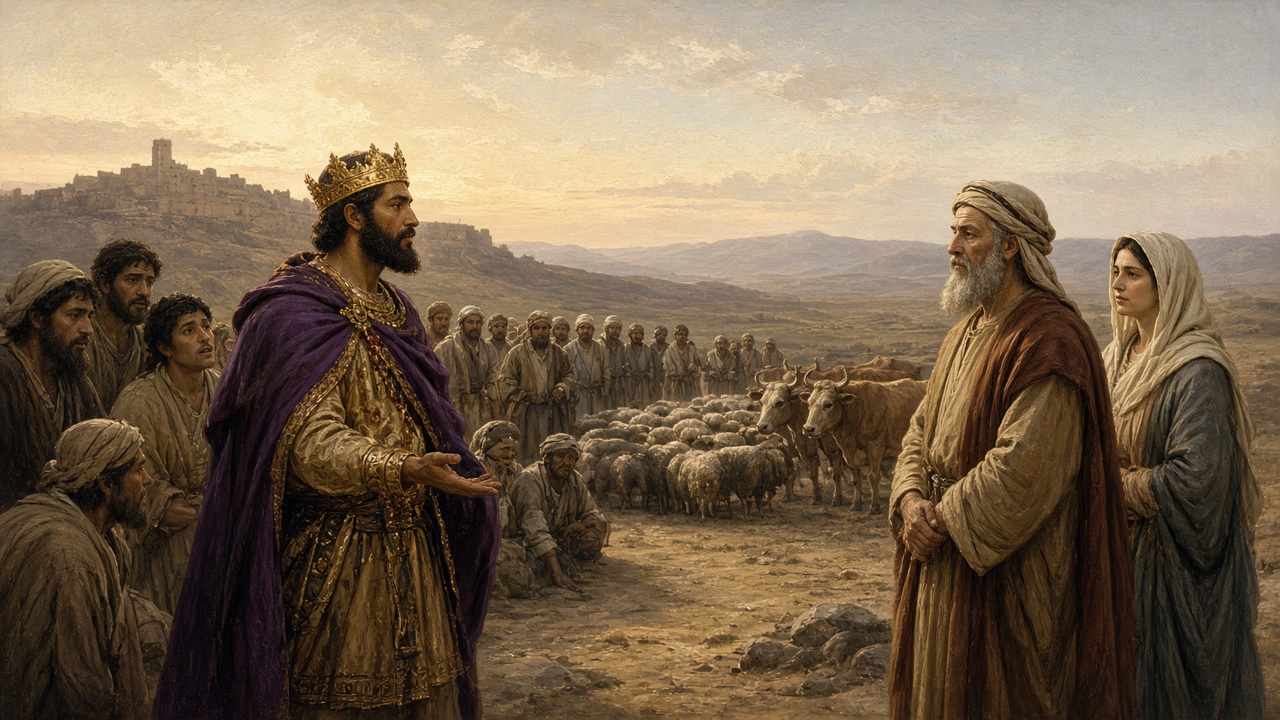
¿Sabías que…?
Hermana y esposa en Gerar
- Abraham estaba en Gerar, una ciudad y un distrito muy antiguos en la frontera sur de Palestina, gobernados entonces por un rey llamado Abimelec. Había ido a la región del Néguev, el distrito árido al sur de Palestina en la ruta de las caravanas hacia Egipto, y se estableció entre Cades y Shur. Shur, nombre que significa “muro”, era una región desértica en el límite noreste de Egipto, probablemente llamada así por la muralla fronteriza que los egipcios construyeron allí.Fuentes: el propio texto bíblico · Gerar · Negeb · Shur
- Cuando Abraham dijo que Sara era su hermana, el parentesco no era del todo inventado: ella también era su media hermana, hija de su padre, pero no de su madre. El diccionario bíblico de Easton (1897) indica que el nombre Sara significa “princesa” y que ese nombre se le dio cuando se anunció que sería la madre de la criatura prometida.Fuentes: el propio texto bíblico · Sarah
- El nombre Abimelec vuelve a aparecer en Gerar en la historia de Isaac. El diccionario bíblico de Easton (1897) describe a ese rey posterior como probablemente hijo del Abimelec que Abraham encontró, y dice que reprendió a Isaac por un engaño semejante acerca de su esposa Rebeca, que el rey descubrió por casualidad. La misma obra dice que Gerar parece haber sido una rica región de pastoreo.Fuentes: Abimelech (King of Gerar) · Gerar
Notas escritas con ayuda de IA a partir de fuentes abiertas (Theographic Bible Metadata, CC BY-SA 4.0; Easton’s Bible Dictionary, dominio público) y revisadas antes de publicarse.
Lugares de este capítulo
- Negeb · 31.245, 34.841 · versículo 1
Solo aparecen lugares identificados con alta confianza (90 % o más según las fuentes académicas reunidas por OpenBible). Mapa de la época: DARE (Digital Atlas of the Roman Empire), CC BY 4.0; mapa actual: © colaboradores de OpenStreetMap; lugares: OpenBible.info (CC BY 4.0).
Créditos y licencia de esta traducción
Ekajuk Scriptures Bible Portions
Ekajuk: Ekajuk Scriptures Bible Portions (Bible)
copyright © 2024 Luke Initiative for Scripture Translation and The Seed Company
Language: Ekajuk
Contributor: Luke Initiative for Scripture Translation
This translation is made available to you under the terms of the
Creative Commons Attribution Share-Alike license 4.0.
You have permission to share and redistribute this Bible translation in any format and to make reasonable revisions and adaptations of this translation, provided that:
You include the above copyright and source information.
If you make any changes to the text, you must indicate that you did so in a way that makes it clear that the original licensor is not necessarily endorsing your changes.
If you redistribute this text, you must distribute your contributions under the same license as the original.
Pictures included with Scriptures and other documents on this site are licensed just for use with those Scriptures and documents.
For other uses, please contact the respective copyright owners.
Note that in addition to the rules above, revising and adapting God's Word involves a great responsibility to be true to God's Word. See Revelation 22:18-19.
2025-07-02
Fuente: http://ebible.org/eka/ · eBible.org