2 Samuel 8
Ekajuk Scriptures Bible Portions · Toca un versículo para ver sus referencias cruzadas.
Esehnge ebta ji Devid
1Eji ma kang, Devid noko ga anebe Filista fere rede bo, fvfo á taare Meteg Amma anebe Filista kpeem ma jo fili.
2Devid tob ga anebe Moab. Á limi aneb agbekobo noongo go ndi nti na era, á yehke bo ji jolo ngbokambang, a etoono nti wul, bo ji jolo go nti era, á yake bo jol go elkpin. Owo wahnge erik anebe Moab fere woomo go elwo ni Devid fere jo ko nsol nyi á lˈbahb bo ba ka-e.
3Fvfo Devid tob ga Hadadejer ji mmona Rehab ntul no Joba, eji á je re á feere song ko ndi go nkpe aya ma Ufrati. 4Devid taar-e amvtv akuungu atahltahl nkpel ebal atahl awubu, ane ba kpo fing amvtv akuungu jolo ane atahltahl nkpel elku ebal ane atahl awubu (7000), nsoja nyi jo jen akpade jolo ane atahltahl nkpel atahl abal a nkpel ewubu.(20,000). Á yehke anyˈnya nya jo fing amvtv akuungu ajiki kpee, sa anyˈnya atahl alon.
5Eji anebe Aram ba go Damaskusi re, bo ba tob Hadadejer ntul no Joba, Devid wulu ane atahltahl nkpel atahl abal a nkpel elku (22,000). 6Á bumu abˈbaabe go Aram, ejahbe ji etul bi Damaskusi, fvfo Aram fere woom-e go elwo jo ko nsol ba ka-e. Jehova jo ka Devid esehnge ebta edi ajehng ajehng ji á lˈjee.
7Devid kehm rodo akum agul nya jolo ka atubesi alokeltum ba Hadadejer ko ba a nya go Jeusalem. 8Go Teba a Berotayi ajahbe nya jolo ka Hadadejer, ntula Devid koo abilikpi gbalee.
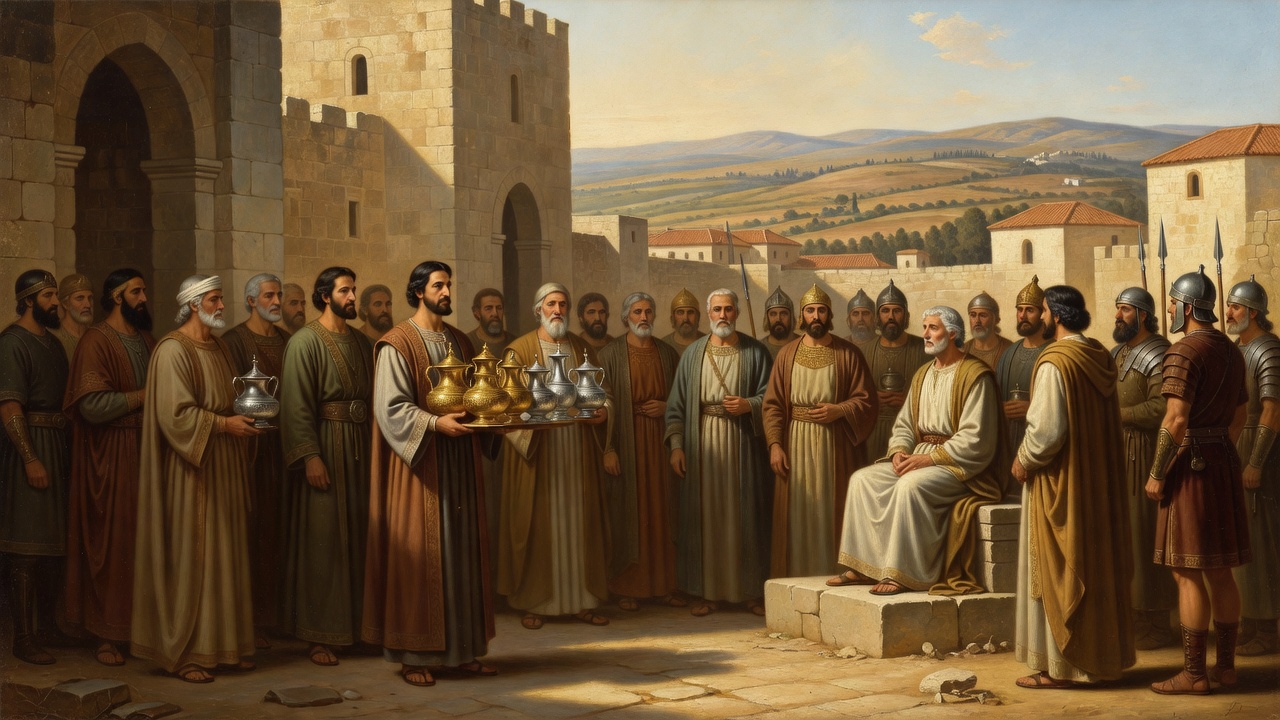
9Eji Towu ntul no ejahbe Hamati wuku re Devid ebga nsoja kpee nyi Hadadejer, 10á tumu Joram mmon ewe tv ntula Devid re á song kak-e nnyo fere tehk-e ege esehnge ebta bi á ma ga Hadadejer, ye ji jo nok ebta a Towu. Joram ko nsol nyi bo ko asilva, a agul, a abilikpi lim re á ba ka ntula Devid.
11Ntula Devid yake nsol nyia ka Jehova ana á ma tohko lim, a asilva, a agul nyako nya ajahbe nyako kpee nya á rede bo go ebta. 12Ane baa jolo anebe Edom a anebe Moab, anebe Amon, a anebe Filista, go anebe Amalek. Á tob yake nsol nyi á da go ebta goji Hadadejer mmona Rehob ntula Joba.
13Elgahm ni Devid kehm yeere eji á kehnge enok bi á wulu anebe Edom ane atahltahl nkpel atahl abal a nkpel elon (18,000), go edamme akang.
14Á bumu abˈbaabe go Edom kpee, anebe Edom kpee fere woomo Devid go elwo. Jehova jo ka Devid esehnge ebta edi ajehng ajehng ji á lˈjee.
Atubesi alokeltum ba Devid
15Devid fili anebe Isreel kpee, á jo limi ejum ajehng ajehng ji li nseenge a ji kpˈnobo ka ane ebe kpee. 16Joab mmona Jeruya, ye wo jo kpur nsoja kpee, Jehosefati mmon no Ahilud wo jolo nne no jo nyon nsol kuuru. 17Jadok mmona Ahitub a Ahimalek mmona Abiata bo ba jolo abalimajom, Seraya jol nnyonawer; 18Benaya mmon no Jehoyada, ye wo jo kpur anebe Kereti a anebe Peleti, fvfo abon ba Devid jolo abalimajom.
¿Sabías que…?
Las Conquistas y la Administración de David
- La expresión Meteg-ama en 2 Samuel 8:1 significa literalmente "el freno de la ciudad madre", un término figurativo para la conquista de una ciudad capital, la cual se identifica como Gat en el pasaje paralelo de 1 Crónicas 18:1.Fuentes: Metheg-ammah · el propio texto bíblico
- Hadad-ezer de Soba gobernaba un reino arameo que se extendía hacia el río Éufrates. La victoria de David sobre él aseguró el dominio sobre Damasco y motivó al rey Toi de Hamat, rival de Hadad-ezer, a enviar a su hijo Joram con tributos de oro, plata y bronce.Fuentes: Zobah · Toi · Joram · el propio texto bíblico
- El capítulo detalla la estructura del gobierno central de David, nombrando a Joab como comandante del ejército, a Josafat como cronista, a Sadoc y Ahimelec como sacerdotes, a Seraías como escriba y a Benaía al mando de los cereteos y peleteos.Fuentes: Joab · el propio texto bíblico
Notas escritas con ayuda de IA a partir de fuentes abiertas (Theographic Bible Metadata, CC BY-SA 4.0; Easton’s Bible Dictionary, dominio público) y revisadas antes de publicarse.
Lugares de este capítulo
- Moab · Hoy: Moab 1 · 31.181, 35.701 · versículos 2, 12
- Euphrates · Hoy: Euphrates River · 31.004, 47.442 · versículo 3
- Zobah · 33.935, 36.151 · versículos 3, 5, 12
- Damascus · 33.511, 36.306 · versículos 5, 6
- Syria · Hoy: Aram · 33.511, 36.306 · versículo 5
- Aram · 33.511, 36.306 · versículo 6
- Jerusalem · 31.777, 35.234 · versículo 7
- Hamath · Hoy: Hama · 35.136, 36.750 · versículo 9
- Amalek · 30.648, 34.422 · versículo 12
- Ammon · 31.955, 35.934 · versículo 12
- Edom · 30.746, 35.604 · versículos 12, 13, 14
- Philistia · 31.664, 34.546 · versículo 12
Solo aparecen lugares identificados con alta confianza (90 % o más según las fuentes académicas reunidas por OpenBible). Mapa de la época: DARE (Digital Atlas of the Roman Empire), CC BY 4.0; mapa actual: © colaboradores de OpenStreetMap; lugares: OpenBible.info (CC BY 4.0).
Créditos y licencia de esta traducción
Ekajuk Scriptures Bible Portions
Ekajuk: Ekajuk Scriptures Bible Portions (Bible)
copyright © 2024 Luke Initiative for Scripture Translation and The Seed Company
Language: Ekajuk
Contributor: Luke Initiative for Scripture Translation
This translation is made available to you under the terms of the
Creative Commons Attribution Share-Alike license 4.0.
You have permission to share and redistribute this Bible translation in any format and to make reasonable revisions and adaptations of this translation, provided that:
You include the above copyright and source information.
If you make any changes to the text, you must indicate that you did so in a way that makes it clear that the original licensor is not necessarily endorsing your changes.
If you redistribute this text, you must distribute your contributions under the same license as the original.
Pictures included with Scriptures and other documents on this site are licensed just for use with those Scriptures and documents.
For other uses, please contact the respective copyright owners.
Note that in addition to the rules above, revising and adapting God's Word involves a great responsibility to be true to God's Word. See Revelation 22:18-19.
2025-07-02
Fuente: http://ebible.org/eka/ · eBible.org