Mateo 2
Beibel: okanisi tongo · Toca un versículo para ver sus referencias cruzadas.
Koniman komoto a taa kondee // kon luku a Pikin
1Ma namo, da Masaa Jesesi meke na a pisiwataa fu Judeja, na a foto den kai Betelehem. A pisiten de, da na Kownu Helowdesi be e taki fu a hii pisiwataa anda. Ma wan duupu koniman komoto a doose kondee go a Jelusalem Foto. Den komoto na a se pe san e opo. Den koniman ya na sama di e sabi san o pasa, te den luku den sitali a tapu. 2Di den go doo Jelusalem Foto, ne den e akisi den sama ape taki: “Pe a kownu fu den Dyu di meke ya de? Bika wi si wan sitali a tapu, di e soi wi taki wan nyun kownu fu Dyusama meke dise. Ne i si u kon ya, fu kon gi en gaandi. We, gaantangi! U soi wi pe a meke, baa.”
3Namo, di Kownu Helowdesi yee taki, den e taki wan taa kownu meke, ne en anga a hii Jelusalem foluku buuya, te ná sipowtu. 4Namo a sende kai ala den moo hei begiman a Jelusalem Foto fu den kon ne en. Soseefi a kai ala den leliman fu Dyuweiti tu. Ne a taigi den taki: “We! Masaa Gadu á be paamisi fu sende wan yeepiman kon a goontapu, no? We, u suku gi mi a ini Masaa Gadu Buku pe a Kelestesi*f2* be o meke.”
5We namo, ne den piki en taki: “Na Betelehem Foto, na a pisiwataa fu Judeja! Bika a sikiifi taki:
6‘Betelehem Foto! A ná yu de na a pisiwataa fu Judeja, sondee balinen, no?
We toku so, yu o toon wan balinen foto.
Bika na yu a gaan edeman,
di o de wan soluguman fu mi sikapu, mi Dyu foluku, o meke.’ ”
7We, Kownu Helowdesi aliki, te a kaba. Namo a sende kai den koniman di be komoto na a se pe san e opo kibii kibii kon ne en. Ne a akisi den, meke den taigi en, on ten pilisisi den be si a sitali a tapu. 8Bakadati, ne a gi den pasi den go a Betelehem Foto go suku a pikin. Ma fosi den gwe, ne a taigi den taki: “U go suku fini fini pe a pikin meke. Te u fende en, da u kon piki mi baka. Bika mi seefi wani go gi en gaandi tu.”
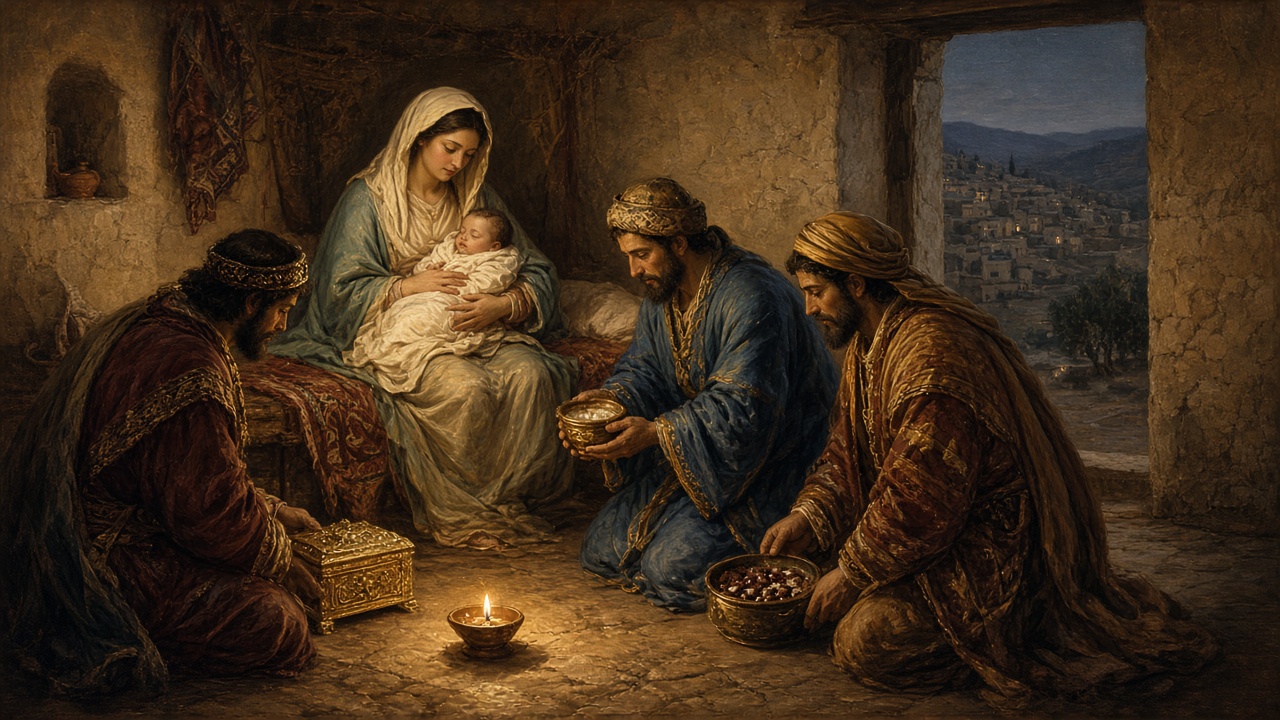
9We, di den anga Kownu Helowdesi taki so kaba, ne den gwe. Namo den si a seefi sitali di den be si a tapu baka. We, ne den piisii gaan piisii. Bika den e waka, da a sitali e waka a tapu a den fesi, fu tii den go doo na a pikin. Na di den si a sitali taampu pii a wan peesi, ne den sabi kaba taki, den doo a peesi pe a pikin meke. 11Ne den go a ini a osu. Ne den si a pikin anga en mma, Maliya de. Ne wanten wanten den sutu kini a doti, gi a pikin gaandi. Soseefi den puu den sowtu a sowtu dii kado di den be tyai, fu gi a pikin a ini sani. Den be tyai gowtu sani, wan sowtu kandaa fu boon switi sumee anga mile oli fu lobi a sikin.
12Na so ala sani be waka. Ma namo de, Masaa Gadu wasikoi den koniman a ini deen taki, den á mu daai go a Kownu Helowdesi moo. Ne den teke wan hii taa pasi waka gwe a den kondee baka.
Maliya anga Jowsef tyai a pikin // go kibii a Egepte Kondee
13Da di den koniman gwe kaba, ne namo, ne Masaa Gadu sende wan Basiya fu Masaa Gadu Kondee*f3* kon a Jowsef, a ini wan deen. Ne a taigi en taki: “Opo teke a pikin anga en mma, da i lowe gwe a Egepte Kondee. Da tan anda fu te enke mi taigi yu, fi i daai kon baka. Bika luku! Helowdesi o meke ala moiti fu kii a pikin ya!” 14We, ne Jowsef opo, ne a teke a pikin anga en mma na a neti, ne a gwe a Egepte Kondee. 15Ne a tan anda fu te Helowdesi dede. Na so a be mu pasa fu san Masaa Gadu be meke wan apaiti takiman fi en be taki mu kon pasa tuu. Bika a be taki: “Mi o kai mi manpikin puu a Egepte Kondee.”
Kownu Helowdesi kii manpikin
16Ma namo, di Kownu Helowdesi si taki, den koniman á kon piki en moo enke fa den be taki, ne en ati boon, te ná sipowtu. Ne a sende suudati waka kii ala manpikin, fu tu yali go a ondoo, a Betelehem anga a hii pisiwataa de. Bika den koniman be taigi en taki, na tu yali pasa kaba di den be si a sitali a tapu.
17Da na so a sani kon pasa tuu enke fa a Jelemija, a apaiti takiman fu Masaa Gadu be taki. 18Bika a be taki:
“U o yee fa sama e bali gaan adyumadye na a pisi kondee fu Laama.
U o yee kusumi anga soso balibali anda.
Na den baka bakaten pikin fu a uman den e kai Laakeli di e tan anda o kusumi so.
Den ná o wani sama koo den ati.
Bika den pikin fu den á de a libi moo.”
Fa den Jowsef daai kon a // Dyu Kondee baka
19We, ne baka di Kownu Helowdesi dede, ne na wan Basiya fu Masaa Gadu Kondee kon a Jowsef, a ini wan deen a Egepte Kondee anda. 20Ne a taigi en taki: “Jowsef, opo! Teke a pikin anga en mma, da u gwe a Islayeli Kondee baka! Bika a sama di be wani kii a pikin anda dede kaba.” 21We, ne Jowsef opo wanten, enke fa Masaa Gadu taigi en a ini a deen. Ne a teke a pikin anga en mma, ne den gwe a Islayeli Kondee baka. 22Ma di a yee taki na a Alikalawsu, a manpikin fu Kownu Helowdesi toon kownu fu Juda ne en dda peesi, ne a feele fu go na a pisi kondee anda. We, ne Masaa Gadu soi en a ini wan deen taki, meke a go tan na a pisiwataa fu Galileya. 23We, ne a go tan a wan foto fu Galileya den e kai Nasaleti. Na so san den apaiti takiman fu Masaa Gadu be taki, kon pasa tuu. Bika den be taki: “Den o kai en wan sama fu Nasaleti Foto.”
¿Sabías que…?
Magos, Herodes y Nazaret
- El rey Herodes de este capítulo es Herodes el Grande. Su hijo Arquelao, habido con Malthace, una mujer samaritana, heredó la tercera parte del reino: Idumea, Judea y Samaria. Hasta pocos días antes de la muerte de Herodes, otro hijo, Antipas, había sido nombrado sucesor, pero en sus últimos momentos Herodes nombró a Arquelao; por temor a él, José se apartó de Judea y se retiró a Galilea.Fuentes: Archelaus · el propio texto bíblico
- Mateo relaciona la muerte de los niños en Belén con palabras pronunciadas por el profeta Jeremías: una voz en Ramá, Raquel llorando por sus hijos. Raquel, una de las esposas de Jacob, murió al dar a luz a Benjamín y fue sepultada junto al camino de Efrata, es decir, Belén, justo al norte de la ciudad. Su sepulcro es objeto de gran veneración entre los judíos.Fuentes: el propio texto bíblico · Rachel · Bethlehem
- Belén, en la región montañosa de Judá, se llamaba antes Efrata y también era conocida como la ciudad de David; bajo los romanos quedaba en Judea, la más meridional de las tres divisiones de Palestina. José y María fueron en cambio a Nazaret, en Galilea, su hogar, un pueblo que no se menciona en el Antiguo Testamento. En general se supone que el nombre Nazaret proviene del hebreo netser, un renuevo o brote, aunque algunos lo relacionan con una palabra que significa guardar o vigilar.Fuentes: Bethlehem · Judea · Nazareth · el propio texto bíblico
Notas escritas con ayuda de IA a partir de fuentes abiertas (Theographic Bible Metadata, CC BY-SA 4.0; Easton’s Bible Dictionary, dominio público) y revisadas antes de publicarse.
Lugares de este capítulo
- Bethlehem · 31.704, 35.208 · versículos 1, 5, 6, 8, 9, 16
- East · Hoy: region around Amman · 31.955, 35.934 · versículos 1, 2, 9
- Jerusalem · 31.777, 35.234 · versículos 1, 3
- Judea · Hoy: Judea 1 · 31.777, 35.234 · versículos 1, 5, 22
- Egypt · 30.129, 31.308 · versículos 13, 14, 15, 19
- Galilee · 32.760, 35.527 · versículo 22
- Nazareth · 32.702, 35.298 · versículo 23
Solo aparecen lugares identificados con alta confianza (90 % o más según las fuentes académicas reunidas por OpenBible). Mapa de la época: DARE (Digital Atlas of the Roman Empire), CC BY 4.0; mapa actual: © colaboradores de OpenStreetMap; lugares: OpenBible.info (CC BY 4.0).
Créditos y licencia de esta traducción
Beibel: okanisi tongo
New Testament in Eastern Maroon Creole (NS:djk:Eastern Maroon Creole)
copyright © 2009 Wycliffe Bible Translators, Inc.
Language: Eastern Maroon Creole
Translation by: Wycliffe Bible Translators, Inc.
Eastern Maroon Creole
djk
Suriname
Copyright Information
© 2009, Wycliffe Bible Translators, Inc. All rights reserved.
This translation text is made available to you under the
terms of the Creative Commons License: Attribution-Noncommercial-No Derivative Works.
( http://creativecommons.org/licenses/by-nc-nd/3.0/ )
In addition, you have permission to port the text to different file formats, as long as you
do not change any of the text or punctuation of the Bible.
You may share, copy, distribute, transmit, and extract portions
or quotations from this work, provided that you include the above copyright
information:
You must give Attribution to the work.
You do not sell this work for a profit.
You do not make any derivative works that change any of the actual words or punctuation of the Scriptures.
Permissions beyond the scope of this license may be
available if you contact
us with your request.
The New Testament
in Eastern Maroon Creole
© 2009, Wycliffe Bible Translators, Inc. All rights reserved.
This translation is made available to you under the terms of the
Creative Commons Attribution-Noncommercial-No Derivatives license 4.0.
You may share and redistribute this Bible translation or extracts from it in any format, provided that:
You include the above copyright and source information.
You do not sell this work for a profit.
You do not change any of the words or punctuation of the Scriptures.
Pictures included with Scriptures and other documents on this site are licensed just for use with those Scriptures and documents.
For other uses, please contact the respective copyright owners.
2014-04-22
Fuente: http://ebible.org/djkNT/ · eBible.org