Santiago 2
Beibel: okanisi tongo · Toca un versículo para ver sus referencias cruzadas.
Kaba si sama hei moo sama
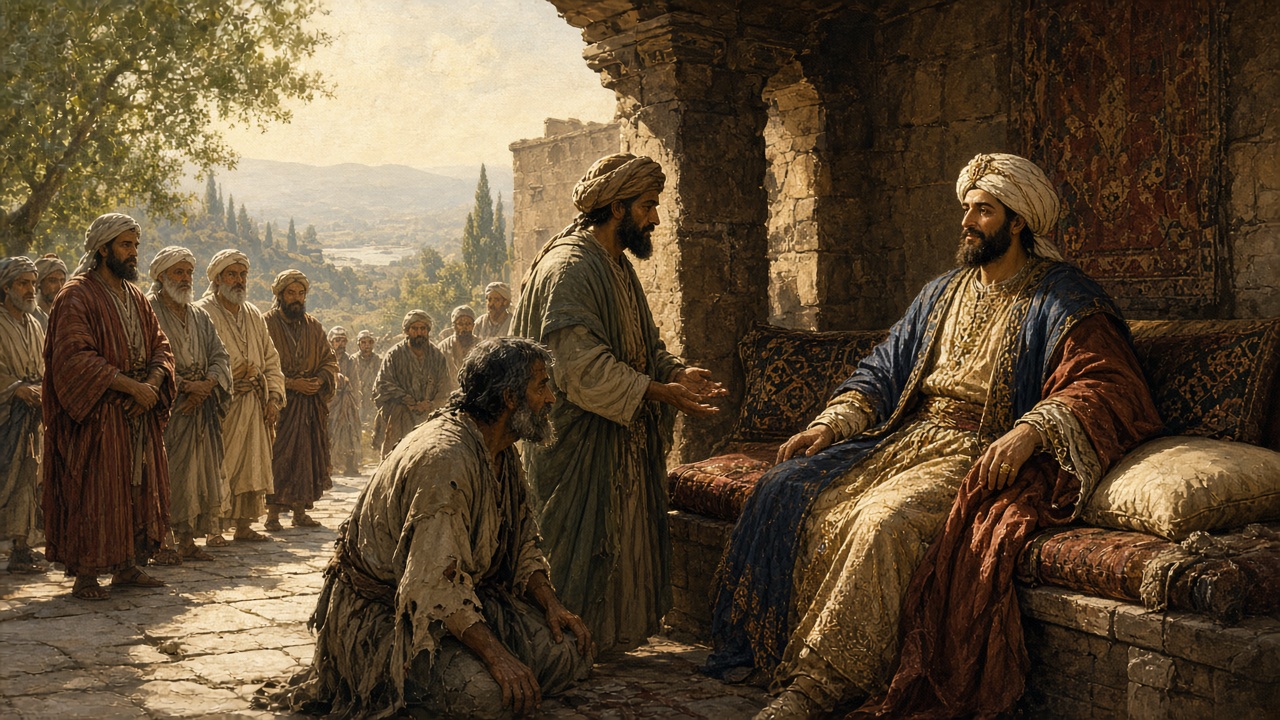
1We, biibiwan! Na Masaa Jesesi Kelestesi di u e biibi namo abi ala gaandi anga ala gaan dyendee. Da kaba keli sama hei moo sama. 2Kon u taki, tu nyun sama kon a u biibiwan mindii de. Wan gudu wei gaan dyendee koosi e koti faya, wei beenki finga linga. A taawan pooti wei boko koosi a sikin fanyaa. 3We ne wanten u teke a guduwan poti a hei taki: “Subi kon teke peesi a heiwan mindii dise.” Da u daai bali a pootiwan taki: “Pasa go taampu a wanse anda! Ofu, da kon sidon na a se fu u futu bangi a doti ya.” 4Da u du gaan ogii de. Bika u taampu enke lanti di nái kuutu sani leti. U wooko fowtu fasi e keli sama hei moo sama.
5Mi lobi biibiwan! U mu sabi taki, Masaa Gadu nái si pootiwan fu goontapu ya fu lagi sani. Bika u si fa a teke denseefi toon en sama di a gi somen gaan bun fi en tu. A seeka den libi fu go fende a bun di de a ini a Nyun Tii fu Masaa Gadu. Na so a paamisi fu gi ala sama di lobi en. 6Da u á mu peefuu wooko sondee lesipeki lagi pootiwan de. Bika na guduman makiti e dwengi u de soso kaali. Na den makiti e seepi u tyai go kuutu a gaanlanti fesi. A ná pootiwan e du dati. 7Na guduman seefi abi deki ati e wisiwasi a bunbun nen fu wi Masaa Jesesi Kelestesi di wi e tyai enke sama fi en.
8We, Masaa Gadu enke Kownu, di e tii ala sani, soi wi a mama fi en weiti a Masaa Gadu Buku, di noiti u mu peefuu taanga yesi gi. A taki: “Lobi taawan enke fa i lobi iseefi.” Dati na a leti fasi fu libi. 9Ma sama di e keli sama hei moo sama, e du wan gaan ogii anga ala takuudu. Na so Masaa Gadu weiti e soi wi. 10Da booko fu a weiti de namo e poli a hii weiti fu Masaa Gadu seefi. Bika winsi ala taa weiti e oli, ma wan kodo booko, da toku a kisi a hii weiti sikin. 11Bika na a seefi Masaa Gadu di poti a weiti taki: “I á mu motyo,” seefi poti taki: “I á mu kii taawan.” Da efi i nái motyo, ma yu e kii, da a weiti di i booko de e kisi a hii weiti sikin kaba.
12Da du ala sani anga koni, doo ala san yu e taki seefi! Masaa Gadu o kuutu ala dati fini fini, na a fasi fa a poti en weiti fu tyai sama puu a takuudu anga ogii. 13Da sama di nái wooko tyali ati fasi anga taawan, da Masaa Gadu seefi ná o wooko tyali ati fasi anga en baka na a gaan kuutu dei. Bika wooko tyali ati fasi anga taawan e tyai wini, fu meke den wooko tyali ati fasi anga yu seefi baka a kuutu.
Fa biibi libi e wooko
14We, biibiwan! Ibiiwan sama sa taki anga mofu taki, a abi biibi. Ma efu a biibi libi nái wooko, da bun fu dati ná o poi fende a Masaa Gadu. 15Bika efu wan pooti biibiwan a u mindii de e mankei koosi anga nyanyan ibii dei, 16ma mofu namo e taigi en taki: “Gadu o yeepi yu. Gwe anga wan switi ati! Wei deki koosi waan yu sikin! Nyan fuu i bee!” Da a biibi libi nái wooko, fu meke a fende bun de. 17Na so mofu namo sa taki: “Biibi de.” Ma efu a biibi libi nái wooko, da a tan enke te a boo fu wan libi nái wooko. Da na dedewan.
18Da sama sa denki taki, na taa biibiwan fende taanga a Masaa Gadu taki, dati biibi libi mu wooko. Ma enseefi fende taanga fu abi biibi namo, da a kaba. Ma dati á kan! Bika mi ya sabi taki, fu soi taki mi abi biibi, da mi biibi libi mu e wooko. 19Na wan moi sani di u ala sabi taki, wan Gadu de tuu. Ma fa fu takuu jeje? Denseefi e biibi so tu, ma anga ala gaan feele.
20Meke poli fusutan sama aliki ya! Mi o soi fa biibi libi di nái wooko sa meke yu tyai nen fu soso taki, i na biibisama! 21Bika saide Masaa Gadu be teli u avo Abalaham taki, a de bun gi en? Na di en biibi libi be e wooko. Na dati soi en biibi. Bika a teke en wankodo manpikin Isaki seeka poti na a apaiti begi tafaa, fu kii boon gi Masaa Gadu enke paiman. 22U e si de, a ná mofu namo a be taki, ai biibi. Ma en biibi libi be e wooko enke fa Masaa Gadu sende en fu du. Na dati meke a biibi fi en be doo peesi enke fa biibi mu de. 23Ne sani waka de enke fa Masaa Gadu Buku sikiifi taki: “Abalaham biibi Masaa Gadu, ne a teli en enke sama di de bun gi en.” A kai Abalaham gaan mati seefi. 24Dati e soi fa Masaa Gadu e teli sama taki, a de bun gi en. Na sama di biibi libi e wooko, na dati ai teli so. Ma a nái tan teli sama soso kaali so, fu di den mofu namo e taki, den e biibi.
25Bika luku Laakabu, enke wan gaan motyo uman fu Jelikow Foto seefi, di a be teli taki, de bun gi en. Bika en biibi libi be e wooko. Di ogii be de fu miti suudati di Josuwa be sende kibii go ondoosuku Jelikow Foto, ne a teke den kibii a ini en osu. A soi den a pasi fu lowe komoto a ini a foto seefi. 26Da sabi taki, biibi, ma fu a biibi libi nái wooko, da a tan enke te a boo fu wan libi nái wooko. Da na dedewan.
¿Sabías que…?
Imparcialidad y fe viva
- Santiago recuerda que Abraham fue justificado al ofrecer a su hijo Isaac en el altar, su fe obrando junto con sus acciones y perfeccionada por lo que hizo. Isaac, el único hijo de Abraham con Sara, fue aquel a quien Dios mandó a Abraham ofrecer en sacrificio en un monte en la tierra de Moriah.Fuentes: el propio texto bíblico · Isaac
- Santiago también cita a Rahab la prostituta, justificada por acoger a los espías y enviarlos por otro camino. Los dos espías, enviados por Josué mientras los hebreos estaban acampados en Sitim frente a Jericó, habían ido a su casa, enfrentaron peligro en la ciudad y fueron salvados por su fidelidad.Fuentes: el propio texto bíblico · Rahab
Notas escritas con ayuda de IA a partir de fuentes abiertas (Theographic Bible Metadata, CC BY-SA 4.0; Easton’s Bible Dictionary, dominio público) y revisadas antes de publicarse.
Créditos y licencia de esta traducción
Beibel: okanisi tongo
New Testament in Eastern Maroon Creole (NS:djk:Eastern Maroon Creole)
copyright © 2009 Wycliffe Bible Translators, Inc.
Language: Eastern Maroon Creole
Translation by: Wycliffe Bible Translators, Inc.
Eastern Maroon Creole
djk
Suriname
Copyright Information
© 2009, Wycliffe Bible Translators, Inc. All rights reserved.
This translation text is made available to you under the
terms of the Creative Commons License: Attribution-Noncommercial-No Derivative Works.
( http://creativecommons.org/licenses/by-nc-nd/3.0/ )
In addition, you have permission to port the text to different file formats, as long as you
do not change any of the text or punctuation of the Bible.
You may share, copy, distribute, transmit, and extract portions
or quotations from this work, provided that you include the above copyright
information:
You must give Attribution to the work.
You do not sell this work for a profit.
You do not make any derivative works that change any of the actual words or punctuation of the Scriptures.
Permissions beyond the scope of this license may be
available if you contact
us with your request.
The New Testament
in Eastern Maroon Creole
© 2009, Wycliffe Bible Translators, Inc. All rights reserved.
This translation is made available to you under the terms of the
Creative Commons Attribution-Noncommercial-No Derivatives license 4.0.
You may share and redistribute this Bible translation or extracts from it in any format, provided that:
You include the above copyright and source information.
You do not sell this work for a profit.
You do not change any of the words or punctuation of the Scriptures.
Pictures included with Scriptures and other documents on this site are licensed just for use with those Scriptures and documents.
For other uses, please contact the respective copyright owners.
2014-04-22
Fuente: http://ebible.org/djkNT/ · eBible.org