1 Tesalonicenses 4
Beibel: okanisi tongo · Toca un versículo para ver sus referencias cruzadas.
Libi fu piisii Masaa Gadu!
1Biibiwan! Fosi wi tapu a biifi ya, da wi dise wani sende u anda wan sani. Libi fu piisii Masaa Gadu! Bika u na sama fu Masaa Jesesi. Wi sabi taki, u anda e libi enke fa wi dise be leli u anda kaba. Ma toku wi wani u suku fu libi moo betee moo so. 2Bika na Masaa Jesesi seefi poti a leli fi en ya a wi ana, fu sende u anda. Ne u kon sabi fa fu waka anda.
3Ma toku, wi wani soi u anda ete, fa Masaa Gadu wani u mu de seefi. A wani u libi de apaiti fasi. Da de sondee fu waka motyo fasi. 4Ma meke ibiiwan sabi teke wan uman poti a osu. Du dati wan fasi di fiti Masaa Gadu anga ala lesipeki fu libisama tu. 5Ma u á mu waka enke sama di nái poti Masaa Gadu a teli. Bika na fafa ati den abi fu waka du ala sowtu motyo sani. 6Da wi enke biibiwan á mu du a ogii ya anga taawan. Meke wi á koli taawan, poli san den abi.
Bika enke fa wi be soi u kaba taki, Masaa Gadu á lobi so. Da en ati o boon fu dati. 7Bika Masaa Gadu kai wi kon toon sama fi enseefi. Da wi mu libi apaiti fasi. Ma wi á mu waka poli fasi enke motyo. 8Efu wan sama towe a leli ya, da a towe Masaa Gadu seefi di gi wi en Apaiti Jeje, fu leli wi libi. Bika a ná libisama soi wi a leli ya, ma na Masaa Gadu seefi.
Tan wooko anga lobi
9We, Masaa Gadu seefi be soi u kaba fa fu wooko anga lobi. Da a á de fanowdu fu sikiifi ya moo, fa fu lobi taa biibiwan. 10Bika u e libi anda so kaba anga ala taa biibiwan na a hii pisi fu Masadoniya.
Biibiwan! Ma toku wi dise e soi u anda ete taki, teke a lobi ya wooko moo bigi moo so. 11Ibii biibisama mu e feti namo fu libi bun anga taa sama sondee dyugu taki. U á mu e waka e mumui a ini taa sama sani tumisi. Ma ibii sama mu mumui anga en eigi sani e du en wooko enke fa a fiti. Da di u be de a mindii anda, da na so u be soi u anda kaba, fu libi. 12Da biibiwan ná o abi fu sidon taki, na taawan mu solugu den. Soseefi, da sama di nái biibi o luku u, da den taki: “Oho! Luku fa den biibiwan e libi soifili fasi.”
San o pasa anga den biibiwan di // dede kaba?
13Biibiwan! We, wi wani meke u sabi fa fu den biibiwan di dede kaba. Da u ná o buduufu anda enke sama di á sabi taki, sani de fu luku ete baka dede.
14Bika Masaa Jesesi seefi be dede koo pii. Ma Masaa Gadu weki en kon libi baka. Na so wi di e biibi kon sabi taki, biibisama di dede kaba, da Masaa Gadu o weki den kon a libi baka enke Jesesi. Da a o tyai den go libi a Jesesi. 15Yee fa Masaa Jesesi seefi be leli wi fu dati taki, wan dei, Masaa o kon teke den biibiwan puu a goontapu. Ma wi á mu denki taki, a o fika den dede biibiwan fu teke a baka, da a o teke den libiwan fosi. Kweti! 16Ma Masaa Gadu sa bali a tapu taki, a yuu doo. Da a moo hei Engel fi en seefi tongo o piki a tapu. Da wan gaan tutu o boo a tapu anda. Da Masaa Jesesi o saka komoto a tapu anda. Da den dede wan, di be e biibi a Masaa Jesesi Kelestesi fosi o weki baka. 17Da wantoon so, Masaa Gadu o tyai wi di de a libi makandii anga den di weki gwe a Masaa a den woluku tapu. Da a miti di wi ala o miti ya, a ná fu paati moo wanten. Wi anga Masaa o libi makandii tego. 18Da na den wowtu ya u mu e teke taigi taa biibiwan, fu puu buduufu na ati. Meke den sa fende koo ati fu libi.
¿Sabías que…?
Santidad, amor y esperanza por los que murieron
- Este capítulo señala que sus lectores ya mostraban amor a todos los hermanos por toda Macedonia. En tiempos del Nuevo Testamento, Macedonia era una provincia romana situada al norte de Grecia, gobernada por un propretor con el título de procónsul. Pablo fue llamado por una visión del "hombre de Macedonia" para predicar el evangelio allí.Fuentes: el propio texto bíblico · Macedonia
- El capítulo habla de los muertos como personas que duermen o se durmieron, y pide a los lectores que no se entristezcan como los demás, que no tienen esperanza. Porque Jesús murió y resucitó, dice el texto, Dios traerá con Jesús a los que durmieron en él; los muertos en Cristo resucitarán primero, y luego los que aún vivan serán arrebatados con ellos en las nubes para encontrarse con el Señor en el aire.Fuentes: el propio texto bíblico
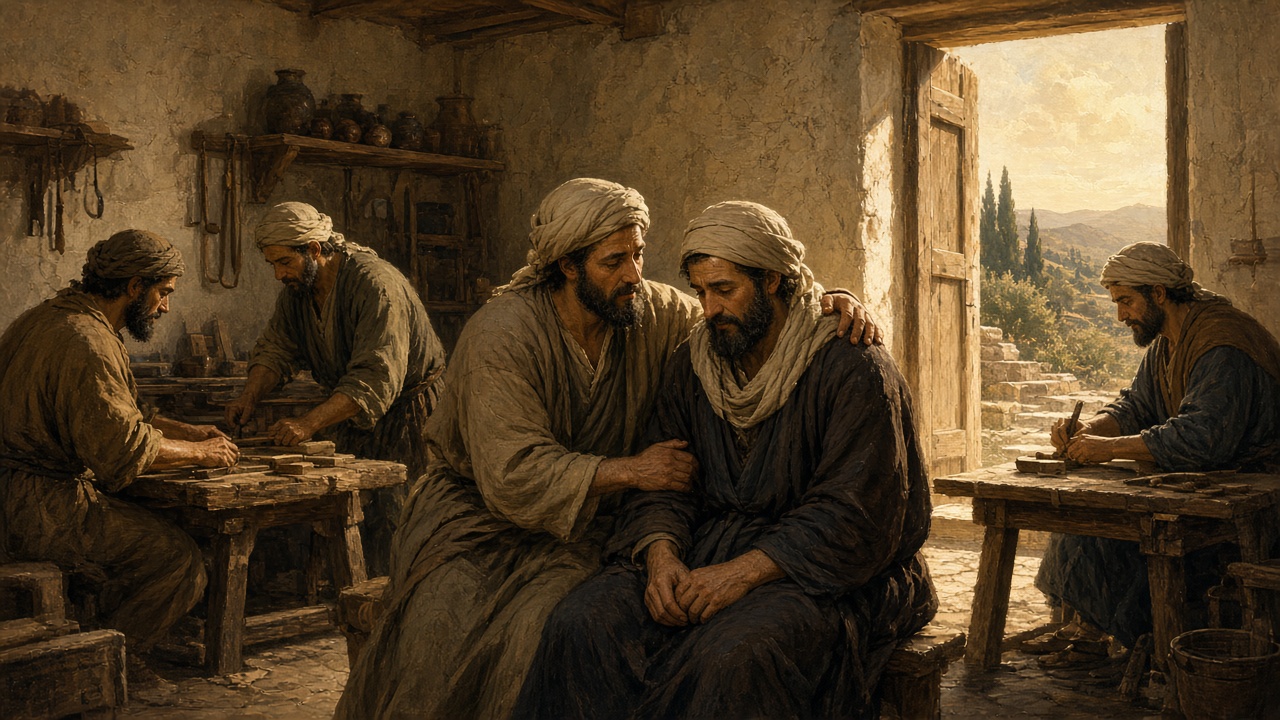
- Se exhorta a los lectores a aspirar a una vida tranquila, a ocuparse de sus propios asuntos y a trabajar con sus propias manos, como ya se les había instruido. El capítulo presenta esto como la manera de comportarse debidamente ante los de afuera y de no depender de nadie.Fuentes: el propio texto bíblico
Notas escritas con ayuda de IA a partir de fuentes abiertas (Theographic Bible Metadata, CC BY-SA 4.0; Easton’s Bible Dictionary, dominio público) y revisadas antes de publicarse.
Lugares de este capítulo
- Macedonia · 41.600, 22.540 · versículo 10
Solo aparecen lugares identificados con alta confianza (90 % o más según las fuentes académicas reunidas por OpenBible). Mapa de la época: DARE (Digital Atlas of the Roman Empire), CC BY 4.0; mapa actual: © colaboradores de OpenStreetMap; lugares: OpenBible.info (CC BY 4.0).
Créditos y licencia de esta traducción
Beibel: okanisi tongo
New Testament in Eastern Maroon Creole (NS:djk:Eastern Maroon Creole)
copyright © 2009 Wycliffe Bible Translators, Inc.
Language: Eastern Maroon Creole
Translation by: Wycliffe Bible Translators, Inc.
Eastern Maroon Creole
djk
Suriname
Copyright Information
© 2009, Wycliffe Bible Translators, Inc. All rights reserved.
This translation text is made available to you under the
terms of the Creative Commons License: Attribution-Noncommercial-No Derivative Works.
( http://creativecommons.org/licenses/by-nc-nd/3.0/ )
In addition, you have permission to port the text to different file formats, as long as you
do not change any of the text or punctuation of the Bible.
You may share, copy, distribute, transmit, and extract portions
or quotations from this work, provided that you include the above copyright
information:
You must give Attribution to the work.
You do not sell this work for a profit.
You do not make any derivative works that change any of the actual words or punctuation of the Scriptures.
Permissions beyond the scope of this license may be
available if you contact
us with your request.
The New Testament
in Eastern Maroon Creole
© 2009, Wycliffe Bible Translators, Inc. All rights reserved.
This translation is made available to you under the terms of the
Creative Commons Attribution-Noncommercial-No Derivatives license 4.0.
You may share and redistribute this Bible translation or extracts from it in any format, provided that:
You include the above copyright and source information.
You do not sell this work for a profit.
You do not change any of the words or punctuation of the Scriptures.
Pictures included with Scriptures and other documents on this site are licensed just for use with those Scriptures and documents.
For other uses, please contact the respective copyright owners.
2014-04-22
Fuente: http://ebible.org/djkNT/ · eBible.org