Lucas 6
Lëk yam · Toca un versículo para ver sus referencias cruzadas.
Jethu acï kuec löŋ aköl lɔ̈ŋ kɔc Itharel
1Naɣɔn aköl cïï kɔc Itharel ye luui, Jethu kek kɔcken ye buɔɔth aake cath ke kuany dhël yic kam dum. Go kɔcken ye buɔɔth rap thoŋ ku koikë ke kecin, ku camkë ke. 2Go kɔc akut Parathï kɔ̈k lueel, “Yeŋö ye wek luui aköl cï löŋdan Itharel pëën bï kɔc cïï ye luui thïn?”
3Go Jethu bɛ̈ɛ̈r, “Këckë kë cï Debit looi wäthɛɛr kaŋ kueen? Wäär nɛ̈k cɔk ye kek kacke, 4go la luaŋ Nhialic ku lööm ayum yaath cï tɔ̈ɔ̈u tënë Nhialic ku ciɛm, ku gɛ̈m kacke aya bïk cam. Ku ayum kënë ëcï lɔ̈ŋda pëën bï kuat raan ë path cïï cam. Ee raan käk Nhialic yen ë ye cam ë rot.” 5Ku wit Jethu wɛ̈tde ëlä, “Manh Raan ë bɛ̈ny këriëëc ëbën agut aköl lɔ̈ŋ.”
Jethu acï mony cï cin ruai kony
6Naɣɔn aköl dɛ̈t, aköl cïï kɔc ye luui ke Jethu la tɛ̈n amat kɔc Itharel ku piööc. Ku mony cï cin cuëc ruai ë tɔ̈ thïn. 7Go kɔc kɔ̈k piööc lööŋ Mothith, ku kɔc kɔ̈k akut Parathï ke tɔ̈ thïn wïc bïk tïŋ, lɔn bï Jethu mony kënë kony bïk la luɔm, rin cï yen ye kony aköl cïï kɔc ye luui. 8Ku Jethu ë ŋic kë tɔ̈ kepuɔ̈th, go lɛ̈k mony awën cï cin ruai, “Jɔt rot ku bäär tueŋ tɛ̈n kɔc nhïïm.” Go bɛ̈n ku kɛ̈ɛ̈c. 9Go Jethu ke thiëëc, “Yeŋö ye lɔ̈ŋda päl ɣo buk looi aköl cïï kɔc ye luui? Ye këpath aye kërac, bï raan kony bï pïr, kua pɛ̈l wei bï thou?” 10Ku döt ke ëbën ku lëk mony awën cï cin ruai, “Nyoth yïcin.” Go yecin nyooth. Go ciɛɛnde piath. 11Tɛ̈ɛ̈në, go kɔc ater Jethu puɔ̈th riääk apɛi, ku matkë kë bïk looi tënë ye.
Jethu acä atuuc kathiäär ku rou kuany
12Naɣɔn akäl tök ë nïnkä yiic, ke Jethu la gɔt nhom tɛ̈ cïï ceŋ bï la röök, ku jɔl ruu röök tënë Nhialic. 13Nawën bak piny ke cɔl kɔcken ye buɔɔth, ku kuany raan thiäär ku rou keyiic ku ciëk ke ke cɔl atuuc. 14Kɔc ke cï kuany ayï, Thaimon (cï Jethu bɛ̈n cäk ke cɔl Pïtɛr), Andria (mɛ̈nh koor ë Thaimon), Jemith, Joon, Pilipo, Bartholomeo, Lebï, Thomath, Jemith wën Alpawuth, ku Thaimon (raan la puɔ̈u ater), Juda wën Jemith ku jɔl a Juda Ithkariöt, raan wäär cï Jethu bɛ̈n luɔm bï dɔm.
Kɔc juëc aa Jethu buɔɔth
17Go Jethu bɛ̈n piny ku kɛ̈ɛ̈c tɛ̈thöŋ nhom gɔt cök kek kɔcken ye buɔɔth, ku kɔc juëc kɔ̈k ke bɔ̈ Judia ku Jeruthalem. Ku kɔc bɛ̈ɛ̈i kɔ̈k tɔ̈ wärkɔ̈u cïmën Tire ku Thidon, aake cï bɛ̈n bïk bɛ̈n piŋ piööc Jethu, ku bï ke bɛ̈n kony tuɛny tɔ̈ kegup. Ku kɔc ke la gup jakrɛc aake cï bɛ̈n aya go Jethu ke kony. 19Ee wïc kuat raan ëbën bï gɔɔt, rin riɛl yen kɔc kony bïk pial ë ye yök yeguɔ̈p ë path tɔ̈ cï ye gɔɔt.
Kɛ̈ŋ miɛt ë puɔ̈u ku rɛ̈ɛ̈c ë puɔ̈u
20Go Jethu yenhom wɛ̈l kɔcken ye buɔɔth ku lueel,
“Wek aa mit gup wek kɔc ŋɔ̈ŋ, rin ye bääny Nhialic këdun!
21Wek aa mit gup wek kɔc nɛ̈k cɔk ëmën, rin wek aabï kuɛth aköldä!
Wek aa mit gup wek kɔc dhiau ëmën, rin wek aabï dɔl.
22Wek aa mit gup tɔ̈ mɛɛn week, ku cop week wei ku lat week,
ku yekë kuec week ciɛ̈t yakë jakrɛc rin ye wek kackiɛ̈ ɣɛn Manh Raan!
23“Wäthɛɛr wärken dït aake cï käk cït käkkä looi tënë kɔc käk Nhialic tïŋ. Këya, tɛ̈ looi käkkä röt tënë week, ke we mit puɔ̈th rin wek aabä ariöpdït yök tënë Nhialic.
24Tɛ̈ rɛɛc yen thïn tënë week, wek kɔc cï jak ëmën,
rin cï wek pïr path yök thïn.
25Tɛ̈ rɛɛc yen thïn tënë week, wek kɔc cï kuɛth ëmën, rin wek aabï cɔk nɔ̈k.
Ku tɛ̈ rɛɛc yen thïn tënë week, wek kɔc dal ëmën,
wek aabï tɔ̈u tiɔp nhom ku dhiaaukë!
26Ku tɛ̈ rɛɛc yen thïn tënë we tɛ̈ bï kɔc ëbën jam käpath ë riɛnkun,
rin wärken dït aake ye jam këlä,
wäthɛɛr tënë kɔc aa lueth röt cɔl aye kɔc käk Nhialic tïŋ.
Nhiar kɔc man yï
27“Ku wek alɛ̈k kënë wek kɔc piŋ wɛ̈lkiɛ̈, Nhiarkë kɔc atɛrdun, ku yakë käpath looi tënë kɔc man we. 28Thiëc Nhialic bï kɔc ye wïc diɛ̈t yï yök kërac dɔɔc, ku rɔ̈ɔ̈k rin kɔc yï bui. 29Tɛ̈ maŋ raan yïgëm, ke wɛ̈l gëm dɛ̈t aya. Këya cïmën ë kënë, na wïc raan alath tënë yï ke duk pën alanh dɛ̈t aya. 30Na wïc raan këdäŋ tënë yï ke gäm ye, ku duk raan cï këdu nyaai thiëc bï cool tënë yï. 31Loi këpath tënë kɔc kɔ̈k cïmën nhiɛɛr yïn këpath bï looi tënë yï aya.
32“Na ye ke nhiaar kɔc nhiar yï kepɛ̈c, ke yï yök lɛc Nhialic? Ayï kɔc kärɛc looi aa nhiar kɔc nhiar ke aya. 33Ku na ye käpath looi tënë kɔc käpath looi tënë yï kepɛ̈c, ke yï yök lɛc Nhialic? Ayï kɔc kärɛc looi aa käpath looi tënë kɔc nhiar ke. 34Ku na ye këdu gam tënë raan ye ŋɔ̈ɔ̈th ciɛ̈t bï cuɔ̈ɔ̈t aköldä, ke Nhialic mit puɔ̈u tënë yï? Agut kɔc kärɛc looi aa käkken gäm kɔc rɛc kɔ̈k cït ke, rin ye kek ye tak ciɛ̈t käkken bï dhuɔ̈k ke ëbën aköldä. 35Na ye këya, nhiar kɔc atɛrdu, ku loi käpath tënë ke. Yakë käkkun gam ë path ku duɔ̈kkë ye ŋɔ̈ɔ̈th lɔn bï we cuɔ̈ɔ̈t. Wek abä acutdït apɛi yök. Ku wek aabï ya mïth Nhialic Madhɔl, rin alir puɔ̈u tënë kɔc ëbën, agut kɔc na cɔk këpath looi tënë ke, ke cïï ke tiŋ puɔ̈th, ku kɔc rac aya. 36Liɛrkë puɔ̈th cïmën ye Wuurdun puɔ̈u liɛr.
Duɔ̈kkë kɔc ye luɔ̈k wei
37“Duɔ̈kkë kɔc ye luɔ̈k wei bï Nhialic we cïï ye luɔ̈k wei. Duɔ̈kkë kɔc kɔ̈k ye tɛ̈m awuɔ̈c bï Nhialic we cïï ye tɛ̈m awuɔ̈c. Pälkë wɛ̈t piny tënë kɔc kɔ̈k bï Nhialic wɛ̈t päl piny tënë we. 38Na ye kɔc kɔ̈k muɔɔc ke Nhialic abï muɔɔc aya. Abä athëmdït cïï ciɛnku lëu bïk muk yiëk yï, rin käk ye looi tënë kɔc kɔ̈k, kek aabï Nhialic looi tënë yï.”
39Ku lëk Jethu ke kääŋ ëlä, “Lëu raan cï cɔɔr bï cɔɔr dɛ̈t thel? Cïk lëu bïk lööny adhuɔ̈m yic kedhie? 40Acïn manh piööc dït tënë raanden piööc. Ku manh piööc na le piɔ̈ɔ̈cde thöl ka cït raanden piööc. 41Yeŋö ye yïn kërɛɛc dït ye looi kuc, ku ye tïŋ kërɛɛc cï wämuuth looi? 42Acïï lëu ba wämuuth wɛ̈ɛ̈t bï kërɛɛc thiin ye looi puɔ̈l, tɛ̈ cïï yïn rot kɔŋ wɛ̈ɛ̈t ba kärɛc ye looi puɔ̈l. Awëëŋkui! Kaŋkë kärɛc yakë ke looi puɔ̈l, ku abäk lëu bäk wämäthkun jäl wɛ̈ɛ̈t bïk kärɛc thii yekë ke looi puɔ̈l.”
43Ku la Jethu tueŋ ku lueel ëlä, “Tim cï cil tɛ̈path acie luɔk mïth rɛc, ku tim cï cil tɛ̈rac acie luɔk mïth path. 44Këya, tim aye ŋic ë miɛ̈thke. Acïï lëu ba mïth tim dɛ̈t la kuany tim dɛ̈t cök. 45Raan path ë luui käpath, rin käpuɔth tɔ̈ yepuɔ̈u. Ku raan rac ë luui kärɛc, rin kärɛc tɔ̈ yepuɔ̈u. Wël ye ke lueel, aa käk tɔ̈ yïpuɔ̈u nyuɔɔth.
Kääŋ rin kɔc karou cï bɛ̈ɛ̈i keer
46“Yeŋö ye wek ɣa cɔɔl, ‘Bɛ̈ny, Bɛ̈ny’ ku wek aa cie kë ca lueel ye looi? 47Kuat raan ë bɛ̈n ku piŋ wɛ̈tdiɛ̈ ku theek ɣa ku looi, 48acït raan cï ɣɔ̈nde ŋiɛc buth tɛ̈thöny. Nawën la aboor bɛ̈n, ku cɔk pïu ɣöt gɔ̈ɔ̈l piny, ku ɣöt cïï yic cɔk päk rin cï ye ŋiɛc buth. 49Ku raan wɛ̈lkiɛ̈ piŋ ku cïï ɣa thek bï ke looi, acït raan ɣöt buth tɔ̈ ye aboor tëëk. Na la aboor bɛ̈n ke wit ɣöt!”
¿Sabías que…?
El sábado, los Doce y la llanura
- En un sábado, mientras Jesús pasaba por los sembrados, sus discípulos arrancaban espigas, las restregaban entre las manos y se las comían, y algunos fariseos dijeron que eso era ilícito. Jesús recordó que David y sus compañeros, con hambre, comieron el pan consagrado de la casa de Dios, lícito solo para los sacerdotes, y dijo que el Hijo del Hombre es Señor del sábado. En otro sábado, restauró en la sinagoga la mano derecha atrofiada de un hombre, mientras los escribas y fariseos lo observaban buscando un motivo para acusarlo; una cronología fecha ambos episodios en el año 28 d. C.Fuentes: el propio texto bíblico · Corn on the Sabbath · Healing a Withered Hand
- Después de pasar la noche en oración en el monte, Jesús llamó a sus discípulos y eligió a doce, a quienes designó apóstoles. Entre ellos estaban Simón, a quien llamó Pedro, y Andrés, hermano de Pedro, pescadores de Betsaida, en la costa occidental del mar de Galilea, y Mateo, recaudador de impuestos en Capernaúm, antes conocido como Leví.Fuentes: el propio texto bíblico · Simon Peter · Andrew · Matthew
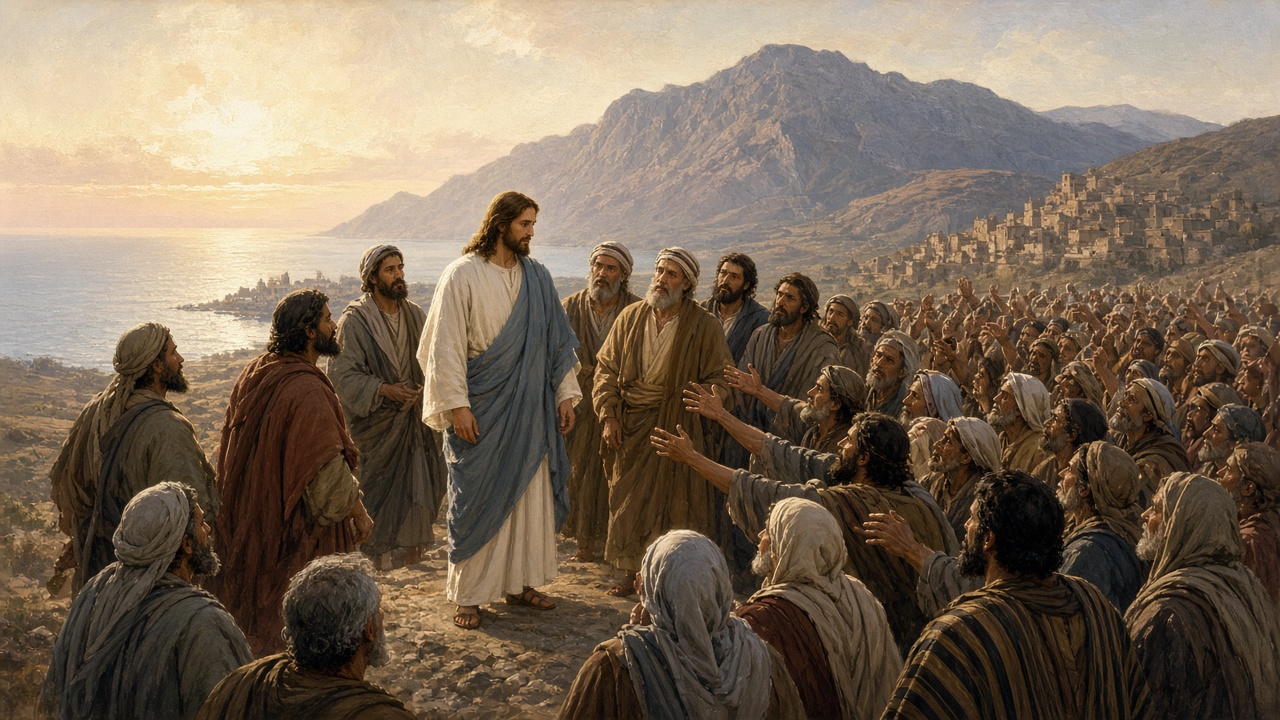
- Jesús bajó con ellos y se detuvo en un lugar llano, donde se había reunido gente de Judea, de Jerusalén y de la costa de Tiro y Sidón para oírlo y ser sanada. Tiro y Sidón eran antiguas ciudades fenicias del Mediterráneo; Sidón, la más antigua, quedaba a unas veinticinco millas al norte de Tiro. Una cronología fecha esta enseñanza en el año 28 d. C. y la titula Sermón del Monte, aunque el relato sitúa a Jesús en terreno llano después de bajar del monte.Fuentes: el propio texto bíblico · Tyre · Sidon · Sermon on the Mount
Notas escritas con ayuda de IA a partir de fuentes abiertas (Theographic Bible Metadata, CC BY-SA 4.0; Easton’s Bible Dictionary, dominio público) y revisadas antes de publicarse.
Lugares de este capítulo
- Jerusalem · 31.777, 35.234 · versículo 17
- Judea · Hoy: Judea 1 · 31.777, 35.234 · versículo 17
- Sidon · Hoy: Sandikli archaeological site in Sidon · 33.561, 35.372 · versículo 17
- Tyre · 33.271, 35.196 · versículo 17
Solo aparecen lugares identificados con alta confianza (90 % o más según las fuentes académicas reunidas por OpenBible). Mapa de la época: DARE (Digital Atlas of the Roman Empire), CC BY 4.0; mapa actual: © colaboradores de OpenStreetMap; lugares: OpenBible.info (CC BY 4.0).
Créditos y licencia de esta traducción
Lëk yam
New Testament in Dinka, Southwestern (SU:dik:Dinka, Southwestern)
copyright © 2006 Wycliffe Bible Translators, Inc.
Language: Dinka, Southwestern
Translation by: Wycliffe Bible Translators, Inc.
Dinka, Southwestern
dik
Sudan
Copyright Information
© 2006, Wycliffe Bible Translators, Inc. All rights reserved.
This translation text is made available to you under the
terms of the Creative Commons License: Attribution-Noncommercial-No Derivative Works.
( http://creativecommons.org/licenses/by-nc-nd/3.0/ )
In addition, you have permission to port the text to different file formats, as long as you
do not change any of the text or punctuation of the Bible.
You may share, copy, distribute, transmit, and extract portions
or quotations from this work, provided that you include the above copyright
information:
You must give Attribution to the work.
You do not sell this work for a profit.
You do not make any derivative works that change any of the actual words or punctuation of the Scriptures.
Permissions beyond the scope of this license may be
available if you contact
us with your request.
The New Testament
in Dinka, Southwestern
© 2006, Wycliffe Bible Translators, Inc. All rights reserved.
This translation is made available to you under the terms of the
Creative Commons Attribution-Noncommercial-No Derivatives license 4.0.
You may share and redistribute this Bible translation or extracts from it in any format, provided that:
You include the above copyright and source information.
You do not sell this work for a profit.
You do not change any of the words or punctuation of the Scriptures.
Pictures included with Scriptures and other documents on this site are licensed just for use with those Scriptures and documents.
For other uses, please contact the respective copyright owners.
2014-04-22
Fuente: http://ebible.org/dikNT/ · eBible.org