Juan 11
Lëk yam · Toca un versículo para ver sus referencias cruzadas.
Thon Ladhäro
1Raan cɔl Ladhäro, ku ë rɛ̈ɛ̈r Bethanï, ëcï tuaany. Bethanï ë gen rëër Maria thïn kek nyankën cɔl Martha. 2Maria kënë yen ë nyan wäär cï Bänyda tɔc cök miök ŋïr, ku wuuny ke nhiëmke. Ku ë mɛ̈nhë Ladhäro yen ëcï tuaany. 3Go nyiɛ̈rakën wɛ̈t tuɔ̈c Jethu, “Bɛ̈ny, mäthdun nhiar acï tuany.”
4Nawën piŋ Jethu ke lueel, “Tuɛny kënë acïï Ladhäro bï nɔ̈k, kënë acï rot looi bï Nhialic leec thïn. Ku yen ë tɛ̈ bï Wën Nhialic lɛc yök thïn.”
5Ku Jethu ë nhiar Martha kek nyankën ku Ladhäro. 6Nawën cɔk piŋ lɔn cï Ladhäro tuaany, ke näk nïn karou tɛ̈wën rëër yen thïn. 7Ku jɔl lɛ̈k kɔc ye buɔɔth, “Benku dhuk ciëën pan Judia.”
8Go kɔc ye buɔɔth lueel, “Raan piööc, wäär ëmën thiɔ̈ɔ̈k, ee wïc kɔc Itharel bïk yï biɔ̈ɔ̈k aleel, ku ye wïc ëmën ba bɛn dhuk thïn?”
9Go Jethu bɛ̈ɛ̈r, “Akäl tök cï yic la aköl ku wakɔ̈u? Tɛ̈ ciɛth raan ke ruɛl dït ke yeen acie kɔ̈th, rin ala ruɛl yen piny tïŋ. 10Ku na ciɛth wakɔ̈u ka kɔ̈th, rin liu ruɛl tënë ye.” 11Jethu acï wëlkä lueel ku mɛt dɛ̈t thïn, “Mäthda Ladhäro acï nïn wit, ku ɣɛn ala ba la puɔ̈ɔ̈c.”
12Go kɔc ye buɔɔth lueel, “Bɛ̈ny, na cï nïn ka bï ŋuɛ̈ɛ̈n.”
13Ku wɛ̈t wïc Jethu bï lɛ̈k ke ë lɔn cï Ladhäro thou. Gokë tak lɔn jiɛɛm yen wɛ̈t nïn ë path. 14Go Jethu gai yic tënë ke, “Ladhäro acï thou, 15ku ɣɛn acï puɔ̈u miɛt ë riɛnkun ba kɛ̈c rëër kek ye, rin bäk gam. Jɔlku la tënë ye.” 16Go Thomath, cɔl Acueek, lɛ̈k atuuc, “Lokku ɣodhie kek Raan piööc, rin buk la thou kek ye.”
Jön rot ku pïr aabɔ̈ tënë Jethu
17Nawën ɣet Jethu ke yök lɔn cï Ladhäro thiɔ̈k ka la nïn kaŋuan raŋ yic. 18Bethanï amec kek Jeruthalem tɛ̈cït tɛ̈n meel karou, 19ku kɔc juëc Itharel aake cï bɛ̈n bïk Martha kek Maria bɛ̈n dɛɛt puɔ̈th, rin wämënhden cï thou.
20Nawën piŋ Martha lɔn bïï Jethu, ke la aɣeer bï la rɔ̈m kek ye, ku dɔ̈ŋ Maria bei. 21Go Martha lɛ̈k Jethu, “Bɛ̈ny, na yï tɔ̈ thïn, ŋuɔ̈t wämääth akëc thou. 22Ku aŋiɛc lɔn na cɔk amën ke Nhialic abï këriëëc ëbën ba thiëëc ye, gäm yï.”
23Go Jethu lɛ̈k ye, “Wämuuth abï rot jɔt bï pïr.”
24Go Martha bɛ̈ɛ̈r, “Aŋiɛc lɔn bï yen rot jɔt bï pïr aköl ciëën.”
25Go Jethu lɛ̈k ye, “Ɣɛn ë jön rot ku pïr. Raan gam wɛ̈tdiɛ̈, na cɔk alɔn thou yen ka bï pïr. 26Ku kuat raan pïr ku gɛm wɛ̈tdiɛ̈ acïï bï kaŋ thou. Ca kënë gam?”
27Go lueel, “Ee këya, Bɛ̈ny. Aca gam lɔn ye yïn Raan cï lɔc ku dɔc, Wën Nhialic, bï dhiɛl bɛ̈n pinynhom.”
Jethu adhiau
28Nawën cï Martha wëlkä lueel, ke dhuk ciëën ku cɔɔl nyanakën Maria amääth ku lueel, “Raan piööc atɔ̈ tɛ̈n ku awïc yï.” 29Nawën piŋ Maria wɛ̈t kënë, ke jɔt rot ku lɔc la aɣeer bï la rɔ̈m kek ye. 30Ku Jethu ë ŋot këc ɣet baai, a ŋot rɛ̈ɛ̈r tɛ̈wën rɛ̈m yen thïn kek Martha. 31Go kɔc Itharel wën rɛ̈ɛ̈r ɣööt kek Maria rin bïk dɛɛt puɔ̈u, buɔɔth cök, wën tïŋ kek ye ke cï rot jɔt ku bɛn yekɔ̈u aɣeer. Ee cïk tak lɔn ler yen raŋ nhom bï la dhiau thïn.
32Wën ɣeet Maria tɛ̈wën rëër Jethu thïn, ke cuɛt rot piny yecök ku lueel, “Bɛ̈ny, na yï tɔ̈ thïn tɛ̈n ŋuɔ̈t wämääth akëc thou.”
33Nawën tïŋ Jethu ke dhiau, ku kɔc Itharel awën ruɛc ye ke dhiau aya, go keŋ yepuɔ̈u ku ŋeer yic apɛi. 34Go ke thiëëc, “Cäk thiɔ̈k tɛ̈no?” Gokë lueel, “Bɛ̈ny, bäär ba tïŋ.”
35Go Jethu dhiau. 36Go kɔc Itharel lueel, “Tiɛ̈ŋkë tɛ̈ nhiɛɛr yen ye thïn.”
37Go kɔc kɔ̈k kamken lueel, “Acï raan cï cɔɔr liep nyin, këc looi? Ku yeŋö këc yen Ladhäro kuɔ̈ny bei thou yic?”
Ladhäro acï bɛn pïr
38Go Jethu yic bɛn ŋɛɛr apɛi ku ler raŋ nhom, ku raŋ ëcï wec kuur yic, ku kuurdït acï tääu yethok. 39Go Jethu ke yɔ̈ɔ̈k, “Nyaaikë kuur.”
Go Martha, nyanakën raan cï thou bɛ̈ɛ̈r, “Bɛ̈ny, acï nhiany. Nïn cï ye thiɔ̈k aa ŋuan.”
40Go Jethu lɛ̈k ye, “Kɛ̈c lɛ̈k yï lɔn bï yïn lɛc Nhialic tïŋ tɛ̈ gɛ̈m yïn?” 41Gokë kuur laar wei. Go Jethu yenyin ŋäär nhial ku lueel, “Wä yïn alɛɛc rin ye yïn ɣa piŋ, 42ku aŋiɛc lɔn ye yïn ɣa piŋ akölaköl, ku aluɛɛl rin bï kɔc tɔ̈ thïn tɛ̈n ye gam, lɔn cï yïn ɣa tooc.”
43Kaam wën cï yen wëlkä lueel ke cöt röldït, “Ladhäro, bäär aɣeer.” 44Go bɛ̈n aɣeer ke cï duut cök ku cin alanh thiëkthiëk, ku acï der nyin alath. Go Jethu lɛ̈k ke, “Däkkë ku calkë acath.”
Amat nɛ̈k Jethu
45Go kɔc juëc Itharel cï bɛ̈n bïk Maria bɛ̈n neem, kë cï Jethu looi tïŋ, ku gamkë wɛ̈tde. 46Ku dhuk kɔc kɔ̈k ciëën kamken tënë kɔc akut Parathï, bïk käk cï Jethu looi la lɛ̈k ke.
47Go kɔc akut Parathï ku kɔc käk Nhialic mat kek bɛ̈ny luk, ku luelkë, “Buk ŋö looi? Mony kënë ee luɔi ril apɛi looi! 48Na pälku bï la tueŋ këlä, ke kɔc ëbën abï wɛ̈tde gam, ku bäny Roma aabï bɛ̈n bïk luaŋ Nhialic thuɔ̈r piny ku rɛckë panda.”
49Go Kaipa yen ye raandït kɔc käk Nhialic ë ruɔ̈ɔ̈n kënë lueel, “Wɛ̈t tök akuɔ̈ckë! 50Cäk ye tïŋ lɔn aŋuɛ̈ɛ̈n tënë we bï raan tök thou rin kɔc, tɛ̈n tɛ̈ bï wuɔ̈nda riääk ëbën?” 51Ku akëc wɛ̈t kënë lueel piände ë rot, ku ë rin ye yen raandït kɔc käk Nhialic ë ruɔ̈ɔ̈n kënë. Ku ë luel käk tueŋ bï röt looi lɔn bï Jethu thou rin thän Itharel, 52Ku acie riɛnken kepɛ̈c, abï thou aya bï mïth Nhialic cï thiëi pinynhom kuɔ̈ɔ̈t yiic bïk aa tök.
53Jɔɔk aköl kënë ke bäny aake guïr bïk Jethu nɔ̈k. 54Këya, go Jethu kɛ̈c bɛn acath ë path kam kɔc pan Judia, ku jiël bï la gen cɔl Epraim tɛ̈thiɔ̈k ke ror, ku rëër thïn kek kɔc ye buɔɔth.
55Ku Yan Ayum cïn yic luɔi kɔc Itharel ëcï thiɔ̈k, go kɔc juëc jäl bääiken yiic bïk la Jeruthalem, bïk köc wuuny kek kegup yandït nhom tueŋ la looi. 56Gokë Jethu wïc, ku thiëckë röt kamken wën cï kek guëër luaŋ Nhialic, “Yeŋö yakë tak? Bï bɛ̈n yai yic, kua cïï bï bɛ̈n?” 57Ku kɔc käk Nhialic ku kɔc akut Parathï aake cï wɛ̈t lueel, lɔn raan ŋic tɛ̈ rëër Jethu thïn adhil wɛ̈t lɛ̈k ke, ku bï dɔm.
¿Sabías que…?
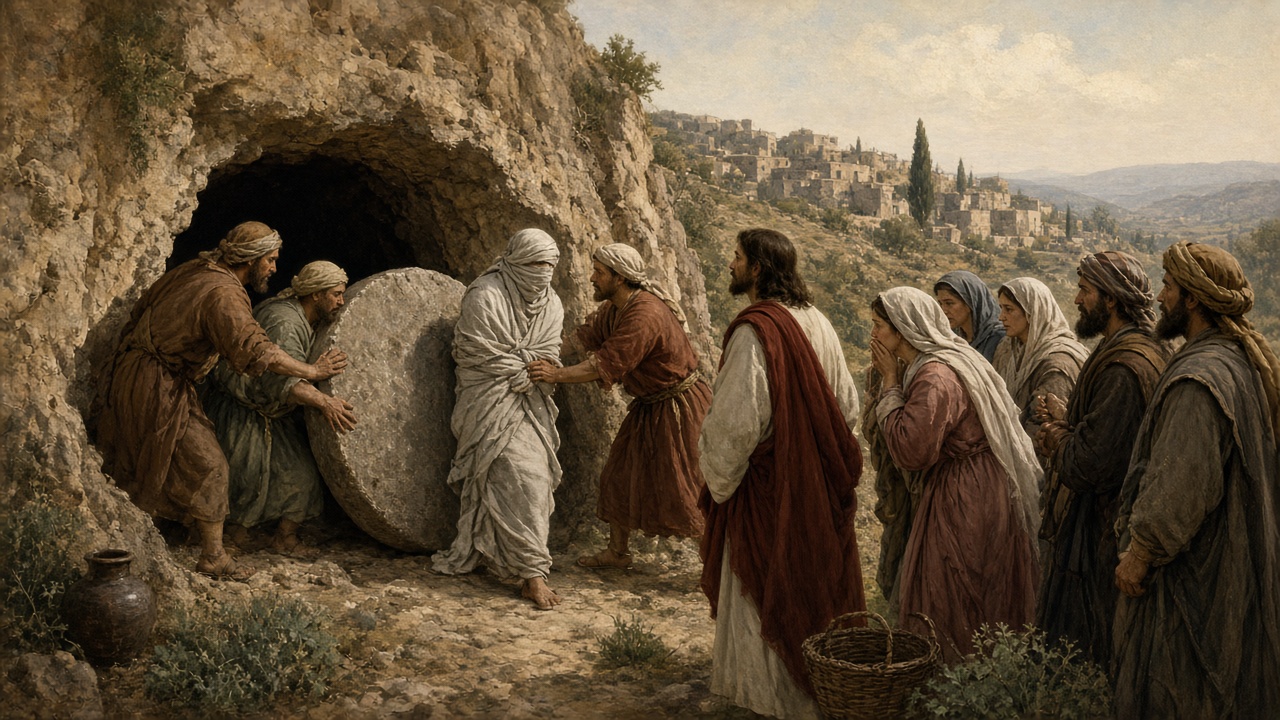
Lázaro resucitado en Betania
- Juan sitúa Betania, la aldea de Lázaro y de sus hermanas María y Marta, a poco menos de dos millas de Jerusalén. El diccionario bíblico de Easton (1897) la ubica en la ladera sureste del monte de los Olivos, en el camino a Jericó, y dice que el nombre venía de las palmeras que crecían allí y que la aldea era conocida como el-Azariyeh, “lugar de Lázaro”.Fuentes: Bethany · el propio texto bíblico
- Tomás, uno de los doce, también era llamado Dídimo, el equivalente griego de su nombre, que significa “gemelo”. Cuando Jesús decidió volver a Judea, donde poco antes habían intentado apedrearlo, Tomás dijo a los otros discípulos: “Vayamos también nosotros, para morir con él”.Fuentes: Thomas · el propio texto bíblico
- Después de que algunos contaron lo que Jesús había hecho, los principales sacerdotes y los fariseos reunieron al Sanedrín, temiendo que, si todos creían en Jesús, los romanos les quitaran su lugar y su nación. Caifás, sumo sacerdote aquel año y, según el diccionario bíblico de Easton (1897), un saduceo que ocupó el cargo del 27 al 36 d.C., dijo que era mejor que un hombre muriera por el pueblo a que pereciera toda la nación. Juan dice que, como sumo sacerdote aquel año, profetizaba que Jesús moriría por la nación, y desde ese día tramaron matarlo.Fuentes: Caiaphas · el propio texto bíblico
Notas escritas con ayuda de IA a partir de fuentes abiertas (Theographic Bible Metadata, CC BY-SA 4.0; Easton’s Bible Dictionary, dominio público) y revisadas antes de publicarse.
Lugares de este capítulo
- Judea · Hoy: Judea 1 · 31.777, 35.234 · versículos 7, 8, 54
- Jerusalem · 31.777, 35.234 · versículos 18, 54, 55
- Ephraim · Hoy: Taybeh · 31.954, 35.300 · versículo 54
Solo aparecen lugares identificados con alta confianza (90 % o más según las fuentes académicas reunidas por OpenBible). Mapa de la época: DARE (Digital Atlas of the Roman Empire), CC BY 4.0; mapa actual: © colaboradores de OpenStreetMap; lugares: OpenBible.info (CC BY 4.0).
Créditos y licencia de esta traducción
Lëk yam
New Testament in Dinka, Southwestern (SU:dik:Dinka, Southwestern)
copyright © 2006 Wycliffe Bible Translators, Inc.
Language: Dinka, Southwestern
Translation by: Wycliffe Bible Translators, Inc.
Dinka, Southwestern
dik
Sudan
Copyright Information
© 2006, Wycliffe Bible Translators, Inc. All rights reserved.
This translation text is made available to you under the
terms of the Creative Commons License: Attribution-Noncommercial-No Derivative Works.
( http://creativecommons.org/licenses/by-nc-nd/3.0/ )
In addition, you have permission to port the text to different file formats, as long as you
do not change any of the text or punctuation of the Bible.
You may share, copy, distribute, transmit, and extract portions
or quotations from this work, provided that you include the above copyright
information:
You must give Attribution to the work.
You do not sell this work for a profit.
You do not make any derivative works that change any of the actual words or punctuation of the Scriptures.
Permissions beyond the scope of this license may be
available if you contact
us with your request.
The New Testament
in Dinka, Southwestern
© 2006, Wycliffe Bible Translators, Inc. All rights reserved.
This translation is made available to you under the terms of the
Creative Commons Attribution-Noncommercial-No Derivatives license 4.0.
You may share and redistribute this Bible translation or extracts from it in any format, provided that:
You include the above copyright and source information.
You do not sell this work for a profit.
You do not change any of the words or punctuation of the Scriptures.
Pictures included with Scriptures and other documents on this site are licensed just for use with those Scriptures and documents.
For other uses, please contact the respective copyright owners.
2014-04-22
Fuente: http://ebible.org/dikNT/ · eBible.org