Hechos 24
Lëk yam · Toca un versículo para ver sus referencias cruzadas.
Kɔc Itharel aacï Paulo gaany
1Nawën nïn kadhiëc cök ciëën, ka Ananiath raandït käk Nhialic la Cetharia kek kɔcdït kɔ̈k ë baai, ku jɔl a raan bï wɛ̈tden ŋiɛc la kuany yic luk yic cɔl Tertuluth. Ku lek bɛ̈nydït Pelik nhom ku lëkkë wëlken gɔɔny kek Paulo. 2Go Tertuluth cɔɔl ku jɔl Paulo gaany ëlä, “Yïn bɛ̈nydït! Wɛ̈t ye yïn raan ŋic kɔc mac ë yen acï ɣok rëër run juëc dɔ̈ɔ̈r yic ke cïn aliääp. Ku käjuëc pɛth ca looi kek aacï wuɔ̈nda ɣäth tueŋ. 3Käpuɔthkä aa nhiarku ke ëbën akölaköl. Ku yïn acuk leec ɣopuɔ̈th apɛi. 4Acä wïc ku ba jam apɛi, ku yïn aläŋ ba wël kuënku yï piŋ. 5Ɣok aacï mony kënë yök ke ye raan rac. Yen acä aliääp a looi kam kɔc Itharel pinynhom ëbën. Ku yeen ë bɛ̈ny kɔc akut Nadharet. 6Yeen awïc bï luaŋ Nhialic yiëk yic buɔ̈ɔ̈l. Ku yeen acuk dɔm. Acuk them buk tɛ̈m awuɔ̈c tɛ̈cït tɛ̈ ye lööŋ panda ye luɛɛl thïn. 7Ke yeen acï bɛ̈nydït apuruuk Lithiath bɛ̈n dɔ̈m bei ɣocin riɛl ku nyiɛɛi. 8Ku yöök kɔc cï Paulo gaany ku bïk bɛ̈n luk yic yïnhom. Tɛ̈ thiëëc yïn ye, ka ba guɔ ŋic kek käk cï ɣok ye gaany.” 9Ku mɛt kɔc Itharel thïn aya ku luelkë lɔn käk cï Paulo gaany aa yith.
Paulo acï rot kony Pelik nhom
10Go bɛ̈nydït baai Paulo jäl yɔ̈ɔ̈k bï jam, ku jɔl Paulo lueel ëlä, “Aŋiɛc lɔn ye yïn raan cï luk luɔ̈k run juëc ë wundaan. Ke ɣɛn amit puɔ̈u ku ba rot kony yïnhom. 11Tɛ̈ lëu yïn ye ba yic ŋic, ke wäär tɛ̈cït nïn kathiäär ku rou ëmën, yen ë le ɣɛn Jeruthalem ba la röök thïn. 12Ku kɔc Itharel acïn raan cïk yök ke gɔ̈th ke ɣɛn luaŋ Nhialic. Ku keek aakëc ɣa yök ke ɣa ye kɔc rac nhïïm tɛ̈n amat Itharel. Ku jɔl aa ɣɔ̈n kɔ̈k yiic aya. 13Ku keek acïk bï lëu bïk yï lɛ̈k kën ye nyuɔɔth lɔn ye käk cïk kuɛɛn ɣaguɔ̈p yith. 14Wɛ̈t lɛ̈u ba gam akïn. Ɣɛn ë Nhialic ye wärkuan dït door, door aya dhël yen yekë lueel ka cie yic. Ku ɣɛn ë këriëëc ëbën cï gɔ̈t lööŋ Mothith ku athör kɔc käk Nhialic tïŋ yiic gam. 15Ɣɛn ala ŋɔ̈th cït ŋäthden aya tënë Nhialic lɔn bï kɔc ëbën, kɔc path ku kɔc rac röt jɔt thou yic aköldä. 16Ke yeen aya them ku ba kë la cök looi tënë Nhialic ku kɔc ëbën.
17“Ɣɛn acï run nɔ̈k wei Jeruthalem, ke ɣɛn ɣa cï la wëëu ba ɣäth tënë kackiɛ̈ ku la rot kɔ̈c. 18Ee wën looi ɣɛn ë kënë yen ë yök kek ɣa luaŋ Nhialic ke ɣa cä guɔ̈p wuɔ̈ɔ̈ny wei kärɛc. Ee cïn yɔ̈ɔ̈m rɛ̈ɛ̈r kek ɣa, ku ë cïn aliäm cï rot looi. 19Ku kɔc Itharel ke bɔ̈ wun Athia aake rɛ̈ɛ̈r thïn. Ku keek nhïïm, ŋuɔ̈t aacï dhiɛl bɛ̈n yïnhom ku bïk kë ca wuɔ̈ɔ̈c bɛ̈n lueel. 20Na cie këya, ke ë röör rɛ̈ɛ̈r ë tɛ̈n, ka luel awuɔ̈c cïk yök ca looi wäär cï ɣa ɣäth luk yic. 21Kë ŋiɛc ë kë töŋ ca lueel ëlä ke ɣa kääc kenhïïm, ‘Ɣɛn acï bɛ̈ɛ̈i luk yic aköl wɛ̈t cï ɣɛn ye gam lɔn nadë ke kɔc cï thou aabï röt jɔt bïk pïr.’ ”
22Ku ë ŋic Pelik apath yen tɛ̈ ye dhël pïr kɔc Itharel thɛɛk thïn. Go luk puɔ̈l ku lëk ke ëlä, “Na la bɛ̈nydït apuruuk Lithiath ɣëët ke luɔ̈ŋdun aba tïŋ.” 23Ku lëk bɛ̈ny apuruuk rɛ̈ɛ̈r apuruuk Paulo tiit nhïïm ku bï Paulo cïï tiit apil yic, ku yekë kɔc määth kek ye puɔ̈l bïk käkken wïc aa bɛ̈ɛ̈i tënë ye.
Paulo acï jam tënë Pelik ku Druthila
24Na la nïn lik thök, ke Pelik bɔ̈ kek tiɛŋde Druthila, ku ë nyan kɔc Itharel. Ku tuc Paulo bï bɛ̈ɛ̈i bï wɛ̈t ye Paulo gam rin Jethu Krïtho bɛ̈n piŋ. 25Nawën la Paulo tueŋ ke jam wɛ̈t path ku lɔn bï raan rot tiit kärɛc, ku jɔl a bɛ̈n aköl luŋdït, go Pelik riɔ̈ɔ̈c ku lueel, “Yïïn alëu ba jäl ëmën. Yïn aba bɛn cɔɔl tɛ̈ cï ɣɛn nhom bɛn lääu.” 26Ku ye ŋɔ̈ɔ̈th lɔn bï Paulo ye riɔp wëëu. Ku rin ë wɛ̈t kënë acï bɛ̈n a tuɔ̈c akölaköl ku jiɛɛm kek ye.
27Na la run karou thök, ke Porkiöth Pethtuth wëër nyin bɛ̈nydït Pelik ke ye bɛ̈ny. Pelik ë wïc ku bï kɔc Itharel nhiaar, go Paulo nyääŋ mɛ̈c yic.
¿Sabías que…?
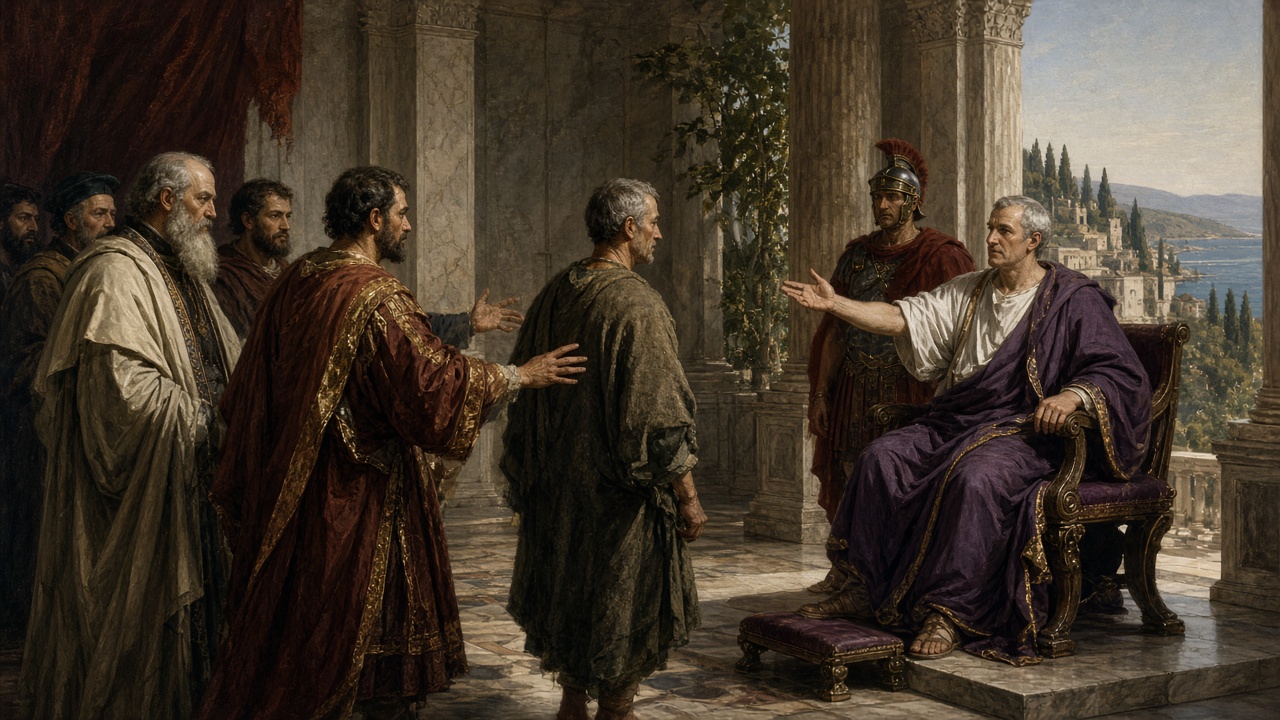
Pablo ante Félix
- El sumo sacerdote Ananías bajó con algunos ancianos y un abogado llamado Tértulo, a quien el Diccionario Bíblico de Easton describe como un abogado romano empleado por los judíos para exponer su causa contra Pablo ante Félix. Tértulo elogió al gobernador y luego dijo que Pablo era una peste que provocaba disensión entre los judíos por todo el mundo, cabecilla de la secta de los nazarenos y un hombre que había intentado profanar el templo. El diccionario relaciona ese elogio inicial con la limpieza que Félix hizo del país, al expulsar a bandidos e impostores.Fuentes: el propio texto bíblico · Tertullus · Felix
- Félix, que estaba bien informado acerca del Camino, aplazó la audiencia y mantuvo a Pablo bajo guarda, aunque le permitió cierta libertad y dejó que sus amigos atendieran sus necesidades. El relato dice que esperaba que Pablo le ofreciera un soborno y por eso lo mandaba llamar con frecuencia; el Diccionario Bíblico de Easton también afirma que al parecer esperaba un soborno y, por ello, tuvo varias entrevistas con él. Después de dos años lo sucedió Porcio Festo —el Diccionario Bíblico de Easton (1897) fecha ese nombramiento en el año 60 d. C.— y, queriendo hacer un favor a los judíos, Félix dejó a Pablo en prisión.Fuentes: el propio texto bíblico · Felix · Portius Festus
- Unos días después, Félix regresó con su esposa Drusila, que era judía, y escuchó a Pablo hablar de la fe en Cristo Jesús y de la justicia, el dominio propio y el juicio venidero; Félix se asustó y lo despidió. El Diccionario Bíblico de Easton (1897) identifica a Drusila como la tercera y la más joven hija de Herodes Agripa I y dice que Félix la indujo a dejar a su esposo, Azizus, rey de Emesa. La misma entrada dice que ella y su hijo perecieron en la erupción del monte Vesubio en el año 79 d. C.Fuentes: el propio texto bíblico · Drusilla
Notas escritas con ayuda de IA a partir de fuentes abiertas (Theographic Bible Metadata, CC BY-SA 4.0; Easton’s Bible Dictionary, dominio público) y revisadas antes de publicarse.
Lugares de este capítulo
- Caesarea · Hoy: Caesarea Maritima · 32.500, 34.892 · versículo 1
- Jerusalem · 31.777, 35.234 · versículos 11, 17
- Asia · 38.400, 28.300 · versículo 18
Solo aparecen lugares identificados con alta confianza (90 % o más según las fuentes académicas reunidas por OpenBible). Mapa de la época: DARE (Digital Atlas of the Roman Empire), CC BY 4.0; mapa actual: © colaboradores de OpenStreetMap; lugares: OpenBible.info (CC BY 4.0).
Créditos y licencia de esta traducción
Lëk yam
New Testament in Dinka, Southwestern (SU:dik:Dinka, Southwestern)
copyright © 2006 Wycliffe Bible Translators, Inc.
Language: Dinka, Southwestern
Translation by: Wycliffe Bible Translators, Inc.
Dinka, Southwestern
dik
Sudan
Copyright Information
© 2006, Wycliffe Bible Translators, Inc. All rights reserved.
This translation text is made available to you under the
terms of the Creative Commons License: Attribution-Noncommercial-No Derivative Works.
( http://creativecommons.org/licenses/by-nc-nd/3.0/ )
In addition, you have permission to port the text to different file formats, as long as you
do not change any of the text or punctuation of the Bible.
You may share, copy, distribute, transmit, and extract portions
or quotations from this work, provided that you include the above copyright
information:
You must give Attribution to the work.
You do not sell this work for a profit.
You do not make any derivative works that change any of the actual words or punctuation of the Scriptures.
Permissions beyond the scope of this license may be
available if you contact
us with your request.
The New Testament
in Dinka, Southwestern
© 2006, Wycliffe Bible Translators, Inc. All rights reserved.
This translation is made available to you under the terms of the
Creative Commons Attribution-Noncommercial-No Derivatives license 4.0.
You may share and redistribute this Bible translation or extracts from it in any format, provided that:
You include the above copyright and source information.
You do not sell this work for a profit.
You do not change any of the words or punctuation of the Scriptures.
Pictures included with Scriptures and other documents on this site are licensed just for use with those Scriptures and documents.
For other uses, please contact the respective copyright owners.
2014-04-22
Fuente: http://ebible.org/dikNT/ · eBible.org