Hechos 19
Lëk yam · Toca un versículo para ver sus referencias cruzadas.
Paulo acï la Epethuth
1Tɛ̈wën rëër Apolo Korinth, ke Paulo jɔl cath bï wuɔ̈t kuany yiic ku ɣeet Epethuth. Tɛ̈ɛ̈n, acï kɔc kɔ̈k abiöth yök thïn 2ku thiëëc ke, “Cï Wëi Nhialic lööny wegup wën cï wek gam?” Gokë dhuɔ̈k ye, “Akëcku cak piŋ lɔn tɔ̈ Wëi Nhialic thïn.”
3Go Paulo ke thiëëc, “Na ye këya, ye miɔ̈c nhom ŋö cäk yök?” Gokë bɛ̈ɛ̈r, “Ee miɔ̈c nhom ye Joon gäm kɔc.”
4Go Paulo lëk ke, “Miɔ̈c ye Joon kɔc muɔɔc nhïïm aye looi tënë kɔc cï kepuɔ̈th wɛl wei kärɛc yiic. Ku lëk kɔc Itharel wek aa dhil Jethu raan bï lɔ̈k bɛ̈n ɣacök gam.”
5Wën piŋ kek ë wɛ̈t kënë, ke muɔc nhïïm bïk jäl aa kɔc buɔth Jethu. 6Ku tɛ̈ɛ̈u Paulo yecin kenhïïm, ku bɔ̈ Wëi Nhialic kegup, ku jiɛɛmkë thok kɔ̈k, ku jɔlkë wɛ̈t cï bɛ̈n tënë Nhialic aa luɛɛl. 7Ku röör aake cït thiäär ku rou ëbën.
8Ku tɛ̈n pɛ̈i kadiäk, Paulo ë ye la tɛ̈ ye kɔc Itharel mat thïn, ku jiɛɛm ke ke apɛi lɔn ye wɛ̈t ye lueel rin bääny Nhialic yic. 9Go kɔc kɔ̈k nhïïm riɛl keyiic ku cïk gɛ̈m, ku luelkë kärɛc apɛi kɔc nhïïm rin dhël pïr cï Bɛ̈ny nyooth. Go Paulo ke nyääŋ piny ku jiël kek kɔc cï gam, ku jɔlkë wɛ̈t aa jaam yic akölaköl, ɣöndït ye mony cɔl Tiranuth jam thïn tënë kɔc juëc. 10Ku la Paulo tueŋ run karou ke loi kënë, abï kɔc ke rɛ̈ɛ̈r wun Athia, kɔc Itharel ku kɔc cie kɔc Itharel, wɛ̈t Bɛ̈ny piŋ.
Aye wɛ̈ɛ̈t Ithkiba them bïk jakrɛc cuɔp wei
11Nhialic ëcï Paulo cɔl aloi käk kɔc gɔ̈i këc röt kaŋ looi. 12Alanh yen tuc wuuny, ku alanh ye ceŋ tɛ̈n luɔi, aake ye ɣäth tënë kɔc tuany. Ku tɛ̈ cï ke ɣäth, aa tuaany cɔl ajiël ku jiël jakrɛc kegup aya. 13Ecï kɔc kɔ̈k Itharel këc gam baai kuany yic ke ye jakrɛc cuɔp wei kɔc gup, aa them aya bïk rin Bɛ̈ny Jethu aa lueel, ku yekë jam tënë jakrɛc ëlä, “Yïn ayɔ̈ɔ̈k rin Jethu, ye Paulo jam riɛnke.” 14Wɛ̈ɛ̈t raandït käk Nhialic cɔl Ithkiba kadhorou kek aake ye kënë looi.
15Go jɔŋrac lueel tënë ke, “Ɣɛn aŋic Jethu, ku ɣɛn acï wɛ̈t Paulo piŋ ku week yakë tak ye wek yï ŋa?”
16Go raan tɔ̈ jɔŋrac yeguɔ̈p thuɛɛt kegup ku yïk ke tɛ̈töök, ku ret aläthken yiic kekɔ̈th. Nawën ke kat paande kecïn kɔ̈th alɛ̈th, ke kuër gup aya. 17Kɔc Itharel ëbën ku kɔc cie kɔc Itharel ke ciëŋ Epethuth, aake cï kë cï raan la guɔ̈p jɔŋrac looi piŋ, gokë riɔ̈ɔ̈c apɛi, ku jɔl rin Bɛ̈ny Jethu aa leec apɛi. 18Go kɔc juëc cï gam bɛ̈n ku lekkë käkken rɛc cïk looi kɔc nhïïm.
19Go acɔ̈r juëc luui ë käkkä athɔ̈rken bɛ̈ɛ̈i ku cuänykë ke ke dɛɛi raan ëbën. Ku matkë wëëu ke ɣɔɔc athör yiic gokë aa wëëu juëc apɛi. 20Käjuëc ril cï röt looikä aacï kɔc cök puɔ̈th apɛi, ku jɔl wɛ̈t Bɛ̈ny la tueŋ ke thiëi piny, ku gɛ̈m kɔc juëc.
Kɔc Epethuth aacä aliääp looi
21Wën cï käkkä röt looi, ke bɔ̈ Paulo puɔ̈u bï la Jeruthalem ke tëk Mathedonia ku Gïrïk, ku lueel, “Tɛ̈ cï ɣɛn la ë bɛ̈ɛ̈ikä yiic ke ɣɛn abï dhiɛl la Roma aya.” 22Go Timothï ku Eratuth kɔcken ye kony tuɔɔc Mathedonia, ku lɔ̈k rɛ̈ɛ̈r Athia.
23Tɛ̈wën rëër yen Athia yen ëcï aliämdït rot looi Epethuth rin dhël pïïr cï Bɛ̈ny nyooth. 24Mony thɔ̈th mïlɔ̈ɔ̈ŋ cɔl Demetriöth ë tɔ̈ thïn. Ku yeen ë ye käŋ thɔ̈ɔ̈th mïläŋ këcït luëk kor ye ke jɔŋ tik cɔl Artemith door thïn. Ku kɔcken luɔi aake wëëu juëc yök ë luɔiden kënë yic. 25Go kɔcken luɔi cɔɔl ëbën, ku cɔɔl kɔc kɔ̈k mïlɔ̈ɔ̈ŋ thɔ̈ɔ̈th kecït luëk Artemith cïmënden aya, ku lëk ke, “Week, aŋiɛckë lɔn ye ɣok wëëukuan pïïr ɣok yök ë luɔi kënë yic. 26Ayakë piŋ ku tiɛ̈ŋkë yen kë looi raan cɔl Paulo. Aye lueel lɔn käk ye thɔ̈ɔ̈th aacie Nhialic acïn, ku yeen acï kɔc juëc wel nhïïm Epethuth ë tɛ̈n, ku jɔl a Athia ëbën. 27Kërac abï rot looi rin kɔc aacïï bï ŋiɛc aa jam ë luɔidan kënë. Ku acie këya rot, acïn kɔc bï ye bɛn aa tak lɔn ye luaŋ jɔŋdan cɔl Artemith kë thiek yic. Ku acïn kɔc bï jɔŋdan cɔl Artemith bɛn aa theek, jɔŋdan ye raan ëbën Athia ku pinynhom, door!”
28Wën piŋ thän awën cï kenhïïm mat kë cï Demetriöth lueel, ke tuuc kegup ku riëëkkë puɔ̈th apɛi, ku loikë wuɔɔu ku yekë lueel ëlä, “Artemith Epethuth adït apɛi alanden!” 29Ku jɔl kɔc juëc gɛu yic ëbën, duɔɔt looi. Ku dɔm thän awën Gaiöth ku Arithtarkuth, kɔc pan Mathedonia ke cath kek Paulo, ku riiŋkë ke tɛ̈ ye kɔc geeu kenhïïm mat thïn. 30Go Paulo wïc bï la jam kek kɔc wën cï kenhïïm mat. Go kɔc cï gam pëën bï cïï la. 31Ku kɔc kɔ̈k ŋiɛ̈c kek ye kɔcdït geeu yiic aake cï wɛ̈t tooc aya bïk lɛ̈k, bï cïï bɔ̈ bï bɛ̈n jam kɔc nhïïm. 32Tɛ̈wën kɔc ke cï bɛ̈n amat yic aake loi duɔɔt. Ku ye kɔc kɔ̈k jam wël cïï thöŋ kek wël kɔc kɔ̈k, rin kɔc juëc keyiic aake cɔk kënë mɛt kɔc kenhïïm kuc. 33Go kɔc kɔ̈k tak lɔn ë yen Alekdhändɛ̈r yen cï kënë looi, rin cï kɔc Itharel ye cɔl ala kɔc nhïïm tueŋ. Go Alekdhändɛ̈r yecin jɔt bï kɔc cɔl abit, ku bï tɛ̈t ke lɔn cïï kek cök tɔ̈ ë wɛ̈t kënë yic. 34Nawën lek Alekdhändɛ̈r ŋic lɔn ë yen raan Itharel, ë ke ŋot ke loi duɔɔt ku ŋuɔt yekë kiit yic, “Artemith Epethuth aril apɛi alanden.”
35Nawën ke jɔl raandït bɛ̈ny geeu lëu bï kɔc duɔ̈m thook piny ku lueel, “Kɔc Epethuth aŋic raan ëbën, lɔn yen gen Epethuth yen ala riɛl bï luaŋ Artemith tiit, ku jɔl a kuɔ̈r yath cï löny nhial. 36Acïn raan dhäl ë käkkä. Këya, pälkë röt piny, ku duɔ̈kkë lui luɔi mïth. 37Wek aacï röörkä bɛ̈ɛ̈i ë tɛ̈n, cɔk alɔn cïn yen kë yaath cï nyaai luɛɛk, ku lɔn cïn yen kärɛc cïk luɛɛl jaŋda guɔ̈p aya. 38Na la Dimitriöth kek kɔcken luɔi raan yekë gaany, ka akööl ye kɔc luk aatɔ̈ thïn ku bäny aa rëër thïn, alëukë bïk raan wïckë la gaany akölë. 39Ku na le këdɛ̈ɛ̈t ŋuɔ̈t wiɛ̈ckë, ka bï luk amatdït yic. 40Rin alëu bäny Roma kuan mac ɣo bïk lueel lɔn cï ɣok aliääp looi rin kë cï rot looi akölë, rin acïn raan lëu ye bï lueel, lɔn ala wɛ̈t puɔth looi aliääp, ku acïn wɛ̈t yic lëuku buk lueel aya rin aliäm kënë.” 41Wën cï yen wɛ̈t kënë lueel, ke däk amat nhom.
¿Sabías que…?
Pablo, el Camino y Artemisa en Éfeso
- Éfeso era la capital del Asia proconsular, la provincia romana que abarcaba la parte occidental de Asia Menor, y en tiempos romanos llevaba el título de primera y más grande metrópoli de Asia. La ciudad se distinguía por el templo de Artemisa, a quien los romanos llamaban Diana, construido fuera de las murallas y contado entre las siete maravillas del mundo antiguo. En el centro había una imagen antigua de la diosa, de la que se decía que había caído del cielo.Fuentes: Ephesus · Diana · Asia
- Demetrio, un platero de Éfeso, hacía santuarios de plata de Artemisa, modelos del templo o de la estatua de la diosa, que se vendían con facilidad a los visitantes llegados de toda Asia Menor. Hechos dice que ese oficio era la fuente de prosperidad de los artesanos y que Demetrio les advirtió del peligro para el negocio y para el honor del templo de Artemisa, la diosa que, según él, era adorada en toda la provincia de Asia y en el mundo entero.Fuentes: Demetrius · el propio texto bíblico
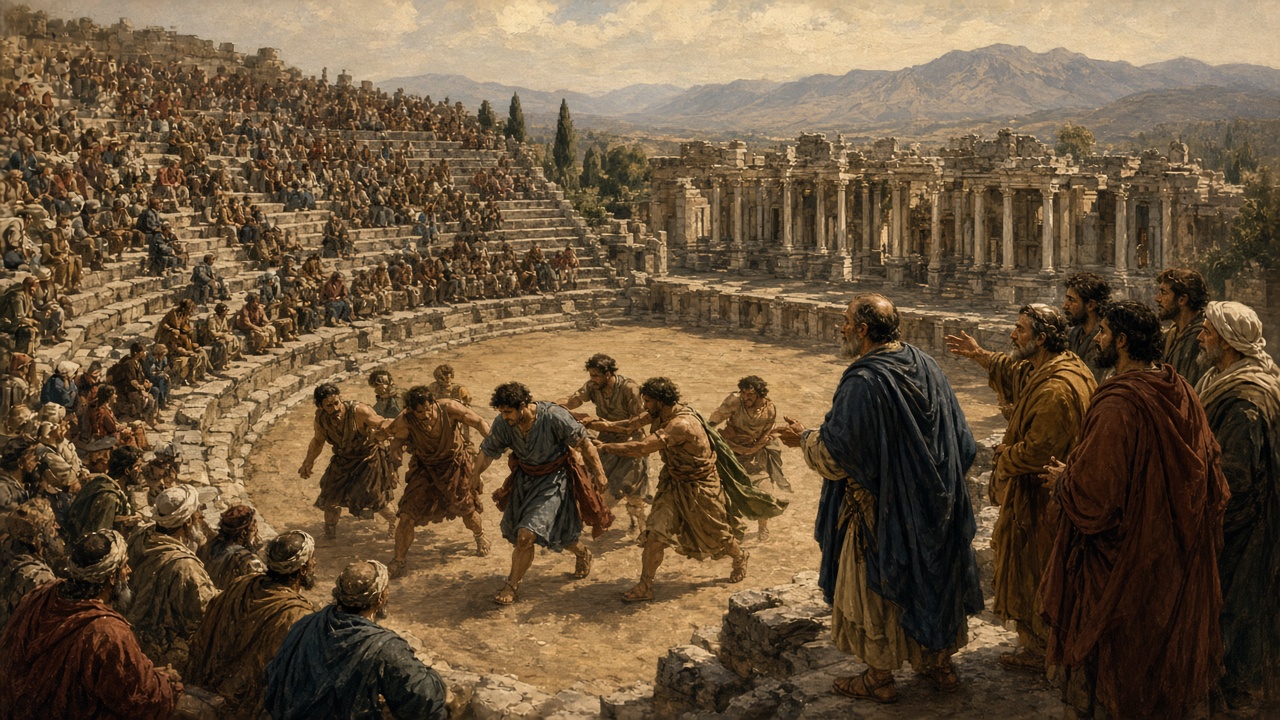
- La multitud se lanzó al teatro de Éfeso, que el Diccionario Bíblico de Easton (1897) describe como el más grande del mundo, a cielo abierto y capaz de albergar a 50.000 espectadores. Amigos de Pablo entre los jefes de Asia, ciudadanos ricos elegidos cada año para presidir los juegos y las fiestas religiosas de sus ciudades, le rogaron que no entrara. El secretario de la ciudad recordó entonces a la asamblea que Éfeso era guardiana del templo de la gran Artemisa y de su imagen, de la que se decía que había caído del cielo.Fuentes: Ephesus · Asia · el propio texto bíblico
Notas escritas con ayuda de IA a partir de fuentes abiertas (Theographic Bible Metadata, CC BY-SA 4.0; Easton’s Bible Dictionary, dominio público) y revisadas antes de publicarse.
Lugares de este capítulo
- Corinth · 37.906, 22.879 · versículo 1
- Ephesus · 37.939, 27.341 · versículos 1, 17, 23, 26, 35
- Asia · 38.400, 28.300 · versículos 10, 22, 26, 27, 31
- Achaia · 38.720, 22.540 · versículo 21
- Jerusalem · 31.777, 35.234 · versículo 21
- Macedonia · 41.600, 22.540 · versículos 21, 22, 29
- Rome · 41.892, 12.485 · versículos 21, 40
Solo aparecen lugares identificados con alta confianza (90 % o más según las fuentes académicas reunidas por OpenBible). Mapa de la época: DARE (Digital Atlas of the Roman Empire), CC BY 4.0; mapa actual: © colaboradores de OpenStreetMap; lugares: OpenBible.info (CC BY 4.0).
Créditos y licencia de esta traducción
Lëk yam
New Testament in Dinka, Southwestern (SU:dik:Dinka, Southwestern)
copyright © 2006 Wycliffe Bible Translators, Inc.
Language: Dinka, Southwestern
Translation by: Wycliffe Bible Translators, Inc.
Dinka, Southwestern
dik
Sudan
Copyright Information
© 2006, Wycliffe Bible Translators, Inc. All rights reserved.
This translation text is made available to you under the
terms of the Creative Commons License: Attribution-Noncommercial-No Derivative Works.
( http://creativecommons.org/licenses/by-nc-nd/3.0/ )
In addition, you have permission to port the text to different file formats, as long as you
do not change any of the text or punctuation of the Bible.
You may share, copy, distribute, transmit, and extract portions
or quotations from this work, provided that you include the above copyright
information:
You must give Attribution to the work.
You do not sell this work for a profit.
You do not make any derivative works that change any of the actual words or punctuation of the Scriptures.
Permissions beyond the scope of this license may be
available if you contact
us with your request.
The New Testament
in Dinka, Southwestern
© 2006, Wycliffe Bible Translators, Inc. All rights reserved.
This translation is made available to you under the terms of the
Creative Commons Attribution-Noncommercial-No Derivatives license 4.0.
You may share and redistribute this Bible translation or extracts from it in any format, provided that:
You include the above copyright and source information.
You do not sell this work for a profit.
You do not change any of the words or punctuation of the Scriptures.
Pictures included with Scriptures and other documents on this site are licensed just for use with those Scriptures and documents.
For other uses, please contact the respective copyright owners.
2014-04-22
Fuente: http://ebible.org/dikNT/ · eBible.org