Marcos 6
Nǫ̀htsı̨̨ Nı̨̨htł'è · Toca un versículo para ver sus referencias cruzadas.
Xàè wèot'ı̨ ehkw'ı adı gı̨ı̨hwhǫ-le
1Zezì edecheekeè xè ekǫ gots'ǫǫ̀ naèhtła gà kǫ̀ta dèzhǫǫ sìı ts'ǫ̀ anajà. 2Nǫ̀htsı̨ Dzęę̀ k'e ełègehdèe-kǫ̀ dǫ hoghàehtǫ. Dànì gots'ǫ̀ goı̨de t'à sıì gıgha enıìyah lanì, ełets'ǫ̀ hagedı, “Amìı hanì eghàlaeda ha yeghàhòı̨ɂǫ? Dànıt'à dıı dǫ sıì gǫǫzǫ xè enıìyah hohtsı̨? 3Dechı̨-eghàlaedaa-dǫǫ̀ elı̨-le nì? Wemǫ Mary wìyeh nì? Eyıts'ǫ wechı James, Joseph, Sımon eyıts'ǫ Zhıdàà agı̨ı̨t'e-le nì? Eyıts'ǫ wedè gota nàgedè-le nì?” ełets'ǫ̀ hagedı t'à weghǫ gık'èch'a agejà.
4Eyıt'à Zezì gots'ǫ̀ hadı, “Nakwenàoɂǫǫ wekǫ̀ta gots'ǫ dǫ eyıts'ǫ xàè wèot'ı̨ zǫ dǫ gıìt'ı̨ nıìle,” gòhdı. 5Eyıt'à ekǫ enıìyah łǫ hohtsı̨ ha dìì. Dǫ eyagı̨ı̨lı̨ı̨ łǫ-lea zǫ edılà gok'e ayį̀į̀là gà k'aàt'ıì agǫ̀ǫ̀là. 6Zezì, dǫ gıgha ehkw'ı-ahodı-le t'à sıì wegha enıìyah dìì. Eyı tł'axǫǫ̀ eyı nèk'e kǫ̀ta hazǫǫ̀ nàèhtła.
Zezì edecheekeè kǫ̀ta gòlaa ts'ǫ̀ goèhɂà
7Zezì edecheekeè hoònǫ-daats'ǫ̀-nàke gokayaı̨htı t'à, łą̀ą nègı̨ı̨de. Įnìłı̨ı̨ dǫ yìı gots'ǫ xàdegeezhı ha goghàhòı̨ɂǫ eyıts'ǫ wecheekeè hazǫǫ̀ nàke ełexè aget'ı̨ xè kǫ̀ta yàgòlaa ts'ǫ̀ goèhɂà.
8Dıı yatı goghàı̨ɂǫ, hadı, “Ekǫ k'eahdè nı̨dè t'asìı wı̨ı̨zìı k'eahłe-le, tèh zǫ k'eahtı̨. Łèt'è, tehmì, eyıts'ǫ sǫǫ̀mbawò k'eahłe-le. 9Ke t'à-aaht'ı̨, hanìkò goht'ǫ weyìı aahkw'e zǫ t'à-aaht'ı̨. 10Amìı wegà aaht'e ha sìı naahdè gots'ǫ̀ wekǫ̀ aaht'e. 11Kǫ̀ta ts'ǫ dǫ naxıgı̨ı̨wǫ-le nı̨dè eyıts'ǫ naxıgeèhkw'ǫ-le nı̨dè, naahdè kwe gıkǫ̀ta ts'ǫ ehtł'è naxıkè-tł'a whìle aahłe (eyı weghàà ekǫ-le eghàlageeda gık'e nìdahoahɂà gık'èezǫǫ̀ ageahłe ha),” Zezì hagòhdı.
12Eyıt'à wecheekeè eyı nèk'e k'egıadè eyıts'ǫ dǫ hazǫǫ̀ ts'ǫ̀ hagedı, “Edek'eahłı̨ xè naxınì eładı̨į̀ aahłe,” gògedı. 13Dǫ łǫ gots'ǫ ı̨nìłı̨ı̨ xàdegeèzhì eyıts'ǫ degaı-tłeè dǫ eyaelı̨ı̨ łǫ k'e agı̨į̀là xè k'aàt'ıì agogį̀į̀là.
John-Baptıst ełaàgį̀ı̨hwho
14Zezì wegodıì eyı nèk'e hazǫǫ̀ ts'ǫ̀ ajà t'à k'àowocho Herod yeghǫ ıìkw'o. Dǫ mǫ̀hdaa Zezì ghǫ hagedı, “John-Baptıst naìdà at'ı̨, eyıt'à enıìyah łǫ hohtsı̨,” gedı.
15Dǫ mǫ̀hdaa, “Nakwenàoɂǫǫ Elıjah at'ı̨,” gedı, eyıts'ǫ ı̨łaà dǫ mǫ̀hdaa, “T'akwe whaà gots'ǫ nakwenàoɂǫǫ at'ı̨,” gedı.
16Eyıt'à k'àowocho Herod yeghǫ ıìkw'o ekò hadı, “John-Baptıst wekwì k'egı̨ı̨hkà ahłà ı̨lè naìdà at'ı̨ ne!” hadı.
17Eyı kwe k'àowocho Herod weyatıì k'e John-Baptıst dagıachì, wegǫ̀ǫ̀ ełeetł'ı̨ xè dǫ-danìı̨laa-kǫ̀ nègı̨ı̨htı̨ ı̨lè. Herod edechı Phılıp wets'èkeè Herodıas xè honìdzaa sìı yets'ıhɂǫ̀ hanì eghàlaı̨dà ı̨lè. 18John-Baptıst yets'ǫ̀ dıı hadı ı̨lè: “Nechı wets'èkeè xè nàądèe sìı wets'àet'ǫ hǫt'e,” yèhdı ı̨lè. 19Herodıas John-Baptıst dzaı̨hwhǫ t'à, ełaàwı ha yı̨ı̨hwhǫ, hanìkò Herod John-Baptıst ts'àejı̨ t'à hayele ha dìì. John-Baptıst dǫ degaı elı̨ xè ehkw'ı eda yek'èezǫ t'à ełaàwı ch'à yek'èdì ı̨lè. John-Baptıst gode yeèhkw'ǫ nı̨dè yenıedì ha wegha dezhì, hanìkò ı̨łaà yeèhkw'ǫ wegha nezı̨.
21K'ǫǫ̀t'a k'àowocho Herod wedzęę̀ k'e Herodıas wınì k'ę̀ę̀ agòjà. K'àowocho Herod edecheekeèdeè hazǫǫ̀, wets'ǫ eghǫǫ-dǫǫ̀ gha k'àowo hazǫǫ̀ eyıts'ǫ Galılee nèk'e gha k'aodèe hazǫǫ̀ gogha nàsı̨deè whehtsı̨. 22Ekìıyeè k'e Herodıas wetì goyaèhtła, Herod eyıts'ǫ dǫ hazǫǫ̀ yexè shègezhee sìı gogha datło.
Herod eyıts'ǫ dǫ hazǫǫ̀ gha nezı̨ at'ı̨ t'à, Herod t'eekoa ts'ǫ̀ hadı, “Ayìı neewǫǫ sìı neghàehɂà ha,” yèhdı. 23Herod edeyatıì nàtsoo t'eekoa ghàı̨ɂǫ, hayèhdı, “Ayìı neewǫǫ sìı sı̨ı̨kè nı̨dè sets'ǫ dèè tanı ts'ǫ̀ kò neghàehɂà ha,” yèhdı.
24T'eekoa edemǫ ts'ǫ̀ èhtła, hayèhdı, “Ayìı weehkè lì?” yèhdı.
Herodıas hayèhdı, “ ‘John-Baptıst wekwì dehwhǫ,’ wìı̨dı,” yèhdı.
25Ekòet'ıì t'eekoa k'àowocho Herod ts'ǫ̀ naèhtła gà yets'ǫ̀ hadı, “Dıì-t'ıì John-Baptıst wekwì kw'à k'e wheɂǫǫ seghàı̨hge,” yèhdı.
26K'àowocho Herod sıì yek'eelı̨, hanìkò hòt'a dǫ hazǫǫ̀ yexè shègezhee sìı gıdaà yatı nàtsoo whehtsı̨ t'à, į̀le yèhdı ha nıwǫ-le. 27Ekòet'ıì Herod eghǫǫ-dǫǫ̀ ts'ǫ̀ hadı, “John-Baptıst wekwì jǫ-į̀chı,” yèhdı. Eyıt'à eghǫǫ-dǫǫ̀ dǫ-danìı̨laa-kǫ̀ John-Baptıst wekwì k'ı̨ı̨hkà 28gà kw'à k'e nèyeèchì. T'eekoa ghàyı̨ı̨hgè, eyıts'ǫ t'eekoa edemǫ ghàyı̨ı̨hgè. 29John-Baptıst wecheekeè gıghǫìkw'o ekò wekw'ǫǫ̀ negıìchì, eyı tł'axǫǫ̀ kwe yìı wekw'ǫǫ̀ whetǫ agį̀į̀là.
Zezì dǫ łǫ wànı̨ı̨dì
30Zezì wecheekeèdeè kǫ̀ta hazǫǫ̀ k'egıadè tł'axǫǫ̀ Zezì ghǫ łą̀ą nègı̨ı̨de, ayìı dàgı̨ı̨laa eyıts'ǫ dànì dǫ hoghàgeehtǫǫ sìı hazǫǫ̀ gıts'ǫ̀ hadı. 31Sıì dǫ łǫ gots'ǫ̀ aget'ı̨ t'à Zezì eyıts'ǫ wecheekeè shègezhe ha kò gıgha hòɂǫ-le. Eyıt'à Zezì edecheekeè ts'ǫ̀ hadı, “Gowhatsǫǫ̀ gòɂǫǫ ts'ǫ̀ ats'ııde, ekǫ łatsaa nahoahzì,” gòhdı.
32Eyıt'à elà yìı gı̨ı̨de gà gowhatsǫǫ̀ gòɂǫǫ ts'ǫ̀ geèɂe. 33Hanìkò dǫ łǫ gogıaɂı̨ sìı amìı agı̨ı̨t'ee gok'ègeezǫ t'à, kǫ̀ta hazǫǫ̀ gots'ǫ dǫ Galılee-tì wetadà tı̨mǫgeède. Zezì wecheekeè ekǫ nègı̨ı̨ɂe kwe-t'ıì dǫ ekǫ nègı̨ı̨de. 34Zezì edecheekeè xè ı̨nǫ̀ǫ̀ tàwheɂe ekò dǫ łǫ ełèwhede goaɂı̨. Sahzǫ̀ą gık'èhodì-le lagı̨ı̨t'e t'à, Zezì ededzeè t'à etegoòhɂı̨. Gots'ǫ̀ gode eyıts'ǫ t'asìı łǫ hoghàgoèhtǫ.
35Xèhts'ǫ̀ agodaade t'à Zezì wecheekeè gıgà nìı̨de, hagıìhdı, “Hòt'a dzę k'ehǫǫwo eyıts'ǫ kǫ̀ta gòlaa ts'ǫ̀ gǫǫwà agǫ̀ht'e t'à, 36dǫ hazǫǫ̀ edegha weghǫ shèts'ezhee nàgeehdì ha kǫ̀ta gòlaa ts'ǫ̀ nagı̨ı̨hɂà,” gıìhdı.
37Hanìkò Zezì gots'ǫ̀ hadı, “Naxı̨ t'asìı gıghàahdı.”
Wecheekeè gıts'ǫ̀ hadı, “Gıgha łèt'è nàts'eèhdì nı̨dè, ek'èdı̨ sa eghàlats'ı̨ı̨dà xètłǫ sǫǫ̀mba wek'ehowı ha. Shègezhe gha, sǫǫ̀mba haàtłǫǫ wek'ehots'ehwhı ha neewǫ nì?” gıìhdı.
38Zezì gots'ǫ̀ hadı, “Łèt'è dàtłǫ naxıts'ǫ?” gòhdı.
Gık'aèhtǫ tł'axǫǫ̀ Zezì ts'ǫ̀ hagedı, “Łèt'è sı̨làı eyıts'ǫ łıwe nàke gots'ǫ,” gıìhdı.
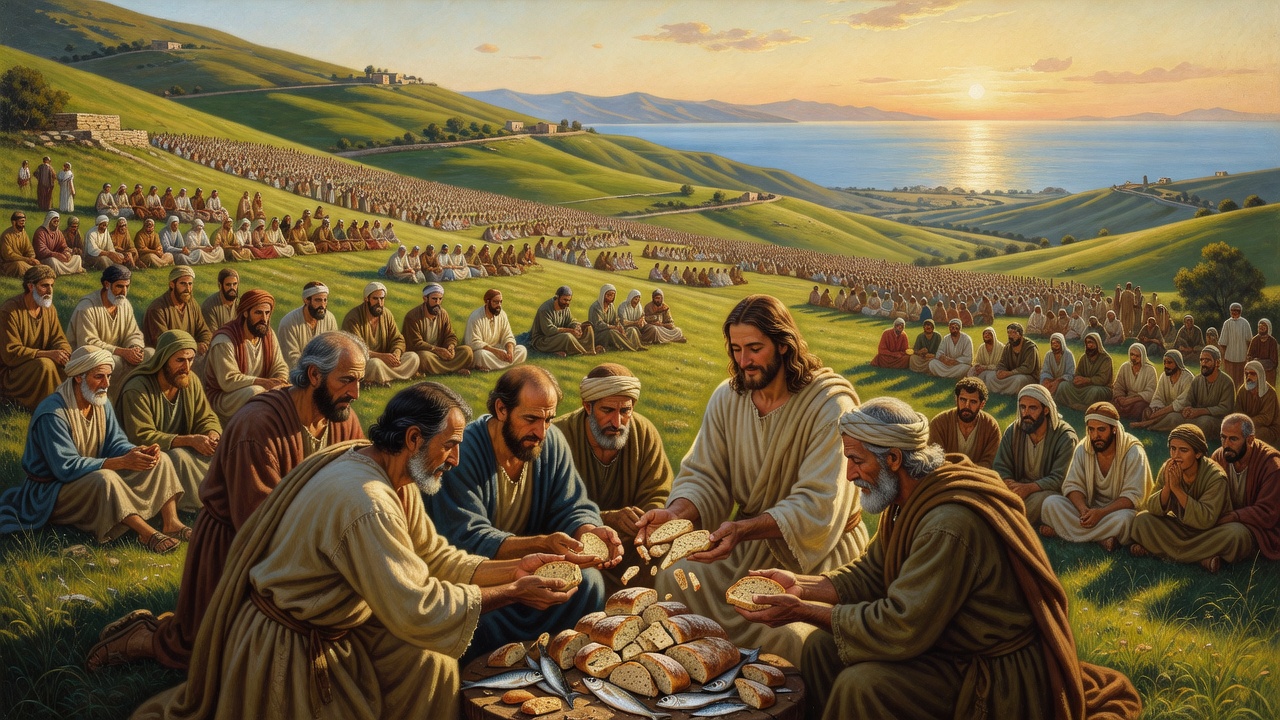
39Zezì edecheekeè gots'ǫ̀ hadı, “Dǫ hazǫǫ̀ łą̀ą tł'oh k'e geèhkw'eè agıahłe,” gòhdı. 40Eyıt'à dǫ mǫ̀hdaa ı̨łèakw'eènǫ ełexè geèhkw'e eyıts'ǫ mǫ̀hdaa sı̨laènǫ ełexè geèhkw'eè agogį̀į̀là. 41Eyı tł'axǫǫ̀ łèt'è sı̨làı eyıts'ǫ łıwe nàke neyı̨į̀wa, ı̨dòo yak'e ts'ǫ̀ k'eet'į̀ xè yek'eèyaı̨htı. Łèt'è nechà-lea tàyı̨ı̨hdla gà dǫ gotaàgeedı ha edecheekeè goghàyı̨ı̨wa. 42Dǫ hazǫǫ̀ gıgha hòt'a ts'ǫ̀ shègıazhe. 43Eyı tł'axǫǫ̀ Zezì wecheekeè łèt'è eyıts'ǫ łıwe weghàhoòwoo sìı tł'ohtǫ hoònǫ-daats'ǫ̀-nàke dagoòɂǫ nàgèhtsı̨. 44Dǫzhìı sı̨làı-lemì (5,000) shègıazhe.
Zezì tı ka k'etło
45Zezì dǫ hazǫǫ̀ wànı̨ı̨dì tł'axǫǫ̀ edecheekeè gots'ǫ̀ hadı, “Elà t'à senakweè ı̨nǫ̀ǫ̀ kǫ̀ta Bethsaıda ts'ǫ̀ naahɂè,” gòhdı. Ededı̨ ı̨dè aìda, dǫ hazǫǫ̀ nageèhdeè agǫ̀ǫ̀là. 46Eyı gots'ǫ naèhtła gà yahtı ha shìhka dekıìtła.
47Togoòtł'ò agòjà ekò elà ı̨kwę̀ nıwà ajà, hanìkò Zezì ı̨łaà dèè k'e aìda. 48Zezì wecheekeè gınìhdǫǫ̀ nawhets'ı t'à hòtł'ò egeet'oò goaɂı̨. Totanı daats'ǫ̀ taı nìı̨ɂǫ hanì-le-ı̨dè ek'ètaı ekìıyeè k'e Zezì tı ka edecheekeè gots'ǫ̀ naetłe ekò goɂǫ̀ǫ̀ naetła ha ı̨lè. 49Hanìkò wecheekeè tı ka naetłe gıaɂı̨ ekò dǫts'ı̨į̀ at'ı̨ gı̨ı̨wǫ t'à hazǫǫ̀ hòtł'ò gezeh. 50Hazǫǫ̀ gıaɂı̨ t'à sıì dègeèhyeh.
Ekòet'ıì Zezì gots'ǫ̀ hadı, “Naxıdzeè nàtsoò aahłe. Sı̨ aht'ı̨. Dahjı̨-le,” gòhdı. 51Gogà elà yìetła et'ıì nı̨hts'ı whìle agòjà. Wecheekeè sıì gıgha enıìyah dìì. 52Gıdzeè yìekw'ı ha gıgha dezhì t'à łèt'è łǫ whehtsı̨ı̨ sìı weghàà dǫ dàhòt'ı̨ı̨ elı̨ı̨ gınıedì-le.
53Įnǫ̀ǫ̀ tàgeèɂe ekò Genesaret nèk'e dàgeède gà tabàa elà dàgeèzà. 54Elà yìı xàgı̨ı̨de ts'ǫ̀et'ıì dǫ Zezì nàgeèhzhį̀. 55Zezì ekǫ nììtła ghǫ dǫ ts'ǫ̀ hagedı ha eyı nèk'e hazǫǫ̀ ts'ǫ̀ natı̨mǫgı̨į̀de. Eyıt'à Zezì edı̨į̀ whedaa sìı dǫ eyagı̨ı̨lı̨ı̨ te k'e whete gıts'ǫ̀ agehɂı̨. 56Eyı nèk'e edı̨į̀ k'etłoo sìı kǫ̀ta yàgòlaa eyıts'ǫ edı̨į̀ dǫ nàdèe sìı dǫ eyaelı̨ı̨ tı̨lı k'e nègele. Gıghǫnàdaetì, hagıìhdı, “Dǫ eyagı̨ı̨lı̨ı̨ neɂeè welǫ zǫ kò dageechıì agı̨ı̨le,” gıìhdı. Eyıt'à dǫ hazǫǫ̀ Zezì weɂeè xèlagıìdıı sìı k'aàt'ıì agejà.
¿Sabías que…?
Ministerio, Oposición y Milagros
- Cuando Jesús enseñó en la sinagoga de su tierra natal, los lugareños se escandalizaron con él, identificándolo por su oficio de carpintero y mencionando a su madre María y a sus hermanos Jacobo, José, Judas y Simón.Fuentes: el propio texto bíblico · Mary (Mother of Jesus) · James (Brother of Jesus) · Simon
- Juan el Bautista fue encarcelado y ejecutado por Herodes Antipas tras declarar que el matrimonio de Herodes con Herodías, la antigua esposa de su hermano Felipe, no era lícito.Fuentes: el propio texto bíblico · Herod Antipas · Herodias · Philip
- Al enviar a los Doce discípulos de dos en dos por Galilea, Jesús les ordenó llevar únicamente un bastón y sandalias, dependiendo por completo de la hospitalidad de los hogares que los recibieran.Fuentes: el propio texto bíblico · Galilee
Notas escritas con ayuda de IA a partir de fuentes abiertas (Theographic Bible Metadata, CC BY-SA 4.0; Easton’s Bible Dictionary, dominio público) y revisadas antes de publicarse.
Lugares de este capítulo
- Nazareth · 32.702, 35.298 · versículo 1
- Galilee · 32.760, 35.527 · versículo 21
- Gennesaret · Hoy: El Ghuweir · 32.861, 35.507 · versículo 53
Solo aparecen lugares identificados con alta confianza (90 % o más según las fuentes académicas reunidas por OpenBible). Mapa de la época: DARE (Digital Atlas of the Roman Empire), CC BY 4.0; mapa actual: © colaboradores de OpenStreetMap; lugares: OpenBible.info (CC BY 4.0).
Créditos y licencia de esta traducción
Nǫ̀htsı̨̨ Nı̨̨htł'è
Dogrib: Dogrib Genesis & New Testament New Testament & Portions of Old Testament
copyright © 2009 Canadian Bible Society
Language: Dogrib
Translation by: Canadian Bible Society
Tłı̨chǫ Genesis and New Testament
About Tłı̨chǫ
Tłı̨chǫ (Dogrib) is a Na-Dene (Athabaskan) language. It is spoken by the First Nations Tłı̨chǫ people in the Northwest Territories in Canada. It has the largest number of speakers of any of the Aboriginal language communities in the NWT, and is one of the official languages of the Northwest Territories.
About This Translation
This translation includes the book of Genesis and the New Testament in Tłı̨chǫ. The first edition of the Tłı̨chǫ New Testament was published in 2003. It was a historic event, as it was the first time in more than a hundred years that a complete New Testament was published for one of the Dene First Nations in the Territories. The first edition was well received and quickly sold out. In the meantime the book of Genesis had been completed. Consequently, the 2008 reprint of the Tłı̨chǫ New Testament included Genesis.
Though this translation of the New Testament and Genesis took a total of ten years, the people who worked on it built on years of labor invested by the Tłı̨chǫ people, elders, priests and missionaries, translators, educators, and linguists. The material contained in this book was checked and approved by consultants from Wycliffe Bible Translators and the Canadian Bible Society.
If you are interested in obtaining a printed copy of this Bible, please contact the Canadian Bible Society at http://www.biblescanada.com .
Copyright Information
Dogrib Genesis and New Testament © 2003, 2008 Canadian Bible Society
The text of the Bible in Tłı̨chǫ that appears in this electronic format or website is for personal use only.
Up to five hundred (500) verses of the Bible text in any form (written, visual, electronic or audio) may be quoted without permission. The quoted verses may not be more than 50% of a complete book of the Bible, or more than 25% of the total text of the work in which they are quoted. Prior written permission must be obtained for any other use of the text. Copyright acknowledgement must in all cases appear on the title or copyright page.
For more information on copyright conditions or to apply, visit http://www.biblesociety.ca/copyright .
This translation is made available to you under the terms of the
Creative Commons Attribution-Noncommercial-No Derivatives license 4.0.
You may share and redistribute this Bible translation or extracts from it in any format, provided that:
You include the above copyright and source information.
You do not sell this work for a profit.
You do not change any of the words or punctuation of the Scriptures.
Pictures included with Scriptures and other documents on this site are licensed just for use with those Scriptures and documents.
For other uses, please contact the respective copyright owners.
2014-04-22
Fuente: http://ebible.org/dgrDOGNT/ · eBible.org