Marcos 10
Nǫ̀htsı̨̨ Nı̨̨htł'è · Toca un versículo para ver sus referencias cruzadas.
Zezì ɂǫ̀łets'eedee k'e xàyaı̨htı
1Zezì eyı kǫ̀ta ts'ǫǫ̀ naèhtła tł'axǫǫ̀ Judea nèk'e ts'ǫ̀ ajà, Jordan-deh nıɂàa wete ts'ǫ̀ ajà. K'achı̨ dǫ łǫ yets'ǫ̀ ełèwhede eyıts'ǫ hoghàgoehtǫ, t'aats'ǫǫ̀ hat'ı̨ ı̨lè t'à.
2Pharısee gı̨ı̨lı̨ı̨ sìı geèhdzà ha gıts'ǫ̀-ède. Dageehke, hagıìhdı, “Gonàowoò k'ę̀ę̀ ha nı̨dè asį̀į̀ dǫzhìı edets'èkeè ɂǫ̀geede ha dìì-le?” gıìhdı.
3Zezì gots'ǫ̀ hadı, “Moses nàowo dàhòt'ı̨ı̨ naxıghàı̨ɂǫ?” gòhdı.
4Zezì ts'ǫ̀ hagedı, “Moses dıı nàowo goghàı̨ɂǫ: ‘Dǫzhìı edets'èkeè ɂǫ̀yeede ha nıwǫ nı̨dè ɂǫ̀łets'eedee nı̨htł'è yegha sıìyele gà xàyeehɂà ha,’ dek'eèhtł'è,” gıìhdı.
5Zezì gots'ǫ̀ hadı, “Naxıkwì nàtso t'à, Moses eyı nàowo naxıghàı̨ɂǫ ı̨lè. 6Hanìkò dıı nèè hòèlı̨ ekò Nǫ̀htsı̨ sìı ‘dǫzhìı eyıts'ǫ ts'èko whehtsı̨.’ 7‘Eyı ts'ıhɂǫ̀ dǫzhìı edetà eyıts'ǫ edemǫ gots'ǫǫ̀ xàetła ha. Edets'èkeè xè ı̨łè lanì ha, 8eyıts'ǫ eyı nàke geet'èe sìı edezhį̀į̀ t'à dǫ ı̨łè lagede ha hǫt'e.’ Eyıt'à dǫ nàke agı̨ı̨t'e-le, hanìkò dǫ ı̨łè zǫ lagı̨ı̨t'e. 9Eyıt'à Nǫ̀htsı̨ dǫ nàke ełeghàgòı̨laa sìı dǫ wı̨ı̨zìı ełets'ǫǫ̀ agole ha nıìle,” Zezì gòhdı.
10Kǫ̀ goyìı nagı̨ı̨de ekò Zezì dàdıı sìı ghǫ wecheekeè dageehke. 11Zezì gots'ǫ̀ hadı, “Dǫzhìı edets'èkeè ɂǫ̀yeede gà ts'èko eyıì-le xè honǫ̀ǫdza nı̨dè, eyı dǫ sìı edets'èkeè k'èch'a hołı̨ı̨ hòèhtsı̨ hǫt'e. 12Eyıts'ǫ ts'èko ededǫǫ̀ ɂǫ̀yeede gà dǫ eyıì-le xè honǫ̀ǫdza nı̨dè, eyı ts'èko hołı̨ı̨ hohtsı̨ hǫt'e,” Zezì gòhdı.
Zezì eyıts'ǫ chekoa nechà-lea
13Eyı tł'axǫǫ̀ dǫ edezaa nechà-lea Zezì edılà gok'e ayele ha gı̨ı̨wǫ t'à, Zezì ts'ǫ̀ gogeèwa, hanìkò wecheekeè haaht'ı̨-le gògedı t'à nàgogeeɂǫ. 14Zezì haget'ı̨ goaɂı̨ ekò gots'ǫ̀ wınì-le xè edecheekeè gots'ǫ̀ hadı, “Chekoa sets'ǫ̀ gııdè agıahłe, sets'agıahɂǫ-le. Amìı dıı chekoa lagı̨ı̨t'ee sìı Nǫ̀htsı̨ Wenàowoò k'ę̀ę̀ hòɂǫǫ gıts'ǫ hǫt'e. 15Ehkw'ı anaxèehsı̨, amìı chekoa lanì Nǫ̀htsı̨ Wenàowoò k'ę̀ę̀ hòɂǫǫ edegha yìhchì lenǫsıı, ekǫ goyaetła ha nıìle,” Zezì gòhdı. 16Eyı tł'axǫǫ̀ Zezì edegǫ̀ǫ̀ chekoa gomǫǫ̀ ayį̀į̀là, eyıts'ǫ edılà gok'e ayį̀į̀là gà gok'eèyaı̨htı.
Dǫ ahxee-deè
17Zezì t'asį̀ı̨ ts'ǫ̀ naèhtła ekò dǫ ı̨łè yets'ǫ̀ tı̨mǫèhza gà yegà nàgòı̨hgè, hayèhdı, “K'àowo nezı̨ı̨, ayìı dàhłà nı̨dè welǫ whìle ts'ǫ̀ ehdaà asedle ha?” yèhdı.
18Zezì yets'ǫ̀ hadı, “Ayìıha k'àowo nezı̨ı̨ sį̀ı̨dı? Dǫ nezı̨ gǫ̀hłı̨ nıìle; Nǫ̀htsı̨ zǫ nezı̨ hǫt'e. 19Moses wenàowo-deè wek'èı̨zǫ ne: ‘Dǫ ełaahwhı-le, ełexè hołı̨ı̨ hoahtsı̨-le, aahɂį̀-le, dǫ ghǫ hoahts'ì-le, dǫ ghǫyaahɂà-le eyıts'ǫ naxıtà eyıts'ǫ naxımǫ gıts'ǫ̀ nezı̨į̀ aahda,’ ” Zezì yèhdı.
20Eyı dǫ hadı, “K'àowo, chekoa ehłı̨ gots'ǫ eyı nàowo hazǫǫ̀ wek'èɂaeht'è hǫt'e,” yèhdı.
21Zezì yeghàeda xè yeghǫneètǫ, hayèhdı, “T'asìı ı̨łè zǫ hanelà-le. Naı̨tłe, t'asìı hazǫǫ̀ nets'ǫ sìı neghǫ nàedì gà eyı sǫǫ̀mba sìı hǫt'ıì dǫ-teèt'ı̨ı̨ gıghàı̨le. Hanì-ı̨dè yak'e t'asìı nechàa nedawheɂǫ ha hǫt'e. Eyı tł'axǫǫ̀-ı̨dè sek'èè k'eı̨da,” Zezì yèhdı.
22Zezì hadı ts'ǫ̀et'ıì dǫ ts'ǫǫ̀nıwǫǫ̀ ajà xè naèhtła, dǫ ahxee-deè elı̨ t'à.
23Zezì dǫ hotıì goghàeda xè edecheekeè gots'ǫ̀ hadı, “Dǫ ahxee sìı Nǫ̀htsı̨ Wenàowoò k'ę̀ę̀ hòɂǫǫ goyaetła ha wegha wèhoedı-le hǫt'e,” gòhdı.
24Hadı t'à wecheekeè gıgha enıìyah dìì. Hanìkò Zezì k'achı̨ hadı, “Secheekeè, Nǫ̀htsı̨ Wenàowoò k'ę̀ę̀ hòɂǫǫ goyats'eedè ha sìı sıì wèhoedı nıìle! 25Dǫ ahxee sìı Nǫ̀htsı̨ Wenàowoò k'ę̀ę̀ hòɂǫǫ goyaetła ha wegha dìì hǫt'e. Eyı wenahk'e tıts'aàdìıcho datı̨htł'à-k'è deghaetła gha sìı denahk'e dìì-le hǫt'e,” Zezì gòhdı.
26Wecheekeè sıì deɂǫ̀ǫ̀ gıgha enıìyah t'à hagedı, “Hanì-ı̨dè amìı edaxàweètı̨ lì?” gedı.
27Zezì goghàeda xè hadı, “Dǫ gıgha dìì hǫt'e, hanìkò Nǫ̀htsı̨ wegha dìì-le hǫt'e; Nǫ̀htsı̨ t'asìı wı̨ı̨zìı wegha dìì gǫ̀hłı̨ nıìle,” gòhdı.
28Peter, Zezì ts'ǫ̀ hadı, “Goxı̨ nek'èè k'ets'edè ha ts'ı̨ı̨wǫ t'à, t'asìı hazǫǫ̀ wedę ats'ı̨ı̨là ı̨lè!” yèhdı.
29Zezì edecheekeè gots'ǫ̀ hadı, “Ehkw'ı anaxèehsı̨, amìı segha eyıts'ǫ godı nezı̨ı̨ gha eghàlaeda ha nıwǫ t'à edekǫ̀, edechı, ededè, edetà, edemǫ, edeza, eyıts'ǫ wets'ǫ dèè gots'ǫǫ̀ naèhtła nı̨dè, 30eda gots'ǫ̀ ı̨łèakw'eènǫ laàtłǫ ts'ǫ̀ weghǫ̀zhe ha. (Dıı nèk'e wekǫ̀, wechı, wedè, wemǫ, weza, eyıts'ǫ wets'ǫ dèè daı̨ɂa xè weghǫ̀zhe ha.) Eyıts'ǫ ı̨daà welǫ whìle ts'ǫ̀ eda eyı sı weghǫ̀t'à ha. 31Dǫ t'akwe geèhkw'ee sìı nǫǫde geèhkw'eè agedle ha, eyıts'ǫ dǫ nǫǫde geèhkw'ee sìı t'akwe geèhkw'eè agedle ha,” Zezì gòhdı.
Zezì ełaàgıìhwhı ha sìı k'achı̨ yeghǫ gode
32Jerusalem ts'ǫ̀ Zezì wecheekeè yek'èè gıadè ekò Zezì ghǫ sıì gıgha enıìyah dìì, hanìkò dǫ eyıì-le goxè aget'ı̨ı̨ sìı geejı̨. Zezì edecheekeè hoònǫ-daats'ǫ̀-nàke whatsǫǫ̀ nègòǫwa gà wets'ǫ̀ dàgode ha sìı ghǫ gots'ǫ̀ goı̨de, 33hadı, “Jerusalem ts'ǫ̀ ts'eedè ha. Ekǫ Dǫ-wet'àaɂàa-deè sìı yahtıı-gha-k'aodèe eyıts'ǫ Nǫ̀htsı̨-yatıì-k'ègedìı-dǫǫ̀ tł'aàgehtè ha hǫt'e. Ełaàwı gha gısınìyahtı ha. Eyı tł'axǫǫ̀ dǫ eładı̨ı̨ tł'aàgıhtè ha. 34Gık'adaedè ha, gık'e geezè ha, nàgeehkwa ha eyıts'ǫ ełaàgıìhwhı ha, taı dzęę̀ nı̨dè naìdà ha,” Zezì gòhdı.
James eyıts'ǫ John Zezì ghǫhk'eè geke ha gı̨ı̨wǫ
35Ekìıyeè k'e Zebedee weza James eyıts'ǫ John, Zezì ts'ǫ̀ nìłegeètła, hagedı, “K'àowo, ayìı nets'eekèe sìı gogha haąle ha nets'ı̨ı̨hwhǫ,” gıìhdı.
36“Naxıgha ayìı dàhłe ha seahwhǫ?” Zezì gòhdı.
37Gıts'ǫ̀ hadı, “K'àowocho wheęlı̨ nı̨dè goxı̨ ı̨łè negà nàgòts'ehnèe whedaà eyıts'ǫ ı̨łè negà gots'ı̨hts'ǫ whedaà agoı̨le,” gıìhdı.
38Zezì hagòhdı, “Ayìı aahkèe sìı wek'èahsǫ nıìle. Lıbò wets'ǫ ehdǫ ha sìı wets'ǫ aahdǫ ha dìì-le nì? Hanì-le-ı̨dè dànì sek'ètaìdzǫ k'ę̀ę̀ naxık'ètaìdzı̨ ha dìì-le nì?” gòhdı.
39“Hęɂę, hats'ede ha dìì-le,” gıìhdı. Zezì gots'ǫ̀ hadı, “Lıbò wets'ǫ ehdǫǫ sìı naxı̨ sı wets'ǫ aahdǫ ha hǫt'e, eyıts'ǫ dànì sek'ètaìdzǫǫ sìı eyı lanì naxık'ètaìdzı̨ ha hǫt'e, 40hanìkò amìı segà nàgòts'ehnèe wheda ha, eyıts'ǫ amìı segà gots'ı̨hts'ǫ wheda ha sìı sı̨ sets'ǫ̀ hoèlı̨ nıìle. Amìı segà wheke ha sìı setà hòt'a gogha sıìgǫ̀ǫ̀là ı̨lè hǫt'e,” gòhdı.
41Wecheekeè hoònǫ sìı James eyıts'ǫ John ayìı Zezì dagı̨ı̨hke ghǫ egıìkw'o ekò gık'èch'a agòjà. 42Zezì edecheekeè łą̀ą nègòǫla gà hagòhdı, “K'àowocho gı̨ı̨lı̨ı̨ sìı dǫ eyıì-le xàɂaa ts'ǫ̀ k'adahogedè, eyıts'ǫ gıcheekeè t'akwe geèhkw'e ededı̨ sı dǫ ts'ǫ̀ k'adahogedè, wek'èahsǫ hǫt'e. 43Hanìkò naxıxè hagǫ̀ht'e ha nıìle. Amìı naxıta t'asìı deè elı̨ ha nıwǫǫ sìı naxıgha eghàlaedaa-dǫǫ̀ elı̨ ha hǫt'e, 44eyıts'ǫ naxıta amìı t'akwe wheda ha nıwǫǫ sìı naxıcheekeè elı̨ ha hǫt'e. 45Dǫ-wet'àaɂàa-deè, ededı̨ kò, dǫ yegha eghàlageeda gha nììtła nıìle, hanìkò dǫ ts'àdı gha eyıts'ǫ dǫ gha ełaàwı gha nììtła hǫt'e. Dǫ łǫ gıhołı̨į̀ gıghǫ nahoezhe gha ełaàwı ha hǫt'e,” Zezì edecheekeè gòhdı.
Dǫ wedaà goìlee sìı k'aàt'ıì ajà
46Ekìıyeè k'e kǫ̀ta Jerıcho nègı̨ı̨de. Zezì eyıts'ǫ wecheekeè eyı kǫ̀ta ts'ǫǫ̀ nageèhde ekò dǫ łǫ gok'èè geède. Dǫ wedaà goìlee Bartımaeus wìyeh sìı tı̨lıbàa wheda xè t'asìı gha nàdaetì. (“Bartımaeus” gedı nı̨dè “Tımaeus weza” gedıì-agedı.) 47Zezì ekǫ naetłe ghǫ ıìkw'o ekò naìdzeh xè hadı, “Zezì, k'àowocho Davıd Weza, etesenèeɂı̨!” hadıì yaìzeh.
48Dǫ łǫ, “Ts'èwhı̨į̀ aąt'e,” gıìhdı, hanìkò k'èdaà hòtł'ò naìdzeh, “K'àowocho Davıd Weza, etesenèeɂı̨!” hadıì ezeh.
49Zezì nììtła, dǫ gots'ǫ̀ hadı, “Sets'ǫ̀ ııtła wèahdı,” gòhdı.
Eyıt'à dǫ wedaà goìlee ts'ǫ̀ gogede, hagedı, “Nınà welè! Nàąwo! Wets'ǫ̀-ı̨tła ha nı̨ı̨hwhǫ,” gıìhdı. 50Ekòet'ıì edeɂeè ɂǫ̀ǫ̀wa gà ı̨whąą̀ Zezì ts'ǫ̀ èhtła.
51Zezì yets'ǫ̀ hadı, “Ayìı negha dàhłe ha seneehwhǫ?” yèhdı.
Eyı dǫ Zezì ts'ǫ̀ hadı, “K'àowo, segha xègaat'ı̨ ha dehwhǫ,” yèhdı.
52Zezì yets'ǫ̀ hadı, “Naı̨tłe! Negha ehkw'ı-ahodı t'à k'aàt'ıì anejà,” yèhdı. Ekòet'ıì k'eet'į̀ ajà eyıts'ǫ Zezì k'èè naèhtła.
¿Sabías que…?
Discipulado y Fe en el Camino a Jerusalén
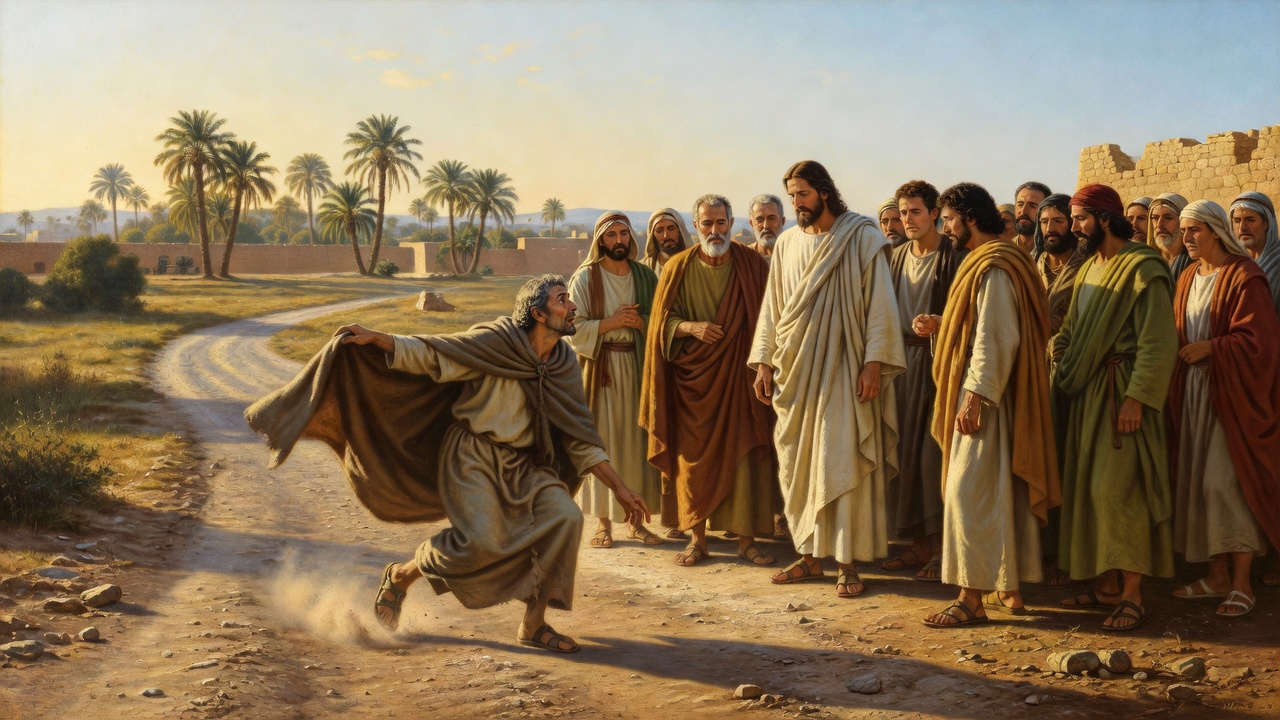
- Mientras Jesús y Sus seguidores viajaban hacia Jerusalén pasando por Jericó, en el valle del Jordán, encontraron a Bartimeo, cuyo nombre significa hijo de Timeo. Sentado junto al camino como un mendigo ciego, aclamó repetidamente a Jesús como 'Hijo de David' antes de recobrar la vista y seguirlo por el camino.Fuentes: Jericho · Bartimaeus · Timaeus · el propio texto bíblico
- Santiago y Juan, los hijos del pescador galileo Zebedeo, le pidieron a Jesús los dos lugares de mayor honor a Su derecha y a Su izquierda. Jesús aprovechó la petición para contrastar a los gobernantes gentiles que se enseñorean de los demás con el reino de Dios, donde quien quiera ser el primero debe hacerse servidor y esclavo de todos.Fuentes: James (Son of Zebedee) · John the Apostle · Zebedee · el propio texto bíblico
Notas escritas con ayuda de IA a partir de fuentes abiertas (Theographic Bible Metadata, CC BY-SA 4.0; Easton’s Bible Dictionary, dominio público) y revisadas antes de publicarse.
Lugares de este capítulo
- Jordan · Hoy: Jordan River · 31.761, 35.558 · versículo 1
- Judea · Hoy: Judea 1 · 31.777, 35.234 · versículo 1
- Jerusalem · 31.777, 35.234 · versículos 17, 32, 33
- Jericho · Hoy: Tell el Alayiq · 31.852, 35.436 · versículo 46
- Nazareth · 32.702, 35.298 · versículo 47
Solo aparecen lugares identificados con alta confianza (90 % o más según las fuentes académicas reunidas por OpenBible). Mapa de la época: DARE (Digital Atlas of the Roman Empire), CC BY 4.0; mapa actual: © colaboradores de OpenStreetMap; lugares: OpenBible.info (CC BY 4.0).
Créditos y licencia de esta traducción
Nǫ̀htsı̨̨ Nı̨̨htł'è
Dogrib: Dogrib Genesis & New Testament New Testament & Portions of Old Testament
copyright © 2009 Canadian Bible Society
Language: Dogrib
Translation by: Canadian Bible Society
Tłı̨chǫ Genesis and New Testament
About Tłı̨chǫ
Tłı̨chǫ (Dogrib) is a Na-Dene (Athabaskan) language. It is spoken by the First Nations Tłı̨chǫ people in the Northwest Territories in Canada. It has the largest number of speakers of any of the Aboriginal language communities in the NWT, and is one of the official languages of the Northwest Territories.
About This Translation
This translation includes the book of Genesis and the New Testament in Tłı̨chǫ. The first edition of the Tłı̨chǫ New Testament was published in 2003. It was a historic event, as it was the first time in more than a hundred years that a complete New Testament was published for one of the Dene First Nations in the Territories. The first edition was well received and quickly sold out. In the meantime the book of Genesis had been completed. Consequently, the 2008 reprint of the Tłı̨chǫ New Testament included Genesis.
Though this translation of the New Testament and Genesis took a total of ten years, the people who worked on it built on years of labor invested by the Tłı̨chǫ people, elders, priests and missionaries, translators, educators, and linguists. The material contained in this book was checked and approved by consultants from Wycliffe Bible Translators and the Canadian Bible Society.
If you are interested in obtaining a printed copy of this Bible, please contact the Canadian Bible Society at http://www.biblescanada.com .
Copyright Information
Dogrib Genesis and New Testament © 2003, 2008 Canadian Bible Society
The text of the Bible in Tłı̨chǫ that appears in this electronic format or website is for personal use only.
Up to five hundred (500) verses of the Bible text in any form (written, visual, electronic or audio) may be quoted without permission. The quoted verses may not be more than 50% of a complete book of the Bible, or more than 25% of the total text of the work in which they are quoted. Prior written permission must be obtained for any other use of the text. Copyright acknowledgement must in all cases appear on the title or copyright page.
For more information on copyright conditions or to apply, visit http://www.biblesociety.ca/copyright .
This translation is made available to you under the terms of the
Creative Commons Attribution-Noncommercial-No Derivatives license 4.0.
You may share and redistribute this Bible translation or extracts from it in any format, provided that:
You include the above copyright and source information.
You do not sell this work for a profit.
You do not change any of the words or punctuation of the Scriptures.
Pictures included with Scriptures and other documents on this site are licensed just for use with those Scriptures and documents.
For other uses, please contact the respective copyright owners.
2014-04-22
Fuente: http://ebible.org/dgrDOGNT/ · eBible.org