Mateo 12
Nǫ̀htsı̨̨ Nı̨̨htł'è · Toca un versículo para ver sus referencias cruzadas.
Nǫ̀htsı̨ Dzęę̀ gha k'àowo
1Įłàà Nǫ̀htsı̨ Dzęę̀ k'e Zezì tł'olà dehshee nı k'etło. Wecheekeè degeèhdì t'à tł'olà gìhchı gà edılà t'à tàtsǫgeèhdı xè gedè. Tł'olà|src="HK067D.tif" size="span" ref="12.1" 2Pharısee gı̨ı̨lı̨ı̨ sìı gogıaɂı̨ ekò Zezì ts'ǫ̀ hagedı, “Gıghàı̨da! Nǫ̀htsı̨ Dzęę̀ k'e ayìı wets'àet'ǫǫ sìı hagehɂı̨,” gedı.
3Zezì gots'ǫ̀ hadı, “K'àowocho Davıd ededı̨ eyıts'ǫ wecheekeè degeèhdì ekò ayìı dàyį̀į̀làa sìı wek'eyaahtı-le nì? 4Nǫ̀htsı̨kǫ̀-gocho goyageède gà łèt'è degaı goyìı wheɂǫǫ sìı gı̨ı̨ɂà. Eyı hagejàa sìı ededı̨ gıgha wets'àet'ǫ hǫt'e, yahtıı zǫ gıgha wets'àet'ǫ nıìle. 5Eyıts'ǫ yahtıı ayìı ghàlageedaa sìı Moses wenı̨htł'è k'e wek'eyaahtı-le nì? Nǫ̀htsı̨ Dzęę̀ k'e eghàlats'eeda ha-le dek'eèhtł'è, hanìkò yahtıı sìı Nǫ̀htsı̨kǫ̀-gocho goyìı eghàlageeda kò ekǫ-le hogehtsı̨ nıìle. 6Ehkw'ı anaxèehsı̨, Nǫ̀htsı̨kǫ̀-gocho nahk'e elı̨ı̨ sìı jǫ wheda hǫt'e. 7Dıı hanì dek'eèhtł'è: ‘Dǫ ts'ǫ̀ naxıdzeè eteèɂı̨ ha dehwhǫ; sets'ǫ̀ t'asìı k'eahk'ǫ̀ ha dehwhǫ-le.’ Eyı yatı dàhodıì-ahodıı sìı wek'èahsǫ nı̨dè dıı secheekeè ekǫ-le hogèhtsı̨-le sìı gısınìyaahtı ha-le ı̨lè. 8Dǫ-wet'àaɂàa-deè sìı Nǫ̀htsı̨ Dzęę̀ gha k'àowo elı̨ hǫt'e,” Zezì gòhdı (edeghǫ godeè-adı).
9Eyı hagòhdı tł'axǫǫ̀ ełègehdèe-kǫ̀ goyaèhtła. 10Dǫ ı̨łè wılà ełeènııtsoo eyı wheda. Pharısee gı̨ı̨lı̨ı̨ sìı Zezì k'e nìdahogeeɂà ha gı̨ı̨wǫ t'à gıts'ǫ̀ hadı, “Gonàowoò k'ę̀ę̀ ha nı̨dè, asį̀į̀ Nǫ̀htsı̨ Dzęę̀ k'e dǫ k'aàt'ıì ats'ele ha dìì-le?” gıìhdı.
11Zezì gots'ǫ̀ hadı, “Edahxǫ naxıts'ǫ sahzǫ̀ą ı̨łè Nǫ̀htsı̨ Dzęę̀ k'e dèè goyìèkw'o nı̨dè xàweahchı ha-le nì? 12Dǫ sahzǫ̀ą nahk'e gı̨ı̨lı̨ hǫt'e! Eyıt'à Nǫ̀htsı̨ Dzęę̀ k'e dǫ ts'ǫ̀ nezı̨į̀ eghàlats'eedaa sìı wets'àet'ǫ nıìle,” gòhdı.
13Eyı tł'axǫǫ̀ dǫ wılà ełeènııtsoo sìı ts'ǫ̀ hadı, “Nılà daį̀chı,” yèhdı. Edılà daìchì ts'ǫ̀et'ıì wılà k'aàt'ıì anajà, wılà eyıì-le xèht'eè ajà. 14Hanìkò Pharısee gı̨ı̨lı̨ı̨ sìı xàgeède, dànì Zezì ełaàgıìhwhı ha sìı dǫ naàhtǫ gıghǫ gode.
Nǫ̀htsı̨ Wecheekeèdeè
15Pharısee dàgı̨ı̨wǫǫ sìı Zezì gok'èezǫ t'à ekǫ ts'ǫǫ̀ naèhtła. Dǫ łǫ gık'èède eyıts'ǫ dǫ-eyaelı̨ı̨ hazǫǫ̀ k'aàt'ıì agǫ̀ǫ̀là, 16hanìkò “Amìı k'aàt'ıì anaxį̀į̀là sìı ghǫ goahde-le,” gòhdı. 17Eyı hagòjàa sìı nakwenàoɂǫǫ Isaıah yeghǫ goı̨de ı̨lèe sìı wek'ę̀ę̀ agòjà. Dıı hadı ı̨lè,
18“Secheekeè wììhchìı sìı jǫ nàwo. Ededı̨ weghǫneehtǫ xè weghǫ sǫdehwhǫ hǫt'e. Yedàyeh Nezı̨ı̨ wets'ǫ̀ ahłe ha eyıts'ǫ dǫ hazǫǫ̀ xàɂaa dànì ehkw'ı geedaa ghǫ hoghàgoehtǫ ha. 19Dǫ xè nàdahoowo hohtsı̨ ha-le, eyıts'ǫ kǫ̀ta ezeh wets'ıìkw'o ha-le. 20Hoehnè xè nàowo ehkw'ıı k'ę̀ę̀ hòɂǫǫ̀ agole gots'ǫ̀ ts'ıchı̨į̀ wexoeɂaa lanıı sìı nàyeezhì ha-le, eyıts'ǫ ek'aèk'ǫ yaazea zǫ dèk'ǫ̀ǫ sìı nayeehkwı ha-le. 21Dǫ hazǫǫ̀ xàɂaa ededı̨ Edaxàgolee elı̨ı̨ sìı gıgha ehkw'ı-ahodı ha,” Isaıah hadı, yeghǫ goı̨de ı̨lè.
Zezì eyıts'ǫ wehłı̨ı̨ gha k'àowo
22Dǫ ı̨nìłı̨ı̨ wets'ǫ̀-èlı̨ t'à wedaà goìlee xè gode-le sìı Zezì gà nègı̨ı̨htı̨. Zezì k'aàt'ıì ayį̀į̀là t'à gode xè k'eet'į̀ anajà. 23Dǫ hazǫǫ̀ gıgha enıìyah t'à, hagedı, “Dıı k'àowocho Davıd Weza at'ı̨ sǫnı,” gedı.
24Hanìkò Pharısee gı̨ı̨lı̨ı̨ sìı egıìkw'o t'à hagedı, “Įnìłı̨ı̨ gha k'àowo dahxà ı̨nìłı̨ı̨ xàdeezhıì at'ı̨,” gedı.
25Hanìkò dànì nànıgedèe sìı Zezì gok'èezǫ t'à hagòhdı, “K'àowocho wenèk'e dǫ ełets'ǫ̀ xànıgı̨ı̨ɂa nı̨dè k'àowo wenèè weghǫ wedıhołè ha. Eyıts'ǫ kǫ̀ta hanì-le-ı̨dè ı̨łèhkǫ̀ goyìı dǫ ełek'èch'a geeda nı̨dè dǫ gıxè hoìla agode ha. 26Wehłı̨ı̨ ı̨nìłı̨ı̨ xàgodeezhı nı̨dè edek'èch'a at'ı̨ hǫt'e. Hanì-ı̨dè wehłı̨ı̨ k'àhowo-le ade ha. 27Įnìłı̨ı̨ gha k'àowo sets'àdı t'à ı̨nìłı̨ı̨ xàdeehshı nı̨dè naxıcheekeè amìı dahxà ı̨nìłı̨ı̨ xàdegeezhı? Eyıt'à naxıcheekeè naxısınìyagehtı ha hǫt'e. 28Ekò Nǫ̀htsı̨ wets'ǫ Įnì Degaı dahxà ı̨nìłı̨ı̨ xàdeehshı nı̨dè Nǫ̀htsı̨ Wenàowoò naxını wehòhɂǫ hǫt'e.
29“K'achı̨ dıı hats'edı ghǫ nànıahdè: dǫ nàtsoo t'akwełǫ̀ǫ̀ dawets'eèzà lenǫsıı wekǫ̀ enìxàts'eezhì gà wets'ǫ t'asìı ts'eeɂį̀ ha dìì. Dawets'eèzà tł'axǫǫ̀ nı̨dè zǫ wekǫ̀ gots'ǫ t'asìı ts'eeɂį̀ ha dìì-le.
30“Dǫ sexè at'ı̨-le sìı sek'èch'a at'ı̨ hǫt'e eyıts'ǫ amìı sexè dǫ nàgehtsį̀-le sìı sek'èch'a aget'ı̨ hǫt'e. 31Ehkw'ı anaxèehsı̨, hołı̨ı̨ hazǫǫ̀ eyıts'ǫ Nǫ̀htsı̨ k'èch'a gots'edee sìı dǫ ghǫ nahoezhe ha hǫt'e, hanìkò Yedàyeh Nezı̨ı̨ k'èch'a gogede nı̨dè gıghǫ nahoezhe ha-le. 32Eyıts'ǫ Dǫ-wet'àaɂàa-deè k'èch'a gogede nı̨dè eyı gıghǫ nahoezhe ha, hanìkò dǫ Yedàyeh Nezı̨ı̨ k'èch'a gogede nı̨dè gıghǫ nahoezhe ha-le. Dıì gıghǫ nahoezhe ha-le eyıts'ǫ ı̨daà sı gıghǫ nahoezhe ha-le.
33“Ts'ı nezı̨ nı̨dè wek'e jìecho nezı̨ı̨ dehshe, ekò ts'ı nezı̨-le nı̨dè wek'e jìecho nezı̨-le dehshe. Ts'ı wejìecho ghàà ts'ı wek'èhoedzǫ hǫt'e. 34Naxı̨ sìı wehłı̨ı̨ weza laaht'e! Hołı̨ı̨-hoahtsı̨ı̨-dǫǫ̀ aaht'e t'à t'asìı nezı̨ı̨ ghǫ goahde ha dìì. Dǫ gıdzeè yìı ayìı whelaa weghàà gogede hǫt'e. 35Dǫ nezı̨ı̨ sìı t'asìı nezı̨ı̨ ededzeè yìı whehła t'à nezı̨į̀ k'ehoɂa. Hanìkò hołı̨ı̨-hohtsı̨ı̨-dǫǫ̀ sìı nàowołı̨ı̨ ededzeè yìı whehła t'à ekǫ-le eghàlaeda. 36Ehkw'ı anaxèehsı̨, gosınìyaetıı dzęę̀ k'e nı̨dè dǫ hazǫǫ̀ yatıts'ıì t'à gogı̨ı̨de ı̨lèe sìı wek'èxa gısınìyaetı ha. 37Naxıyatıì ghàà naxısınìyaetı ha. Yatı nezı̨ı̨ t'à goahde nı̨dè wek'èxa t'asanaxedle ha-le, ekò yatı nezı̨-le t'à goahde nı̨dè wek'èxa hoìla anaxedle ha,” Zezì gòhdı.
K'aodèe gı̨ı̨lı̨ı̨ sìı enıìyah deè geekè
38Pharısee gı̨ı̨lı̨ı̨ mǫ̀hdaa eyıts'ǫ Nǫ̀htsı̨-yatıì-k'ègedìı-dǫǫ̀ mǫ̀hdaa Zezì ts'ǫ̀ hagedı, “K'àowo, godaà enıìyah hoı̨htsı̨,” gıìhdı.
39Zezì gots'ǫ̀ hadı, “Dǫ Nǫ̀htsı̨ k'èagı̨ı̨t'e-le xè hołı̨ı̨-nàowoò k'ę̀ę̀ geedaa sìı enıìyah deè geekè, hanìkò hanıı wı̨ı̨zìı geɂį̀ ha-le. Nǫ̀htsı̨ dànì nakwenàoɂǫǫ Jonah xè enıìyah eghàlaı̨dàa sìı eyı zǫ geɂį̀ ha. 40Taı dzęę̀ eyıts'ǫ taı toò ts'ǫ̀ Jonah łıwecho bò yìı̨dà. Eyı xèht'eè Dǫ-wet'àaɂàa-deè taı dzęę̀ eyıts'ǫ taı toò ts'ǫ̀ dèè goyìı wheda ha. 41Dǫ hazǫǫ̀ gısınìyaetı nı̨dè, Nıneveh got'ı̨į̀ dıı dǫ xè nàgeèhza ha, ‘Dıı dǫ ekǫ-le eghàlagı̨ı̨dà,’ gedı ha. Nakwenàoɂǫǫ Jonah Nıneveh got'ı̨į̀ ts'ǫ̀ goı̨de ekò edek'egı̨ı̨lı̨ xè gınì eładı̨į̀ ajà ı̨lè. Hanìkò dıì, Jonah nahk'e elı̨ı̨ sìı jǫ wheda hǫt'e. 42Dǫ hazǫǫ̀ gısınìyaetı nı̨dè, sazı̨ nèk'e gots'ǫ ts'èko-k'àowo dıı dǫ gota nàwo ha, ‘Dıı dǫ ekǫ-le eghàlagı̨ı̨dà,’ hadı ha. Nıwàa nèk'e gots'ǫ at'ı̨ kò k'àowocho Solomon wenàowoò gǫǫzǫǫ yeèhkw'ǫ ha nıwǫ t'à yets'àèhtła ı̨lè. Hanìkò dıì Solomon nahk'e elı̨ı̨ sìı jǫ wheda hǫt'e.
43“Įnìłı̨ı̨ dǫ yìı gots'ǫ xàetła nı̨dè ekìı-ka nèk'e hazǫǫ̀ wek'eèhoowo. Edı̨į̀ nahoezì ha gòɂǫǫ sìı hanıwǫ, hanìkò yegòhɂà-le. 44Eyıt'à hadı, ‘Edı̨į̀ gots'ǫ xàèhtłaa sìı ekǫ anahde ha,’ hadı. Dǫ yìı nǫ̀ǫtła nı̨dè, t'asìı hazǫǫ̀ nezı̨į̀ whela yeɂį̀ ha. 45Eyıt'à k'achı̨ xàèhtła. Įnìłı̨ı̨ łǫ̀hdı̨ yenahk'e sıì gıjıı sìı edexè goyagoèwa gà, dǫ yìı nàgedè. Nǫǫde ts'ǫ̀ eyı dǫ t'akwe nahk'e deɂǫ̀ǫ̀ wexè gots'eèdıì agòjà. Dıı dǫ xàgeèɂaa sìı hanì gıxè hòɂǫ ha hǫt'e,” Zezì gòhdı.
Zezì wemǫ eyıts'ǫ wechıke
46Zezì ı̨łaà dǫ xè godo ekò, wemǫ eyıts'ǫ wechıke gıts'ǫ̀ gode ha gı̨ı̨wǫ t'à, mǫ̀ht'a nàgeèhza. 47Dǫ ı̨łè Zezì ts'ǫ̀ hadı, “Nemǫ eyıts'ǫ nechı mǫ̀ht'a nàgeèhza; nets'ǫ̀ gogede ha gı̨ı̨wǫ,” yèhdı.
48Zezì yets'ǫ̀ hadı, “Amìı semǫ ne? Amìı sechı agı̨ı̨t'e?” 49Edecheekeè ts'ǫ̀ dakw'ıekwı xè hadı, “Dıı sìı semǫ eyıts'ǫ sechı agı̨ı̨t'e. 50Amìı Setà yak'e whedaa k'èagı̨ı̨t'ee sìı sechı, sedè eyıts'ǫ semǫ agı̨ı̨t'e,” Zezì yèhdı.
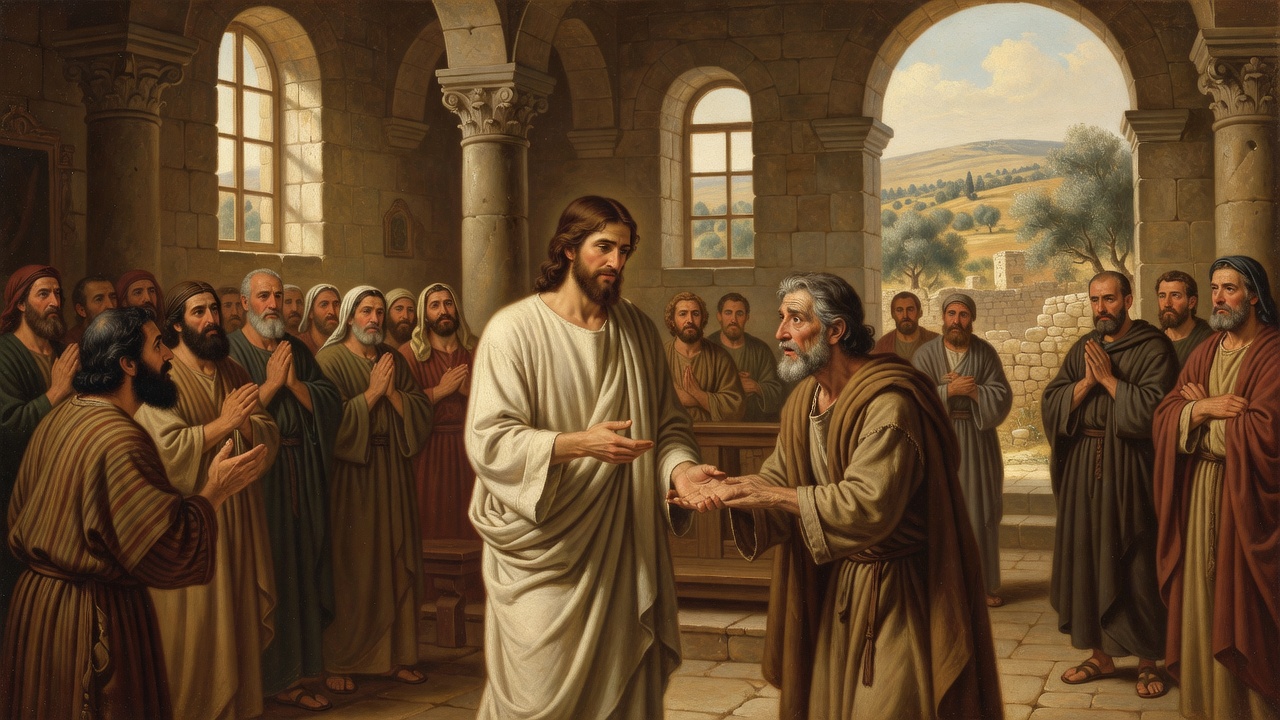
¿Sabías que…?
Señor del sábado y las señales del Reino
- Cuando los fariseos lo cuestionaron por recoger espigas en sábado, Jesús citó el relato del Antiguo Testamento donde David comió los panes consagrados cuando tuvo hambre. Argumentó que la necesidad humana y hacer el bien tienen prioridad sobre las normas rituales, declarándose Señor del sábado.Fuentes: el propio texto bíblico · David
- Tras expulsar un demonio de un hombre ciego y mudo, Jesús fue acusado de actuar por medio de Beelzebú, el príncipe de los demonios. Jesús rechazó la acusación, explicando que un reino o casa dividida contra sí misma no puede sostenerse y que expulsar demonios por el Espíritu de Dios demuestra la llegada de su reino.Fuentes: el propio texto bíblico · Satan
- En respuesta a quienes pedían una señal milagrosa, Jesús señaló al profeta Jonás, comparando los tres días de Jonás en el vientre del pez con su propia muerte y sepultura venideras. Advirtió que los habitantes de Nínive y la Reina del Sur juzgarían a esa generación porque respondieron a Jonás y a Salomón, mientras que alguien mayor estaba ahora presente.Fuentes: el propio texto bíblico · Jonah · Nineveh · Solomon
Notas escritas con ayuda de IA a partir de fuentes abiertas (Theographic Bible Metadata, CC BY-SA 4.0; Easton’s Bible Dictionary, dominio público) y revisadas antes de publicarse.
Lugares de este capítulo
Solo aparecen lugares identificados con alta confianza (90 % o más según las fuentes académicas reunidas por OpenBible). Mapa de la época: DARE (Digital Atlas of the Roman Empire), CC BY 4.0; mapa actual: © colaboradores de OpenStreetMap; lugares: OpenBible.info (CC BY 4.0).
Créditos y licencia de esta traducción
Nǫ̀htsı̨̨ Nı̨̨htł'è
Dogrib: Dogrib Genesis & New Testament New Testament & Portions of Old Testament
copyright © 2009 Canadian Bible Society
Language: Dogrib
Translation by: Canadian Bible Society
Tłı̨chǫ Genesis and New Testament
About Tłı̨chǫ
Tłı̨chǫ (Dogrib) is a Na-Dene (Athabaskan) language. It is spoken by the First Nations Tłı̨chǫ people in the Northwest Territories in Canada. It has the largest number of speakers of any of the Aboriginal language communities in the NWT, and is one of the official languages of the Northwest Territories.
About This Translation
This translation includes the book of Genesis and the New Testament in Tłı̨chǫ. The first edition of the Tłı̨chǫ New Testament was published in 2003. It was a historic event, as it was the first time in more than a hundred years that a complete New Testament was published for one of the Dene First Nations in the Territories. The first edition was well received and quickly sold out. In the meantime the book of Genesis had been completed. Consequently, the 2008 reprint of the Tłı̨chǫ New Testament included Genesis.
Though this translation of the New Testament and Genesis took a total of ten years, the people who worked on it built on years of labor invested by the Tłı̨chǫ people, elders, priests and missionaries, translators, educators, and linguists. The material contained in this book was checked and approved by consultants from Wycliffe Bible Translators and the Canadian Bible Society.
If you are interested in obtaining a printed copy of this Bible, please contact the Canadian Bible Society at http://www.biblescanada.com .
Copyright Information
Dogrib Genesis and New Testament © 2003, 2008 Canadian Bible Society
The text of the Bible in Tłı̨chǫ that appears in this electronic format or website is for personal use only.
Up to five hundred (500) verses of the Bible text in any form (written, visual, electronic or audio) may be quoted without permission. The quoted verses may not be more than 50% of a complete book of the Bible, or more than 25% of the total text of the work in which they are quoted. Prior written permission must be obtained for any other use of the text. Copyright acknowledgement must in all cases appear on the title or copyright page.
For more information on copyright conditions or to apply, visit http://www.biblesociety.ca/copyright .
This translation is made available to you under the terms of the
Creative Commons Attribution-Noncommercial-No Derivatives license 4.0.
You may share and redistribute this Bible translation or extracts from it in any format, provided that:
You include the above copyright and source information.
You do not sell this work for a profit.
You do not change any of the words or punctuation of the Scriptures.
Pictures included with Scriptures and other documents on this site are licensed just for use with those Scriptures and documents.
For other uses, please contact the respective copyright owners.
2014-04-22
Fuente: http://ebible.org/dgrDOGNT/ · eBible.org