Lucas 9
Nǫ̀htsı̨̨ Nı̨̨htł'è · Toca un versículo para ver sus referencias cruzadas.
Zezì edecheekeèdeè kǫ̀ta ts'ǫ̀ goèhɂà
1Zezì edecheekeèdeè hoònǫ-daats'ǫ̀-nàke gokayaı̨htı t'à, łą̀ą nègı̨ı̨de. Įnìłı̨ı̨ dǫ yìı gots'ǫ xàdegeezhı ha eyıts'ǫ dǫ k'aàt'ıì agele ha goghàhòı̨ɂǫ. 2Eyı tł'axǫǫ̀ Nǫ̀htsı̨ Wenàowoò k'ę̀ę̀ hòɂǫǫ sìı t'à dǫ hoghàgeehtǫ ha eyıts'ǫ dǫ eyaelı̨ı̨ k'aàt'ıì agele ha kǫ̀ta yàgòlaa ts'ǫ̀ goèhɂà. 3Ekǫ geède ekò Zezì edecheekeè gots'ǫ̀ hadı, “Ekǫ k'eahdè gha t'asìı wı̨ı̨zìı edexè k'eahłe-le; tè k'eahtı̨-le, tehmì k'eahchı-le, łèt'è k'eahɂa-le, sǫǫ̀mba k'eahłe-le eyıts'ǫ goht'ǫ ładı̨ı̨ k'eahłe-le. 4Amìı wegà aaht'e ha sìı naahdè gots'ǫ̀ eyı kǫ̀ aaht'e. 5Dǫ naxıgı̨ı̨wǫ-le nı̨dè, naahdè kwe gıkǫ̀ta gots'ǫ ehtł'è naxıkè-tł'a whìle aahłe (hanì-ı̨dè weghàà ekǫ-le eghàlageeda gık'e nìdahoahɂà gık'èezǫǫ̀ ageahłe ha),” gòhdı. 6Zezì hagòhdı tł'axǫǫ̀ wecheekeè kǫ̀ta hazǫǫ̀ yàgòlaa ts'ǫ̀ geède. Nǫ̀htsı̨ wegodıì nezı̨ı̨ t'à dǫ hoghàgeehtǫ, eyıts'ǫ ekǫ kǫ̀ta hazǫǫ̀ dǫ k'aàt'ıì agı̨į̀là.
7K'àowocho Herod hazǫǫ̀ dàgòt'ı̨ı̨ sìı yeghǫ ıìkw'o ekò dǫ mǫ̀hdaa, “John-Baptıst naìdà at'ı̨,” gedı t'à dèhyeh lajà. 8Dǫ mǫ̀hdaa, “Nakwenàoɂǫǫ Elıjah naìdà at'ı̨,” gedı, eyıts'ǫ ı̨łaà dǫ mǫ̀hdaa, “T'akwe whaà gots'ǫ nakwenàoɂǫǫ naìdà at'ı̨,” gedı. 9Hanìkò Herod hadı, “John-Baptıst wekwì k'ııhkà ı̨lè. Eyı dǫ enıìyah hohtsı̨ı̨ weghǫ eèhkw'oo sìı amìı at'ı̨?” hadı. Eyıt'à yeɂį̀ ha hoèhdzà.
Zezì dǫ łǫ wànı̨ı̨dì
10Wecheekeèdeè kǫ̀ta yàgòlaa gots'ǫ nǫǫ̀gı̨ı̨de ekò ayìı dàgı̨ı̨laa sìı Zezì ts'ǫ̀ hagedı. Eyı tł'axǫǫ̀ Zezì edecheekeè kǫ̀ta Bethsaıda gòyeh ts'ǫ̀ edexè goòwa, ekǫ whatsǫǫ̀ ełexè geèhkw'e ha t'à. 11Hanìkò dǫ łǫ gıghǫ gıìkw'o t'à Zezì k'èè geède. Zezì wegha sìghà agejà. Nǫ̀htsı̨ Wenàowoò k'ę̀ę̀ hòɂǫǫ t'à goxè godo eyıts'ǫ dǫ eyagı̨ı̨lı̨ı̨ sìı k'aàt'ıì agǫ̀ǫ̀là.
12Xèhts'ǫ̀ agodaade t'à Zezì wecheekeè hagıìhdı, “Dǫ nagı̨ı̨hɂà. Jǫ t'asìı gǫ̀hłı̨-le t'à yeè kǫ̀ta ekǫ weghǫ shèts'ezhee nàgııhdì eyıts'ǫ edı̨į̀ geetè ha edegha gogìhɂà,” gıìhdı.
13Hanìkò Zezì gots'ǫ̀ hadı, “Naxı̨ t'asìı gıghàahdı,” gòhdı.
“Łèt'è sı̨làı eyıts'ǫ łıwe nàke zǫ gots'ǫ. Dǫ haàtłǫǫ gha weghǫ shèts'ezhee nàts'eehdì ha neewǫ nì?” gıìhdı. 14(Dǫzhìı zǫ ts'ı̨ı̨htà nı̨dè sı̨làı-lemì eyı dèhkw'e.)
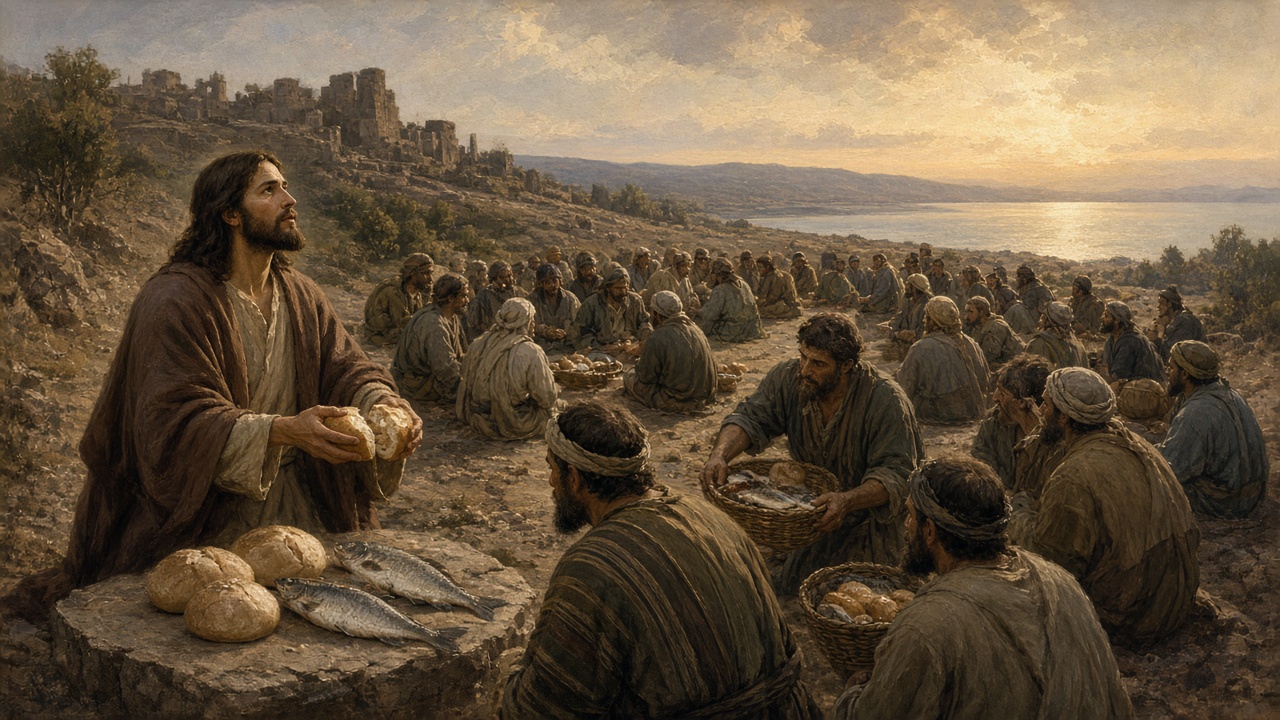
Hanìkò Zezì edecheekeè ts'ǫ̀ hadı, “Dǫ hazǫǫ̀ geèhkw'eè agıahłe. Hazǫǫ̀ sı̨laènǫ ełexè geèhkw'eè agıahłe,” gòhdı. 15Wecheekeè hazǫǫ̀ hagogį̀į̀là, eyıt'à dǫ hazǫǫ̀ dèè k'e geèhkw'e. 16Zezì łèt'è sı̨làı eyıts'ǫ łıwe nàke neyı̨į̀wa, ı̨dòo yak'e ts'ǫ̀ k'eet'į̀ xè yek'eèyaı̨htı. Łèt'è eyıts'ǫ łıwe nechà-lea tàyı̨ı̨zhì gà wecheekeè dǫ gotaàgeedı ha goghàyı̨ı̨wa. 17Dǫ hazǫǫ̀ gıgha hòt'a ts'ǫ̀ shègıazhe. Eyı tł'axǫǫ̀ weghàhoòwoo sìı wecheekeè tł'ohtǫ hoònǫ-daats'ǫ̀-nàke dagoòɂǫ nàgı̨ı̨htsı̨.
Chrıst anet'e, Peter Zezì ts'ǫ̀ hadı
18Įłàà Zezì whatsǫǫ̀ gòɂǫǫ ekǫ yahtı. Wecheekeè gıgà-èhkw'e. Zezì dagoehke, “Dǫ amìı aht'e sègedı?” gòhdı.
19Wecheekeè hagıìhdı, “Dǫ mǫ̀hdaa John-Baptıst anet'e gedı, mǫ̀hdaa nakwenàoɂǫǫ Elıjah anet'e gedı eyıts'ǫ dǫ mǫ̀hdaa whaà gots'ǫ nakwenàoɂǫǫ ı̨łè naìdà anet'e nègedı,” gıìhdı.
20Zezì dagoehke, “Ekò naxı̨, amìı aht'e sèahdı?” gòhdı.
Peter Zezì ts'ǫ̀ hadı, “Nǫ̀htsı̨ wets'ǫ Chrıst anet'e,” yèhdı.
21Zezì edecheekeè gots'ǫ̀ hadı, “Dǫ wı̨ı̨zìı ts'ǫ̀ haahdı-le!” gòhdı. 22Eyıts'ǫ (edeghǫ) gots'ǫ̀ hadı, “Dǫ-wet'àaɂàa-deè sìı hòtł'ò daı̨ɂa ha. Ǫhdah gı̨ı̨lı̨ı̨, yahtıı-gha-k'aodèe eyıts'ǫ Nǫ̀htsı̨-yatıì-k'ègedìı-dǫǫ̀ gıgha wedę ha hǫt'e. Ełaàgıìhwhı ha eyıts'ǫ taı dzęę̀ t'à naìdà ha hǫt'e,” gòhdı.
23Hadı tł'axǫǫ̀ Zezì dǫ hazǫǫ̀ ts'ǫ̀ hadı, “Amìı sek'èè at'ı̨ ha nıwǫǫ sìı edeghǫ nànıwo ha nıìle eyıts'ǫ dzę taàt'eè edets'ǫ dechı̨et'aa sek'èè nayatı̨ ha hǫt'e. 24Amìı edınì k'ę̀ę̀ eda ha nıwǫǫ sìı wedıhołè ha, hanìkò amìı sets'ıhɂǫ̀ edınì k'ę̀ę̀ eda ha nıwǫ-le sìı edaxàweetè ha hǫt'e. 25Dıı nèk'e dǫ t'asìı hazǫǫ̀ edegha dèhnǫ kò wedıhòłı̨ nı̨dè eyı hazǫǫ̀ wegha wet'àaɂà ha nıìle. 26Amìı dǫ nadąą̀ seghǫ į̀į̀zhaelı̨ xè seyatıì sı ghǫ į̀į̀zhaelı̨ nı̨dè wexè hoìla ha. Dǫ-wet'àaɂàa-deè edets'ǫ eyıts'ǫ edetà wets'ǫ enıìyah deè t'à yak'eet'ı̨į̀ gìdaat'ı̨ı̨ goxè nììtła nı̨dè, yeghǫ į̀į̀zhaelı̨ ha hǫt'e. 27Ehkw'ı anaxèehsı̨, dǫ mǫ̀hdaa jǫ nàgeèhzaa sìı Nǫ̀htsı̨ Wenàowoò k'ę̀ę̀ hòɂǫǫ geɂį̀ kwe ełaàgede ha nıìle,” Zezì hadı.
Zezì, Moses eyıts'ǫ Elıjah ełets'ǫ̀ gogede
28Ek'èdı̨ dzęę̀ tł'axǫǫ̀ Zezì yahtı ha shìhka dekıìtła. Peter, John eyıts'ǫ James edexè agǫ̀ǫ̀là. 29Yahtı ekò wınì ładı̨į̀ wègoèht'į̀ eyıts'ǫ wegoht'ǫǫ̀ degoo xè sıì wek'e saı̨dı̨. 30Hǫtsaa dǫ nàke, Moses eyıts'ǫ Elıjah sıì enıìyah k'ę̀ę̀ gìgoèht'į̀, Zezì ts'ǫ̀ gogede. Jerusalem ekǫ dànì ełaàwı ha eyıts'ǫ yelǫ ts'ǫ̀ yeghàlaeda ha sìı ghǫ gogede. 32Eyı hagot'ı̨ ekò Peter eyıts'ǫ dǫ nàke gıxè at'ı̨ı̨ sìı sıì nègı̨ı̨tsǫ t'à hòtł'ò gete. Ts'ıgı̨ı̨dè ekò Zezì wek'e saı̨dı̨ t'à sıì wèdaat'ı̨ gıaɂı̨ eyıts'ǫ dǫ nàke wegà nàłeewo. 33Moses eyıts'ǫ Elıjah nageedè ha nìkw'o ekò Peter Zezì ts'ǫ̀ hadı, “K'àowo, jǫ ts'eèhkw'e gogha hoı̨zı̨ dìì. Kǫ̀ą taı gots'ııhtsı̨; ı̨łè negha, ı̨łè Moses wegha eyıts'ǫ ı̨łè Elıjah wegha,” hadı. (Peter dàdıì-adıı sìı yek'èezǫ-le kò adı.)
34Įłaà Peter gode ekò k'oh gımǫǫ̀ ajà t'à geèhyeh. 35K'oh yìı gots'ǫ gots'edeè hǫt'e, “Dıı Seza hǫt'e, wììhchì hǫt'e, weàhkw'ǫ,” hats'edıì hǫt'e. 36Hagodı tł'axǫǫ̀ wecheekeè taı Zezì ededı̨ zǫ nàwo gıaɂı̨. Ekìıyeè k'e gıxè hagòjàa sìı gıghǫ xàyaı̨htı-le. Ayìı gıdaà nàhòwoo sìı dǫ wı̨ı̨zìı ts'ǫ̀ hagedı-le.
Dǫzhìa ı̨nìłı̨ı̨ wets'ǫ̀-èlı̨ı̨ sìı k'aàt'ıì ajà
37Ek'èdaedzęę̀ k'e shìhka gots'ǫ hodàgı̨ı̨de ekò dǫ łǫ gıghǫnį̀ı̨de. 38Dǫ gıta ts'ǫ dǫ ı̨łè whezeh hadı, “K'àowo, etesį̀ı̨ɂı̨, sezaa ghàı̨da. Seza ı̨łàet'ee zǫ hǫt'e. 39Įnìłı̨ı̨ yek'alawo nı̨dè hǫtsaa yaèzeh anat'į̀. Įnìłı̨ı̨ yets'ǫ̀ k'àowo t'à dèè k'e ts'ǫ̀ yeehxà gà ts'ehłı̨ lat'į̀. Eyıts'ǫ wewà gots'ǫ goghoo xàewì. Įnìłı̨ı̨ yets'ǫǫ̀ ade-le t'à ełaàyèhwhı ha lanì. 40Necheekeè ı̨nìłı̨ı̨ xàdegeezhı ha gıghǫnàdaehtì, hanìkò hagele ha dìì,” yèhdı.
41Zezì gots'ǫ̀ hadı, “Naxı̨ dǫ yàahłı̨ı̨ sìı naxıgha ehkw'ı-ahodı-le xè ehkw'ı k'èch'a aaht'e. Dàwhaà naxıxè aht'e ha? Dàwhaà sınì tsį̀ahwhı ha?” Hadı tł'axǫǫ̀ dǫzhìa wetà ts'ǫ̀ hadı, “Nezaa sets'ǫ̀ wı̨ı̨hchı,” yèhdı.
42Dǫzhìa Zezì ts'ǫ̀ geèhchì ekò ı̨nìłı̨ı̨ dèè k'e ts'ǫ̀ nàyı̨ı̨hxà xè ts'ehłı̨į̀ lajà. Hanìkò Zezì ı̨nìłı̨ı̨ xàdeèzhì. Dǫzhìa k'aàt'ıì ayį̀į̀là tł'axǫǫ̀ wetà ghǫnayį̀ı̨htı̨. 43Dǫ hazǫǫ̀ Nǫ̀htsı̨ t'asìı wegha dìì-le gıaɂı̨ t'à gıgha enıìyah dìì.
Zezì ayìı ghàlaı̨dàa sìı gıgha enıìyah t'à gıghǫ gode. Hanìkò Zezì (edeghǫ) edecheekeèdeè ts'ǫ̀ hadı, 44“Dànaxèehsı̨ ha sìı hotıì nezı̨į̀ aàhkw'o: Dǫ-wet'àaɂàa-deè dǫ tł'aàgıhtè ha hǫt'e,” gòhdı. 45Hanìkò wecheekeè gıgha deɂı̨į̀ wheɂǫ t'à ayìı ghǫ adıı sìı gınıedì-le. Eyı ghǫ dageehke ha gı̨ı̨wǫ kò t'asagedı-le.
Amìı denahk'e elı̨?
46Wecheekeè ełets'ǫ̀ nàyagehtı. Amìı gonahk'e t'asìı deè elı̨ gedı t'à ełets'ǫ̀ nàyagehtı. 47Zezì ayìı ghǫ nànıgedèe sìı gok'èezǫ t'à chekoa nechà-lea edegà nàwo ayį̀į̀là, 48gots'ǫ̀ hadı, “Amìı sıızì dahxà dıı chekoa nechà-lea ts'ǫ̀ nezı̨į̀ anıwǫǫ sìı sı̨ sets'ǫ̀ nezı̨į̀ anıwǫ hǫt'e. Eyıts'ǫ amìı sets'ǫ̀ nezı̨į̀ anıwǫǫ sìı amìı jǫ sı̨ı̨hɂàa sìı eyı sı ts'ǫ̀ nezı̨į̀ anıwǫ hǫt'e. Naxını amìı dek'aɂį̀ elı̨ı̨ sìı denahk'e elı̨ hǫt'e,” gòhdı.
49John Zezì ts'ǫ̀ hadı, “K'àowo, dǫ ı̨łè nıızì t'à ı̨nìłı̨ı̨ xàdeèzhì wets'aɂı̨. Goxè at'ı̨-le t'à, haąt'ı̨ ha-le, wèts'edı, hanìkò whį̀awèts'edı,” yèhdı.
50Zezì yets'ǫ̀ hadı, “Wech'à weahɂǫ-le. Amìı naxık'èch'a at'ı̨-le sìı naxıxè at'ı̨ hǫt'e,” yèhdı.
Samarıa got'ı̨į̀ Zezì gots'àtła ha gı̨ı̨wǫ-le
51Yak'e ts'ǫ̀ nıwıìtè ts'ǫ̀ whaà-le agodaade ekò, Zezì Jerusalem ts'ǫ̀ etła ha edınì nàtsoò ayį̀į̀là. 52Wegha sınìhogììɂà ha t'à, wecheekeè mǫ̀hdaa edenakweè Samarıa got'ı̨į̀ gıkǫ̀ta ts'ǫ̀ agǫ̀ǫ̀là. 53Hanìkò ekǫ gots'ǫ dǫ Zezì Jerusalem ts'ǫ̀ at'ı̨ gık'èezǫ t'à, gots'àtła ha gı̨ı̨hwhǫ-le. 54Wecheekeè James eyıts'ǫ John dǫ hagı̨ı̨wǫ ghǫ gıìkw'o ekò Zezì ts'ǫ̀ hagedı, “K'àowo, goyatıì t'à yak'e gots'ǫ kǫ̀ gık'e hodàètł'ı t'à gıdıhots'ehtsı̨ ha neewǫ nì?” gıìhdı. 55Hanìkò Zezì gots'ǫ̀ nàɂa xè, “Haahdı-le,” gòhdı. 56Eyı tł'axǫǫ̀ kǫ̀ta eyıì-le ts'ǫ̀ geède.
Zezì xè ats'et'ı̨ gha t'asìı hazǫǫ̀ wedę ats'ııle
57Tı̨lı k'e nagıadè ekò dǫ ı̨łè Zezì ts'ǫ̀ hadı, “Edı̨į̀ anet'ı̨ı̨ sìı nexè ahde ha dehwhǫ,” yèhdı.
58Zezì yets'ǫ̀ hadı, “Nǫgèe gıɂǫ gǫ̀hłı̨ eyıts'ǫ chı̨ą gıt'oh gǫ̀hłı̨ hanìkò Dǫ-wet'àaɂàa-deè edı̨į̀ kwìhɂǫ ha sìı gǫ̀hłı̨-le,” yèhdı.
59Hanìkò Zezì dǫ eyıì-le ts'ǫ̀ hadı, “Sek'èı̨tła,” yèhdı. Hanìkò eyı dǫ hadı, “K'àowo, t'akwełǫ̀ǫ̀ setà wekw'ǫǫ̀ nèehtį̀ gà welè,” yèhdı.
60Zezì yets'ǫ̀ hadı, “Dǫ ełaı̨dèe lagı̨ı̨t'ee sìı edets'ǫ dǫ ełaı̨dèe gıkw'ǫǫ̀ nègııle, hanìkò nı̨ sìı Nǫ̀htsı̨ Wenàowoò k'ę̀ę̀ hòɂǫǫ sìı t'à dǫ ts'ǫ̀ goı̨de,” yèhdı.
61K'achı̨ dǫ ı̨łè yets'ǫ̀ hadı, “K'àowo, nek'èè k'ehtło ha, hanìkò t'akwełǫ̀ǫ̀ sekǫ̀ sèot'ı̨ nǫǫde gıts'ǫ̀wehtła gà, awehde nǫǫ̀,” yèhdı.
62Zezì yets'ǫ̀ hadı, “Dǫ wı̨ı̨zìı tı̨lı k'e naetłe xè ek'èt'à k'eet'į̀ı̨ sìı Nǫ̀htsı̨ Wenàowoò k'ę̀ę̀ hòɂǫǫ gha eghàlaeda ha dìì hǫt'e,” yèhdı.
¿Sabías que…?
Misión, identidad y el camino a Jerusalén
- Herodes el tetrarca, perplejo por lo que se decía de Jesús, es Herodes Antipas, hijo de Herodes con Malthace. Él dijo que había decapitado a Juan, mientras algunos afirmaban que Juan había resucitado de entre los muertos, otros que Elías el tisbita, el "Elías" del Nuevo Testamento, había aparecido, y otros que un antiguo profeta había surgido. Una cronología de estos hechos fecha la decapitación de Juan en el año 29 d.C.Fuentes: Herod Antipas · Elijah · John Beheaded · el propio texto bíblico
- Cuando los apóstoles regresaron, Jesús se retiró con ellos a una ciudad llamada Betsaida, donde acogió a la multitud, habló del reino de Dios y alimentó a unos cinco mil hombres con cinco panes y dos peces. El diccionario bíblico de Easton (1897) sitúa esta Betsaida en el lado oriental del lago, a dos millas río Jordán arriba, en la región de Gaulonitis; Felipe el tetrarca la amplió y la llamó Julias, por la hija del emperador. Algunos han supuesto que había una sola Betsaida, construida a ambos lados del lago, cerca de donde el Jordán entra en él; la entrada identifica las ruinas como et-Tel.Fuentes: Bethsaida · el propio texto bíblico
- Pedro, llamado originalmente Simón, respondió que Jesús es "el Cristo de Dios". Unos ocho días después, Jesús llevó a Pedro, Santiago y Juan a un monte para orar; Moisés y Elías aparecieron en gloria y hablaron de la partida que Jesús estaba por cumplir en Jerusalén. Santiago, hermano mayor de Juan y pescador en sociedad con Pedro, estaba con ellos; a él y a Juan se les llamaba Boanerges, "hijos del trueno", probablemente por su osadía y energía, y más tarde preguntaron si debían hacer bajar fuego del cielo sobre una aldea de samaritanos que no quiso recibir a Jesús porque se dirigía a Jerusalén.Fuentes: Simon Peter · James (Son of Zebedee) · el propio texto bíblico
Notas escritas con ayuda de IA a partir de fuentes abiertas (Theographic Bible Metadata, CC BY-SA 4.0; Easton’s Bible Dictionary, dominio público) y revisadas antes de publicarse.
Lugares de este capítulo
Solo aparecen lugares identificados con alta confianza (90 % o más según las fuentes académicas reunidas por OpenBible). Mapa de la época: DARE (Digital Atlas of the Roman Empire), CC BY 4.0; mapa actual: © colaboradores de OpenStreetMap; lugares: OpenBible.info (CC BY 4.0).
Créditos y licencia de esta traducción
Nǫ̀htsı̨̨ Nı̨̨htł'è
Dogrib: Dogrib Genesis & New Testament New Testament & Portions of Old Testament
copyright © 2009 Canadian Bible Society
Language: Dogrib
Translation by: Canadian Bible Society
Tłı̨chǫ Genesis and New Testament
About Tłı̨chǫ
Tłı̨chǫ (Dogrib) is a Na-Dene (Athabaskan) language. It is spoken by the First Nations Tłı̨chǫ people in the Northwest Territories in Canada. It has the largest number of speakers of any of the Aboriginal language communities in the NWT, and is one of the official languages of the Northwest Territories.
About This Translation
This translation includes the book of Genesis and the New Testament in Tłı̨chǫ. The first edition of the Tłı̨chǫ New Testament was published in 2003. It was a historic event, as it was the first time in more than a hundred years that a complete New Testament was published for one of the Dene First Nations in the Territories. The first edition was well received and quickly sold out. In the meantime the book of Genesis had been completed. Consequently, the 2008 reprint of the Tłı̨chǫ New Testament included Genesis.
Though this translation of the New Testament and Genesis took a total of ten years, the people who worked on it built on years of labor invested by the Tłı̨chǫ people, elders, priests and missionaries, translators, educators, and linguists. The material contained in this book was checked and approved by consultants from Wycliffe Bible Translators and the Canadian Bible Society.
If you are interested in obtaining a printed copy of this Bible, please contact the Canadian Bible Society at http://www.biblescanada.com .
Copyright Information
Dogrib Genesis and New Testament © 2003, 2008 Canadian Bible Society
The text of the Bible in Tłı̨chǫ that appears in this electronic format or website is for personal use only.
Up to five hundred (500) verses of the Bible text in any form (written, visual, electronic or audio) may be quoted without permission. The quoted verses may not be more than 50% of a complete book of the Bible, or more than 25% of the total text of the work in which they are quoted. Prior written permission must be obtained for any other use of the text. Copyright acknowledgement must in all cases appear on the title or copyright page.
For more information on copyright conditions or to apply, visit http://www.biblesociety.ca/copyright .
This translation is made available to you under the terms of the
Creative Commons Attribution-Noncommercial-No Derivatives license 4.0.
You may share and redistribute this Bible translation or extracts from it in any format, provided that:
You include the above copyright and source information.
You do not sell this work for a profit.
You do not change any of the words or punctuation of the Scriptures.
Pictures included with Scriptures and other documents on this site are licensed just for use with those Scriptures and documents.
For other uses, please contact the respective copyright owners.
2014-04-22
Fuente: http://ebible.org/dgrDOGNT/ · eBible.org