Lucas 22
Nǫ̀htsı̨̨ Nı̨̨htł'è · Toca un versículo para ver sus referencias cruzadas.
Zhıdàà Zezì k'aodèe tł'aàyehtè ha
1Dzędeè Passover gha nàsı̨ hołè ts'ǫ̀ whaà-le agòjà. Eyı dzędeè k'e łèt'èa dę łèt'è ghǫ shègezhe. 2Yahtıı-gha-k'aodèe eyıts'ǫ Nǫ̀htsı̨-yatıì-k'ègedìı-dǫǫ̀ Zezì ełaàgehwhı ha gı̨ı̨wǫ t'à dànì agele ha sìı hagı̨ı̨wǫ, hanìkò dǫ gots'àgeejı̨ t'à gonaàhtǫ aget'ı̨. 3Ekò k'e wehłı̨ı̨ Zhıdàà ts'ǫ̀ ajà. (Zhıdàà, Iscarıyot sı wìyeh.) Ededı̨ sìı Zezì wecheekeè hoònǫ-daats'ǫ̀-nàke gı̨ı̨lı̨ı̨ ts'ǫ ı̨łè hǫt'e. 4Zhıdàà, yahtıı-gha-k'aodèe eyıts'ǫ Nǫ̀htsı̨kǫ̀-xogııhdıı-dǫǫ̀ gha k'aodèe gı̨ı̨lı̨ı̨ sìı gots'àèhtła. Dànì Zezì gotł'aàyıhtè ha sìı ghǫ gogı̨ı̨de. 5K'aodèe gınà nàhòwo t'à gıts'ǫ̀ hadı, “Hanele ha nı̨dè, sǫǫ̀mba łǫ nets'àts'eehdì ha,” gıìhdı. 6Hęɂę gòhdı, eyıt'à dànì dǫ naàhtǫ Zezì k'aodèe gotł'aàyehtè ha sìı gha naèhɂı̨.
Zezì edecheekeè xè nǫǫde shètı̨
7Passover dzęę̀ xèhǫǫ̀wo. Eyı dzęę̀ k'e Passover gha yahtıı sahzǫ̀ą ełaàgehwhı gà Nǫ̀htsı̨ ts'ǫ̀ gık'eehk'ǫ̀. 8Zezì, edecheekeè Peter eyıts'ǫ John gots'ǫ̀ hadı, “Ełexè nàsı̨ Passover ghǫ shèts'ezhe gha sınìhòahɂà,” gòhdı.
9“Edı̨į̀ nàsı̨ gha sıìgots'ele ha neewǫ?” gıìhdı.
10Zezì gots'ǫ̀ hadı, “Jerusalem nìłaahtła nı̨dè dǫ kwetǫ t'à tı naehtı̨ naxınìhdǫǫ̀ etła ha. Wek'èè et'ıì aahde, edı̨į̀ kǫ̀ ts'ǫ̀ at'ı̨ı̨ sìı wek'èè goyaahdè. 11Dǫ wekǫ̀ agǫ̀ht'ee sìı wets'ǫ̀ dıı haahdı, ‘Gots'ǫ̀ K'àowo nets'ǫ̀ dıı hadı: Edı̨į̀ shèts'ezhe gha gòɂǫ? Secheekeè gıxè nàsı̨ Passover ghǫ shètı̨ ha dehwhǫ,’ wèahdı. 12Eyı dǫ dahkǫ̀ gǫchàa gòɂǫǫ t'asìı hazǫǫ̀ ts'atà whelaa sìı ts'ǫ̀ naxeewa ha. Ekǫ shèts'ezhe gha sıìgoahłe,” Zezì gòhdı.
13Wecheekeè ekǫ geède, Zezì dàgòhdıı sìı hotıì wek'ę̀ę̀ hagòjà. Eyıt'à nàsı̨ Passover gha sınìhogį̀ı̨ɂǫ.
14Shègezhe ha nìkw'o ekò Zezì, edecheekeèdeè xè ladà gà nììtła. 15Zezì gots'ǫ̀ hadı, “Daıhɂa kwe naxıxè dıı nàsı̨ Passover ghǫ shètı̨ ha sedzeè t'à hahwhǫ hǫt'e. 16Ehkw'ı anaxèehsı̨, dıı nàsı̨ k'achı̨ weghǫ nashèhtı̨ ha-le. Nǫ̀htsı̨ Wenàowoò k'ę̀ę̀ hòɂǫǫ̀ agòjà nı̨dè naxıxè nàsı̨ wedeèdlı̨ı̨ ghǫ nashèhtı̨ ha,” gòhdı.
17Lıbò nıį̀hge gà yek'eèyaı̨htı hadı, “Dıı lıbò weyìı wetł'ıı sìı ełeghàahdı. 18Ehkw'ı anaxèehsı̨, dıı nèk'e k'achı̨ dıı jìetì naxıxè nahdǫ ha-le. Nǫ̀htsı̨ Wenàowoò k'ę̀ę̀ hòɂǫǫ wexèhoìwı nı̨dè naxıxè jìetì wegòò ehdǫ ha,” gòhdı.
19Zezì łèt'è nıìchı gà yek'eèyaı̨htı, tàyı̨ı̨zhì gà edecheekeè goghàyı̨ı̨dì, hadı, “Dıı łèt'è sezhį̀į̀ hǫt'e naxıgha adlà. Dıı haaht'ı̨ t'à senaahdì nǫǫ̀,” gòhdı.
20Eyı xèht'eè, shègıazhe tł'axǫǫ̀ lıbò neyı̨į̀hgè gà hadı, “Dıı sedoò naxıgha xàı̨tł'ıı sìı wet'à nakenahòdlı̨ı̨ wegòò naxıgha hòèlı̨ hǫt'e. 21Hanìkò eyı dǫ k'aodèe tł'aàsìhtè ha sìı wılà jǫ ladà k'e sılà gà wheɂǫ. 22Dǫ-wet'àaɂàa-deè dànì wegha hòɂǫǫ sìı k'ę̀ę̀ ade ha t'ıį̀t'e, hanìkò amìı k'aodèe gotł'aàyehtè ha sìı wegha hoìla nechà ha hǫt'e,” gòhdı. 23Wecheekeè, amìı hanì yets'ǫ̀ eghàlaeda ha adı gı̨ı̨wǫ t'à dałegeehke.
24Eyı wedę wecheekeè ełets'ǫ̀ nàyagehtı, “Amìı gonahk'e elı̨?” gedı t'à. 25Zezì gots'ǫ̀ hadı, “K'àowocho gı̨ı̨lı̨ı̨ sìı dǫ eyıì-le xàɂaa ts'ǫ̀ k'adahogedè, eyı xè ‘Dǫ ts'àts'edı ats'ı̨ı̨t'e’ edegeewǫ hǫt'e. 26Hanìkò naxı̨ sìı gıxèaht'e ha-le. Naxıta gots'ǫ dǫ denahk'e elı̨ı̨ sìı gochı nǫǫdea lanì elı̨ ha, eyıts'ǫ dǫ gha k'àowo elı̨ı̨ sìı dǫ gha eghàlaedaa-dǫǫ̀ lanì elı̨ ha. 27Amìı denahk'e elı̨ dahwhǫ, dǫ ladà gà weghàhodìı hanì-le-ı̨dè dǫ yegha eghàlaedaa? Dǫ ladà gà weghàhodìı sìı eyı denahk'e elı̨ hǫǫwǫ hǫt'e. Hanìkò sı̨ sìı naxını dǫ gha eghàlaedaa-dǫǫ̀ laht'e. 28Sexè hoìla k'ehokw'o kò naxı̨ sìı ı̨łaà sexè aaht'ı̨ hǫt'e. 29Setà K'àowocho ehłı̨ ha seghàhòı̨ɂǫ k'ę̀ę̀ sı̨ sı k'àowocho aahłı̨ gha naxıghàhòehɂǫ hǫt'e. 30K'àowocho whıhłı̨ nı̨dè seladà k'e shèahzhe ha eyıts'ǫ daèhchı̨cho k'e dahkw'e ha. Israel got'ı̨į̀ hoònǫ-daats'ǫ̀-nàke xàɂaa gı̨ı̨lı̨ı̨ sìı gısınìyaahtı ha,” gots'ǫ̀ hadı.
31Eyı tł'axǫǫ̀ Zezì hadı, “Sımon, hotıì nezı̨į̀ sı̨į̀hkw'ǫ. Wehłı̨ı̨ naxeèhdzà ha nıwǫ, 32hanìkò, Sımon, ı̨łaà nınì nàtso ha, negha yaehtı. Sets'ǫ̀ ek'èt'à anaąjà nı̨dè nèot'ı̨ gınì nàtsoò agı̨ı̨le nǫǫ̀,” yèhdı.
33Peter, Zezì ts'ǫ̀ hadı, “Sets'ǫ̀ K'àowo, nexè dǫ-danìı̨laa-kǫ̀ ts'ǫ̀ ahde ha eyıts'ǫ nexè ełaehwhı ha ts'atà whıhda hǫt'e,” yèhdı.
34Zezì yets'ǫ̀ hadı, “Peter, ehkw'ı anèehsı̨, dıı dzęę̀ k'e k'àba ezeh kwe, taà-eht'aà sek'èı̨zǫ-le nı̨ı̨dı ha,” yèhdı. K'àba ezeh|src="HK007D.tif" size="span" ref="22.34"
35Eyı tł'axǫǫ̀ Zezì edecheekeè dagoehke, “Dǫ ts'ǫ̀ goahde ha gıts'ǫ̀ naxeehɂà ekò sǫǫ̀mba, tehmì eyıts'ǫ ke k'eahłe-le naxèehsı̨ ekò asį̀į̀ naxıgha t'asìı whìle nǫǫ̀?”
“Dàòdì, gogha t'asìı whìle-le,” gıìhdı.
36Zezì gots'ǫ̀ hadı, “Ekò dıì sǫǫ̀mbawò naxıts'ǫ nı̨dè k'eahtı̨ eyıts'ǫ tehmì sı edexè k'eahłe, eyıts'ǫ behcho naxıts'ǫ-le nı̨dè naxıɂeè naxıghǫ nàedì gà behcho ı̨łè nàahdì. 37Dıı hanì dek'eèhtł'è hǫt'e, ‘Dǫjıı xè nagı̨ı̨htà.’ Hanì seghǫ dek'eèhtł'èe sìı wek'ę̀ę̀ ahde ha hǫt'e. Hęɂę, dànì seghǫ dek'eèhtł'èe sìı wek'ę̀ę̀ agodaade,” Zezì gòhdı.
38Wecheekeè hagıìhdı, “K'àowo, jǫ behcho nàke whela.”
“Hòt'a!” Zezì gòhdı.
Zezì nànııtì xè Nǫ̀htsı̨ ts'ǫ̀ yahtı
39Eyı tł'axǫǫ̀ Zezì shìh Olıvet ekǫ at'ı̨ zǫ t'à ekǫ ts'ǫ̀ èhtła eyıts'ǫ wecheekeè gıxè ajà. 40Ekǫ nììtła ekò edecheekeè gots'ǫ̀ hadı, “Hołı̨ı̨ hoahtsı̨ ch'à edegha yaahtı,” gòhdı. 41Hadı tł'axǫǫ̀ ı̨daà gǫǫwà-lea nììtła, nàgòı̨hgè gà dıı hadıì yaı̨htı, 42“Setà, haneewǫ nı̨dè dıı wet'à dàıhɂaa sìı sets'ǫǫ̀ anele. Hanìkò sınì k'ę̀ę̀ welè-le, nınì k'ę̀ę̀ welè,” Zezì hadıì yaı̨htı. 43Yak'eet'ı̨į̀ wets'ǫ̀ wègoèht'į̀, wınì nàtsoò ayį̀į̀là. 44Sıì wegha dìì agòjà t'à denahk'e hòtł'ò Nǫ̀htsı̨ ts'ǫ̀ yahtı. Wınìtì edoò lanì dèè k'e det'e.
45Zezì yaı̨htı tł'axǫǫ̀ edecheekeè taı goghǫ nǫ̀ǫtła ekò gete nǫǫ̀. Sıì gıgha dìì agòjà t'à nègı̨ı̨tsǫǫ̀ agejà. 46“Dànìghǫ wheahte? Nıàhdè, hołı̨ı̨ hoahtsı̨ ch'à edegha yaahtı,” gòhdı.
K'aodèe Zezì gį̀į̀hchì
47Įłaà edecheekeè ts'ǫ̀ gode et'ıì dǫ łǫ nìı̨de, wecheekeè hoònǫ-daats'ǫ̀-nàke gots'ǫ ı̨łè, Zhıdàà wìyeh, gonakweè naetłe. Zezì gà nììtła gà yı̨ı̨ts'į̀. 48Hanìkò Zezì yets'ǫ̀ hadı, “Zhıdàà, Dǫ-wet'àaɂàa-deè wı̨ı̨ts'į̀ t'à dǫ tł'aàwı̨ı̨htè ha nì?” yèhdı.
49Zezì wecheekeè dàgode ha gık'èhoèhzà t'à hagedı, “K'àowo, behcho t'à agets'ele ha neewǫ nì?” gıìhdı. 50Zezì wecheekeè ı̨łè yahtıı-wet'àaɂàa-deè wecheekeè ı̨łè behcho t'à nàgòts'ehnèe ts'ǫ yedzeèbàa dachı̨ı̨hwho.
51Hanìkò Zezì hadı, “Hòt'a!” Zezì edılà dǫ dzeèbàa k'e ayį̀į̀là t'à t'asanìle anajà.
52Eyı tł'axǫǫ̀ Zezì, yahtıı-gha-k'aodèe, Nǫ̀htsı̨kǫ̀-xogııhdıı-dǫǫ̀ gha k'aodèe eyıts'ǫ ǫhdah eyı nègı̨ı̨dee sìı gots'ǫ̀ hadı, “Ayìıha behcho eyıts'ǫ dechı̨ sets'ǫ̀ k'eahłe? Ełets'egǫ gha aht'ı̨ dahwhǫ nì? 53Dzę taàt'eè naxıxè Nǫ̀htsı̨kǫ̀-gocho gà whıhda ı̨lè kò sèahchì-le ı̨lè. Hanìkò dıì to agǫ̀ht'e t'à naxıgha hòɂǫǫ̀ agòjà,” Zezì gòhdı.
Peter Zezì k'èehsǫ-le hadı
54Eyı tł'axǫǫ̀ dagıachì gà yahtıı-wet'àaɂàa-deè wekǫ̀ ts'ǫ̀ agı̨į̀là. Peter ı̨dè sìghaı̨waà gok'èetłe. 55Yahtıı-wet'àaɂàa-deè wekǫ̀ gà kǫ̀ nageèhtła xè kǫ̀ gà geèhkw'e. Peter ededı̨ sı gogà dèhkwà. 56Kǫ̀ dèk'ǫ̀ǫ ts'ǫ dzęh t'à, ts'èko eyı eghàlaedaa sìı yaɂı̨. Ts'èko hotıì yeghàı̨dà tł'axǫǫ̀ hadı, “Dıı dǫ yexè at'ı̨ ı̨lè,” hadı.
57Hanìkò Peter hadı, “Ts'èko, eyı dǫ wek'èehsǫ nıìle,” yèhdı.
58Sìghaı̨waà hoòwo tł'axǫǫ̀ k'achı̨ dǫ ı̨łè yaɂı̨ t'à yets'ǫ̀ hadı, “Nı̨ sı Zezì wecheekeè gıxè aąt'ı̨ ı̨lè,” yèhdı. Hanìkò Peter yets'ǫ̀ hadı, “Į̀le, gıxè aht'ı̨ nıìle!” yèhdı.
59Įłè sadzeè k'ehǫǫwo tł'axǫǫ̀ dǫ ı̨łè k'achı̨ hayèhdı, “Dıı dǫ hotıì yexè at'ı̨ ı̨lè, Galılee got'ı̨į̀ ne,” hadı.
60Peter yets'ǫ̀ hadı, “Dàı̨dıì-aı̨dı sìı wek'èehsǫ nıìle!” yèhdı. Hadı ts'ǫ̀et'ıì k'àba whezeh. 61Zezì yets'ǫ̀ nàɂa gà Peter ghàı̨dà. Hanì-t'ıì Peter, Zezì dàdı ı̨lèe sìı yenadì. “Dıı dzęę̀ k'e k'àba ezeh kwe, taà-eht'aà sek'èı̨zǫ-le nı̨ı̨dı ha,” yèhdı ı̨lè. 62Peter xàèhtła gà sıì ededzeè t'à ı̨tsè.
Eghǫǫ-dǫǫ̀ Zezì k'adageedè
63Dǫ Zezì xogııhdıı sìı gık'adaedè xè nàgeeht'ı. 64Wedaà k'e ehtł'ı̨ ełègeèzà gà hagıìhdı, “Nakwenàoɂǫǫ anet'e nı̨dè amìı nànı̨ı̨ht'ıı sìı gots'ǫ̀ haı̨dı,” gıìhdı. 65Eyıts'ǫ t'asìı eyıì-le łǫ t'à gık'adaedè.
Zezì k'àowo Pılate eyıts'ǫ k'àowocho Herod nadąą̀ nàwo
66K'omǫǫ̀dǫǫ̀ dzęh agòjà ekò yahtıı-gha-k'aodèe, ǫhdah gı̨ı̨lı̨ı̨ eyıts'ǫ Nǫ̀htsı̨-yatıì-k'ègedìı-dǫǫ̀ łą̀ą nègı̨ı̨de gà Zezì goyageèhchì. 67Zezì ts'ǫ̀ hagedı, “Chrıst ts'edıı sìı eyı anet'e nı̨dè gots'ǫ̀ haı̨dı,” gıìhdı. Zezì gots'ǫ̀ hadı, “Amìı aht'e naxıts'ǫ̀ haehsı̨ kò ehkw'ı adı seahwhǫ ha nıìle, 68t'asìı danaxeehke nı̨dè, sets'ǫ̀ ek'èt'à xàyaahtı ha nıìle. 69Jǫ gots'ǫ ı̨daà Dǫ-wet'àaɂàa-deè Nǫ̀htsı̨ t'asìı wegha dìì-le sìı gà nàgòts'ehnèe wheda ha,” Zezì gòhdı.
70Eyı tł'axǫǫ̀ hazǫǫ̀ dageehke, “Nǫ̀htsı̨ Weza anet'e nì?” gıìhdı.
Zezì gots'ǫ̀ hadı, “Seghǫ dàahdıı sìı ehkw'ı aahdı,” gòhdı.
71Eyıt'à hagedı, “Hòt'a k'achı̨ dǫ gık'e nìdahogeeɂà-le kò. Goxı̨ xàè weyatıì ts'ıìkw'o ne,” gedı.
¿Sabías que…?
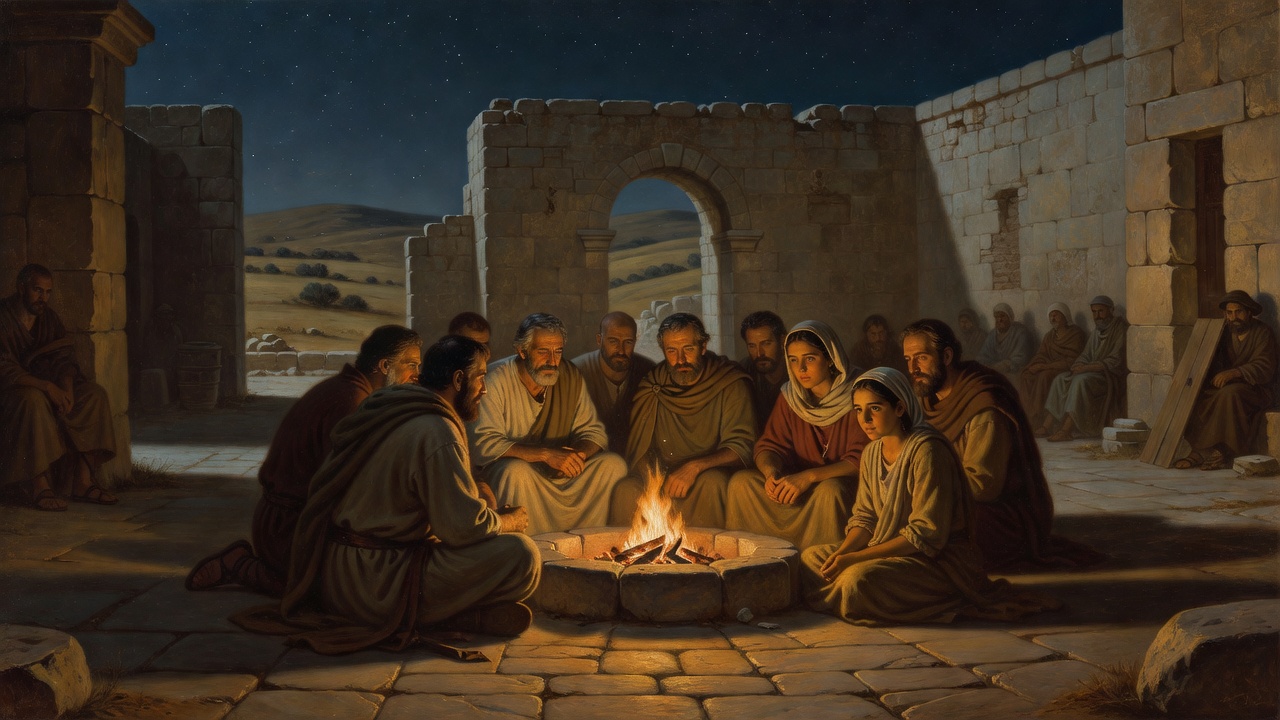
La cena de la Pascua y el arresto
- El capítulo llama Pascua a la Fiesta de los Panes sin Levadura, que se acercaba, y sitúa la comida en el día en que debía sacrificarse el cordero de la Pascua. Jesús envió a Pedro y a Juan, ambos de Betsaida y ambos pescadores, a prepararla; encontraron una gran sala amueblada en el piso superior y, llegada la hora, él se reclinó a la mesa con los apóstoles.Fuentes: el propio texto bíblico · Simon Peter · John the Apostle
- Judas, uno de los Doce, es llamado Iscariote, un sobrenombre que se explica como hombre de Queriot, y se lo identifica como hijo de Simón. El capítulo dice que Satanás —nombre que significa adversario o acusador— entró en él; Judas entonces acordó con los principales sacerdotes y los oficiales del templo entregar a Jesús por dinero, lejos de la multitud.Fuentes: el propio texto bíblico · Judas Iscariot · Satan
- Después de la comida, Jesús fue, como de costumbre, al Monte de los Olivos, una sierra al este de Jerusalén, llamada así por los olivos que cubren sus laderas y separada de la ciudad por el valle del Cedrón. Se apartó como un tiro de piedra más allá de los discípulos, se arrodilló y oró; entonces llegó una multitud guiada por Judas, y llevaron a Jesús a la casa del sumo sacerdote.Fuentes: el propio texto bíblico · Mount of Olives
Notas escritas con ayuda de IA a partir de fuentes abiertas (Theographic Bible Metadata, CC BY-SA 4.0; Easton’s Bible Dictionary, dominio público) y revisadas antes de publicarse.
Lugares de este capítulo
Solo aparecen lugares identificados con alta confianza (90 % o más según las fuentes académicas reunidas por OpenBible). Mapa de la época: DARE (Digital Atlas of the Roman Empire), CC BY 4.0; mapa actual: © colaboradores de OpenStreetMap; lugares: OpenBible.info (CC BY 4.0).
Créditos y licencia de esta traducción
Nǫ̀htsı̨̨ Nı̨̨htł'è
Dogrib: Dogrib Genesis & New Testament New Testament & Portions of Old Testament
copyright © 2009 Canadian Bible Society
Language: Dogrib
Translation by: Canadian Bible Society
Tłı̨chǫ Genesis and New Testament
About Tłı̨chǫ
Tłı̨chǫ (Dogrib) is a Na-Dene (Athabaskan) language. It is spoken by the First Nations Tłı̨chǫ people in the Northwest Territories in Canada. It has the largest number of speakers of any of the Aboriginal language communities in the NWT, and is one of the official languages of the Northwest Territories.
About This Translation
This translation includes the book of Genesis and the New Testament in Tłı̨chǫ. The first edition of the Tłı̨chǫ New Testament was published in 2003. It was a historic event, as it was the first time in more than a hundred years that a complete New Testament was published for one of the Dene First Nations in the Territories. The first edition was well received and quickly sold out. In the meantime the book of Genesis had been completed. Consequently, the 2008 reprint of the Tłı̨chǫ New Testament included Genesis.
Though this translation of the New Testament and Genesis took a total of ten years, the people who worked on it built on years of labor invested by the Tłı̨chǫ people, elders, priests and missionaries, translators, educators, and linguists. The material contained in this book was checked and approved by consultants from Wycliffe Bible Translators and the Canadian Bible Society.
If you are interested in obtaining a printed copy of this Bible, please contact the Canadian Bible Society at http://www.biblescanada.com .
Copyright Information
Dogrib Genesis and New Testament © 2003, 2008 Canadian Bible Society
The text of the Bible in Tłı̨chǫ that appears in this electronic format or website is for personal use only.
Up to five hundred (500) verses of the Bible text in any form (written, visual, electronic or audio) may be quoted without permission. The quoted verses may not be more than 50% of a complete book of the Bible, or more than 25% of the total text of the work in which they are quoted. Prior written permission must be obtained for any other use of the text. Copyright acknowledgement must in all cases appear on the title or copyright page.
For more information on copyright conditions or to apply, visit http://www.biblesociety.ca/copyright .
This translation is made available to you under the terms of the
Creative Commons Attribution-Noncommercial-No Derivatives license 4.0.
You may share and redistribute this Bible translation or extracts from it in any format, provided that:
You include the above copyright and source information.
You do not sell this work for a profit.
You do not change any of the words or punctuation of the Scriptures.
Pictures included with Scriptures and other documents on this site are licensed just for use with those Scriptures and documents.
For other uses, please contact the respective copyright owners.
2014-04-22
Fuente: http://ebible.org/dgrDOGNT/ · eBible.org