Génesis 49
Nǫ̀htsı̨̨ Nı̨̨htł'è · Toca un versículo para ver sus referencias cruzadas.
Jacob edeza k'eèyaı̨htı
1Eyı tł'axǫǫ̀ Jacob edeza gokayaı̨htı, hadı, “Segà nìahdè, ı̨daà naxıxè dàgode ha sìı naxıts'ǫ̀ haehsı̨ ha.
2“Seza yàahłı̨ı̨ sìı segà łą̀ą nìahdè gà seàhkw'ǫ.
3“Ruben, nı̨ t'aa t'akwełǫ̀ǫ̀ negǫ̀hłı̨ı̨ anet'e,
set'ı anet'e, negǫ̀hłı̨ t'à nàhtsoò asììdlà,
denahk'e nezı̨į̀ nets'ǫ̀ nageɂa, denahk'e nànetso.
4Hanìkò tı nàtsoo k'etaetı̨ı̨ lanet'e.
Sets'èkeè wet'ànet'ı̨ xè sedaèhte k'e hołı̨ı̨ k'ę̀ę̀ eghàlaneedà t'à denahk'e nelı̨ ha-le.
5“Sımeyon eyıts'ǫ Levı ełechı agı̨ı̨t'e;
edebehchoò t'à dǫweè hogèhtsı̨.
6Dǫ naàhtǫ ełegeèhdì nı̨dè gıxè aht'ı̨ ha-le,
eyıts'ǫ gıxè whıhda ha dehwhǫ-le.
Sıì gınàhǫ̀ǫht'è t'à dǫ ełaàgı̨ı̨hdè,
eyıts'ǫ t'asìı ghǫ-le ejıe wedzaà tàgı̨ı̨hwho.
7Sıì gınàhǫ̀ǫht'è xè dǫweè gha gınì nàtso t'à
gıxè hojıì hòɂǫ welè.
Israel got'ı̨į̀ gıta ts'ǫ̀ ehkègehdè agehłe ha.
8“Judah, nı̨ sìı nechı eyıts'ǫ nı̨ı̨de neghàsǫgeedı ha.
Dǫ nets'ǫ̀ ełegegǫǫ sìı gıghǫı̨hnè ha.
Netà weza gı̨ı̨lı̨ı̨ sìı nets'ǫ̀ nàgògehgè ha.
9Judah, seza, goìjìıcho nàtsoo lanet'e.
T'asìı ełeneehwho gots'ǫ nǫneetła nı̨dè
dèe k'e k'edeɂà xè whetı̨ı̨ lanet'e.
Nıìtła gha dǫ wı̨ı̨zìı nek'alawo ha nıìle.
10Judah, k'àowocho-geè t'aats'ǫǫ̀ wetł'aà wheɂǫ ha.
Amìı wets'ǫ nee sìı nììtła gots'ǫ̀
k'àowocho-geè t'aats'ǫǫ̀ Judah wexè hòɂǫ ha,
eyıts'ǫ dǫ hazǫǫ̀ xàɂaa gık'èı̨t'e ha.
11Edets'ǫ tłı̨tsoa jìechochı̨į̀ ts'ǫ̀ dayeetł'ı̨ ha,
kw'ıhchı̨į̀ denahk'e nezı̨ı̨ sìı ts'ǫ̀ daetł'ı̨į̀ ayele ha.
Jìetì ta edegoht'ǫǫ̀ k'enaehtse ha,
eyıts'ǫ edeɂeè jìetì dek'oo ta nàtıyeexo ha.
12Wedaà jìetì nezı̨ı̨ nahk'e dek'o ha,
eyıts'ǫ weghòò ejıet'ò nahk'e degoo ha.
(T'asìı hazǫǫ̀ t'à ahxe elı̨ ha.)
13“Zebulun tıchobàa nàde ha,
wenèè k'e elàcho łǫ aget'ı̨ ha.
Wenèè Sıdon nèk'e ts'ǫ̀ nıɂà ha.
14“Isakar tłı̨tsoa nàtsoo elı̨ ha,
ɂǫhchì naege tł'axǫǫ̀ nahoezì ha.
15Sıì wenèk'e wegha hoı̨zı̨ t'à
tłı̨tsoa lanì t'asìı nedàa k'ele ha wegha t'asanìle
eyıts'ǫ la nàtsoo eghàlaeda kò wınì ha.
16“Dan Israel got'ı̨į̀ ı̨łè xàɂaa elı̨ı̨,
edets'ǫ dǫ gha ehkw'ı hohtsı̨ ha.
17Dan, tı̨lıbàa gòocho elı̨ lanì ha.
Tłı̨cho-kehtà xàhde nı̨dè
dǫ yeka dawhedaa sìı hodàekw'ı ha.
18“Sets'ǫ̀ K'àowo, edaxàsı̨ı̨htè ha nedanaehɂı̨.
19“Gad, egeeɂį̀ı̨-dǫǫ̀ hǫtsaa gık'aladè ha,
hanìkò ededı̨ nagodeezhı ha.
20“Asher wenèk'e weghǫ shèts'ezhee nezı̨ı̨ łǫ dehshe ha;
yet'à k'àowocho ghàɂeedı ha.
21“Naftalı ts'ìda lanì k'etı̨mǫedaà awedle ha;
weza wèdaat'ı̨ı̨ gǫ̀hłı̨ ha.
22“Joseph tı gà jìechochı̨į̀ dehshe lanì;
wek'e jìecho łǫ, wekw'ıhchı̨į̀ nedè ts'ǫ̀ dehshe ha. Jìechochı̨į̀|src="HK00110B.TIF" size="span" ref="49.22"
23Dǫ yedzagı̨ı̨hwhǫǫ sìı k'į̀ t'à gıhtà.
24Hanìkò Jacob Wenǫ̀htsı̨ t'asìı wegha dìì-le sìı yets'àdı,
eyıts'ǫ Israel wets'ǫ Kwe Nàtsoo yexoehdı t'à,
Joseph wegǫ̀ nàtsoo hòèlı̨ xè k'į̀ t'à ehkw'ı eehtà.
25Netà Wenǫ̀htsı̨ nets'àdı ha,
Nǫ̀htsı̨ t'asìı wegha dìì-le sìı yat'a gots'ǫ chǫh eyıts'ǫ dèè gotł'a ts'ǫ tı t'à
nexè sìghà ayele ha,
tıts'aàdìı łǫ eyıts'ǫ chekoa łǫ neghàyele ha.
26Netà yatı nezı̨ı̨ nets'ǫ̀ xàyaı̨htıı sìı
whaà gots'ǫ shìh gòlaa wets'ǫ t'asìı nezı̨ı̨ łǫ nahk'e nàtso hǫt'e.
Eyı yatı nezı̨ı̨ wet'à sìghà gòɂǫǫ hazǫǫ̀
Joseph wets'ǫ̀ awede welè,
edı̨ı̨de gonakweè whedaa elı̨ hǫt'e.
27“Benjamın, dìga wets'àhoejı̨ı̨ lanì;
k'omǫǫ̀dǫǫ̀ t'asìı ełaı̨hwhoo sìı yeɂà,
xèhts'ǫ̀ t'asìı dèhnǫǫ sìı gotayelè,” Jacob hadı.
28Eyı hazǫǫ̀ Israel got'ı̨į̀ gha hoònǫ-daats'ǫ̀-nàke dǫ xàɂaa agı̨ı̨t'e. Hanì t'aa Jacob nǫǫde yatı edeza goghàı̨la. Hazǫǫ̀ gıtaàt'eè ehkw'ı gots'ǫ̀ xàyaı̨htı.
Jacob ełaı̨wo
29Eyı tł'axǫǫ̀ Jacob dıı hagòhdı: “Hòt'a ełaehwhı ha sehòı̨hwho, secho gıts'ǫ̀ ahde ha ne. Het got'ı̨į̀ Efron wedèè k'e secho gıxè sekw'ǫǫ̀ whetǫ aahłe. 30Kanan nèk'e, Amor got'ı̨į̀ Mamer wedèè gà Makpelah wedèè k'e kwe-yìı-gòɂǫǫ sìı Abraham, Het got'ı̨į̀ Efron wets'ǫ nàgoèhdì ı̨lè, dǫkw'ǫǫ̀ whela gha kwe-yìı-gòɂǫǫ eyıts'ǫ dèè xè nàyeèhdì ı̨lè. 31Ekǫ Abraham eyıts'ǫ wets'èkeè Sarah, gıkw'ǫǫ̀ whela, Isaac eyıts'ǫ wets'èkeè Rebekah gıkw'ǫǫ̀ whela, eyıts'ǫ ekǫ sets'èkeè Leah wekw'ǫǫ̀ nìı̨htǫ ı̨lè. 32Eyı dèè eyıts'ǫ wek'e kwe-yìı-gòɂǫǫ sìı gocho Het got'ı̨į̀ ghǫ nàgeehdì ı̨lè,” Jacob hadı.
33Jacob edeza gots'ǫ̀ hadı tł'axǫǫ̀ edekè daèhte k'e ayį̀į̀là, nǫǫde xàèhjı gà ełaı̨wo, eyıts'ǫ wecho gots'ǫ̀ ajà.
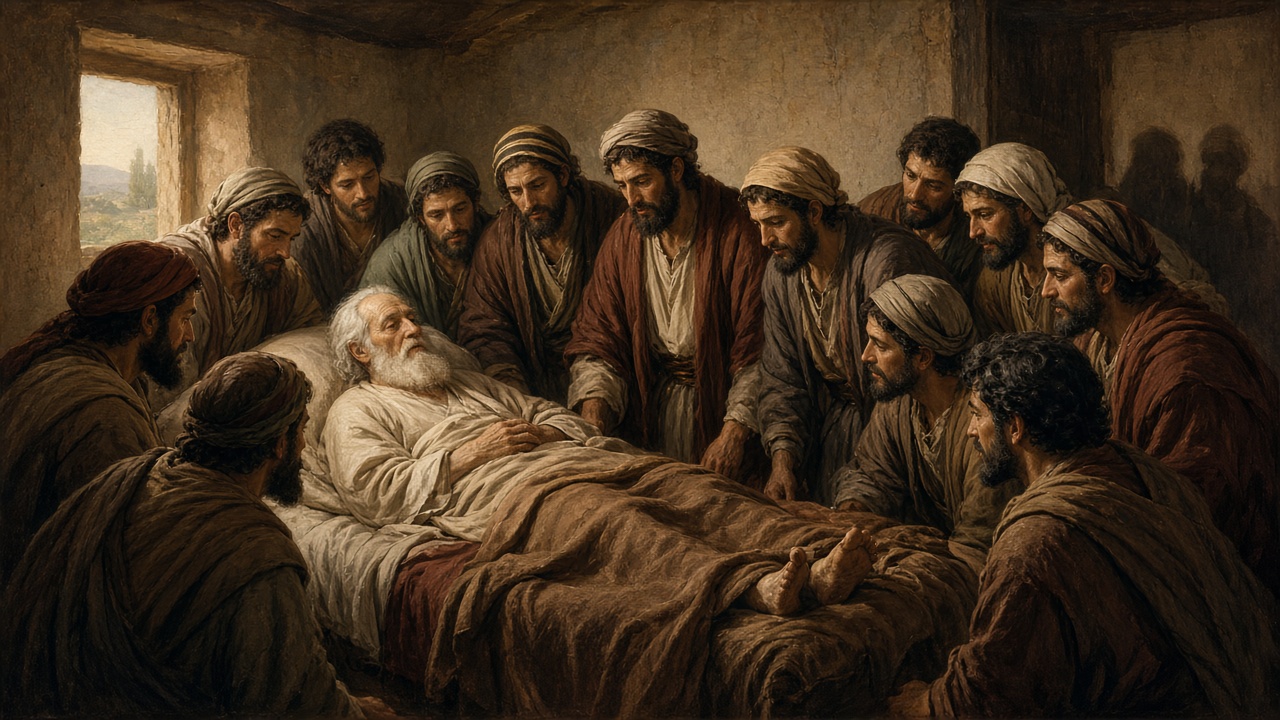
¿Sabías que…?
Últimas bendiciones a las doce tribus de Israel
- Las palabras de Jacob juegan con el significado de los nombres de sus hijos. Judá (en hebreo Yehudah) proviene de las palabras de Lea, "Ahora alabaré" (odeh), y Jacob dice que los hermanos de Judá lo alabarán. El nombre de Dan hace eco del "Dios me ha juzgado" (dananni) de su madre Bilha; Jacob dice que Dan juzgará a su pueblo, o le hará justicia, y el Easton's Bible Dictionary (1897) sugiere que esto probablemente alude a Sansón, un juez posterior de la tribu de Dan.Fuentes: Judah (patriarch) · Dan · el propio texto bíblico
- El capítulo llama bendición a cada discurso, aunque algunos son severos. Rubén, primogénito de Jacob y Lea, cuyo nombre significa "¡He aquí un hijo!", oye que ya no sobresaldrá, porque profanó el lecho de su padre. Simeón y Leví, que se vengaron con violencia de Hamor y de los siquemitas, oyen su ira maldecida y la promesa de que serán dispersados en Jacob y esparcidos en Israel; donde la Authorized Version decía que derribaron un muro, la Revised Version dice que desjarretaron un buey, tal como este capítulo afirma que desjarretan bueyes.Fuentes: Reuben · Simeon · Levi (patriarch) · el propio texto bíblico
- Jacob pide entonces que lo sepulten con sus padres en la cueva del campo de Efrón el hitita, que Abraham compró como sepulcro de la familia. Macpela, nombre entendido como "porción" o "cueva doble", estaba en la ladera de un monte al este de Hebrón, frente a Mamre, en la tierra de Canaán. Abraham y Sara, Isaac y Rebeca, y Lea ya estaban sepultados allí.Fuentes: Machpelah · Ephron · Mamre · el propio texto bíblico
Notas escritas con ayuda de IA a partir de fuentes abiertas (Theographic Bible Metadata, CC BY-SA 4.0; Easton’s Bible Dictionary, dominio público) y revisadas antes de publicarse.
Lugares de este capítulo
- Shiloh · Hoy: Khirbet Seilun · 32.056, 35.290 · versículo 10
- Sidon · Hoy: Sandikli archaeological site in Sidon · 33.561, 35.372 · versículo 13
- Canaan · 32.767, 35.333 · versículo 30
- Machpelah · Hoy: Cave of the Patriarchs · 31.525, 35.111 · versículo 30
Solo aparecen lugares identificados con alta confianza (90 % o más según las fuentes académicas reunidas por OpenBible). Mapa de la época: DARE (Digital Atlas of the Roman Empire), CC BY 4.0; mapa actual: © colaboradores de OpenStreetMap; lugares: OpenBible.info (CC BY 4.0).
Créditos y licencia de esta traducción
Nǫ̀htsı̨̨ Nı̨̨htł'è
Dogrib: Dogrib Genesis & New Testament New Testament & Portions of Old Testament
copyright © 2009 Canadian Bible Society
Language: Dogrib
Translation by: Canadian Bible Society
Tłı̨chǫ Genesis and New Testament
About Tłı̨chǫ
Tłı̨chǫ (Dogrib) is a Na-Dene (Athabaskan) language. It is spoken by the First Nations Tłı̨chǫ people in the Northwest Territories in Canada. It has the largest number of speakers of any of the Aboriginal language communities in the NWT, and is one of the official languages of the Northwest Territories.
About This Translation
This translation includes the book of Genesis and the New Testament in Tłı̨chǫ. The first edition of the Tłı̨chǫ New Testament was published in 2003. It was a historic event, as it was the first time in more than a hundred years that a complete New Testament was published for one of the Dene First Nations in the Territories. The first edition was well received and quickly sold out. In the meantime the book of Genesis had been completed. Consequently, the 2008 reprint of the Tłı̨chǫ New Testament included Genesis.
Though this translation of the New Testament and Genesis took a total of ten years, the people who worked on it built on years of labor invested by the Tłı̨chǫ people, elders, priests and missionaries, translators, educators, and linguists. The material contained in this book was checked and approved by consultants from Wycliffe Bible Translators and the Canadian Bible Society.
If you are interested in obtaining a printed copy of this Bible, please contact the Canadian Bible Society at http://www.biblescanada.com .
Copyright Information
Dogrib Genesis and New Testament © 2003, 2008 Canadian Bible Society
The text of the Bible in Tłı̨chǫ that appears in this electronic format or website is for personal use only.
Up to five hundred (500) verses of the Bible text in any form (written, visual, electronic or audio) may be quoted without permission. The quoted verses may not be more than 50% of a complete book of the Bible, or more than 25% of the total text of the work in which they are quoted. Prior written permission must be obtained for any other use of the text. Copyright acknowledgement must in all cases appear on the title or copyright page.
For more information on copyright conditions or to apply, visit http://www.biblesociety.ca/copyright .
This translation is made available to you under the terms of the
Creative Commons Attribution-Noncommercial-No Derivatives license 4.0.
You may share and redistribute this Bible translation or extracts from it in any format, provided that:
You include the above copyright and source information.
You do not sell this work for a profit.
You do not change any of the words or punctuation of the Scriptures.
Pictures included with Scriptures and other documents on this site are licensed just for use with those Scriptures and documents.
For other uses, please contact the respective copyright owners.
2014-04-22
Fuente: http://ebible.org/dgrDOGNT/ · eBible.org