Génesis 34
Nǫ̀htsı̨̨ Nı̨̨htł'è · Toca un versículo para ver sus referencias cruzadas.
Jacob wetì Dınah wegodıì
1Sìghaı̨waà hoòwo tł'axǫǫ̀, Leah eyıts'ǫ Jacob gıtì Dınah, eyı nèk'e gots'ǫ ts'èko gots'ǫ̀ kǫ̀taèhtła. 2Ekǫ Hıv got'ı̨į̀ gha k'àowo Hamor weza Shekem yaɂı̨ ekò dayaachì gà yets'ǫ̀ ekǫ-le eghàlaı̨dà. 3Hanìkò Shekem sıì t'eeko ts'ǫ̀ kànıwo xè yeghǫneètǫ t'à yets'ǫ̀ nezı̨į̀ adı. 4Eyıt'à Shekem edetà Hamor ts'ǫ̀ hadı, “Dıı t'eeko sets'èkeè elı̨ ha segha wetà ts'ǫ̀ goı̨de,” edetà èhdı.
5Jacob, wetì ts'ǫ̀ ekǫ-le eghàlaeda yeghǫ ıìkw'o ekò weza t'asį̀ı̨ tıts'aàdìı k'ègedìı ts'ǫ̀ geèlı̨ ı̨lè. Eyıt'à edekǫ̀ nǫǫ̀gı̨ı̨de gots'ǫ̀ yeghǫ t'asadı-le.
6Whaà-le-t'ıì Shekem wetà Hamor, Jacob ts'ǫ̀ gode ha yets'àèhtła. 7Ekìıyeè k'e Jacob weza, dàgòjà ghǫ gıìkw'o ts'ǫ̀et'ıì edekǫ̀ nǫǫ̀gı̨ı̨de. Shekem, Jacob wetì ts'ǫ̀ hanì ekǫ-le eghàlaı̨dà t'à Jacob weza sıì gınì-le xè wets'ǫ̀ gık'èch'a. Hanì k'ehots'eɂa ha honàedı ha-le ı̨lè.
8Hanìkò Hamor, Jacob ts'ǫ̀ hadı, “Seza Shekem sıì ededzeè t'à netì ghǫneètǫ hǫt'e. Seza ts'èkeè elı̨ ha netì seza ghàı̨htè. 9Goza eyıts'ǫ gotì ełexè honìgııdè. Naxıtì goghàahtè eyıts'ǫ gotì naxıghàts'ehtè ha. 10Hanì-ı̨dè gota nàahdè ha dìì-le. Gonèk'e t'ahoòyį̀ı̨ k'ehoahde ha, edegha dèè ààhchı ha eyıts'ǫ t'asìı ełedats'ele ha,” yèhdı.
11Shekem, Dınah wetà Jacob eyıts'ǫ wı̨ı̨de gots'ǫ̀ hadı, “Hęɂę sèahdı nı̨dè ayìı seahkèe sìı naxıghàehłe ha. 12T'eeko seahtè k'èxa ayìı dahwhǫǫ sìı seahkè. Dàı̨hcho ts'ǫ̀ wek'èxa nàehdì ha dahwhǫǫ sìı seahkè. Eyı t'eeko sets'èkeè elı̨ ha eyı zǫ dehwhǫ,” gòhdı.
13Gıdè wets'ǫ̀ ekǫ-le eghàlaedà ts'ıhɂǫ̀ Jacob weza, Shekem eyıts'ǫ wetà Hamor ts'ǫ̀ hogets'ì xàyagı̨ı̨htı. 14Hagedı, “Hats'ele ha dìì,” gıìhdı, “Godè dǫ wekwǫ̀ nàet'a-le xè honìdaà ats'ele ha dìì. Eyı sìı gogha wets'àet'ǫ hǫt'e. 15T'asìı ı̨łè haahłà nı̨dè hęɂę naxèts'edı ha. Naxıts'ǫ dǫzhìı hazǫǫ̀ goxèht'eè gıkwǫ̀ k'e nàt'à ha hǫt'e. 16Hanì-ı̨dè gotì naxıghàts'ehtè ha eyıts'ǫ naxıtì ts'ìhchı ha. Eyıts'ǫ naxıta nàts'edè ha eyıts'ǫ naxıxè dǫ ı̨łè xàɂaa lats'ede ha. 17Hanìkò naxıkwǫ̀ nàt'à ha dahwhǫ-le nı̨dè godè nats'eechı xè nats'eedè ha,” gògedı.
18Dàgedıı sìı Hamor eyıts'ǫ weza Shekem gıgha nezı̨ t'à gok'èhogı̨ı̨ɂǫ. 19Eyı cheko Shekem, Hamor wèot'ı̨ gha nakweè whedaa elı̨ı̨ sìı, Jacob wetì ts'ǫ̀ kànıwo t'à ekòet'ıì gıyatıì k'ę̀ę̀ wekwǫ̀ nàet'aà adììdlà. 20Eyıt'à Hamor eyıts'ǫ weza Shekem kǫ̀ta dǫ ełègehdèe-k'è edèot'ı̨ hazǫǫ̀ ts'ǫ̀ gogı̨ı̨de. 21“Eyı dǫ sìı gots'ǫ̀ dǫ nezı̨ı̨ agı̨ı̨t'e,” gògedı. “Gonèk'e goxè nàgııdè eyıts'ǫ ełexè t'asìı ehdats'ııle. Gonèk'e goı̨chà t'à ededı̨ sı gıgha gòɂǫ. Gıtì ts'ìhchı ha eyıts'ǫ ededı̨ sı gotì gìhchı ha. 22Hanìkò eyı dǫ sìı t'asìı ı̨łè hats'ı̨ı̨là nı̨dè zǫ hęɂę gògedı ha gedı. Gots'ǫ dǫzhìı hazǫǫ̀ gıxèht'eè gıkwǫ̀ nàet'a nı̨dè zǫ, gedı. 23Hanì-ı̨dè gıts'ǫ tıts'aàdìı hazǫǫ̀, eyıts'ǫ t'asìı hazǫǫ̀ gıts'ǫ sìı goghaelı̨ ha. Eyıt'à hęɂę gìts'ııdì, hanì-ı̨dè gota nàgedè ha dìì-le,” gògedı.
24Eyı kǫ̀ta gots'ǫ dǫzhìı hazǫǫ̀ ełèwhedee sìı Hamor eyıts'ǫ weza Shekem k'èhogı̨ı̨ɂǫ t'à dǫzhìı gıkwǫ̀ k'e nagıat'a.
25Taı dzęę̀ tł'axǫǫ̀ ı̨łaà dǫzhìı gıkwǫ̀ nàet'aa k'è eyagı̨ı̨lı̨ ekò Jacob weza nàke, Dınah wı̨ı̨de Sımeyon eyıts'ǫ Levı behcho t'à eyı kǫ̀ta ts'ǫ dǫzhìı hazǫǫ̀ ełaàgı̨ı̨hdè. 26Hamor eyıts'ǫ weza Shekem behcho t'à ełaàgogį̀ı̨hdè gà ededè Dınah Shekem wekǫ̀ gots'ǫ negıìchı gà nageèhde. 27Eyı tł'axǫǫ̀ Jacob weza, dǫ ełaı̨dèe ts'ǫ̀ geède. Eyı kǫ̀ta gıdè ts'ǫ̀ ekǫ-le eghàlaedà ts'ıhɂǫ̀ ekǫ gots'ǫ t'asìı hazǫǫ̀ gıgha nezı̨ı̨ sìı xàgeèwa. 28Eyı kǫ̀ta gots'ǫ eyıts'ǫ gınèk'e gots'ǫ tıts'aàdìı, tłı̨tsoa eyıts'ǫ t'asìı hazǫǫ̀ whelaa sìı negı̨į̀wa. 29T'asìı hazǫǫ̀ t'à ahxe gı̨ı̨lı̨ı̨ sìı nageèwa, gıts'ǫ ts'èko eyıts'ǫ gıza sı, eyıts'ǫ gıkǫ̀ goyìı t'asìı whelaa sìı hazǫǫ̀ nageèwa.
30Eyı tł'axǫǫ̀ Jacob, edeza Sımeyon eyıts'ǫ Levı ts'ǫ̀ hadı, “Jǫ nèk'e Kanan got'ı̨į̀ eyıts'ǫ Perız got'ı̨į̀ sedzagı̨ı̨hwhǫǫ̀ agìahłà t'à segha hoìla hòwhàahtsı̨ hǫt'e. Goı̨tłǫǫ ats'ı̨ı̨t'e nıìle, eyıt'à ełets'àgedı xè gots'ǫ̀ ełegegǫ nı̨dè gonahk'e gı̨ı̨lı̨ t'à sèot'ı̨ hazǫǫ̀ xè ełaàsegèhwhı ha,” gòhdı.
31Hanìkò weza hagıìhdı, “Shekem godè ts'èkojıı elı̨ lanì yets'ǫ̀ k'ehoɂa ha nıìle ı̨lè,” gedı.
¿Sabías que…?
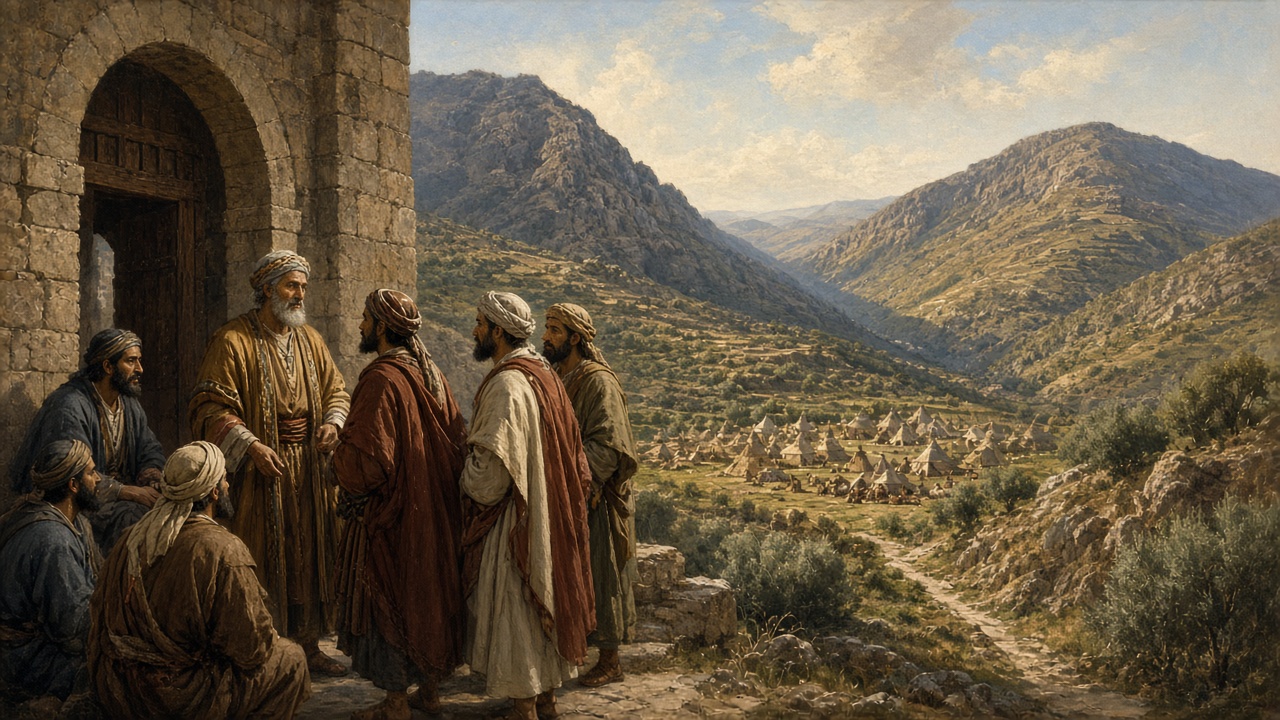
Dina y la ciudad de Siquem
- Dina, hija de Jacob y Lea y hermana de Simeón y Leví, fue tomada por la fuerza por Siquem, hijo de Hamor el heveo. Simeón y Leví mataron entonces a Hamor, a Siquem y a los hombres de la ciudad; Jacob dijo que lo habían convertido en un hedor para los cananeos y los ferezeos y, al morir, pronunció una maldición contra Simeón.Fuentes: Dinah · Simeon · el propio texto bíblico
- La ciudad de Siquem estaba en un valle estrecho y resguardado, entre el monte Ebal al norte y el monte Gerizim al sur, separados en la base por solo unas quinientas yardas. Tras volver de Mesopotamia, Jacob compró allí una parcela de campo a los hijos de Hamor. El nombre de Hamor se explica como 'asno macho', y Hechos 7:16 lo llama Emmor.Fuentes: Shechem · Hamor
- Los heveos eran uno de los pueblos dispersos desde el Hermón hasta Gabaón, al sur; el nombre se interpreta como 'gente de las tierras del medio' o 'aldeanos', y probablemente eran una rama de los hititas. A Hamor el heveo se lo describe como príncipe de la tierra en el tiempo del regreso de Jacob, y el relato llama a su hijo Siquem el más respetado de toda la casa de su padre.Fuentes: Hivite · el propio texto bíblico
Notas escritas con ayuda de IA a partir de fuentes abiertas (Theographic Bible Metadata, CC BY-SA 4.0; Easton’s Bible Dictionary, dominio público) y revisadas antes de publicarse.
Créditos y licencia de esta traducción
Nǫ̀htsı̨̨ Nı̨̨htł'è
Dogrib: Dogrib Genesis & New Testament New Testament & Portions of Old Testament
copyright © 2009 Canadian Bible Society
Language: Dogrib
Translation by: Canadian Bible Society
Tłı̨chǫ Genesis and New Testament
About Tłı̨chǫ
Tłı̨chǫ (Dogrib) is a Na-Dene (Athabaskan) language. It is spoken by the First Nations Tłı̨chǫ people in the Northwest Territories in Canada. It has the largest number of speakers of any of the Aboriginal language communities in the NWT, and is one of the official languages of the Northwest Territories.
About This Translation
This translation includes the book of Genesis and the New Testament in Tłı̨chǫ. The first edition of the Tłı̨chǫ New Testament was published in 2003. It was a historic event, as it was the first time in more than a hundred years that a complete New Testament was published for one of the Dene First Nations in the Territories. The first edition was well received and quickly sold out. In the meantime the book of Genesis had been completed. Consequently, the 2008 reprint of the Tłı̨chǫ New Testament included Genesis.
Though this translation of the New Testament and Genesis took a total of ten years, the people who worked on it built on years of labor invested by the Tłı̨chǫ people, elders, priests and missionaries, translators, educators, and linguists. The material contained in this book was checked and approved by consultants from Wycliffe Bible Translators and the Canadian Bible Society.
If you are interested in obtaining a printed copy of this Bible, please contact the Canadian Bible Society at http://www.biblescanada.com .
Copyright Information
Dogrib Genesis and New Testament © 2003, 2008 Canadian Bible Society
The text of the Bible in Tłı̨chǫ that appears in this electronic format or website is for personal use only.
Up to five hundred (500) verses of the Bible text in any form (written, visual, electronic or audio) may be quoted without permission. The quoted verses may not be more than 50% of a complete book of the Bible, or more than 25% of the total text of the work in which they are quoted. Prior written permission must be obtained for any other use of the text. Copyright acknowledgement must in all cases appear on the title or copyright page.
For more information on copyright conditions or to apply, visit http://www.biblesociety.ca/copyright .
This translation is made available to you under the terms of the
Creative Commons Attribution-Noncommercial-No Derivatives license 4.0.
You may share and redistribute this Bible translation or extracts from it in any format, provided that:
You include the above copyright and source information.
You do not sell this work for a profit.
You do not change any of the words or punctuation of the Scriptures.
Pictures included with Scriptures and other documents on this site are licensed just for use with those Scriptures and documents.
For other uses, please contact the respective copyright owners.
2014-04-22
Fuente: http://ebible.org/dgrDOGNT/ · eBible.org