Génesis 3
Nǫ̀htsı̨̨ Nı̨̨htł'è · Toca un versículo para ver sus referencias cruzadas.
Adam eyıts'ǫ Eve hołı̨ı̨ hogèhtsı̨
1Gòocho sìı Nǫ̀htsı̨ tıts'aàdìı whatsǫǫ̀ edegeedaa whehtsı̨ı̨ sìı hazǫǫ̀ t'à gonahk'e eghǫyaeɂà gha gǫǫzǫ hǫt'e. Ts'èko ts'ǫ̀ hadı, “Nǫ̀htsı̨, dıı dèè-goehshee-k'è ts'ı t'alàa-sìı wets'ǫ shèahtı̨ ha-le, hadı nì?” yèhdı.
2Ts'èko gòocho ts'ǫ̀ hadı, “Dıı dèè-goehshee-k'è ts'ı hazǫǫ̀ wets'ǫ shèwetı̨ ha dìì-le hǫt'e, 3hanìkò Nǫ̀htsı̨ dıı hagòhdı ı̨lè, ‘Dèè-goehshee-k'è ts'ı tanı nàı̨ɂaa sìı wets'ǫ jìecho naxıwàhodı ha-le, eyıts'ǫ daahchì ha-le. Daahchì nı̨dè ełaahwhı ha,’ gòhdı ı̨lè,” yèhdı.
4Gòocho ts'èko ts'ǫ̀ hadı, “Ełaı̨wı ha nıìle. 5Wets'ǫ jìecho neeɂà nı̨dè t'asìı łǫ negha wègaat'ı̨į̀ agode ha, Nǫ̀htsı̨ yek'èezǫ t'à hanaxèhdı hǫt'e. Nǫ̀htsı̨ laahde ha, nàowo nezı̨ı̨ eyıts'ǫ nàowo nezı̨-le k'èhoahsǫǫ̀ aahde ha,” gòocho yèhdı.
6Ts'èko, eyı ts'ı wejìecho ts'eɂà gha nezı̨ lanì wegha wègaat'ı̨ xè wegha wèdaat'ı̨. Wet'à gohzǫǫ̀ ahde ha nıwǫ t'à jìecho mǫ̀hdaa neyı̨į̀wa gà yı̨ı̨ɂà. Wedǫǫ̀ yegà nàwoo sìı jìecho mǫ̀hdaa yeghàı̨dì. Ededı̨ sı yı̨ı̨ɂà. 7Jìecho gı̨ı̨ɂà tł'axǫǫ̀ į̀łah t'asìı łǫ gıgha wègaat'ı̨į̀ agòjà, ı̨ht'edę geèhkw'e nǫǫ̀ gık'èhoèhzà. Eyıt'à ı̨t'ǫ̀ą nechàa ełexègeèlı gà goht'ǫ lanì edek'e nègı̨ı̨wa.
8Eyı tł'axǫǫ̀ xèhts'ǫ̀ gòk'òo ekìıyeè k'e dǫzhìı eyıts'ǫ wets'èkeè gots'ǫ̀ K'àowo Nǫ̀htsı̨ dèè-goehshee-k'è k'eda hǫt'e gıìkw'o. Eyıt'à ts'ı nàèhzhaa nı gots'ǫ̀ K'àowo Nǫ̀htsı̨ ts'àdegeeɂį̀. 9Gots'ǫ̀ K'àowo Nǫ̀htsı̨ dǫzhìı ts'ǫ̀ gode, “Edı̨į̀ ts'ǫ̀ neelı̨?” yèhdı.
10Dǫzhìı hadı, “Dèè-goehshee-k'è k'eı̨tło neèhkw'o, hanìkò ı̨ht'edę whıhda t'à dehjı̨, eyıt'à nàdeehɂį̀,” yèhdı.
11Nǫ̀htsı̨ hadı, “Amìı ı̨ht'edę wheęda nèhdı? Eyı ts'ı wets'ǫ shènetı̨ ha-le nèehsı̨ı̨ sìı wets'ǫ shènetı̨ nì?” yèhdı.
12Dǫzhìı hadı, “Ts'èko sexè jǫ whedaà anelàa sìı eyı ts'ı gots'ǫ jìecho sànı̨ı̨dì t'à ııhɂà ı̨lè,” yèhdı.
13Eyıt'à gots'ǫ̀ K'àowo Nǫ̀htsı̨ ts'èko ts'ǫ̀ hadı, “Dànìghǫ hanì eghàlaneedà?” yèhdı.
Ts'èko hadı, “Gòocho seghǫyaàɂǫ t'à jìecho ııhɂà,” hadı.
14Eyıt'à Nǫ̀htsı̨ gòocho ts'ǫ̀ hadı,
“Hanì ts'èko ts'ǫ̀ eghàlaneedà ts'ıhɂǫ̀
tıts'aàdìı gık'èhodìı eyıts'ǫ whatsǫǫ̀ edegeedaa sìı gınahk'e nexè gots'eèdı ha hǫt'e.
Dèè k'e nebò t'à k'enets'ì ha, eyıts'ǫ t'aats'ǫǫ̀ ı̨da gots'ǫ̀ ehtł'è nedè ha.
15“Nı̨ eyıts'ǫ ts'èko ełek'èch'a aaht'eè anaxehłe ha,
ts'èko weza eyıts'ǫ nı̨ neza ełets'ǫ̀ xànègı̨ı̨ɂa ha.
Ts'èko weza sìı nekwì k'ètsǫètà ha,
eyıts'ǫ nı̨ wekehtà nàı̨ht'ı ha,” Nǫ̀htsı̨ gòocho ts'ǫ̀ hadı.
16Nǫ̀htsı̨ ts'èko ts'ǫ̀ dıı hadı,
“Bebìa k'è hòtł'ò eyanelı̨ ha,
neza gòhłè nı̨dè sıì negha hoìla ha.
Nedǫzhıì wekaneeɂà ha,
eyıts'ǫ nedǫzhıì nets'ǫ̀ k'àowo elı̨ ha,” yèhdı.
17Nǫ̀htsı̨ Adam ts'ǫ̀ dıı hadı,
“Eyı ts'ı wets'ǫ jìecho neɂà-le nèehsı̨ kò
nets'èkeè wek'èanet'e t'à jìecho neeɂà.
Nı̨ nets'ıhɂǫ̀ dıı dèè k'e gots'eèdı hòɂǫ ha.
T'aats'ǫǫ̀ ı̨da gots'ǫ̀ la nàtsoo ghàlaı̨da zǫ t'à shènetı̨ ha.
18“Nets'ǫ dèè k'e ı̨chį̀ghoò eyıts'ǫ tł'oh nezı̨-le xàehshe ha,
hanì dèè k'e t'asìı nezı̨ı̨ dehshee sìı ghǫ shènetı̨ ha.
19“Ehtł'è nanedlı̨ gots'ǫ̀ nınììtì xè
la nàtsoo ghàlaı̨da zǫ t'à shènetı̨ ha.
Ehtł'è gots'ǫ nehòlı̨ t'à ehtł'è anet'e,
eyıts'ǫ ehtł'è nanedlı̨ ha,” Nǫ̀htsı̨ Adam ts'ǫ̀ hadı.
20Adam edets'èkeè wıızì whehtsı̨. Dǫ hazǫǫ̀ eda gha gomǫ elı̨ ha t'à Eve yèhdıì yıızì whehtsı̨.
21Gots'ǫ̀ K'àowo Nǫ̀htsı̨ ewò t'à Adam eyıts'ǫ wets'èkeè gogha goht'ǫ whehtsı̨ gà gok'e nèyı̨ı̨wa. 22Eyıts'ǫ gots'ǫ̀ K'àowo Nǫ̀htsı̨ hadı, “Dıı dǫ, nàowo nezı̨ı̨ eyıts'ǫ nàowo nezı̨-le k'èhoezǫ t'à goxèht'eè lajà. Ts'ı wet'à ts'eedaa gots'ǫ jìecho yııɂà sǫ̀ǫ̀, yı̨ı̨ɂà nı̨dè welǫ whìle ts'ǫ̀ eda ha,” hadı. 23Eyıt'à Nǫ̀htsı̨ Eden nèk'e dèè-goehshee-k'è gots'ǫ xàyeèhɂà. Dèè gots'ǫ wehòèlı̨ı̨ sìı yek'e eghàlaedaà ayį̀į̀là. 24Nǫ̀htsı̨ dǫ xàdeèzhì tł'axǫǫ̀ Eden nèk'e dèè-goehshee-k'è sa kàɂàa ts'ǫnèe yak'eet'ı̨į̀ nàłegeewoò ayį̀į̀là. Behcho dèk'ǫ̀ǫ į̀hnǫǫ̀nageetı̨ t'à ts'ı wet'à ts'eedaa wets'ǫ̀ goòɂàa sìı yexogııhdı.
¿Sabías que…?
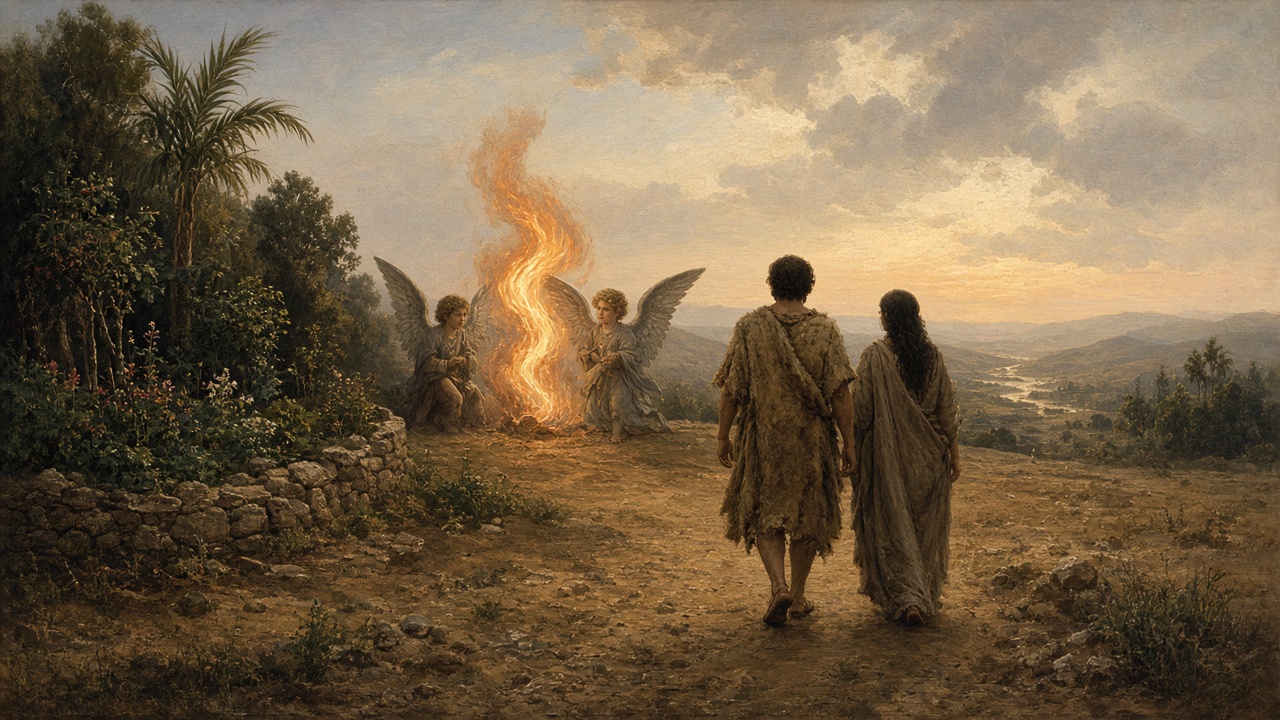
La caída y el exilio del Edén
- Una referencia tradicional explica Adán como “rojo”, palabra babilónica usada como nombre genérico del hombre, con el mismo sentido en hebreo y en asirio, y relaciona el nombre con el hecho de que fue formado del polvo de la tierra. En este capítulo ese origen reaparece en el juicio: trabajará por su alimento hasta volver al suelo, porque es polvo y al polvo volverá, y es enviado a labrar la tierra de la que fue tomado.Fuentes: Adam · el propio texto bíblico
- En este capítulo Adán da a su mujer el nombre Eva, que significa “vida” o “viviente”, porque ella sería la madre de todos los vivientes.Fuentes: Eve · el propio texto bíblico
- La ubicación del jardín de Edén, del que el hombre es expulsado en este capítulo, se ha discutido mucho: se ha situado en Armenia, al oeste del mar Caspio, en Media, cerca de Damasco, en Palestina, en el sur de Arabia y en Babilonia. Una nota geográfica tradicional lo busca a lo largo del Tigris y el Éufrates, en la tierra de Sinar, o Babilonia.Fuentes: Eden · el propio texto bíblico
Notas escritas con ayuda de IA a partir de fuentes abiertas (Theographic Bible Metadata, CC BY-SA 4.0; Easton’s Bible Dictionary, dominio público) y revisadas antes de publicarse.
Créditos y licencia de esta traducción
Nǫ̀htsı̨̨ Nı̨̨htł'è
Dogrib: Dogrib Genesis & New Testament New Testament & Portions of Old Testament
copyright © 2009 Canadian Bible Society
Language: Dogrib
Translation by: Canadian Bible Society
Tłı̨chǫ Genesis and New Testament
About Tłı̨chǫ
Tłı̨chǫ (Dogrib) is a Na-Dene (Athabaskan) language. It is spoken by the First Nations Tłı̨chǫ people in the Northwest Territories in Canada. It has the largest number of speakers of any of the Aboriginal language communities in the NWT, and is one of the official languages of the Northwest Territories.
About This Translation
This translation includes the book of Genesis and the New Testament in Tłı̨chǫ. The first edition of the Tłı̨chǫ New Testament was published in 2003. It was a historic event, as it was the first time in more than a hundred years that a complete New Testament was published for one of the Dene First Nations in the Territories. The first edition was well received and quickly sold out. In the meantime the book of Genesis had been completed. Consequently, the 2008 reprint of the Tłı̨chǫ New Testament included Genesis.
Though this translation of the New Testament and Genesis took a total of ten years, the people who worked on it built on years of labor invested by the Tłı̨chǫ people, elders, priests and missionaries, translators, educators, and linguists. The material contained in this book was checked and approved by consultants from Wycliffe Bible Translators and the Canadian Bible Society.
If you are interested in obtaining a printed copy of this Bible, please contact the Canadian Bible Society at http://www.biblescanada.com .
Copyright Information
Dogrib Genesis and New Testament © 2003, 2008 Canadian Bible Society
The text of the Bible in Tłı̨chǫ that appears in this electronic format or website is for personal use only.
Up to five hundred (500) verses of the Bible text in any form (written, visual, electronic or audio) may be quoted without permission. The quoted verses may not be more than 50% of a complete book of the Bible, or more than 25% of the total text of the work in which they are quoted. Prior written permission must be obtained for any other use of the text. Copyright acknowledgement must in all cases appear on the title or copyright page.
For more information on copyright conditions or to apply, visit http://www.biblesociety.ca/copyright .
This translation is made available to you under the terms of the
Creative Commons Attribution-Noncommercial-No Derivatives license 4.0.
You may share and redistribute this Bible translation or extracts from it in any format, provided that:
You include the above copyright and source information.
You do not sell this work for a profit.
You do not change any of the words or punctuation of the Scriptures.
Pictures included with Scriptures and other documents on this site are licensed just for use with those Scriptures and documents.
For other uses, please contact the respective copyright owners.
2014-04-22
Fuente: http://ebible.org/dgrDOGNT/ · eBible.org