Génesis 21
Nǫ̀htsı̨̨ Nı̨̨htł'è · Toca un versículo para ver sus referencias cruzadas.
Isaac wegǫ̀hłı̨
1Gots'ǫ̀ K'àowo, Sarah ts'ǫ̀ wedzeè eteèɂı̨ t'à edeyatıì yeghàı̨ɂǫ k'ę̀ę̀ yets'ǫ̀ eghàlaı̨dà. 2Eyıt'à Abraham eneèko whelı̨ tł'axǫǫ̀ wets'èkeè Sarah hotıeda-le ajà xè yezaa nìı̨htı̨. Hotıì ekìıyeè k'e Nǫ̀htsı̨ hagode ha dı ı̨lèe sìı k'ę̀ę̀ agòjà. 3Abraham, Sarah yezaa nìı̨htı̨ı̨ sìı Isaac wìyeh ayį̀į̀là. 4Wezaa Isaac wegǫ̀hłı̨ gots'ǫ ek'èdı̨ dzęę̀ k'e Abraham wekwǫ̀ k'e nàyı̨ı̨t'a. Nǫ̀htsı̨ nàowo yeghàı̨ɂǫ k'ę̀ę̀ ayį̀į̀là. 5Abraham ı̨łèakw'eènǫ weghoò ekò wezaa Isaac wegǫ̀hłı̨.
6Sarah hadı, “Nǫ̀htsı̨ nàɂehdlò asį̀į̀là, eyıts'ǫ dǫ hazǫǫ̀ eyı ghǫ gıìkw'oo sìı sexè nàgeedlò ha,” hadı. 7Eyıts'ǫ hadı, “Sarah chekoa eht'ò ayele ha sìı amìı Abraham ts'ǫ̀ hadı welì? Hanìkò eneèko whelı̨ tł'axǫǫ̀ wezaa nìı̨htı̨,” Sarah hadı.
Abraham, Hagar eyıts'ǫ weza Ishmael nagoèhɂà
8Sarah Isaac nìı̨htı̨ı̨ sìı nechà dèzhǫ xè bò ghǫ shètı̨į̀ ajà. Isaac bò ghǫ shètı̨į̀ ajà t'à Abraham yegha nàsı̨ whehtsı̨. 9Ekò k'e Sarah, Ishmael, Isaac k'adaawo yaɂı̨. (Egypt got'ı̨į̀ Hagar, Abraham wezaa Ishmael nìı̨htı̨ ı̨lè hǫt'e.) 10Eyıt'à Sarah, Abraham ts'ǫ̀ hadı, “Eyı ts'èko gogha eghàlaedaa sìı weza xè xàwı̨ı̨hɂà. Eyı ts'èko weza sìı seza xè t'asìı hazǫǫ̀ nets'ǫ sìı weghaelı̨ ha nıìle,” hadı.
11Ishmael Abraham weza ne t'à sıì wegha dìì. 12Hanìkò Nǫ̀htsı̨ yets'ǫ̀ hadı, “Eyı cheko eyıts'ǫ ts'èko negha eghàlaedaa sìı gıghǫ nànınewo-le. Nezaa Isaac ededı̨ wet'ǫ̀ǫ̀ nets'ıhɂǫ̀ǫ-dǫǫ̀ gǫ̀hłı̨ ha, eyıt'à Sarah dànèhdıı sìı k'èanet'e. 13Eyı ts'èko negha eghàlaedaa weza sìı nets'ǫ wegǫ̀hłı̨ ne t'à, wets'ıhɂǫ̀ǫ-dǫǫ̀ łǫ gǫ̀hłı̨ ha,” Nǫ̀htsı̨ yèhdı.
14K'omǫǫ̀dǫǫ̀ ts'ǫ̀et'ıì Abraham weghǫ shèts'ezhee deyèyı̨ı̨wa eyıts'ǫ tıwò yìı tı yı̨ı̨htł'ı, Hagar nayage gha yek'e nèyı̨ı̨wa, hanì dǫzhìa xè xàyeèhɂà. Ekìı-ka nèk'e Bersheba gòyeh ekǫ hok'èezǫ-le k'etło.
15Tı whìle agòjà ekò Hagar edeza gogho tł'a whetı̨į̀ ayį̀į̀là. 16Eyı gà taekw'eènǫ (300) gokè haı̨wa ts'ǫ̀ yahdaà dèè k'e dèhkwà, dıı hanıwǫ t'à, “Dǫzhìa sedaà ełaàwı ha segha dìì,” hanıwǫ. Ekǫ wheda xè etse hǫt'e.
17Hanìkò Nǫ̀htsı̨ eyı dǫzhìa etse yeèhkw'ǫ. Nǫ̀htsı̨ wets'ǫ yak'eet'ı̨į̀ yak'e gots'ǫ Hagar ts'ǫ̀ gode, hayèhdı, “Hagar nexè dàgòjà? Dı̨ı̨jı̨-le, dǫzhìa eyı whetı̨ı̨ xè etsee sìı Nǫ̀htsı̨ yeèhkw'ǫ hǫt'e. 18Dǫzhìa nıìtłaà awı̨ı̨le gà k'egòwı̨ı̨dı, wets'ıhɂǫ̀ǫ-dǫǫ̀ łǫ gǫ̀hłı̨ ha ne t'à,” yak'eet'ı̨į̀ yèhdı.
19Nǫ̀htsı̨ tı-xàewìı-k'è wegha wegoèht'į̀ ayį̀į̀là. Hagar ekǫ èhtła gà tıwò yìı tı dagoòɂǫǫ̀ ayį̀į̀là gà edeza ghàtıı̨dì.
20Eyı dǫzhìa nechà dèzhǫ ekò Nǫ̀htsı̨ yexè sìghà hòɂǫǫ̀ ayį̀į̀là. Ekìı-ka nèk'e nàdeè ajà eyıts'ǫ k'į̀ t'à nezı̨į̀ eehtà k'èezǫǫ̀ ajà. 21Ekìı-ka nèk'e Paran nàde ekò wemǫ Egypt nèk'e gots'ǫ ts'èko yeghaį̀hchì.
Abraham eyıts'ǫ Abımelek ełexè yatı nàtsoo gèhtsı̨
22Ekìıyeè k'e k'àowocho Abımelek eyıts'ǫ yegha eghǫǫ-dǫǫ̀ ts'ǫ̀ k'àowo elı̨ı̨ Fıkol, Abraham ts'ǫ̀ hagedı, “Nǫ̀htsı̨ t'asìı hazǫǫ̀ t'à nexè sìghà hòɂǫǫ̀ ayį̀į̀là hǫt'e. 23Eyıt'à jǫ Nǫ̀htsı̨ nadąą̀ sexè yatı nàtsoo nehtsı̨. Sets'ǫ̀ hoìla hoı̨htsı̨ ha-le, seza sı eyıts'ǫ ı̨daà gòı̨ɂà nı̨dè sets'ıhɂǫ̀ǫ-dǫǫ̀ sı gıts'ǫ̀ hoìla hoı̨htsı̨ ha-le sìı̨dıì, sexè yatı nàtsoo nehtsı̨. Jǫ gonèk'e xàhtǫ lanì nàądè t'à dànì nets'ǫ̀ sedzeè eteèɂı̨ k'ę̀ę̀ nı̨ sı sets'ǫ̀ nedzeè eteèɂı̨ welè,” yèhdı.
24Abraham gots'ǫ̀ hadı, “Eyı gha yatı nàtsoo naxıxè whıhtsı̨ hǫt'e,” gòhdı.
25Eyıts'ǫ Abımelek wecheekeè tık'è goghǫ negıìchì ı̨lèe sìı t'à Abraham, Abımelek ts'ǫ̀ goı̨de. 26Hanìkò Abımelek yets'ǫ̀ hadı, “Amìı ayį̀į̀làa sìı wek'èehsǫ nıìle. Sets'ǫ̀ haı̨dı-le ts'ıhɂǫ̀ dıı dzęę̀ k'e k'ǫąt'a wek'èhoèhzà,” yèhdı.
27Eyıt'à Abraham, sahzǫ̀ą eyıts'ǫ ejıe Abımelek ghàı̨la, eyıt'à ełexè nàowo gèhtsı̨. 28Abraham sahzǫ̀ą hazǫǫ̀ ts'ǫ sahzǫ̀ązaa łǫ̀hdı̨ whatsǫǫ̀ nègòǫwa ekò, 29Abımelek yets'ǫ̀ hadı, “Eyı sahzǫ̀ązaa łǫ̀hdı̨ whatsǫǫ̀ nègı̨ı̨waa sìı dànìghǫ anehɂı̨?” yèhdı.
30Abraham yets'ǫ̀ hadı, “Dıı sahzǫ̀ązaa łǫ̀hdı̨ sìı negha welè. Eyı weghàà dıı tık'è gòɂǫǫ sìı sı̨ wegha dèè xàehgè hǫt'e wek'èhoedzǫ ha t'à,” yèhdı.
31Eyıt'à eyı dǫ nàke ełexè yatı nàtsoo gèhtsı̨ t'à eyı dèè gòɂǫǫ sìı Bersheba gòyeh adlà.
32Bersheba nèk'e nàowo hòèlı̨ tł'axǫǫ̀ k'àowocho Abımelek eyıts'ǫ yegha eghǫǫ-dǫǫ̀ ts'ǫ̀ k'àowo elı̨ı̨ Fıkol, Fılıstea nèk'e ts'ǫ̀ nageèhde. 33Abraham, Bersheba nèk'e ts'ı “tamarısk” ekǫ dehshe gha dèè k'e nàyı̨ı̨hgè. Ekǫ t'aa welǫ whìle ts'ǫ̀ Nǫ̀htsı̨ elı̨ı̨ sìı ts'ǫ̀ xàyaı̨htı. 34Eyı tł'axǫǫ̀ Abraham, Fılıstea nèk'e whaà gots'ǫ̀ nàı̨dè.
¿Sabías que…?
El nacimiento de Isaac, la partida de Agar y Beerseba
- Abraham tenía cien años cuando Sara dio a luz a Isaac, el único hijo que tuvieron juntos, y lo circuncidó a los ocho días, como Dios le había mandado. Sara dijo que Dios la había hecho reír y que cuantos oyeran la noticia reirían con ella. El Easton's Bible Dictionary (1897) señala que hubo una gran fiesta cuando destetaron a Isaac, probablemente hacia los dos años.Fuentes: el propio texto bíblico · Isaac
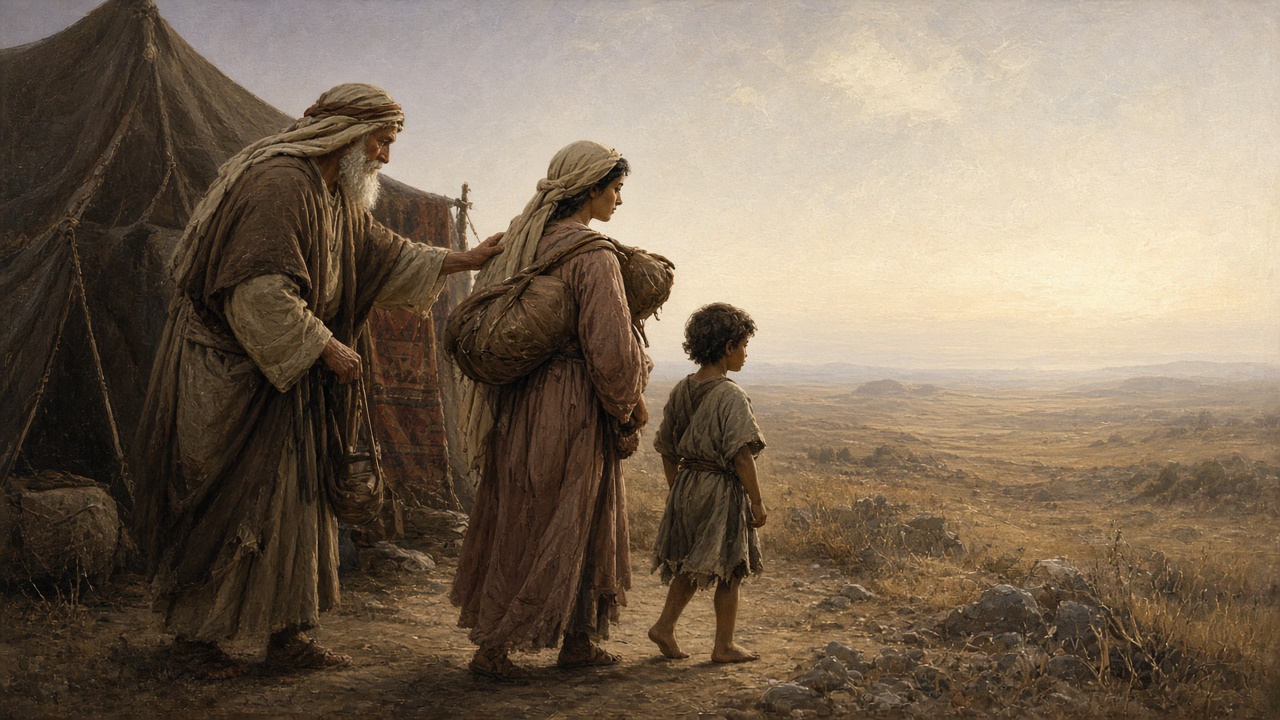
- Agar, cuyo nombre se explica como “huida” o, según otros, “extranjera”, era egipcia y sierva de Sara, quien la entregó a Abraham como esposa secundaria. Tras el nacimiento de Isaac, Abraham envió a Agar y al hijo de ambos, Ismael, al desierto de Beerseba, con pan y un odre de agua. Ismael se estableció después en el desierto de Parán, una región desértica en el noreste de la península del Sinaí, entre el Arabá al este y el desierto de Shur al oeste; llegó a ser un gran arquero, y su madre le consiguió una esposa de Egipto.Fuentes: el propio texto bíblico · Hagar · Paran
- Beerseba, “pozo del juramento” o “pozo de los siete”, recibió ese nombre cuando Abraham y Abimelec juraron allí por un pozo que Abraham dijo haber cavado; él apartó siete corderas como testimonio, y los dos hicieron un pacto. Ficol, capitán en jefe del ejército de Abimelec, el rey filisteo de Gerar, entró en esa alianza con Abraham. Luego Abraham plantó un tamarisco en Beerseba y vivió mucho tiempo en la tierra de los filisteos.Fuentes: el propio texto bíblico · Beersheba · Phichol
Notas escritas con ayuda de IA a partir de fuentes abiertas (Theographic Bible Metadata, CC BY-SA 4.0; Easton’s Bible Dictionary, dominio público) y revisadas antes de publicarse.
Lugares de este capítulo
Solo aparecen lugares identificados con alta confianza (90 % o más según las fuentes académicas reunidas por OpenBible). Mapa de la época: DARE (Digital Atlas of the Roman Empire), CC BY 4.0; mapa actual: © colaboradores de OpenStreetMap; lugares: OpenBible.info (CC BY 4.0).
Créditos y licencia de esta traducción
Nǫ̀htsı̨̨ Nı̨̨htł'è
Dogrib: Dogrib Genesis & New Testament New Testament & Portions of Old Testament
copyright © 2009 Canadian Bible Society
Language: Dogrib
Translation by: Canadian Bible Society
Tłı̨chǫ Genesis and New Testament
About Tłı̨chǫ
Tłı̨chǫ (Dogrib) is a Na-Dene (Athabaskan) language. It is spoken by the First Nations Tłı̨chǫ people in the Northwest Territories in Canada. It has the largest number of speakers of any of the Aboriginal language communities in the NWT, and is one of the official languages of the Northwest Territories.
About This Translation
This translation includes the book of Genesis and the New Testament in Tłı̨chǫ. The first edition of the Tłı̨chǫ New Testament was published in 2003. It was a historic event, as it was the first time in more than a hundred years that a complete New Testament was published for one of the Dene First Nations in the Territories. The first edition was well received and quickly sold out. In the meantime the book of Genesis had been completed. Consequently, the 2008 reprint of the Tłı̨chǫ New Testament included Genesis.
Though this translation of the New Testament and Genesis took a total of ten years, the people who worked on it built on years of labor invested by the Tłı̨chǫ people, elders, priests and missionaries, translators, educators, and linguists. The material contained in this book was checked and approved by consultants from Wycliffe Bible Translators and the Canadian Bible Society.
If you are interested in obtaining a printed copy of this Bible, please contact the Canadian Bible Society at http://www.biblescanada.com .
Copyright Information
Dogrib Genesis and New Testament © 2003, 2008 Canadian Bible Society
The text of the Bible in Tłı̨chǫ that appears in this electronic format or website is for personal use only.
Up to five hundred (500) verses of the Bible text in any form (written, visual, electronic or audio) may be quoted without permission. The quoted verses may not be more than 50% of a complete book of the Bible, or more than 25% of the total text of the work in which they are quoted. Prior written permission must be obtained for any other use of the text. Copyright acknowledgement must in all cases appear on the title or copyright page.
For more information on copyright conditions or to apply, visit http://www.biblesociety.ca/copyright .
This translation is made available to you under the terms of the
Creative Commons Attribution-Noncommercial-No Derivatives license 4.0.
You may share and redistribute this Bible translation or extracts from it in any format, provided that:
You include the above copyright and source information.
You do not sell this work for a profit.
You do not change any of the words or punctuation of the Scriptures.
Pictures included with Scriptures and other documents on this site are licensed just for use with those Scriptures and documents.
For other uses, please contact the respective copyright owners.
2014-04-22
Fuente: http://ebible.org/dgrDOGNT/ · eBible.org