Génesis 18
Nǫ̀htsı̨̨ Nı̨̨htł'è · Toca un versículo para ver sus referencias cruzadas.
Xàhtǫ taı Abraham ts'àgede
1Amor got'ı̨į̀ Mamer wets'ǫ ts'ı nechàa nàwheɂaa ts'ǫ̀ nıwà-le, gots'ǫ̀ K'àowo Abraham ts'ǫ̀ wègoèht'į̀. Dzętanı edı ekìıyeè k'e Abraham edenı̨hbàa gà tı̨ı̨dà wheda ı̨lè. 2Abraham ı̨daà k'eet'į̀ là dǫ taı nàgeèhza goaɂı̨. Goaɂı̨ ts'ǫ̀et'ıì nıìtła gà ı̨whąą̀ gots'ǫ̀ èhtła, gonadąą̀ dèè k'e ts'ǫ̀ nàgòı̨hgè.
3Hagòhdı, “K'àowo, etesį̀ı̨ɂı̨ nı̨dè seɂǫ̀ǫ̀ naı̨tła-le. 4Tı łǫ-lea naxıgha ts'ìhchı. Wet'à naxıkè k'enaahtse gà jǫ łatsaa ts'ı wezhıı nahoahzì. 5Jǫ naxıcheekeè ts'ǫ̀ nìahde t'à t'asìa naxıwàhodı. Segà łatsaa nahoahzì gà naahdè nǫǫ̀,” Abraham gòhdı.
“Hęɂę, dàı̨dıı sìı hanele,” gıìhdı.
6Eyıt'à ekòet'ıì Abraham Sarah gà goyaèhtła, hayèhdı, “Įwhąą̀! Łè nezı̨ı̨ sìı dı̨ènǫ aı̨hda deyı̨į̀htł'ì. Łè tsı̨ı̨htsı gà łèt'è neht'è,” yèhdı.
7Eyı tł'axǫǫ̀ ejıe k'èhodìı ts'ǫ̀ tı̨mǫèhza gà ejıezaa łek'à xè wekwǫ̀ dezhì-lea nıwǫǫ sìı yį̀į̀hchì gà edecheekeè ghàyeèchì. Wecheekeè ı̨whąą̀ yetaı̨t'a gà yegha yèht'e. 8Eyı tł'axǫǫ̀ ejıet'ò det'oo eyıts'ǫ ejıezaakwǫ̀ whet'ee gogà nèyı̨ı̨hgè. Eyı dǫ taı shègıazhe ts'ǫ̀ Abraham gogà ts'ı zhıı nàwo.
9“Nets'èkeè Sarah welaedì?” gıìhdı dageehke.
“Nı̨hbàa goyìı wheda,” gòhdı.
10Gots'ǫ̀ K'àowo, Abraham ts'ǫ̀ hadı, “Įdae-xo dıı hagǫ̀ht'e nı̨dè hotıì nets'ǫ̀ anahde ha. Ekìıyeè k'e nı̨dè nets'èkeè Sarah wezaa gǫ̀hłı̨ ha,” yèhdı.
Sarah, ı̨dè nı̨hbàa goyìı tı̨ı̨dà gots'ǫ eèhkw'ǫ ı̨lè. 11Abraham eyıts'ǫ Sarah hòt'a ǫhdah gehłè xè gıghoò łǫǫ̀ ajà. Sarah ts'èko ǫhdaà whelı̨ t'à bebìa nìhtè-le ajà. 12Sarah wegha enıìyah t'à edets'ǫ̀ nàɂedlò, hanıwǫ, “Hòt'a ts'ǫǫ̀ko whıhłı̨ tł'axǫǫ̀, eyıts'ǫ sedǫǫ̀ sı eneèko whelı̨ tł'axǫǫ̀ edànì chekoa sets'ǫ welì?” hanıwǫ.
13Gots'ǫ̀ K'àowo Abraham ts'ǫ̀ hadı, “Dànìghǫ Sarah nàɂedlò xè dıı hanıwǫ, ‘Hòt'a ts'ǫǫ̀ko whıhłı̨ tł'axǫǫ̀ edànì chekoa sets'ǫ welì?’ hanıwǫ? 14Gots'ǫ̀ K'àowo wegha t'asìı dezhìı gǫ̀hłı̨ nıìle. Įdae-xo eyı wek'ę̀ę̀ hòɂǫ ha dehwhǫ nı̨dè nets'ǫ̀ anahde ha. Ekìıyeè k'e nı̨dè Sarah wezaa gǫ̀hłı̨ ha,” gots'ǫ̀ K'àowo yèhdı.
15Sarah dèhyeh ts'ıhɂǫ̀ hots'ìı t'à, “Į̀le, nàɂıhdlò nıìle,” hadı.
Hanìkò gots'ǫ̀ K'àowo hayèhdı, “Hęɂę, nàɂı̨dlò ı̨lè,” yèhdı.
Abraham kǫ̀ta Sodom gha Nǫ̀htsı̨ ghǫnàdaetì
16Eyı dǫ taı hòt'a nageedè ha negı̨į̀de ekò kǫ̀godeè Sodom ts'ǫ̀ k'egeet'į̀. Abraham gǫǫwà-lea ts'ǫ̀ gok'èehtła. 17Gots'ǫ̀ K'àowo edets'ǫ̀ hanıwǫ, “Ayìı dàgohłe ha sìı asį̀į̀ Abraham wets'ǫ̀ haehsı̨ welì. 18Abraham wets'ıhɂǫ̀ǫ-dǫǫ̀ dǫdeè gı̨ı̨lı̨ ha eyıts'ǫ dǫ nàtsoo gìhłè ha hǫt'e. Abraham wets'ıhɂǫ̀ dıı nèk'e dǫ hazǫǫ̀ xàɂaa gıxè sìghà hòɂǫ ha. 19Sı̨ wììhchì hǫt'e. Edeza eyıts'ǫ wets'ıhɂǫ̀ǫ-dǫǫ̀ hazǫǫ̀ wetł'axǫǫ̀ geeda ha sìı senàowoò k'ègedì gha hoghàgoehtǫ ha t'à wììhchì hǫt'e. Ayìı ehkw'ıı sìı ghàlageeda ha, hanì-ı̨dè dànì Abraham xè yatı whıhtsı̨ı̨ sìı wek'ę̀ę̀ hòɂǫǫ̀ agohłe ha,” gots'ǫ̀ K'àowo hanıwǫ.
20Eyıt'à gots'ǫ̀ K'àowo hadı, “Sodom got'ı̨į̀ eyıts'ǫ Gomorah got'ı̨į̀ sıì hołı̨ı̨ nechàa hogèhtsı̨ t'à gıghǫ yatı nezı̨-le eèhkw'o. 21Eyıt'à ekǫ gıts'àhtła ha. Ayìı dàgı̨ı̨laa sìı asį̀į̀ sìdìı t'à agedıı sìı wegòhɂà ha. Hanì-ı̨dè gıgodıì k'èehsǫ ha,” hadı.
22Dǫ nàke wexè eyı nàgeèhza ı̨lèe sìı kǫ̀godeè Sodom ts'ǫ̀ geède, hanìkò gots'ǫ̀ K'àowo Abraham xè aìda. 23Łatsaa hoòwo tł'axǫǫ̀ Abraham gots'ǫ̀ K'àowo gà nììtła, hadı, “Dǫ ehkw'ı geedaa sìı dǫ hołı̨ı̨ k'ę̀ę̀ geedaa xè gıdıhoı̨htsı̨ ha nì? 24Ekò dǫ sı̨laènǫ ehkw'ı geedaa eyı nàgedè nı̨dè ı̨łaà gıxè kǫ̀godeè whìle anele ha nì? Hanì-le-ı̨dè eyı dǫ sı̨laènǫ ehkw'ı geedaa eyı nàgedè ts'ıhɂǫ̀ eyı kǫ̀godeè t'asagoı̨le ha-le nì? 25Hanì kǫ̀godeè wedıhoı̨htsı̨ ha honàedı nıìle. Dǫ ehkw'ı geedaa sìı dǫ hołı̨ı̨ k'ę̀ę̀ geedaa xè ełaàgį̀ı̨hde ha dìì. Dǫ ehkw'ı geedaa eyıts'ǫ dǫ hołı̨ı̨ k'ę̀ę̀ geedaa ełèht'eè gıghàlaı̨da ha dìì hǫt'e. Hanì ha honàedı nıìle. Dıı nèk'e t'asìı hazǫǫ̀ yesınìyahtıı elı̨ı̨ sìı ehkw'ı eghàlaeda ha nıìle nì?” Abraham yèhdı. 26Eyıt'à gots'ǫ̀ K'àowo hayèhdı, “Kǫ̀godeè Sodom goyìı dǫ sı̨laènǫ ehkw'ı geedaa gòehɂǫ nı̨dè gıts'ıhɂǫ̀ kǫ̀godeè t'asagohłe ha-le,” yèhdı.
27Eyı tł'axǫǫ̀ Abraham k'achı̨ xàyaı̨htı, hadı, “Ehtł'è gots'ǫ aht'e kò edèdaehdı-le lanì Sets'ǫ K'àowo wets'ǫ̀ gohde. 28K'achı̨ t'asìı neehkè ha. Sı̨laènǫ k'aɂį̀ dǫ ehkw'ı geedaa eyı nàgedè nı̨dè kǫ̀godeè ayìı dàgı̨ı̨le ha? Dǫ sı̨làı dek'aɂį̀ nı̨dè eyı kǫ̀godeè ı̨łaà wedıhǫhtsı̨ ha nì?” yèhdı.
Eyıt'à gots'ǫ̀ K'àowo hayèhdı, “Dǫ dı̨ènǫ-daats'ǫ̀-sı̨làı (45) ehkw'ı geedaa gǫ̀hłı̨ nı̨dè eyı kǫ̀godeè t'asahłe ha-le,” yèhdı.
29Abraham k'achı̨ yets'ǫ̀ xàyaı̨htı, hadı, “Ekò dı̨ènǫ zǫ nı̨dè dànì ha?” yèhdı.
“Dǫ ehkw'ı geedaa dı̨ènǫ eyı nàgedè nı̨dè kǫ̀godeè wedıhohtsı̨ ha-le,” gots'ǫ̀ K'àowo yèhdı.
30Abraham k'achı̨ hadı, “Gots'ǫ̀ K'àowo sets'ǫ̀ wek'èch'a welè-le, hanìkò seę̀hkw'ǫ welè. Dǫ ehkw'ı geedaa taènǫ zǫ eyı nàgedè nı̨dè dànì ha?” yèhdı.
“Dǫ ehkw'ı geedaa taènǫ zǫ eyı nàgedè nı̨dè t'asagohłe ha-le,” gots'ǫ̀ K'àowo yèhdı.
31K'achı̨ Abraham hadı, “Gots'ǫ̀ K'àowo hanì edèdaehdı-le wets'ǫ̀ gohde, k'achı̨ t'asìı neehkè ha dehwhǫ. Dǫ ehkw'ı geedaa naènǫ haàtłǫǫ zǫ eyı nàgedè nı̨dè dànì ha?” yèhdı.
Gots'ǫ̀ K'àowo yets'ǫ̀ hadı, “Dǫ hageètłǫǫ gha kǫ̀godeè t'asagohłe ha-le,” yèhdı.
32K'achı̨ Abraham hanaedı, “Gots'ǫ̀ K'àowo wek'èch'a welè-le, hanìkò k'achı̨ dıì ı̨łàà zǫ xàyahtıì ası̨ı̨le. Ekò dǫ ehkw'ı geedaa hoònǫ zǫ eyı nàgedè nı̨dè dànì ha?” yèhdı.
Gots'ǫ̀ K'àowo hadı, “Eyı dǫ hoònǫ gıgha kǫ̀godeè t'asagohłe ha-le,” yèhdı.
33Gots'ǫ̀ K'àowo hòt'a Abraham ts'ǫ̀ goı̨de tł'axǫǫ̀ yets'ǫǫ̀ naèhtła, eyıts'ǫ Abraham edekǫ̀ nǫ̀ǫtła.
¿Sabías que…?
Visitantes en Mamre y un ruego por Sodoma
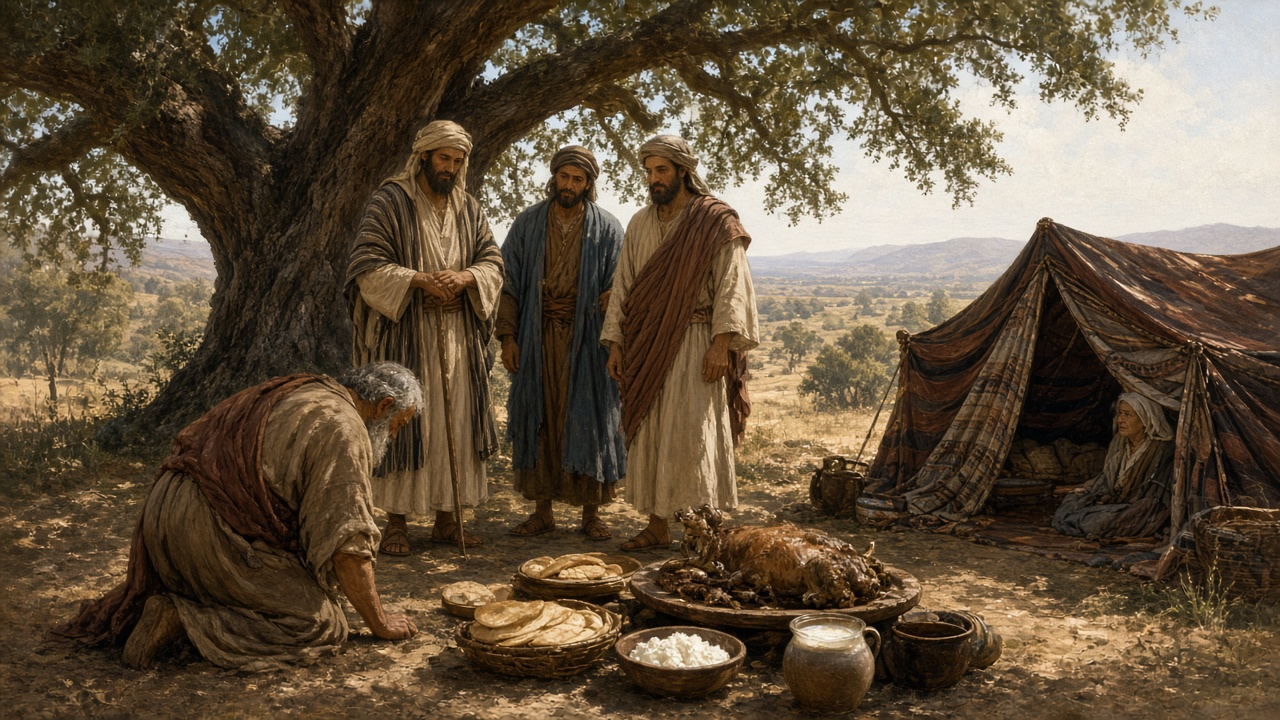
- En Génesis 18, el Señor apareció a Abraham junto a las encinas de Mamre, en el calor del día, mientras Abraham estaba sentado a la entrada de su tienda. Mamre era un jefe amorreo en alianza con Abraham. Abraham corrió al encuentro de tres hombres, se inclinó hasta el suelo, les ofreció agua para los pies y descanso bajo el árbol, y luego puso delante de ellos pan, un becerro tierno y escogido, cuajada y leche.Fuentes: el propio texto bíblico · Mamre
- Sara, la esposa de Abraham, recibe en el Diccionario Bíblico de Easton (1897) el sentido de “Princesa”; el diccionario dice que ese nombre le fue dado cuando se anunció que ella sería la madre del hijo prometido. En Génesis 18, el Señor dijo que volvería dentro de aproximadamente un año y que Sara tendría un hijo, aunque ambos ya eran ancianos y ella había pasado la edad de tener hijos. Ella se rio para sí y, por miedo, negó haber reído.Fuentes: Sarah · el propio texto bíblico
- Sodoma, una ciudad en el valle de Sidim, y Gomorra, una de las cinco ciudades de esa llanura, se mencionan juntas en Génesis 18 por el gran clamor contra su pecado grave. El Diccionario Bíblico de Easton (1897) dice que las ciudades de esa llanura probablemente estaban cerca unas de otras, hacia el extremo norte de lo que hoy es el mar Muerto, y explica Sodoma y Gomorra como “Quema; la amurallada” y “Sumersión”. Dos de los hombres se dirigieron hacia Sodoma, mientras Abraham se quedó y pidió al Señor que perdonara la ciudad por causa de los justos, bajando el número de cincuenta a diez.Fuentes: Sodom · Gomorrah · el propio texto bíblico
Notas escritas con ayuda de IA a partir de fuentes abiertas (Theographic Bible Metadata, CC BY-SA 4.0; Easton’s Bible Dictionary, dominio público) y revisadas antes de publicarse.
Créditos y licencia de esta traducción
Nǫ̀htsı̨̨ Nı̨̨htł'è
Dogrib: Dogrib Genesis & New Testament New Testament & Portions of Old Testament
copyright © 2009 Canadian Bible Society
Language: Dogrib
Translation by: Canadian Bible Society
Tłı̨chǫ Genesis and New Testament
About Tłı̨chǫ
Tłı̨chǫ (Dogrib) is a Na-Dene (Athabaskan) language. It is spoken by the First Nations Tłı̨chǫ people in the Northwest Territories in Canada. It has the largest number of speakers of any of the Aboriginal language communities in the NWT, and is one of the official languages of the Northwest Territories.
About This Translation
This translation includes the book of Genesis and the New Testament in Tłı̨chǫ. The first edition of the Tłı̨chǫ New Testament was published in 2003. It was a historic event, as it was the first time in more than a hundred years that a complete New Testament was published for one of the Dene First Nations in the Territories. The first edition was well received and quickly sold out. In the meantime the book of Genesis had been completed. Consequently, the 2008 reprint of the Tłı̨chǫ New Testament included Genesis.
Though this translation of the New Testament and Genesis took a total of ten years, the people who worked on it built on years of labor invested by the Tłı̨chǫ people, elders, priests and missionaries, translators, educators, and linguists. The material contained in this book was checked and approved by consultants from Wycliffe Bible Translators and the Canadian Bible Society.
If you are interested in obtaining a printed copy of this Bible, please contact the Canadian Bible Society at http://www.biblescanada.com .
Copyright Information
Dogrib Genesis and New Testament © 2003, 2008 Canadian Bible Society
The text of the Bible in Tłı̨chǫ that appears in this electronic format or website is for personal use only.
Up to five hundred (500) verses of the Bible text in any form (written, visual, electronic or audio) may be quoted without permission. The quoted verses may not be more than 50% of a complete book of the Bible, or more than 25% of the total text of the work in which they are quoted. Prior written permission must be obtained for any other use of the text. Copyright acknowledgement must in all cases appear on the title or copyright page.
For more information on copyright conditions or to apply, visit http://www.biblesociety.ca/copyright .
This translation is made available to you under the terms of the
Creative Commons Attribution-Noncommercial-No Derivatives license 4.0.
You may share and redistribute this Bible translation or extracts from it in any format, provided that:
You include the above copyright and source information.
You do not sell this work for a profit.
You do not change any of the words or punctuation of the Scriptures.
Pictures included with Scriptures and other documents on this site are licensed just for use with those Scriptures and documents.
For other uses, please contact the respective copyright owners.
2014-04-22
Fuente: http://ebible.org/dgrDOGNT/ · eBible.org