Hechos 4
Nǫ̀htsı̨̨ Nı̨̨htł'è · Toca un versículo para ver sus referencias cruzadas.
Peter eyıts'ǫ John gıghǫ nàyaetı
1Peter eyıts'ǫ John dǫ ts'ǫ̀ gogede ekò yahtıı gı̨ı̨lı̨ı̨ eyıts'ǫ Nǫ̀htsı̨kǫ̀-xogııhdıı-dǫǫ̀ eyıts'ǫ Sadducee gı̨ı̨lı̨ı̨ sìı gots'ǫ̀ geède. 2Peter eyıts'ǫ John, Zezì wet'à dǫ naìdà ha, gedı hanì dǫ hoghàgeehtǫ t'à, k'aodèe gı̨ı̨lı̨ı̨ sìı eyı ghǫ sıì gık'èch'a agejà. 3Peter eyıts'ǫ John gıghǫ nàyaetı ha dagogıachì. Xèhts'ǫ̀ agòjà t'à satsǫ gots'ǫ̀ dǫ-danìı̨laa-kǫ̀ nègogį̀ı̨wa. 4Hanìkò dǫ łǫ godı gıìkw'oo sìı gıgha ehkw'ı-ahodıì agejà. Hazǫǫ̀ t'à dǫzhìı sı̨làı-lemì haàtłǫǫ gıgha ehkw'ı-ahodıì agejà.
5Ek'èdaedzęę̀ k'e k'aodèe, ǫhdah gı̨ı̨lı̨ı̨ eyıts'ǫ Nǫ̀htsı̨-yatıì-k'ègedìı-dǫǫ̀ kǫ̀ta Jerusalem ełegeèhdì ha łą̀ą nègı̨ı̨de. 6Annas, yahtıı-wet'àaɂàa-deè elı̨, eyı wheda, eyıts'ǫ Caıaphas, John, Alexander eyıts'ǫ yahtıı-wet'àaɂàa-deè wèot'ı̨ gı̨ı̨lı̨ı̨ sı eyı geèhkw'e. 7Gıyatıì k'e Peter eyıts'ǫ John tanı nègogį̀ı̨wa gà dagogeehke, “Ayìı dahxà, hanì-le-ı̨dè amìı wıızì t'à hanì eghàlaahda?” gògedı.
8Peter, Yedàyeh Nezı̨ı̨ wek'e ajà t'à gots'ǫ̀ hadı, “K'aodèe yàahłı̨ı̨ eyıts'ǫ ǫhdah yàahłı̨ı̨ sìı, 9dıı dzęę̀ k'e dǫ k'eda-le etewets'eèɂı̨ k'èxa goghǫ nàyaetı nı̨dè, eyıts'ǫ dànì dǫ k'aàt'ıì ajàa sìı ghǫ dagoahke ha nı̨dè, 10naxı̨ eyıts'ǫ Israel got'ı̨į̀ hazǫǫ̀ sìı naxıts'ǫ̀ dıı hats'edı ha: Nazareth got'ı̨į̀ Zezì wıızì dahxà dıı dǫ k'aàt'ıì ajà hǫt'e. Zezì dechı̨et'aa k'e wedeàhtsò ı̨lè hanìkò Nǫ̀htsı̨ naìdà ayį̀į̀là. 11‘Naxı̨ kwekǫ̀ gòahtsı̨ gots'ǫ kwe ı̨łè ɂǫ̀ahk'àa sìı’ ededı̨ hǫt'e ‘eyı kwe denahk'e wet'àaɂàa whelı̨.’ 12Ededı̨ zǫ edaxàgole ha hǫt'e. Dıı nèk'e dǫ wı̨ı̨zìı wet'à edaxàts'eedè ha gǫ̀hłı̨ nıìle,” Peter gòhdı.
13Peter eyıts'ǫ John geejı̨-le gogede eyıts'ǫ hoghàgeetǫ-le agı̨ı̨t'e gok'èhogeèhzà ekò k'aodèe sıì gıgha enıìyah dìì. Eyı dǫ sìı Zezì xè agıat'į̀ ı̨lè gınadì. 14Dǫ k'aàt'ıì ajàa sìı Peter eyıts'ǫ John gogà nàwo gıghàeda t'à, gok'èch'a t'asagedı ha dìì. 15Peter eyıts'ǫ John ełegeèhdìı-kǫ̀ gots'ǫ xàgogeèwa, eyı tł'axǫǫ̀ goghǫ ełets'ǫ̀ gogede. 16Dałegeehke, “Dàgets'ele ha?” gedı. “Enıìyah deè hogèhtsı̨ı̨ sìı dǫ hazǫǫ̀ Jerusalem nàgedèe gık'èezǫ. Eyıt'à hagòjà-le gìts'edı ha dìì. 17Hanìkò eyı hazǫǫ̀ dǫ ta ts'ǫ̀ ade ha ts'ı̨ı̨wǫ-le. ‘Zezì wıızì t'à dǫ ts'ǫ̀ goahde-le,’ hats'edıì nàgets'eɂǫ ha,” gedı.
18Gıyatıì k'e Peter eyıts'ǫ John k'achı̨ goyagogeèwa gà hagògedı: “K'achı̨ Zezì wıızì t'à dǫ ts'ǫ̀ goahde-le eyıts'ǫ weghǫ dǫ hoghàgıahtǫ-le,” gògedı. 19Hanìkò Peter eyıts'ǫ John hagedı, “Dıı weghǫ nànıahdè: ayìı seè Nǫ̀htsı̨ gha ehkw'ı ne, naxık'èats'ı̨ı̨t'e, hanì-le-ı̨dè Nǫ̀htsı̨ k'èats'ı̨ı̨t'e? 20Ayìı ghàts'ı̨ı̨dàa eyıts'ǫ ayìı weghǫ ts'ıìkw'oo sìı weghǫ gots'ede-le ha dìì,” gedı.
21K'aodèe k'èagı̨ı̨t'e-le nı̨dè hoìla agogele ha gògedı tł'axǫǫ̀ nagogeèhɂà. Dǫ hazǫǫ̀ enıìyah nàhòwo ghǫ Nǫ̀htsı̨ ghàsǫgeedı t'à, dànì hoìla agogele ha sìı k'aodèe gık'èezǫ-le. 22Eyı dǫ enıìyah nàhòwo t'à k'aàt'ıì ajàa sìı dı̨ènǫ daats'ǫ̀ weghoò hǫt'e.
Nǫ̀htsı̨ wecheekeè yagehtı
23Peter eyıts'ǫ John nagogeèhɂà ekò Nǫ̀htsı̨ wecheekeè ts'ǫ̀ anagejà. Yahtıı-gha-k'aodèe eyıts'ǫ ǫhdah gı̨ı̨lı̨ı̨ dàgedıı sìı hazǫǫ̀ gots'ǫ̀ hagedı. 24Nǫ̀htsı̨ wecheekeè egıìkw'o ekò hazǫǫ̀ Nǫ̀htsı̨ ts'ǫ̀ yagehtı, hagedı, “Gots'ǫ̀ K'àowo t'asìı hazǫǫ̀ negha dìì-le anet'e. Yat'a, dèe, tı, eyıts'ǫ t'asìı hazǫǫ̀ edaa sìı wheęhtsı̨ hǫt'e. 25Gocho Davıd Yedàyeh Nezı̨ı̨ dahxà godeè anelà. Necheekeè dıı hadıì anelà,
‘Dànìghǫ dıı nèk'e dǫ hazǫǫ̀ xàɂaa sıì gìch'e? Dànìghǫ k'ètł'ǫ̀ gots'ǫ̀ K'àowo k'èch'a aget'ı̨? 26Dıı nèk'e k'àowocho łą̀ą ełègı̨ı̨de, Nǫ̀htsı̨ k'èch'a aget'ı̨ eyıts'ǫ wets'ǫ Chrıst sı k'èch'a aget'ı̨,’ k'àowocho Davıd hadı ı̨lè.
27Hęɂę, hotıì hagòjà. K'àowocho Herod eyıts'ǫ k'àowo Pılate, dǫ eyıì-le xàɂaa eyıts'ǫ Israel got'ı̨į̀ ełexè jǫ kǫ̀ta łą̀ą ełègı̨ı̨de ı̨lè. Zezì necheekeè degaı weneehchìı sìı wek'èch'a k'ehogeɂa ı̨lè. 28Įdèe whaà gots'ǫ hanì eghàlageeda ha neewǫ k'ę̀ę̀ eghàlagı̨ı̨dà. 29Gots'ǫ̀ K'àowo, dıì k'aodèe gı̨ı̨lı̨ı̨ sìı dànì gok'èch'a gogedee sìı geęhkw'ǫ. Necheekeè ts'ı̨ı̨lı̨ı̨ sìı negodıì t'à dǫ xè gots'edo ha edèdats'eedı-le agoı̨le. 30Nılà t'à dǫ k'aàt'ıì agı̨ı̨le eyıts'ǫ necheekeè Zezì wıızì degaı t'à enıìyah deè geɂį̀ agı̨ı̨le,” gedıì yagı̨ı̨htı.
31Yagı̨ı̨htı tł'axǫǫ̀, kǫ̀ goyìı łą̀ą geèhkw'ee sìı hǫtsaa nàgoèhdǫ. Hazǫǫ̀ goyìı geèhkw'ee sìı Yedàyeh Nezı̨ı̨ gık'e ajà t'à Nǫ̀htsı̨ weyatıì t'à gogede ha gınì nàtsoò ajà.
Dǫ gıgha ehkw'ı-ahodıı sìı t'asìı hazǫǫ̀ t'à ełets'àgedı
32Hazǫǫ̀ gıgha ehkw'ı-ahodıı sìı gıdzeè eyıts'ǫ gınì ı̨łè zǫ lajà. Dǫ t'asìı gıts'ǫ sìı edegha zǫ gık'èdì-le, t'asìı hazǫǫ̀ gıts'ǫ sìı ełetaàgeelè. 33Zezì wecheekeèdeè enıìyah hogehtsı̨ xè gots'ǫ̀ K'àowo Zezì naìdà wegodıì t'à dǫ xè gogedo, eyıts'ǫ Nǫ̀htsı̨ wesǫnıwǫ deɂǫ̀ǫ̀ gıts'ǫ̀-èlı̨. 34Dǫ-teèt'ı̨ı̨ wı̨ı̨zìı gota wheda-le. Ǫhk'è dèè hanì-le-ı̨dè kǫ̀ gıts'ǫ nı̨dè gıghǫ nàèdì gà eyı sǫǫ̀mba 35Zezì wecheekeèdeè gà nègele. Amìı wegha t'asìı whìle sìı eyı sǫǫ̀mba t'à gots'àgedı.
36Gıta dǫ ı̨łè Joseph wìyeh sìı Cyprus gots'ǫ Levı got'ı̨į̀ hǫt'e. Zezì wecheekeèdeè, Barnabas wìyeh agı̨į̀là. (Dǫ-ts'àdıı-dǫǫ̀ gedıì-agedı.) 37Eyı dǫ Barnabas dèè wets'ǫ sìı weghǫ nàèdì gà eyı sǫǫ̀mba Zezì wecheekeèdeè ghàyı̨ı̨wa.
¿Sabías que…?
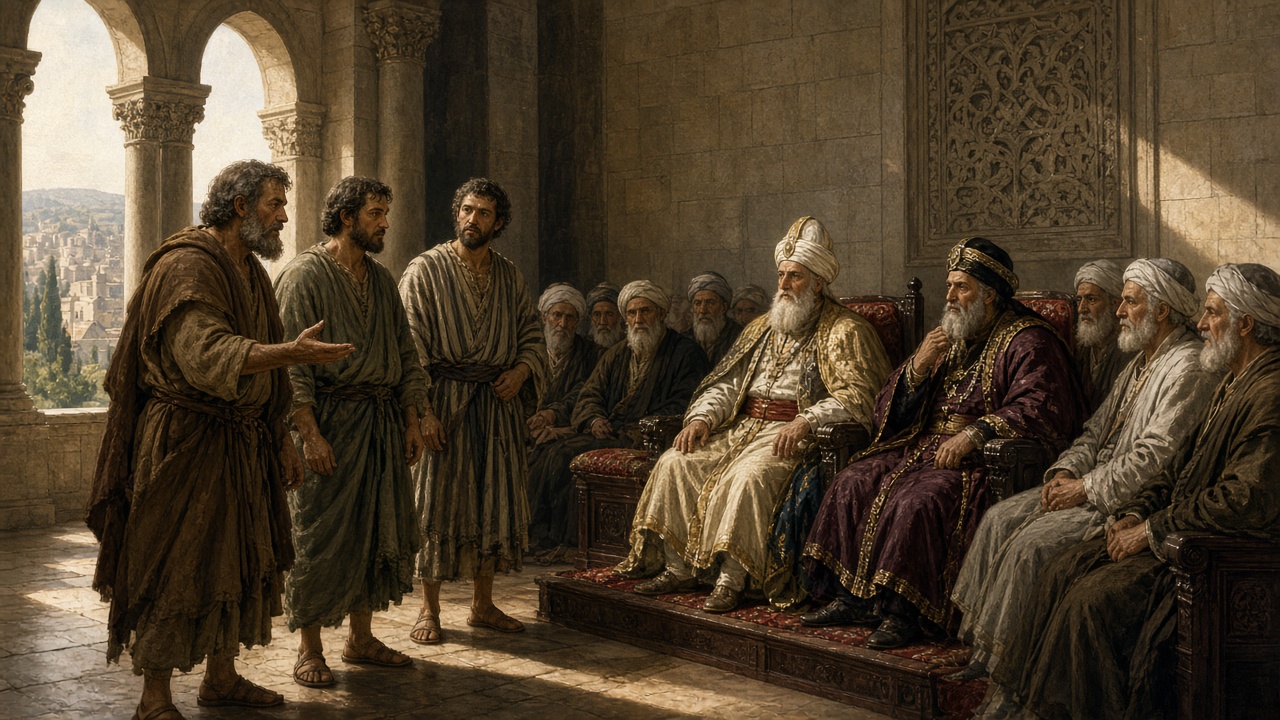
Pedro y Juan ante el Sanedrín
- Los sacerdotes, el capitán de la guardia del templo y los saduceos prendieron a Pedro y a Juan porque enseñaban al pueblo y proclamaban en Jesús la resurrección de los muertos. Caifás, que participó en la asamblea al día siguiente, pertenecía a los saduceos.Fuentes: el propio texto bíblico · Caiaphas
- Anás, llamado aquí sumo sacerdote, ocupó ese cargo del año 7 al 14 d.C., hasta que un procurador romano lo depuso. Caifás, que se había casado con la hija de Anás, fue elevado al cargo en el año 25 d.C.; aun así, algunos judíos podían seguir considerando a Anás el sumo sacerdote legal, pues la ley mosaica trataba el oficio como vitalicio, y Anás probablemente era presidente o auxiliar del Sanedrín. Juan y Alejandro, parientes del sumo sacerdote y por lo demás desconocidos, estaban sentados con ellos.Fuentes: el propio texto bíblico · Annas · John (Relative of the High Priest) · Alexander (Son of Simon)
- Pedro, pescador de Betsaida, y Juan, también pescador e hijo de Zebedeo, fueron llevados ante los gobernantes, los ancianos y los escribas. El concilio se maravilló de su valentía al darse cuenta de que eran hombres sin estudios y comunes, y notó que habían estado con Jesús.Fuentes: el propio texto bíblico · Simon Peter · John the Apostle
Notas escritas con ayuda de IA a partir de fuentes abiertas (Theographic Bible Metadata, CC BY-SA 4.0; Easton’s Bible Dictionary, dominio público) y revisadas antes de publicarse.
Lugares de este capítulo
- Jerusalem · 31.777, 35.234 · versículos 5, 16
- Nazareth · 32.702, 35.298 · versículo 10
- Cyprus · 35.000, 33.000 · versículo 36
Solo aparecen lugares identificados con alta confianza (90 % o más según las fuentes académicas reunidas por OpenBible). Mapa de la época: DARE (Digital Atlas of the Roman Empire), CC BY 4.0; mapa actual: © colaboradores de OpenStreetMap; lugares: OpenBible.info (CC BY 4.0).
Créditos y licencia de esta traducción
Nǫ̀htsı̨̨ Nı̨̨htł'è
Dogrib: Dogrib Genesis & New Testament New Testament & Portions of Old Testament
copyright © 2009 Canadian Bible Society
Language: Dogrib
Translation by: Canadian Bible Society
Tłı̨chǫ Genesis and New Testament
About Tłı̨chǫ
Tłı̨chǫ (Dogrib) is a Na-Dene (Athabaskan) language. It is spoken by the First Nations Tłı̨chǫ people in the Northwest Territories in Canada. It has the largest number of speakers of any of the Aboriginal language communities in the NWT, and is one of the official languages of the Northwest Territories.
About This Translation
This translation includes the book of Genesis and the New Testament in Tłı̨chǫ. The first edition of the Tłı̨chǫ New Testament was published in 2003. It was a historic event, as it was the first time in more than a hundred years that a complete New Testament was published for one of the Dene First Nations in the Territories. The first edition was well received and quickly sold out. In the meantime the book of Genesis had been completed. Consequently, the 2008 reprint of the Tłı̨chǫ New Testament included Genesis.
Though this translation of the New Testament and Genesis took a total of ten years, the people who worked on it built on years of labor invested by the Tłı̨chǫ people, elders, priests and missionaries, translators, educators, and linguists. The material contained in this book was checked and approved by consultants from Wycliffe Bible Translators and the Canadian Bible Society.
If you are interested in obtaining a printed copy of this Bible, please contact the Canadian Bible Society at http://www.biblescanada.com .
Copyright Information
Dogrib Genesis and New Testament © 2003, 2008 Canadian Bible Society
The text of the Bible in Tłı̨chǫ that appears in this electronic format or website is for personal use only.
Up to five hundred (500) verses of the Bible text in any form (written, visual, electronic or audio) may be quoted without permission. The quoted verses may not be more than 50% of a complete book of the Bible, or more than 25% of the total text of the work in which they are quoted. Prior written permission must be obtained for any other use of the text. Copyright acknowledgement must in all cases appear on the title or copyright page.
For more information on copyright conditions or to apply, visit http://www.biblesociety.ca/copyright .
This translation is made available to you under the terms of the
Creative Commons Attribution-Noncommercial-No Derivatives license 4.0.
You may share and redistribute this Bible translation or extracts from it in any format, provided that:
You include the above copyright and source information.
You do not sell this work for a profit.
You do not change any of the words or punctuation of the Scriptures.
Pictures included with Scriptures and other documents on this site are licensed just for use with those Scriptures and documents.
For other uses, please contact the respective copyright owners.
2014-04-22
Fuente: http://ebible.org/dgrDOGNT/ · eBible.org