Hechos 12
Nǫ̀htsı̨̨ Nı̨̨htł'è · Toca un versículo para ver sus referencias cruzadas.
Yak'eet'ı̨į̀ dǫ-danìı̨laa-kǫ̀ gots'ǫ Peter xàèhchì
1Ekìıyeè k'e k'àowocho Herod Nǫ̀htsı̨ wecheekeè mǫ̀hdaa dagoachì, dagǫ̀ǫhɂa ha nıwǫ t'à, dǫ-danìı̨laa-kǫ̀ ts'ǫ̀ agǫ̀ǫ̀là. 2Weyatıì k'e John wı̨ı̨de James, behcho t'à ełaàgį̀ı̨hwho. 3Israel got'ı̨į̀ goınà at'ı̨ yek'èhoèhzà ekò weyatıì k'e Peter sı dagıachì. Eyı hagòjàa sìı łèt'è łèt'èa dę hòèlı̨ xè nàsı̨ hołèe dzęę̀ nı ts'ǫ̀ agòjà. 4K'àowocho Herod Peter wedaàtǫ ayį̀į̀là. Eghǫǫ-dǫǫ̀ hoònǫ-daats'ǫ̀-ek'ètaı gots'ǫ eghǫǫ-dǫǫ̀ ek'èdı̨ ełek'èawoò gıxoehdı. Dzędeè Passover wetehoòwo nı̨dè Herod dǫ hazǫǫ̀ gıdaà Peter wesınìyaetı ha nıwǫ.
5Eyıt'à Peter dǫ-danìı̨laa-kǫ̀ wek'èhodì, hanìkò Nǫ̀htsı̨ wecheekeè Nǫ̀htsı̨ ts'ǫ̀ hòtł'ò yegha yagehtı.
6Peter wesınìyaetı kwe eyı toò k'e satsǫ̀tł'ıì t'à deètł'ı̨ xè eghǫǫ-dǫǫ̀ nàke goge whetı̨ agį̀į̀là. Eyıts'ǫ enìı̨tǫ gà eghǫǫ-dǫǫ̀ nàgeèhza. 7Hǫtsaa yak'eet'ı̨į̀ wègoèht'į̀ t'à goyìı hazǫǫ̀ ts'ǫ̀ dzęh agòjà. Yak'eet'ı̨į̀ Peter ts'àı̨htso, ts'eyį̀ı̨hwho. “Įwhąą̀ nıį̀tła!” yèhdı. Ekòet'ıì welachı̨į̀ k'e satsǫ̀tł'ıì xàı̨tł'ı.
8Yak'eet'ı̨į̀ yets'ǫ̀ hadı, “Negoht'ǫǫ̀ yìı̨tła eyıts'ǫ nekè yìı̨tà.” Eyıt'à Peter hajà. Eyıts'ǫ yak'eet'ı̨į̀ hayèhdı, “Neɂeè edek'e nìı̨ɂa gà sek'èı̨tła,” yèhdı. 9Peter dǫ-danìı̨laa-kǫ̀ gots'ǫ yek'èè xàèhtła. Hanìkò yak'eet'ı̨į̀ xè dàgot'ı̨ı̨ sìı deghàà yenıedì-le, ekìı wenazhıı agot'ı̨ nıwǫ. 10Eghǫǫ-dǫǫ̀ t'akwe nàgeèhzaa eyıts'ǫ gık'èè nàgeèhzaa sìı goxageède. Eyıts'ǫ mǫ̀ht'a satsǫ̀ enìı̨tǫ nechàa sìı ts'ǫ̀ nègı̨ı̨de. Enìı̨tǫ whatsǫǫ̀ enìxàı̨ke t'à xàgeède. Tı̨lı welǫ nègı̨ı̨de ekò hǫtsaa yak'eet'ı̨į̀ wènagoèht'į̀-le,
11Peter hǫtsaa ts'ı̨ı̨wo lajà, hanıwǫ, “Sets'ǫ̀ K'àowo edets'ǫ yak'eet'ı̨į̀ sets'ǫ̀ ayį̀į̀là hotıì wek'èehsǫ ne. Herod wech'à xàseèhtı̨ eyıts'ǫ Israel got'ı̨į̀ sexè hoìla hogehtsı̨ ha ı̨lèe sìı Nǫ̀htsı̨ hanàhòwo-le ayį̀į̀là,” hanıwǫ.
12Peter wexè hagòjà yek'èhoèhzà tł'axǫǫ̀ Mary, John-Mark wemǫ, wekǫ̀ ts'ǫ̀ èhtła. Ekǫ dǫ łǫ yagehtı ha ełègı̨ı̨de. 13Peter enìı̨tǫ ts'aeht'ı. T'eekoa ı̨łè gogha eghàlaeda Rhoda wìyeh enìı̨tǫ gà nììtła. 14Peter gode hǫt'e yıìkw'o ekò Peter at'ı̨ nàyèhzhį̀. Sıì wınà t'à yets'ǫ̀ enìxàechì-le et'ıì ek'èt'à tı̨mǫèhza gà whezeh, hadı, “Peter enìı̨tǫ gà nàwo!” hadı.
15T'eekoa ts'ǫ̀ hagedı, “Gonezǫ-le anejà nì?” gıìhdı. Hanìkò k'èdaà hadı t'à, hagedı, “Weyak'eet'ı̨į̀ at'ı̨ sǫnı,” gedı.
16Hanìkò Peter ı̨łaà enìı̨tǫ ts'aeht'ı. Enìxàgıachì ekò Peter gıaɂı̨ t'à sıì gıgha enıìyah dìì. 17Sıì sìgeèt'ı̨ xè gıdagoòhwho t'à Peter ts'èwhı̨į̀ agı̨ı̨t'e ha edılà t'à gogha nàɂeetsį̀. Eyı tł'axǫǫ̀ dànì gots'ǫ̀ K'àowo dǫ-danìı̨laa-kǫ̀ gots'ǫ xàyeèhchìı sìı hazǫǫ̀ gots'ǫ̀ hadı. “James eyıts'ǫ Nǫ̀htsı̨ wecheekeè gıts'ǫ̀ haahdı nǫǫ̀,” gòhdı tł'axǫǫ̀ eyıì-le kǫ̀ ts'ǫ̀ xàèhtła.
18K'omǫǫ̀dǫǫ̀ agòjà ekò Peter wègoèt'į̀-le t'à eghǫǫ-dǫǫ̀ nıdahogı̨į̀hdè. 19K'àowocho Herod weyatıì k'e eghǫǫ-dǫǫ̀ Peter hagı̨ı̨wǫ, hanìkò gıgòhɂǫ-le. Eghǫǫ-dǫǫ̀ Peter k'ègıadìı sìı dàgòjà ghǫ deghàà dagoı̨hke tł'axǫǫ̀ Herod weyatıì k'e ełaàgogį̀ı̨hdè.
Herod ełaı̨wo
Eyı tł'axǫǫ̀ k'àowocho Herod Judea nèk'e gots'ǫ Caesarea nèk'e ts'ǫ̀ ajà, ekǫ whaà hoògǫ ts'ǫ̀ aı̨t'è. 20K'àowocho Herod, kǫ̀ta Tyre eyıts'ǫ kǫ̀ta Sıdon dǫ nàgedèe sìı gots'ǫ̀ wınì-le ı̨lè, hanìkò wenèk'e gots'ǫ t'asìı gıwàhodı ne t'à dǫ Herod xè ełegeèhdì ha gı̨ı̨wǫ. Blastus, k'àowocho gha k'eyaetıı elı̨ı̨ sìı gots'àdıì agı̨į̀là, wet'ǫ̀ǫ̀ k'àowocho xè ts'èwhı̨į̀ hòɂǫ hogehtsı̨ gha dageehke.
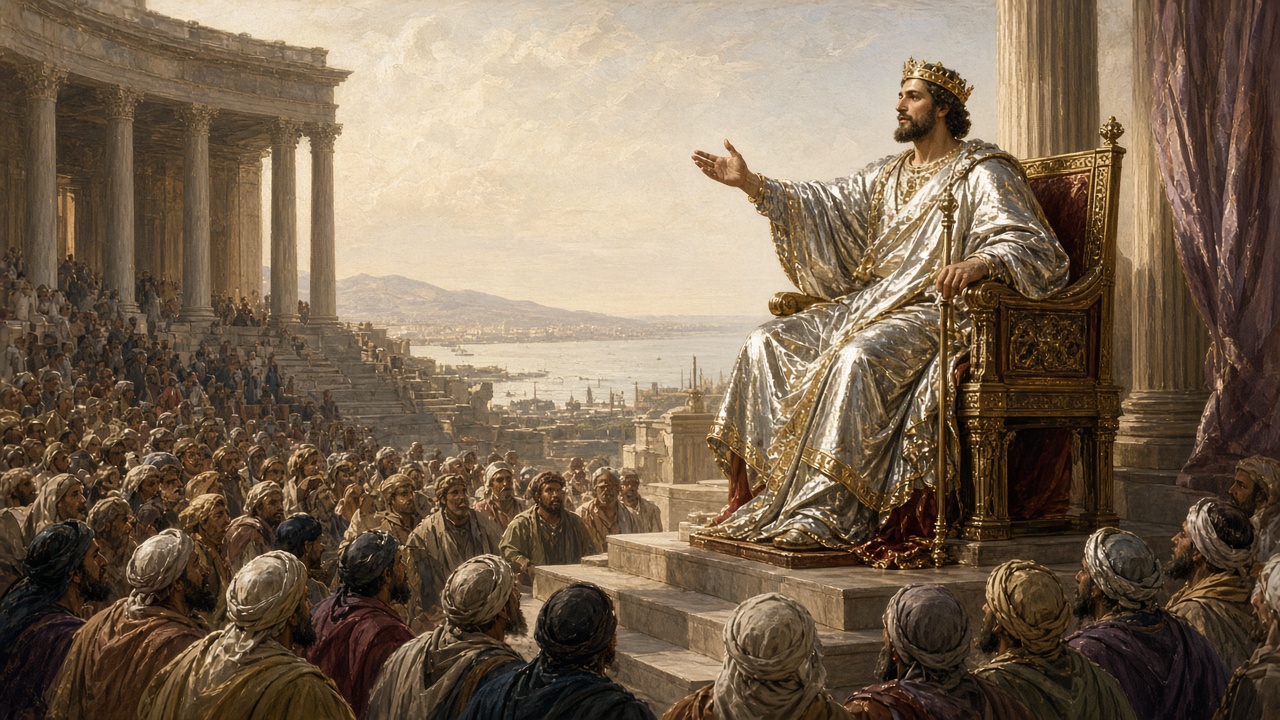
21Ełegeèhdìı dzęę̀ k'e k'àowocho Herod, goht'ǫ wèdaat'ı̨ı̨ yìetła eyıts'ǫ k'àowocho daèhchı̨į̀ k'e dèhkwà gà dǫ ts'ǫ̀ goı̨de. 22Goı̨de tł'axǫǫ̀ dǫ yagìzeh, hagedı, “Nǫ̀htsı̨ lanì xàyaı̨htı, dǫ lanì-le,” gedı. 23Nǫ̀htsı̨ ghàsǫnı̨ı̨dì-le t'à, ekòet'ıì Nǫ̀htsı̨ weyak'eet'ı̨į̀, k'àowocho Herod tàda wexèhdıì ayį̀į̀là. Weyìı gòo ajà t'à ełaı̨wo.
24Hanìkò k'èdaà Nǫ̀htsı̨ weyatıì dǫ łǫ ts'ǫ̀ ajà.
25Barnabas eyıts'ǫ Saul edılaà ghǫ nagı̨ı̨t'e tł'axǫǫ̀ Jerusalem gots'ǫ kǫ̀ta Antıoch ts'ǫ̀ nǫǫ̀gı̨ı̨de. John-Mark edexè agı̨į̀là.
¿Sabías que…?
La huida de Pedro y la muerte de Herodes
- El rey Herodes de este capítulo es Herodes Agripa I, nieto de Herodes el Grande, que con el tiempo llegó a poseer todo el reino de su abuelo y el título de rey. Hizo matar a Santiago y encarceló a Pedro. El Diccionario Bíblico de Easton (1897) dice que, en el segundo día de una fiesta en honor del emperador Claudio, Agripa apareció en el gran teatro de Cesarea con magníficas vestiduras de plata; era temprano, y los rayos del sol deslumbraban a quienes lo veían.Fuentes: Herod Agrippa I · el propio texto bíblico
- El Santiago muerto a espada era Santiago, hijo de Zebedeo, hermano del apóstolo Juan, un pescador que había trabajado como socio de Pedro. El Diccionario Bíblico de Easton (1897) lo presenta como el primero de los apóstoles en ser muerto y dice que Herodes Agripa lo hizo decapitar. El Santiago a quien Pedro pide que se avise a los creyentes es otro hombre: el mismo diccionario lo identifica como el Santiago que encabezaba la iglesia en Jerusalén.Fuentes: James (Son of Zebedee) · James (Brother of Jesus) · el propio texto bíblico
- Cuando comprendió que estaba libre, Pedro fue a la casa de María, madre de Juan Marcos, en Jerusalén, que el Diccionario Bíblico de Easton (1897) llama lugar habitual de reunión de los discípulos; mucha gente estaba reunida allí orando. La sirvienta que acudió a la puerta exterior se llamaba Rode, nombre que significa una rosa; llena de alegría al oír su voz, corrió adentro para anunciarlo y olvidó abrir la puerta. Juan, llamado también Marcos, era hijo de María —Marcos, su nombre romano, poco a poco reemplazó al nombre judío Juan— y más tarde salió de Jerusalén con Bernabé y Saulo.Fuentes: Mary (Mother of John Mark) · Rhoda · John Mark · el propio texto bíblico
Notas escritas con ayuda de IA a partir de fuentes abiertas (Theographic Bible Metadata, CC BY-SA 4.0; Easton’s Bible Dictionary, dominio público) y revisadas antes de publicarse.
Lugares de este capítulo
- Caesarea · Hoy: Caesarea Maritima · 32.500, 34.892 · versículo 19
- Judea · Hoy: Judea 1 · 31.777, 35.234 · versículo 19
- Sidon · Hoy: Sandikli archaeological site in Sidon · 33.561, 35.372 · versículo 20
- Tyre · 33.271, 35.196 · versículo 20
- Jerusalem · 31.777, 35.234 · versículo 25
Solo aparecen lugares identificados con alta confianza (90 % o más según las fuentes académicas reunidas por OpenBible). Mapa de la época: DARE (Digital Atlas of the Roman Empire), CC BY 4.0; mapa actual: © colaboradores de OpenStreetMap; lugares: OpenBible.info (CC BY 4.0).
Créditos y licencia de esta traducción
Nǫ̀htsı̨̨ Nı̨̨htł'è
Dogrib: Dogrib Genesis & New Testament New Testament & Portions of Old Testament
copyright © 2009 Canadian Bible Society
Language: Dogrib
Translation by: Canadian Bible Society
Tłı̨chǫ Genesis and New Testament
About Tłı̨chǫ
Tłı̨chǫ (Dogrib) is a Na-Dene (Athabaskan) language. It is spoken by the First Nations Tłı̨chǫ people in the Northwest Territories in Canada. It has the largest number of speakers of any of the Aboriginal language communities in the NWT, and is one of the official languages of the Northwest Territories.
About This Translation
This translation includes the book of Genesis and the New Testament in Tłı̨chǫ. The first edition of the Tłı̨chǫ New Testament was published in 2003. It was a historic event, as it was the first time in more than a hundred years that a complete New Testament was published for one of the Dene First Nations in the Territories. The first edition was well received and quickly sold out. In the meantime the book of Genesis had been completed. Consequently, the 2008 reprint of the Tłı̨chǫ New Testament included Genesis.
Though this translation of the New Testament and Genesis took a total of ten years, the people who worked on it built on years of labor invested by the Tłı̨chǫ people, elders, priests and missionaries, translators, educators, and linguists. The material contained in this book was checked and approved by consultants from Wycliffe Bible Translators and the Canadian Bible Society.
If you are interested in obtaining a printed copy of this Bible, please contact the Canadian Bible Society at http://www.biblescanada.com .
Copyright Information
Dogrib Genesis and New Testament © 2003, 2008 Canadian Bible Society
The text of the Bible in Tłı̨chǫ that appears in this electronic format or website is for personal use only.
Up to five hundred (500) verses of the Bible text in any form (written, visual, electronic or audio) may be quoted without permission. The quoted verses may not be more than 50% of a complete book of the Bible, or more than 25% of the total text of the work in which they are quoted. Prior written permission must be obtained for any other use of the text. Copyright acknowledgement must in all cases appear on the title or copyright page.
For more information on copyright conditions or to apply, visit http://www.biblesociety.ca/copyright .
This translation is made available to you under the terms of the
Creative Commons Attribution-Noncommercial-No Derivatives license 4.0.
You may share and redistribute this Bible translation or extracts from it in any format, provided that:
You include the above copyright and source information.
You do not sell this work for a profit.
You do not change any of the words or punctuation of the Scriptures.
Pictures included with Scriptures and other documents on this site are licensed just for use with those Scriptures and documents.
For other uses, please contact the respective copyright owners.
2014-04-22
Fuente: http://ebible.org/dgrDOGNT/ · eBible.org