1 Timoteo 4
Nǫ̀htsı̨̨ Nı̨̨htł'è · Toca un versículo para ver sus referencias cruzadas.
Tımothy ayìı dàyele ha hǫt'e
1Yedàyeh Nezı̨ı̨ hotıì dıı hadı: Nǫǫde dzęę̀ ts'ǫ̀ hawe nı̨dè dǫ mǫ̀hdaa yatı ehkw'ıı sìı wedę agele ha. Įnì eghǫyaeɂàa sìı k'èagı̨ı̨t'e ha, eyıts'ǫ ı̨nìłı̨ı̨ nàowoò k'ę̀ę̀ geeda ha. 2Dǫ negezı̨-le sìı eyı nàowo dǫ hoghàgogeehtǫ hǫt'e. Eyı dǫ nezı̨į̀ gìgaat'ı̨ hanìkò hogets'ì agı̨ı̨t'e. Gınì ełaı̨dèe lanì, ayìı ehkw'ıı eyıts'ǫ ayìı ekǫ-le sìı gınıehdì-le. 3Hots'et'ı̨ı̨ sìı ehkw'ı nıìle gedı ha, eyıts'ǫ weghǫ shèts'ezhee mǫ̀hdaa geɂà-le agogehɂı̨ ha. Nǫ̀htsı̨ weghǫ shèts'ezhee yèhtsı̨ hǫt'e, eyıt'à dǫ gıgha ehkw'ı-ahodıı xè nàowo ehkw'ıı k'ègeezǫǫ sìı gıghǫ shèzhe xè weghǫ masì gı̨ı̨wǫ ha hǫt'e. 4Nǫ̀htsı̨ t'asìı hazǫǫ̀ whehtsı̨ı̨ sìı nezı̨ hǫt'e, t'asìı wı̨ı̨zìı wedę ats'ele ha nıìle, shèts'ezhe xè weghǫ masì ts'ı̨ı̨wǫ ha hǫt'e. 5Nǫ̀htsı̨ weyatıì t'à eyıts'ǫ goxı̨ xàyats'ehtı t'à degaı adlà hǫt'e.
6Gòet'ı̨ hanì hoghàgı̨ı̨htǫ nı̨dè, Zezì-Krı wegha nezı̨į̀ eghàlaı̨da ha hǫt'e. Haąt'ı̨ nı̨dè Zezì-Krı weyatıì ehkw'ıı wet'à negeèhsǫǫ sìı wek'ę̀ę̀ anet'ı̨ hǫt'e, eyıts'ǫ ayìı ehkw'ıı hoghàneètǫǫ xè ayìı wek'èaneet'èe sìı wek'ę̀ę̀ eghàlaı̨da ha hǫt'e. 7Godı wet'àaɂà-le, eyıts'ǫ godı Nǫ̀htsı̨ ts'ǫ nıìle sìı wedę anele, hanìkò Nǫ̀htsı̨ wınì k'ę̀ę̀ ı̨da gha hòtł'ò eghàlaı̨da. 8Gozhį̀į̀ hòtł'ò eghàlaeda ats'ehɂı̨ı̨ sìı yaazea zǫ wet'àaɂà, ekò Nǫ̀htsı̨ wınì k'ę̀ę̀ ts'eedaa sìı t'asìı hazǫǫ̀ gha wet'àaɂà hǫt'e, dıì ts'eedaa gha eyıts'ǫ ı̨daà ts'eeda gha Nǫ̀htsı̨ edeyatıì goghàı̨ɂǫ ne t'à.
9Eyı yatı sìı hotıì ehkw'ı hǫt'e, dǫ hotıì edegha gìhchı welì. 10Eyıt'à wek'ę̀ę̀ hòtł'ò eghàlats'eeda xè wet'à dats'ı̨ı̨ɂa, Nǫ̀htsı̨ edaa sìı wegha goınì nàtsoò ats'ı̨ı̨là t'à. Nǫ̀htsı̨ sìı dıı nèk'e ts'ǫ dǫ hazǫǫ̀ edaxàlee elı̨ı̨ hǫt'e, eyıts'ǫ dǫ gıgha ehkw'ı-ahodıı sìı denahk'e edaxàgole hǫt'e.
11Eyı yatı dǫ hoghàgı̨ı̨htǫ xè wek'èaht'e gį̀ı̨dı. 12Cheko anet'e t'à dǫ negı̨ı̨hwhǫ-le kò gıts'ǫnıɂà-le, hanìkò ı̨łaà dǫ nezı̨ı̨ k'ę̀ę̀ ı̨da. Eyıt'à dàı̨dıì goı̨dee, dànì k'ehoı̨ɂaa, dànì dǫ ghǫneę̀tǫǫ, dànì negha ehkw'ı-ahodıı xè degaı k'ę̀ę̀ ı̨da nı̨dè, dǫ nexègeɂı̨ ha dìì-le hǫt'e. 13Nets'ǫ̀ nèehtła gots'ǫ̀, nınì nàtso xè gıts'ǫ̀ Nǫ̀htsı̨ Nı̨htł'è k'eyaąhtı, wet'à gıts'ǫ̀ goı̨de, eyıts'ǫ wet'à hoghàgı̨ı̨htǫ. 14Ayìı neghǫ̀t'ǫǫ sìı wek'ę̀ę̀ eghàlaı̨da, wedę anele-le. Nǫ̀htsı̨ wets'ǫ dǫ k'aodèe edılà nek'e agį̀į̀là ekò Yedàyeh Nezı̨ı̨ dahxà neghǫ xàyagı̨ı̨htı ı̨lè hǫt'e.
15Eyı hazǫǫ̀ hòtł'ò weghàlaı̨da ha hǫt'e, eyıts'ǫ wegha nınì nàtso anehwhǫ, hanì-ı̨dè dànì Nǫ̀htsı̨ yatıì t'à nànetsoò anejàa sìı dǫ hazǫǫ̀ gık'èezǫ ha. 16Eyıt'à dànì ı̨daa eyıts'ǫ ayìı dǫ hoghàı̨htǫǫ sìı t'à hotıì edexonehdı. Nàowo ehkw'ıı t'aats'ǫǫ̀ netǫ̀. Hanì ı̨da nı̨dè edaxàdı̨ı̨tè ha, eyıts'ǫ dǫ negeèhkw'ǫǫ sı edaxàgı̨ı̨le ha.
¿Sabías que…?
Falsa enseñanza y entrenamiento en la piedad
- El capítulo dice que el Espíritu declara expresamente que, en tiempos posteriores, algunos abandonarán la fe para seguir espíritus engañosos y enseñanzas de demonios. Estarán influidos por la hipocresía de mentirosos, cuya conciencia ha sido cauterizada con un hierro candente, y prohibirán el matrimonio y exigirán abstenerse de ciertos alimentos.Fuentes: el propio texto bíblico
- La carta responde a esas exigencias diciendo que Dios creó esos alimentos para que los reciban con acción de gracias quienes creen y conocen la verdad. Toda creación de Dios es buena, y nada de lo que se recibe con acción de gracias debe rechazarse, porque es santificado por la palabra de Dios y la oración.Fuentes: el propio texto bíblico
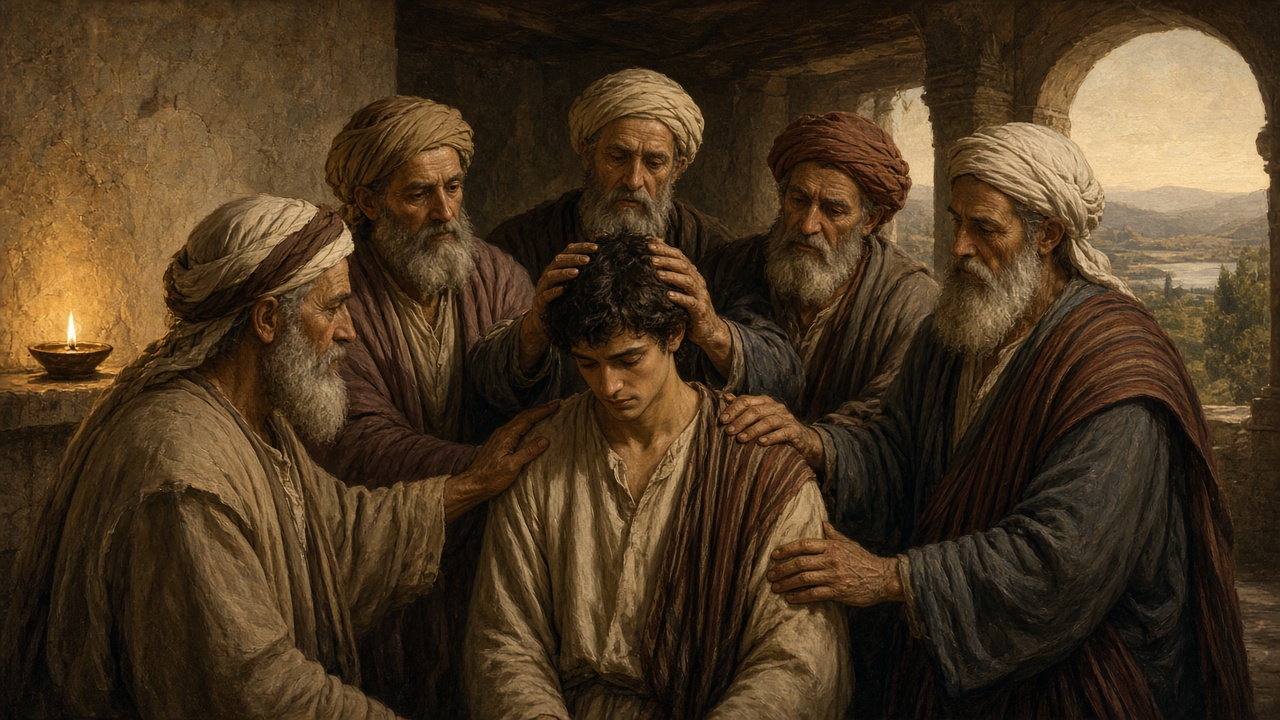
- El autor exhorta al joven a quien se dirige a no dejar que nadie menosprecie su juventud, sino a ser ejemplo en el habla, en la conducta, en el amor, en la fe y en la pureza. Hasta que el autor llegue, debe dedicarse a la lectura pública de las Escrituras, a la exhortación y a la enseñanza, y no descuidar el don que le fue dado mediante profecía, cuando los ancianos le impusieron las manos. El ejercicio físico, añade la carta, tiene un valor limitado, mientras que la piedad es valiosa en todo sentido y encierra promesa para la vida presente y para la venidera, un dicho que la carta llama digno de confianza y de plena aceptación.Fuentes: el propio texto bíblico
Notas escritas con ayuda de IA a partir de fuentes abiertas (Theographic Bible Metadata, CC BY-SA 4.0; Easton’s Bible Dictionary, dominio público) y revisadas antes de publicarse.
Créditos y licencia de esta traducción
Nǫ̀htsı̨̨ Nı̨̨htł'è
Dogrib: Dogrib Genesis & New Testament New Testament & Portions of Old Testament
copyright © 2009 Canadian Bible Society
Language: Dogrib
Translation by: Canadian Bible Society
Tłı̨chǫ Genesis and New Testament
About Tłı̨chǫ
Tłı̨chǫ (Dogrib) is a Na-Dene (Athabaskan) language. It is spoken by the First Nations Tłı̨chǫ people in the Northwest Territories in Canada. It has the largest number of speakers of any of the Aboriginal language communities in the NWT, and is one of the official languages of the Northwest Territories.
About This Translation
This translation includes the book of Genesis and the New Testament in Tłı̨chǫ. The first edition of the Tłı̨chǫ New Testament was published in 2003. It was a historic event, as it was the first time in more than a hundred years that a complete New Testament was published for one of the Dene First Nations in the Territories. The first edition was well received and quickly sold out. In the meantime the book of Genesis had been completed. Consequently, the 2008 reprint of the Tłı̨chǫ New Testament included Genesis.
Though this translation of the New Testament and Genesis took a total of ten years, the people who worked on it built on years of labor invested by the Tłı̨chǫ people, elders, priests and missionaries, translators, educators, and linguists. The material contained in this book was checked and approved by consultants from Wycliffe Bible Translators and the Canadian Bible Society.
If you are interested in obtaining a printed copy of this Bible, please contact the Canadian Bible Society at http://www.biblescanada.com .
Copyright Information
Dogrib Genesis and New Testament © 2003, 2008 Canadian Bible Society
The text of the Bible in Tłı̨chǫ that appears in this electronic format or website is for personal use only.
Up to five hundred (500) verses of the Bible text in any form (written, visual, electronic or audio) may be quoted without permission. The quoted verses may not be more than 50% of a complete book of the Bible, or more than 25% of the total text of the work in which they are quoted. Prior written permission must be obtained for any other use of the text. Copyright acknowledgement must in all cases appear on the title or copyright page.
For more information on copyright conditions or to apply, visit http://www.biblesociety.ca/copyright .
This translation is made available to you under the terms of the
Creative Commons Attribution-Noncommercial-No Derivatives license 4.0.
You may share and redistribute this Bible translation or extracts from it in any format, provided that:
You include the above copyright and source information.
You do not sell this work for a profit.
You do not change any of the words or punctuation of the Scriptures.
Pictures included with Scriptures and other documents on this site are licensed just for use with those Scriptures and documents.
For other uses, please contact the respective copyright owners.
2014-04-22
Fuente: http://ebible.org/dgrDOGNT/ · eBible.org