Salmos 14
Die Schlachter-Bibel 1951 · Toca un versículo para ver sus referencias cruzadas.
1Dem Vorsänger. Von David. Der Tor spricht in seinem Herzen: «Es ist kein Gott!» Sie begehen verderbliche und greuliche Handlungen; keiner ist, der Gutes tut. 2Der HERR schaut vom Himmel auf die Menschenkinder, daß er sehe, ob jemand so verständig sei und nach Gott frage; 3aber sie sind alle abgewichen und allesamt verdorben; keiner ist, der Gutes tut, auch nicht einer! 4Werden nicht alle Übeltäter erfahren, die mein Volk fressen, als äßen sie Brot, aber den HERRN nicht anrufen; 5werden sie es nicht dann mit Schrecken erfahren, daß Gott beim Geschlecht der Gerechten ist? 6Wollt ihr den Rat des Elenden zuschanden machen, da doch der HERR seine Zuflucht ist? 7Ach, daß das Heil Israels aus Zion käme! Wenn der HERR das Gefängnis seines Volkes wendet, so wird Jakob frohlocken und Israel sich freuen!
¿Sabías que…?
La corrupción humana y la esperanza de Sion
- El Salmo 14 describe la negación práctica de Dios como la causa de la corrupción generalizada y del maltrato a los oprimidos, afirmando que Dios sigue siendo un refugio para los justos.Fuentes: el propio texto bíblico
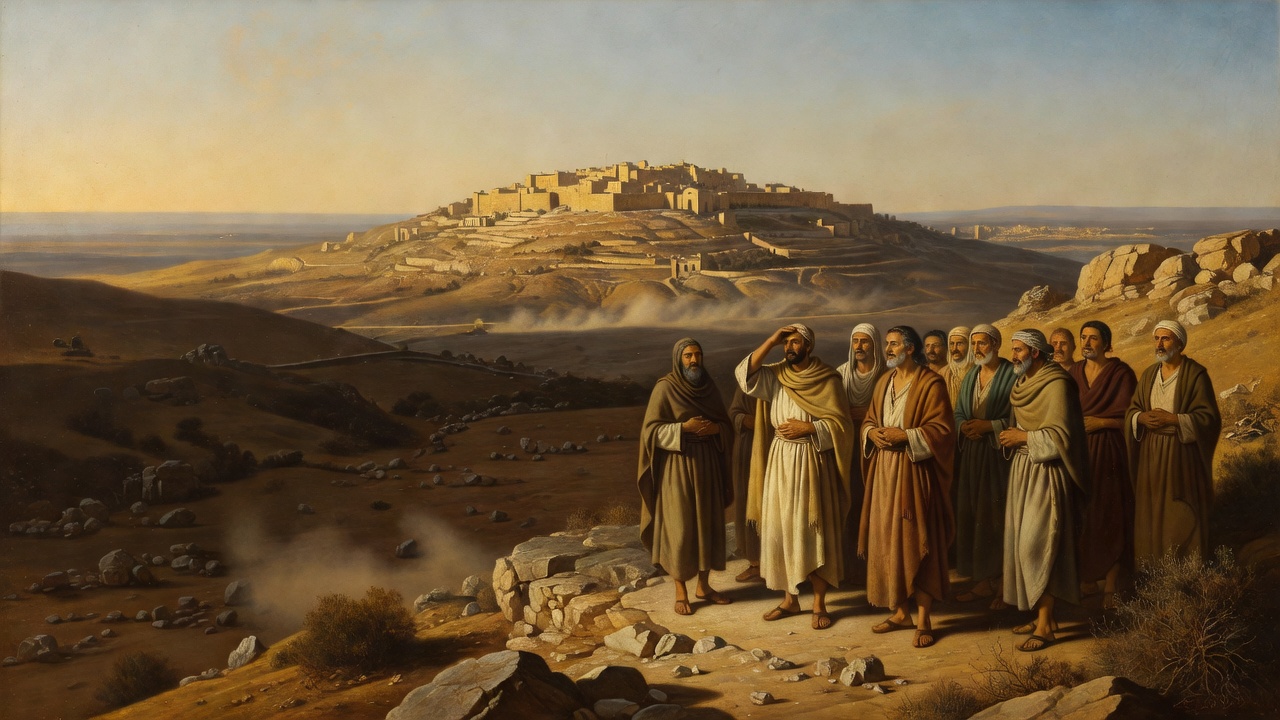
- En el versículo final, se aguarda la liberación procedente de Sion, la colina suroriental de Jerusalén donde el rey David estableció su ciudadela y ciudad real.Fuentes: Zion · el propio texto bíblico
- La mención paralela de Jacob e Israel evoca al patriarca Jacob, el segundo hijo gemelo de Isaac que también recibió el nombre de Israel, cuyos nombres pasaron a representar a toda la nación.Fuentes: Jacob (Israel) · el propio texto bíblico
Notas escritas con ayuda de IA a partir de fuentes abiertas (Theographic Bible Metadata, CC BY-SA 4.0; Easton’s Bible Dictionary, dominio público) y revisadas antes de publicarse.
Lugares de este capítulo
- Zion · Hoy: Jerusalem · 31.777, 35.234 · versículo 7
Solo aparecen lugares identificados con alta confianza (90 % o más según las fuentes académicas reunidas por OpenBible). Mapa de la época: DARE (Digital Atlas of the Roman Empire), CC BY 4.0; mapa actual: © colaboradores de OpenStreetMap; lugares: OpenBible.info (CC BY 4.0).
Créditos y licencia de esta traducción
Die Schlachter-Bibel 1951
The Holy Bible in German, Schlachter 1951 version
copyright © 1951 Genfer Bibelgeschellschaft (Geneva Bible Society)
Language: Deutsch (German, Standard)
Translation by: Franz-Eugen Schlachter
Contributor: Genfer Bibelgesellschaft
Die Heilige Schrift des Alten und Neuen Testaments nach dem Urtext Übersetzt von Franz Eugen Schlachter. Neue Überarbeitung 1951 durch Genfer Bibelgesellschaft.
This translation is made available to you under the terms of the
Creative Commons Attribution license 4.0.
You may share and redistribute this Bible translation or extracts from it in any format, provided that:
You include the above copyright and source information.
If you make any changes to the text, you must indicate that you did so in a way that makes it clear that the original licensor is not necessarily endorsing your changes.
Pictures included with Scriptures and other documents on this site are licensed just for use with those Scriptures and documents.
For other uses, please contact the respective copyright owners.
Note that in addition to the rules above, revising and adapting God's Word involves a great responsibility to be true to God's Word. See Revelation 22:18-19.
2022-03-30
Fuente: http://ebible.org/deu1951/ · eBible.org