2 Corintios 4
Dai Cangcim Kthai · Toca un versículo para ver sus referencias cruzadas.
Mdek k’am üng Ngmüimkhya Khawhthem
1Pamhnama m’yeneinak am ahina khutbi a jah peta kyase, kami ktha am se.
2Angthupnaka bilawha khyakeinak kami yawk hütki. Hleihlaknak am bilo u lü, Pamhnama ngthu khyang mhleinak vaia am kami biloki; ngthungtak ksingsak u lü, Pamhnama hmuha khyang naküta ngaiha dawnak va kami biloki.
3Kami sanga thangkdaw thupa akya üng pi khyükaki hea phäha ni thupa akya ve.
4Acukba am jummeiki he cun khawmdek mhnama johit naw ami ksingnak nghmüp khui üng a jah thupa phäha kyaki. Ami khana vaikia akvai, thangkdaw üngka naw lawkia Khritawa hlüngtainak cun amät Pamhnam kunga tängpüi, ami hmuhnak thei üngka naw Khawmdek mhnam naw a jah thupa kyaki.
5Kami mäta mawngma am pyen u nawng, Jesuh Khritaw Bawia a kyanak la Jesuha phäha m'ya kami kyanaka mawng ni kami pyen ve.
6Jesuh Khritawa hmai üng Pamhnama hlüngtainak, ksingnaka akvai, vainak jah pe khaia, “Nghmüp üngka akvai vai law khai,” tikia Pamhnam kung naw mi mlungmthin he üng akvai vai lawsaki.
7Cunsepi khyaihnak cun mimi üngka am kya lü, Pamhnama vei üngka akyanak a ngdangnak vaia, acuna ngmüimkhya khawh cun mdek k’am üng mi taki.
8Ahmäi üng ami jah mkhuimkha, cunsepi am kami mhmüiki; kami mlung naki, cunsepi kami mlung am uplat ve;
9kami ye daki, cunsepi kami püi he awmki he; ami jah mkhuimkha, cunsepi am kami pyehki;
10kami pumsa üng Jesuha xünnak angdangnak vaia, Jesuha thihnak kami pumsa üng angläta kami phüiki.
11Isetiakyaküng, thi theikia kami pumsa üng Jesuha xünnak angdangnak thei vaia, kami xün k'um üng Jesuha phäha thi khai hlawka ami jah pawh khawi.
12Acunakyase, thihnak naw keimi üng khutbi bi se, xünnak naw nangmi üng khutbi biki.
13Cangcim üng, “Ka juma phäha ngthu ka pyenki” tia a ng’yuka kba, acuna ngmüimkhya jumnak bä am keimi naw pi kami pyenki.
14Bawipa Jesuh mtho bekia Pamhnam naw keimi pi Jesuh mah maha jah mtho be lü, nangmi am atänga a veia jah cehpüi khai tia kami ksingki.
15Avan hin nangmia phäha ni; Pamhnama bäkhäknak cun khyang khawjaha veia apha üng, Pamhnama hlüngtainak cun ktaiyü lü jenak pyen khai he.
Jumnak üng Xünsei
16Acunakyase kami mlung ktha am se, kami kpung lam khyang pyehpyam sepi kami ngmüimkhya khyang cun amhmüp tä se pyang be kthai laih laiha kyaki.
17Am mawngkia kami khuikhanak, atuh asäng khuikhanak kami kham hin naw dämduh lü angläta hlüngtainak law püi khai. Acun cun atuh mi khameia kthaka däm säihki.
18Hmuh thei am teng u lü, am hmuh thei kami tengki; hmuh theie cun asängca vaia kya lü, am hmuh theie cun angläta kyaki.
¿Sabías que…?
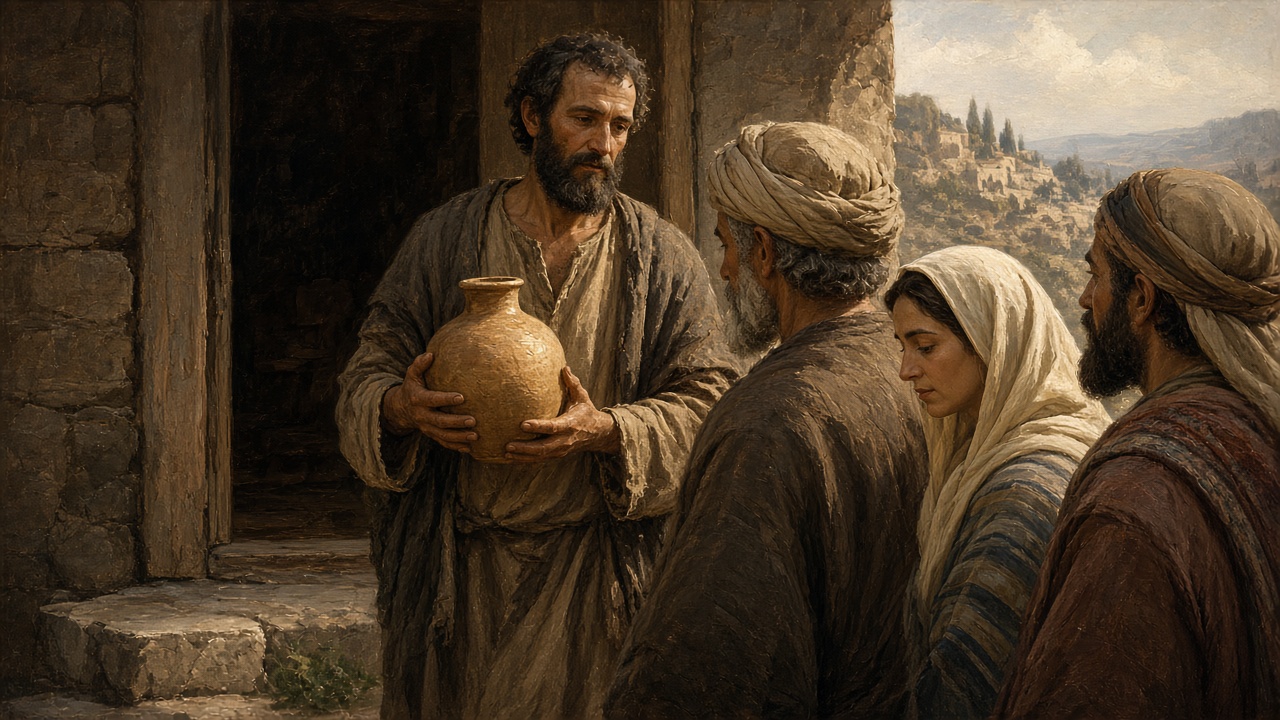
Tesoro en vasijas de barro
- En este capítulo, quienes hablan dicen que, porque Dios en su misericordia les ha dado este ministerio, no se desaniman. Han renunciado a caminos secretos y vergonzosos: no practican el engaño ni distorsionan la palabra de Dios, sino que, mediante la proclamación abierta de la verdad, se recomiendan a la conciencia de cada persona delante de Dios.Fuentes: el propio texto bíblico
- Su mensaje se presenta como un tesoro guardado en vasijas de barro, para que se muestre que este poder incomparablemente grande viene de Dios y no de ellos. El mismo contraste recorre sus dificultades: presionados por todos lados, pero no aplastados; perplejos, pero no desesperados; perseguidos, pero no abandonados; derribados, pero no destruidos.Fuentes: el propio texto bíblico
- La luz es la otra imagen central del capítulo. Dios, que dijo: "Que la luz brille desde las tinieblas", es presentado como quien hizo brillar su luz en el corazón de ellos, para dar la luz del conocimiento de la gloria de Dios en el rostro de Jesucristo. No se proclaman a sí mismos, sino a Jesucristo como Señor, y a sí mismos como siervos de aquellos a quienes se dirigen, por causa de Jesús; si el evangelio está velado, el texto dice que está velado para los que perecen, cuyas mentes ha cegado "el dios de esta era".Fuentes: el propio texto bíblico
Notas escritas con ayuda de IA a partir de fuentes abiertas (Theographic Bible Metadata, CC BY-SA 4.0; Easton’s Bible Dictionary, dominio público) y revisadas antes de publicarse.
Créditos y licencia de esta traducción
Dai Cangcim Kthai
The New Testament in the Dai Chin language of Myanmar
copyright © 2018 The Word for the World International
Language: Daai (Chin, Daai)
Contributor: The Word for the World Southeast Asia
The New Testament in Dai
published as
DAI CANGCIM KTHAI
The Word for the World International
This translation is made available to you under the terms of the
Creative Commons Attribution license 4.0.
You may share and redistribute this Bible translation or extracts from it in any format, provided that:
You include the above copyright and source information.
If you make any changes to the text, you must indicate that you did so in a way that makes it clear that the original licensor is not necessarily endorsing your changes.
Pictures included with Scriptures and other documents on this site are licensed just for use with those Scriptures and documents.
For other uses, please contact the respective copyright owners.
Note that in addition to the rules above, revising and adapting God's Word involves a great responsibility to be true to God's Word. See Revelation 22:18-19.
2023-04-09
Fuente: http://ebible.org/dao/ · eBible.org