Nahúm 3
Thai Phum Holy Bible · Toca un versículo para ver sus referencias cruzadas.
1Tami thi palawngnae kho dawk, thoebonae ka tâcawtkhai e laithoe hoi thamanae akawi. A man e naw hai tha awh hoeh. 2Bongpai hoi hem e lawk, rangleng khok kamlei lawk, marang coukdouk lawk, rangleng a yawng e lawk hah ka thai. 3Marangransa ni laklakkaang e tahloi, keitat tahroe hah a dâw teh, kadout e tami ro teh a kâmawk. Hote ronaw hah boeba touk thai hoeh. Ronaw hah a kamthui awh teh ro van a tâlaw awh. 4Hetnaw pueng teh ka kâyawt e napui kecu doeh a tho. A meihawinae, ânnae, a kâyonae lahoi khocaramca pueng koung a dum toe. 5Hatdawkvah, Cathut ni a dei e teh, nange avanglah kai ka o. Na angki hah na minhmai dawk ka ling vaiteh caici lah na onae hoi na kayanae hah uknaeram tangkuem ka patue han. 6Ei hoi na dei vaiteh, na khin sak vaiteh, ayâ ni panuet e lah na ta han. 7Na kahmawt e tami pueng ni, Nineveh kho a rawk toe, apinimouh a khui han vai ati awh teh, na yawng takhai awh han. Nang lungpahawi hanelah, nâmouh ka tawng vaiteh ka pâphawng han vai. 8Nang teh tuipui rahak kaawm e Noamon kho hlak na talue maw. Hote khopui teh tui ni a kalup teh, tuipui teh ahnie rapan lah ao. 9Ethiopia hoi Izip ram teh ahnie senehmaica lah ao teh a thaonae teh baw thai hoeh. Put hoi Lubim ni a kabawp.
10Hatei, hote kho teh tarannaw ni a tuk awh teh a man awh toe. Khocanaw teh lamtakinnaw koe a phep awh. Bari lah kaawm e khocanaw teh, cungpam lah a khoe awh teh, thakasai e khocanaw abuemlah sumrui hoi a pâkhi awh toe.
11Nang haiyah puen laihoi na kâhro han. Taran kut dawk hoi hlout nahanelah kacakpounge hmuen na tawng han.
12Nange rapanimnaw teh a paw hmaloe kahmin e thaibunglungnaw hoi a kâvan han. Kahuet navah ka cat ngai e kâko thung hloum a bo pouh awh han.
13Na taminaw teh na hmalah napui patetlah ao vaiteh, kho longkhanaw teh tarannaw hanelah kakaw lah a kamawng vaiteh tho rawngkannae teh hmai a kak han.
14Taran ni na kaven yunglam, na hno hane tui sut do awh. Rapanimnaw hah caksak awh. Amhru talai hah katin awh. Amhru hmai raawng awh.
15Hote hmuen koe raw vah hmai na kak awh vaiteh, tahloi hoi pat na raboung awh han. Samtong patetlah pap awh yawkaw, awsi patetlah pap a yawkaw.
16Kalvan âsinaw hlak hno kayawtnaw kapap nakunghai, samtongnaw patetlah parang a kamleng awh han.
17Nangmae khobawinaw teh samtangnaw patetlah ransabawinaw teh tapangkhongdengnaw patetlah ao awh teh, a pâding toteh tahmout dawk a tabo awh. Kanî a tâco toteh nâmouh phang a kamleng tie panuek hoeh.
18Assiria siangpahrang nange tukhoumnaw teh muet a i awh teh, Saring kakhenkungnaw teh a yan awh. Ransanaw teh monsom vah koung kâkapek awh teh apinihai pâkhueng awh hoeh.
19Na khang e a hmâ a nung poung dawkvah dam thai mahoeh. Nange kamthang ka thai e pueng ni kut na tabawng sin awh han. Bangkongtetpawiteh, nang ni na rektap hoeh e tami apihai awm hoeh.
¿Sabías que…?
La inevitable caída de Nínive
- Nahúm advierte a Nínive recordando la caída de Tebas, una gran ciudad protegida por las aguas del Nilo y aliada con Cus, Egipto y Fut. A pesar de sus formidables defensas naturales y alianzas regionales, Tebas fue conquistada y sus nobles fueron llevados al cautiverio.Fuentes: el propio texto bíblico · Thebes · Cush · Put
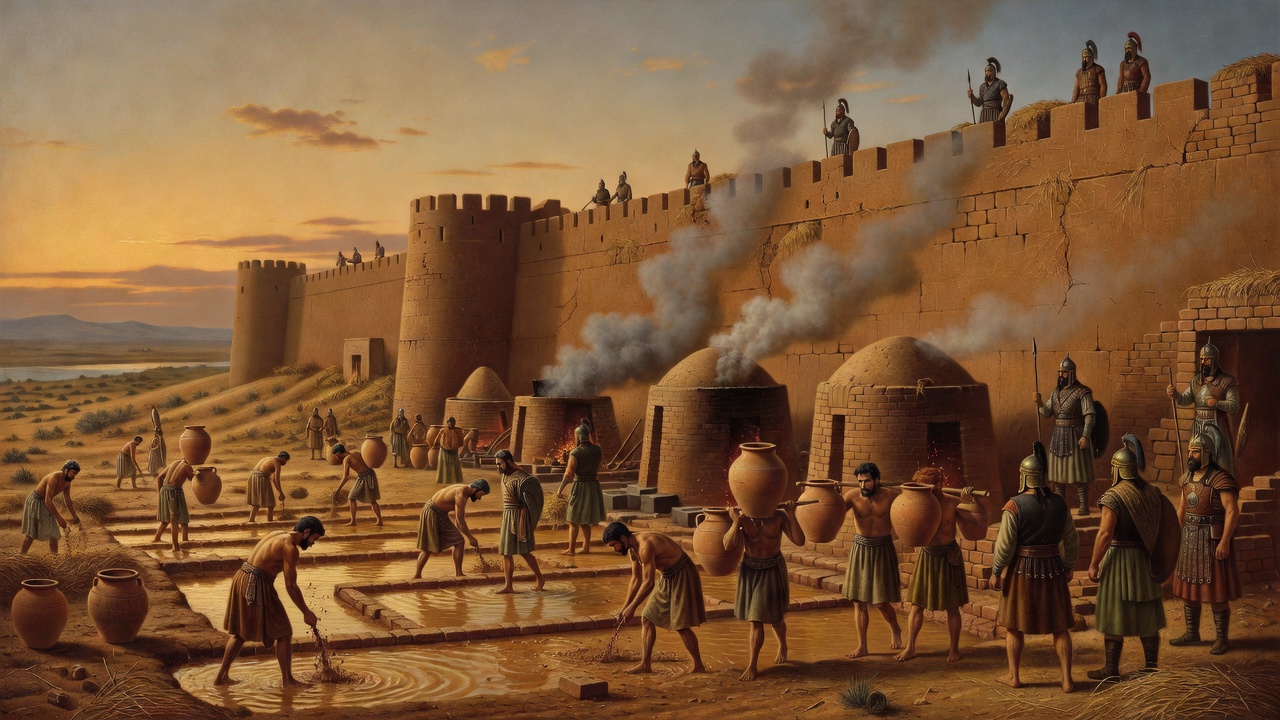
- El profeta ordena irónicamente a Nínive que se prepare para el asedio acarreando agua, trabajando el barro y pisando el mortero para reforzar sus fortificaciones de ladrillo. Aun con estos extensos preparativos, el texto declara que el fuego y la espada devorarían la ciudad.Fuentes: el propio texto bíblico
- Nahúm compara a los guardias y oficiales de Nínive con langostas que se agrupan en los muros en un día frío. Tan pronto sale el sol, levantan el vuelo y desaparecen, ilustrando la rapidez con la que los líderes y defensores de Asiria se dispersarían.Fuentes: el propio texto bíblico
Notas escritas con ayuda de IA a partir de fuentes abiertas (Theographic Bible Metadata, CC BY-SA 4.0; Easton’s Bible Dictionary, dominio público) y revisadas antes de publicarse.
Lugares de este capítulo
- Nineveh · 36.359, 43.153 · versículos 1, 4, 7, 11
- Nile · Hoy: Nile River · 31.465, 30.367 · versículo 8
- Thebes · 25.721, 32.610 · versículos 8, 10
- Cush · Hoy: Cush 1 · 16.935, 33.751 · versículo 9
- Egypt · 30.129, 31.308 · versículo 9
- Libya · 32.821, 21.851 · versículo 9
- Assyria · 36.359, 43.153 · versículo 18
Solo aparecen lugares identificados con alta confianza (90 % o más según las fuentes académicas reunidas por OpenBible). Mapa de la época: DARE (Digital Atlas of the Roman Empire), CC BY 4.0; mapa actual: © colaboradores de OpenStreetMap; lugares: OpenBible.info (CC BY 4.0).
Créditos y licencia de esta traducción
Thai Phum Holy Bible
The Holy Bible in the Thaiphum Chin language of Myanmar
Copyright © 2020 Batupuei Christian Fellowship
Language: Thai Phum (Chin, Thaiphum)
Translation by: Batupuei Christian Fellowship
copyright only valid in Myanmar; Public Domain elsewhere
This translation is made available to you under the terms of the
Creative Commons Attribution Share-Alike license 4.0.
You have permission to share and redistribute this Bible translation in any format and to make reasonable revisions and adaptations of this translation, provided that:
You include the above copyright and source information.
If you make any changes to the text, you must indicate that you did so in a way that makes it clear that the original licensor is not necessarily endorsing your changes.
If you redistribute this text, you must distribute your contributions under the same license as the original.
Pictures included with Scriptures and other documents on this site are licensed just for use with those Scriptures and documents.
For other uses, please contact the respective copyright owners.
Note that in addition to the rules above, revising and adapting God's Word involves a great responsibility to be true to God's Word. See Revelation 22:18-19.
2024-05-01
Fuente: http://ebible.org/cth/ · eBible.org