Job 15
Thai Phum Holy Bible · Toca un versículo para ver sus referencias cruzadas.
Eliphaz ni Job yon a pen
1Hahoi Teman tami Eliphaz ni a pathung. 2Hat navah,
Tami a lungkaang ni ahrawnghrang panuenae hoi maw a pathung han.
Kanîtholae kahlî hoi a von a paha sak han namaw.
3Bang patopatang kaawm hoeh e lawk hno lahoi thoseh,
hawinae ka sak thai hoeh e lawk ni a poukkhai han maw.
4Cathut takinae hoi ama koe ratoum e hah na ngang pouh.
5Bangkongtetpawiteh, na payonpakainae ni,
na pahni hah a cangkhai teh, huenghai onae lawk hah na kârawi.
6Kai ni nang yon na pen hoeh.
Na pahni roeroe ni doeh yon na pen.
7Hmaloe poung khe e lah maw na o,
hoeh pawiteh monnaw ao hoehnahlan vah sak e lah na o toung maw.
8Cathut e khokhangnae hah na panue toung maw,
Lungangnae he nang hane dueng lah maw ao.
9Kaimouh ni ka panue hoeh e bangmaw na panue,
kaimouh dawk kaawm hoeh e bangmaw na panue thai.
10Kaimouh thung dawkvah sampo ka po e hoi kacuepoung e,
na pa hlak hai kacuehnawn e ka o awh kaima.
11Cathut ni a dei e lungmawngnae lawk kanem teh
nang hanlah a patawpoung maw
12Bang kecu dawk maw, na lungthin ni na kahmakhai,
bang kecu dawk maw avangvanglah pou na hmaiet.
13Na muitha ni Cathut taranlahoi pou a kamlang teh,
hot patet e lawknaw na pahni dawk hoi na tâco sak.
14Tami teh banglamaw ao teh, a thoung thai han.
Napui ni a khe e teh, banglamaw ao teh, a lan thai han.
15A tamikathoungnaw patenghai,
Cathut ni kâuepkhai hoeh.
A mithmu vah kalvan patenghai thounghoeh pawiteh,
16Panuet ka tho e, kakhin e, payonpakainae hah,
tui patetlah ka net e teh, banghloimaw hoe kathounghoehe la ao han.
17Thaihaw, ka dei vai,
ka hmu e hah ka pâpho han.
18Tami a lungkaangnaw ni ouk a dei e
mintoe koehoi e hmu e hno a hro awh hoeh e hah.
19Ahnimouh dueng a poe e ram,
ram alouknaw a othaihoenae hah.
20Tamikathoutnaw ni a hring na thung patawnae a khang.
Amamouh kum yit touh rep kacuengroenaw koe a hro.
21Takitho e pawlawk hah amamae hnâ ni a thai teh,
hnopai a tawn nah, ka raphoe hane naw ni a thosin awh.
22Hmonae thung hoi kamlang hane hah yuem hoeh.
Bangkongtetpawiteh, ahni teh tahloi ni a ring toe.
23Ca hane tawng hanelah a kâva teh,
nâmaw hote teh ao telah a ti.
Hmonae hnin teh a kut dawk a pha toe tie hah a panue.
24Rucatnae hoi kângairunae ni a lungpuen sak,
tarantuk hanelah coungkacoe kaawm e siangpahrang patetlah tâ e la ao.
25Bangkongtetpawiteh, Cathut taranlahoi a kut a dâw teh,
Athakasaipounge taranlahoi kâoupnae hoi a kâroe.
26Bahling katha poung e hoi, lung ka patak poung e lahoi
Cathut tuk hanelah a yawng sin.
27Athaw ni a minhmai muen a ramuk teh,
a keng thouk kathâw nakunghai,
28kingkadi e khopui dawk kho a sak teh,
apinihai a ohoehnae, kingdi e kho dawk ao.
29Tawnta mahoeh, hoeh pawiteh, a tawnta e hnopainaw kangning mahoeh,
hoeh pawiteh a tawn e hah talai dawk pungdaw mahoeh.
30Hmonae thung hoi tâcawt mahoeh.
Hmaipalai ni a kangnaw hah a kak han,
a pahni dawk e kahlî hoi be a kahma sak han.
31Amahoima a kâdum teh, bang hoeh e hah kâuep han seh,
bangkongtetpawiteh, a tawkphu teh banghai bang nahoeh.
32Atueng akuep hoehnahlan vah, kuep sak lah ao awh vaiteh,
akangnaw hah naw mahoeh toe.
33Misurkangnaw patetlah ka hmin hoeh rae a paw a sarut totouh kahû en vai teh,
Olive thing patetlah a pei hah koung a sarut han.
34Bangkongtetpawiteh, tamikathoutnaw hoi kamyawng e teh,
caici lah ao han. Tadawngnae hoi sak e im teh, hmai ni be a kak han.
35Kahawi hoeh e hah a vawn teh, bang hoeh e hah a khe awh.
A von dawk laithoe a vawn awh telah a ti.
¿Sabías que…?
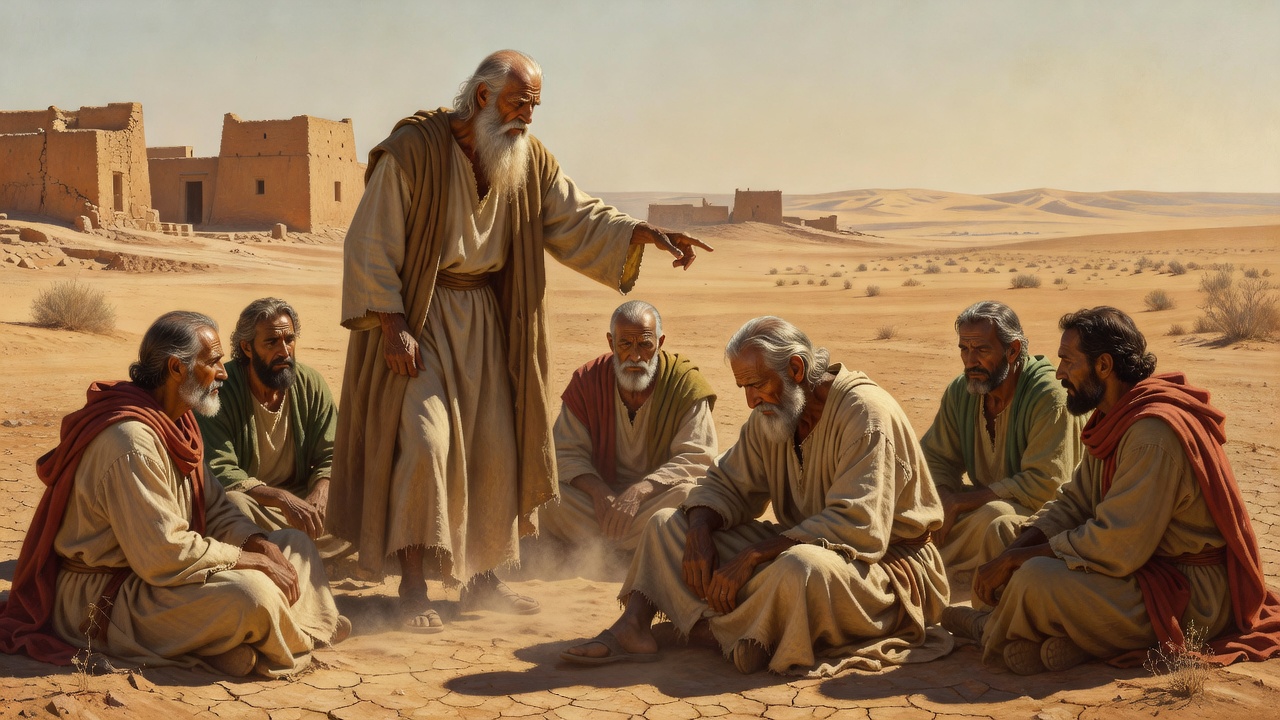
El segundo discurso de Elifaz y la sabiduría ancestral
- Elifaz acusa a Job de llenar su vientre con el viento del este, utilizando una conocida metáfora del antiguo Oriente Próximo sobre el viento abrasador del desierto que marchita la vegetación y trae devastación en lugar de sustento.Fuentes: el propio texto bíblico
- Para respaldar su postura de que los malvados sufren inevitablemente la ruina, Elifaz apela a la autoridad de ancianos de cabellos canos y a tradiciones transmitidas desde tiempos anteriores a la influencia de pueblos extranjeros.Fuentes: el propio texto bíblico · Eliphaz
Notas escritas con ayuda de IA a partir de fuentes abiertas (Theographic Bible Metadata, CC BY-SA 4.0; Easton’s Bible Dictionary, dominio público) y revisadas antes de publicarse.
Créditos y licencia de esta traducción
Thai Phum Holy Bible
The Holy Bible in the Thaiphum Chin language of Myanmar
Copyright © 2020 Batupuei Christian Fellowship
Language: Thai Phum (Chin, Thaiphum)
Translation by: Batupuei Christian Fellowship
copyright only valid in Myanmar; Public Domain elsewhere
This translation is made available to you under the terms of the
Creative Commons Attribution Share-Alike license 4.0.
You have permission to share and redistribute this Bible translation in any format and to make reasonable revisions and adaptations of this translation, provided that:
You include the above copyright and source information.
If you make any changes to the text, you must indicate that you did so in a way that makes it clear that the original licensor is not necessarily endorsing your changes.
If you redistribute this text, you must distribute your contributions under the same license as the original.
Pictures included with Scriptures and other documents on this site are licensed just for use with those Scriptures and documents.
For other uses, please contact the respective copyright owners.
Note that in addition to the rules above, revising and adapting God's Word involves a great responsibility to be true to God's Word. See Revelation 22:18-19.
2024-05-01
Fuente: http://ebible.org/cth/ · eBible.org