Jeremías 3
Thai Phum Holy Bible · Toca un versículo para ver sus referencias cruzadas.
Isarel te kaya panuek hoeh
1Tami buet touh ni a yu hah a ma teh, napui ni ahni hah a ceitakhai teh, ayâ alouke yu lah awm pawiteh, tongpa ni hote napui teh bout a la han na maw. Hote ram teh ka patawpoung lah khin sak hoeh na maw, telah ati awh. Hateiteh nang teh, na ngai e naw pueng koe tak na kâyo. Hatei kai koe bout na ban telah, BAWIPA ni ati. 2Hmuenrasang cailum hmuen koe loungouk nateh khenhaw! tongpa ni na ikhai hoeh nae hmuen ao maw. Ram tangkuem dawk Arabia taminaw patetlah, ahnimouh na ring laihoi, lam teng vah na tahung teh, na tak kâyonae hoi, na hawihoehnae lahoi, ram thung koung na khinsak toe. 3Hatdawkvah, khorak sak laipalah, hnukteng e kho hai rak hoeh toe, tak na kâyonae tampa hah na sin teh, kaya na panuek hoeh. 4Apa, ka nawca navah na kahrawikung lah na o, telah kai na kaw nahoehmaw. 5Nang teh lung pou na khuek han maw. Apout totouh maw na lung pou khuek han, khenhaw! hot patetlah, lawk na dei teh, na tithai totouh, yonnae hah na sak.
6Hothloilah, Josiah siangpahrang se nah hai, BAWIPA ni kai koe hettelah a dei, hnuklah ban han ka ngai e Isarel ni a sak e hah, na hmu maw. Mon rasang pueng dawk a luen teh, thing rahim tangkuem vah tak a kâyo. 7Hete hnonaw a sak hnukkhu hoi, kai koe bout a ban han doeh, telah ka ti. Hatei bout ban ngai hoeh, yuemkamcu hoeh e a nawngha Judah ni a hmu. 8Hatdawkvah, hnuklah a bannae ni Isarel ka uicuk sak naw hah ka hmu. Kama teh kâmanae ca hah ka poe. Hat nakunghai yuemkamcu hoeh e a nawngha Judah ni bout taket hoeh. Hatei ahni hai a cei teh, tak a kâyo van. 9Takkâyonae hoi ram hah a khin sak teh, thing hoi talung koe a uicuk. 10Hete hnonaw hloilah kamcu hoeh e a nawngha napui Judah teh lungthin katang hoi ban laipalah, ka kâsak e lah a ban, telah BAWIPA ni a dei. 11BAWIPA ni kai koe hettelah a dei. Hnuklah ka ban e Isarel ni yuemkamcu hoeh e Judah hlak hai kalanhnawn la a kamnue. 12Cet nateh, hete lawk he tung lah pâpho, hnuklah kamlang e Isarel ban leih telah BAWIPA ni ati. Lungkhueknae minhmai hoi na khen mahoeh. Bangkongtetpawiteh, lungmanae hoi ka kawi e lah ka o, telah BAWIPA ni ati, lungkhueknae hoi poe kaawm mahoeh. 13BAWIPA na Cathut na tarannae hoi thingkung rahim e ram alouknaw koe, tak na kâyonae hoi, ka dei e lawk na yuem hoeh kecu dawkvah, na payonnae hah pâpho, telah BAWIPA ni ati. 14Oe, hnuklah kamlang e catounnaw ban awh, telah BAWIPA ni ati. Bangkongtetpawiteh, nangmanaw kountoukkung lah ka o. Khopui dawk hoi tami buet touh, imthung dawk hoi tami kahni touh na la awh vaiteh, Zion vah na hrawi awh han.
15Panuenae hoi, thoumthai lungangnae hoi, nangmouh kountoukkung, kaie lungthin ka tawn e, tukhoumkung hah na poe awh han. 16Hahoi hettelah ao han. Hatnae tueng dawk ram thung vah, moikapap na kamphung torei teh, ahnimouh ni ‘BAWIPA lawkkam thingkong telah tet awh mahoeh toe, a pouknae naw dawk hai pâkuem awh mahoeh toe. Cet hai na cet sin awh mahoeh, sak hai na sak awh mahoeh toe, telah BAWIPA ni ati. 17Hatnae tueng dawk Jerusalem teh, BAWIPA bawitungkhung telah ti han. Hawvah miphunnaw pueng hah BAWIPA e min lahoi Jerusalem vah a kamkhueng awh han. Kahawihoeh e pouknae kâpoenae hah tarawi awh mahoeh toe. 18Hatnae hnin dawk Judah imthung hah Isarel imthung hoi rei awm awh vaiteh, na mintoenaw koe râw hanelah ka poe e, ram dawk tung lae ram hoi cungtalah tâco awh han.
19Hateiteh, kai ni bangtelamaw miphunnaw râw kahawie kanawmpoung e ram hah ka poe teh, catounnaw koe vah, na hruek thai awh, telah ka ti. Apa telah na kaw vaiteh, na kangheng takhai mahoeh toe, telah ka ti. 20Yu buet touh ni yuemkamcu hoeh lahoi a vâ a ceitakhai e patetlah, oe Isarel imthungkhunaw yuemkamcu hoeh lahoi na dum katang awh, telah BAWIPA ni ati. 21Isarel catounnaw kâheinae hoi na khuinae lawk hah, karasange cailum hmuen dawk hoi ka thai toe. Bangkongtetpawiteh, amamae lamthung hah kamlang takhai teh, BAWIPA Cathut hah a pahnim awh. 22Oe, hnuklah kamlang e canaw bout ban awh haw, hnuklah na kamlangnae hah na dam sak han. Hatei nang koe ka tho. Bangkongtetpawiteh, nang nama teh kaimae BAWIPA Cathut la na o. 23Mon dawk hoi rungngangnae hmu hane ngaihawinae teh, bang cungkeinae awm hoeh. Monnaw puenghai cungkeinae awm katang hoeh. Isarel rungngangnae teh, BAWIPA Cathut koe dueng doeh ao. 24Bangkongtetpawiteh, ka nawca hoi ka mintoenaw ni a tawk e a tuhunaw hoi, saringnaw, a canu a capanaw totouh, kayanae ni be a ca awh. 25Kayanae dawk ka i awh teh, yeiraiponae ni, na ramuk awh. Bangkongtetpawiteh, BAWIPA Cathut taranlahoi ka yon awh teh, kamamouh hoi mintoenaw ni ka nawca hoi sahnin totouh, BAWIPA Cathut e lawk hah ka tarawi awh hoeh.
¿Sabías que…?
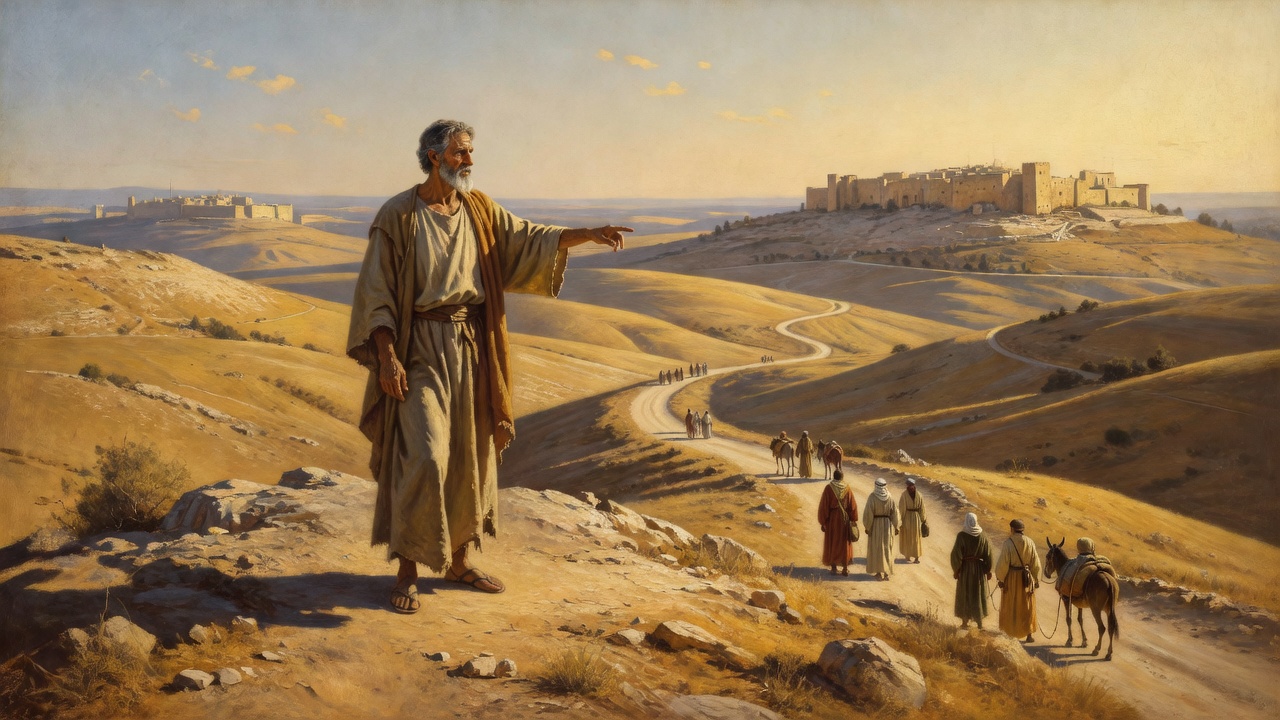
Un llamado al regreso de las hermanas infieles
- Durante el reinado del rey Josías de Judá, Jeremías recibió profecías que comparaban al reino del norte de Israel y al reino del sur de Judá con dos hermanas. Aunque el reino del norte ya había sido repudiado por su idolatría, Judá no aprendió del destino de su hermana y solo regresó de forma fingida.Fuentes: el propio texto bíblico · Josiah
- El profeta anticipa una restauración futura en la que el pueblo disperso es llevado de regreso a Sion, la colina histórica de Jerusalén. En aquel tiempo, la propia Jerusalén sería llamada el Trono del SEÑOR, y el arca del pacto ya no sería recordada ni reconstruida.Fuentes: el propio texto bíblico · Zion · Jerusalem
- A partir de las imágenes matrimoniales y del divorcio, el texto describe el culto a dioses extranjeros en las colinas y bajo los árboles frondosos como una infidelidad conyugal. A pesar de esta traición, el SEÑOR invita repetidamente a sus hijos infieles a reconocer su culpa y regresar a Él.Fuentes: el propio texto bíblico
Notas escritas con ayuda de IA a partir de fuentes abiertas (Theographic Bible Metadata, CC BY-SA 4.0; Easton’s Bible Dictionary, dominio público) y revisadas antes de publicarse.
Lugares de este capítulo
Solo aparecen lugares identificados con alta confianza (90 % o más según las fuentes académicas reunidas por OpenBible). Mapa de la época: DARE (Digital Atlas of the Roman Empire), CC BY 4.0; mapa actual: © colaboradores de OpenStreetMap; lugares: OpenBible.info (CC BY 4.0).
Créditos y licencia de esta traducción
Thai Phum Holy Bible
The Holy Bible in the Thaiphum Chin language of Myanmar
Copyright © 2020 Batupuei Christian Fellowship
Language: Thai Phum (Chin, Thaiphum)
Translation by: Batupuei Christian Fellowship
copyright only valid in Myanmar; Public Domain elsewhere
This translation is made available to you under the terms of the
Creative Commons Attribution Share-Alike license 4.0.
You have permission to share and redistribute this Bible translation in any format and to make reasonable revisions and adaptations of this translation, provided that:
You include the above copyright and source information.
If you make any changes to the text, you must indicate that you did so in a way that makes it clear that the original licensor is not necessarily endorsing your changes.
If you redistribute this text, you must distribute your contributions under the same license as the original.
Pictures included with Scriptures and other documents on this site are licensed just for use with those Scriptures and documents.
For other uses, please contact the respective copyright owners.
Note that in addition to the rules above, revising and adapting God's Word involves a great responsibility to be true to God's Word. See Revelation 22:18-19.
2024-05-01
Fuente: http://ebible.org/cth/ · eBible.org