Deuteronomio 14
Thai Phum Holy Bible · Toca un versículo para ver sus referencias cruzadas.
Kathounge rawca hoi kathounghoehe rawca
1Nangmouh teh, BAWIPA Cathut e ca lah na o awh. Kadoutnaw hanelah na tak na kâbouk mahoeh. Na mitmuen hai na ngaw mahoeh. 2Nangmouh teh BAWIPA Cathut hanelah kathounge miphun lah na o awh. BAWIPA ni talai van dawk kaawm e miphun pueng hlakvah, ama ni tawn e miphun lah na o awh nahanelah nangmouh na rawi awh toe.
Kathoung hoi kathounghoehe rawca
3Panuetkatho e na cat mahoeh. 4Na ca hane saringnaw teh, maito, tu, hmae, 5sakhi, sazuk, saya, atha, savi, kahrawngmaito, mon dawk e tu ti e 6khoksamen samka ni teh a thepkaai e pueng teh na ca thai awh. 7Hatei, a thepkaai niteh, a khoksamen ka samka e naw thung dawk na ca hoeh hane naw teh, kalauk, saveh, cahi, naw heh athepai eiteh, a khoksamen a samka hoeh dawkvah kakhin e lah ao. 8Vok teh a khoksamen a samka eiteh, athepai hoeh dawkvah, nangmouh hanelah a khin. a moi na cat awh mahoeh. A ro hai na tek awh mahoeh.
9Tui dawk kaawm e naw thung dawk hetnaw heh na ca awh han. A pathuet hoi a lakep kaawm pueng na ca thai awh. 10A pathuet hoi a lakep kaawm hoeh e pueng na cat awh mahoeh, nangmouh hanelah a khin.
11Kathounge tava aphunphun na ca thai awh. 12Na ca hoeh hane tavanaw teh, langta, tuilangta, mataw, 13masi, ungngang, 14vonga, 15kalaukva, basairek, batuiling, pingpit, 16bukbu, kawhna, balengek, 17tuicawmpai, 18kahrawngcawmpai, bongpi, 19a rathei a tawn ei, kâva e saring pueng teh nangmouh hanelah a thoung hoeh dawkvah, na cat awh mahoeh. 20Kathounge tava pueng na ca thai awh.
21A mahmawk kadout e moi na cat mahoeh. Na tengonaw ni a ca hanelah na poe han. Hoehpawiteh, ramlouk e tami longkha thung kaawmnaw koe na yo han. Nangmouh teh nangmae BAWIPA Cathut hanelah kathounge miphun lah na o awh. Hmaeca hah a manu e sanutui hoi mek na thawng mahoeh.
Hra touh dawk buet touh poenae
22Kum tangkuem na law dawk hoi ka tâcawt e pueng pung hra pung touh na kapek awh han. 23Nangmae BAWIPA Cathut ni a min ao nahanelah a rawi e hmuen koe cakang, misurtui, satui hoi tuhu, maitohu naw dawk e camin pung hra pung touh hah a hmalah na ca awh han. 24Nangmae BAWIPA Cathut ni yawhawi na poe awh torei teh, a min ao nahanelah a rawi e hmuen teh, ekvoi ahla dawkvah, pung hra pung touh na phawt thai awh hoeh pawiteh, 25hote hno hah na yo vaiteh, tangka na sin vaiteh, na BAWIPA Cathut ni a rawi e hmuen koe na cei vaiteh, 26ca han na ngai e patetlah maito, tu, misurtui, yamu tie ca han na ngai e pueng hah na ran vaiteh, BAWIPA Cathut e hmalah, na imthung abuemlahoi na ca awh vaiteh, kanawm lah na o awh han. 27Hatei, nangmae longkha thung kaawm e Levih miphunnaw teh, a ham awm hoeh, râw hai ao hoeh dawkvah, na hnoun awh mahoeh.
28A kum thum dawk na hmu awh e pueng hah pung hra pung touh na tâcokhai awh vaiteh, khothung longkha vah na pâkueng awh han. 29Nangmouh koe kaawm e ham kaawm hoeh e, râw kaawm hoeh e Levihnaw koe kaawm van e Jentelnaw, naranaw, na longkha thung kaawm e lahmainaw a tho awh vaiteh, a ca awh han. Hottelah na sak pawiteh, nangmae BAWIPA Cathut ni na sak e pueng dawk yawhawi na poe awh han.
¿Sabías que…?
Leyes Alimentarias y Normas sobre el Diezmo
- Las leyes dietéticas de Deuteronomio 14 distinguen a los animales terrestres limpios de los inmundos mediante dos criterios físicos: tener la pezuña dividida y rumiar. Los animales acuáticos solo se consideraban aptos para el consumo si tenían tanto aletas como escamas.Fuentes: el propio texto bíblico
- Para facilitar el cumplimiento a quienes vivían lejos del santuario designado, la ley permitía cambiar los diezmos agrícolas por dinero para el viaje. Al llegar al lugar central, los fieles podían utilizar ese dinero para comprar alimentos festivos y celebrar con sus familias.Fuentes: el propio texto bíblico
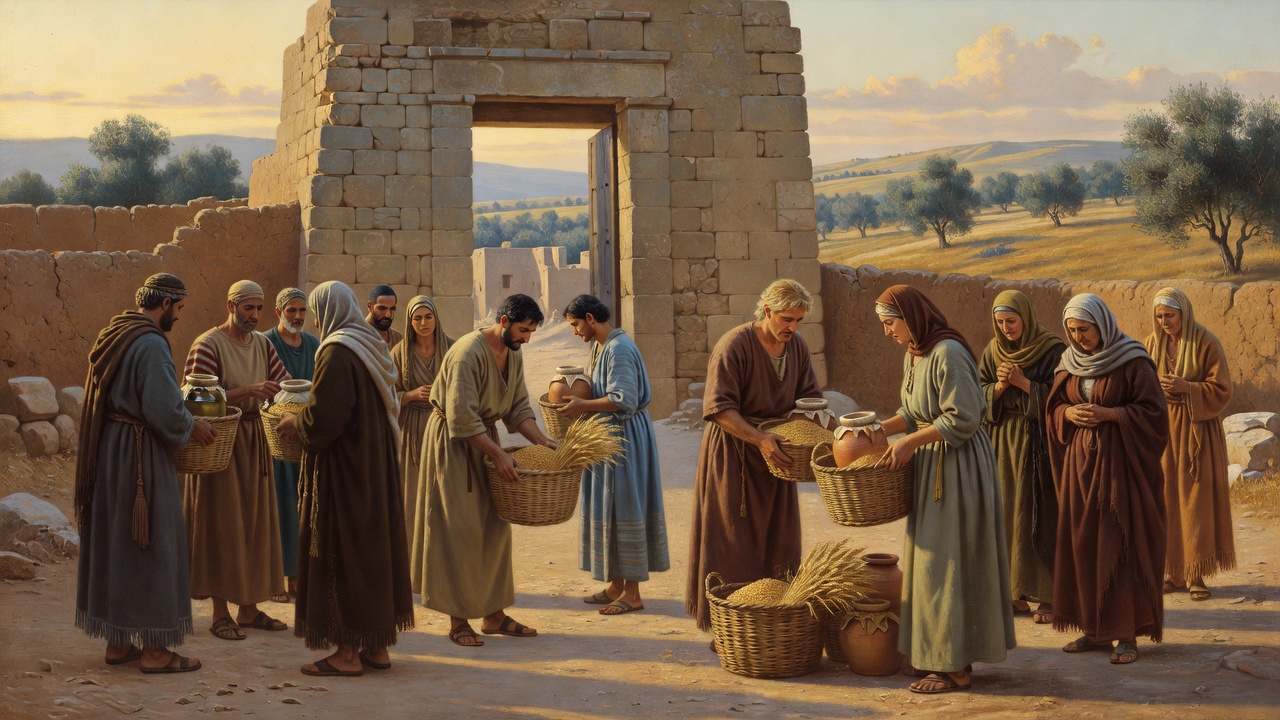
- Cada tres años, el diezmo anual se almacenaba dentro de las ciudades locales en lugar de llevarse al santuario central. Estos alimentos se destinaban al sustento de los miembros de la comunidad sin herencia de tierras, específicamente los levitas, los extranjeros residentes, los huérfanos y las viudas.Fuentes: el propio texto bíblico
Notas escritas con ayuda de IA a partir de fuentes abiertas (Theographic Bible Metadata, CC BY-SA 4.0; Easton’s Bible Dictionary, dominio público) y revisadas antes de publicarse.
Créditos y licencia de esta traducción
Thai Phum Holy Bible
The Holy Bible in the Thaiphum Chin language of Myanmar
Copyright © 2020 Batupuei Christian Fellowship
Language: Thai Phum (Chin, Thaiphum)
Translation by: Batupuei Christian Fellowship
copyright only valid in Myanmar; Public Domain elsewhere
This translation is made available to you under the terms of the
Creative Commons Attribution Share-Alike license 4.0.
You have permission to share and redistribute this Bible translation in any format and to make reasonable revisions and adaptations of this translation, provided that:
You include the above copyright and source information.
If you make any changes to the text, you must indicate that you did so in a way that makes it clear that the original licensor is not necessarily endorsing your changes.
If you redistribute this text, you must distribute your contributions under the same license as the original.
Pictures included with Scriptures and other documents on this site are licensed just for use with those Scriptures and documents.
For other uses, please contact the respective copyright owners.
Note that in addition to the rules above, revising and adapting God's Word involves a great responsibility to be true to God's Word. See Revelation 22:18-19.
2024-05-01
Fuente: http://ebible.org/cth/ · eBible.org