Apocalipsis 10
Sahidica - طبعة جديدة من العهد الجديد باللغة القبطية الصعيدية · Toca un versículo para ver sus referencias cruzadas.
1ⲀⲚⲀⲨ ⲈⲔⲈⲀⲄⲄⲈⲖⲞⲤ ⲈϤϬⲘϬⲞⲘ ⲈϤⲚⲎⲨ ⲈⲂⲞⲖ ϨⲚ ⲦⲠⲈ ⲈⲢⲈ ⲞⲨⲔⲖⲞⲞⲖⲈ ϨⲒⲰϤ ⲈⲢⲈ ⲞⲨⲞⲈⲒⲚ ϨⲒϪⲚ ⲦⲈϤⲀⲠⲎ ⲈⲢⲈ ⲠⲈϤϨⲞ ⲞⲚⲐⲈ ⲘⲠⲢⲎ ⲈⲢⲈ ⲚⲈϤⲞⲨⲢⲎⲎⲦⲈ Ⲟ ⲚⲐⲈ ⲚϨⲈⲚⲤⲦⲨⲖⲞⲤ ⲚⲔⲰϨⲦ 2ⲈⲨⲚ ⲞⲨϪⲰⲰⲘⲈ ⲈϤⲠⲞⲢϢ ⲈⲂⲞⲖ ϨⲚ ⲦⲈϤϬⲒϪ. ⲀⲨⲰ ⲀϤⲔⲰ ⲚⲦⲈϤⲞⲨⲢⲎⲎⲦⲈ ⲚⲞⲨⲚⲀⲘ ϨⲚ ⲐⲀⲖⲖⲀⲤⲤⲀ ⲀⲨⲰ ⲦⲈϤϨⲂⲞⲨⲢ ϨⲒ ⲠⲈⲔⲢⲞ 3ⲀϤⲀϢⲔⲀⲔ ⲈⲂⲞⲖ ϨⲚ ⲞⲨⲚⲞϬ ⲚⲤⲘⲎ ⲚⲐⲈ ⲚⲞⲨⲘⲞⲨⲒ ⲈϤⲖϨⲎⲘ ⲚⲦⲈⲢⲈϤⲀϢⲔⲀⲔ ⲆⲈ ⲈⲂⲞⲖ ⲀⲨϢⲀϪⲈ ⲚϬⲒ ⲦⲤⲀϢϤⲈ ⲚϨⲢⲞⲨⲂⲂⲀⲒ ϨⲚ ⲚⲈⲨⲀⲤⲠⲈ. 4ⲀⲨⲰ ⲚⲦⲈⲢⲞⲨϢⲀϪⲈ ⲚϬⲒ ⲦⲤⲀϢϤⲈ ⲚϨⲢⲞⲨⲂⲂⲀⲒ ϨⲚ ⲚⲈⲨⲀⲤⲠⲈ. ⲀⲒⲈⲒ ⲆⲈ ⲈⲒⲚⲀⲤⲈϨ ⲚⲈ ⲚⲦⲀⲨϪⲞⲞⲨ ⲚϬⲒ ⲦⲤⲀϢϤⲈ ⲚϨⲢⲞⲨⲂⲂⲀⲒ ⲀⲒⲤⲰⲦⲘ ⲈⲨⲤⲘⲎ ⲈⲂⲞⲖ ϨⲚ ⲦⲠⲈ ⲈⲤϪⲰ ⲘⲘⲞⲤ ϪⲈ ⲦⲰⲰⲂⲈ ⲈⲢⲚⲚⲈⲚⲦⲀⲨϪⲞⲞⲨ ⲚϬⲒ ⲚⲈϨⲢⲞⲨⲂⲂⲀⲒ ⲚⲄⲦⲘⲤⲀϨⲞⲨ. 5ⲀⲨⲰ ⲠⲀⲄⲄⲈⲖⲞⲤ ⲚⲦⲀⲒⲚⲀⲨ ⲈⲢⲞϤ ⲈϤⲀϨⲈⲢⲀⲦϤ ϨⲒϪⲚ ⲐⲀⲖⲖⲀⲤⲤⲀ ⲘⲚ ⲠⲈⲔⲢⲞ ⲀϤϤⲒ ⲚⲦⲈϤϬⲒϪ ⲚⲞⲨⲚⲀⲘ ⲈϨⲢⲀⲒ ⲈⲦⲠⲈ 6ⲀⲨⲰ ⲀϤⲰⲢⲔ ⲘⲠⲈⲦⲞⲚϨ ϢⲀⲚⲒⲈⲚⲈϨ ⲚⲈⲚⲈϨ ϨⲀⲘⲎⲚ ⲠⲈⲚⲦⲀϤⲤⲰⲚⲦ ⲚⲦⲠⲈ ⲘⲚ ⲚⲈⲦⲚϨⲎⲦⲤ ⲀⲨⲰ ⲠⲔⲀϨ ⲘⲚ ⲚⲈⲦⲚϨⲎⲦϤ ⲀⲨⲰ ⲐⲀⲖⲖⲀⲤⲤⲀ ⲘⲚ ⲚⲈⲦⲚϨⲎⲦⲤ 7ϪⲈ ⲘⲚ ϬⲈ ⲞⲨⲞⲈⲒϢ ϬⲈ ⲚⲀϢⲰⲠⲈ. ⲀⲖⲖⲀ ϨⲢⲀⲒ ϨⲚ ⲚⲈϨⲞⲞⲨ ⲚⲦⲈⲤⲘⲎ ⲘⲠⲘⲈϨⲤⲀϢϤ ⲚⲀⲄⲄⲈⲖⲞⲤ ⲈϤϢⲀⲚⲚⲞⲨ ⲈⲤⲀⲖⲠⲒⲌⲈ ϤⲚⲀϪⲰⲔ ⲈⲂⲞⲖ ⲚϬⲒ ⲠⲘⲎⲤⲦⲨⲢⲒⲞⲚ ⲘⲠⲚⲞⲨⲦⲈ ⲚⲐⲈ ⲚⲦⲀϤⲈⲨⲀⲄⲄⲈⲖⲒⲌⲈ ⲚⲚⲈϤϨⲘϨⲀⲖ ⲘⲚ ⲚⲈⲠⲢⲞⲪⲨⲦⲎⲤ. 8ⲀⲨⲰ ⲦⲈⲤⲘⲎ ⲚⲦⲀⲒⲤⲰⲦⲘ ⲈⲢⲞⲤ ⲈⲤϢⲀϪⲈ ⲚⲘⲘⲀⲒ ⲈⲂⲞⲖ ϨⲚ ⲦⲠⲈ ⲠⲈϪⲀϤ ⲞⲚ ⲚⲀⲒ ϪⲈ ⲂⲰⲔ ⲚⲄϪⲒ ⲘⲠϪⲰⲰⲘⲈ ⲈⲦⲠⲞⲢϢ ⲈⲂⲞⲖ ϨⲚ ⲦϬⲒϪ ⲘⲠⲀⲄⲄⲈⲖⲞⲤ ⲠⲀⲒ ⲈⲦⲀϨⲈⲢⲀⲦϤ ϨⲒϪⲚ ⲐⲀⲖⲖⲀⲤⲤⲀ ⲘⲚ ⲠⲈⲔⲢⲞ 9ⲀⲒⲂⲰⲔ ϢⲀ ⲠⲀⲄⲄⲈⲖⲞⲤ ⲠⲈϪⲀϤ ⲚⲀⲒ ϪⲈ ⲘⲀ ⲚⲀⲒ ⲘⲠϪⲰⲰⲘⲈ ⲠⲈϪⲀϤ ⲚⲀⲒ ϪⲈ ϪⲒⲦϤ ⲚⲄⲞⲨⲞⲘϤ ⲀⲨⲰ ϤⲚⲀϢⲰⲠⲈ ⲈϤⲤⲀϢⲈ ⲚϨⲎⲦⲔ ⲀⲖⲖⲀ ϤⲚⲀϨⲖⲞϬ ϨⲚ ⲦⲈⲔⲦⲀⲠⲢⲞ ⲚⲐⲈ ⲚⲞⲨⲈⲂⲒⲰ.. 10ⲀⲒϪⲒ ⲘⲠϪⲰⲰⲘⲈ ⲈⲂⲞⲖ ϨⲚ ⲦϬⲒϪ ⲘⲠⲀⲄⲄⲈⲖⲞⲤ ⲀⲒⲞⲨⲞⲘϤ ⲀⲨⲰ ⲚⲈϤϨⲞⲖϬ ⲠⲈ ⲚⲐⲈ ⲚⲞⲨⲈⲂⲒⲰ ϨⲚ ⲦⲀⲦⲀⲠⲢⲞ ⲚⲦⲈⲢⲈⲒⲞⲨⲞⲘϤ ⲆⲈ ⲀϤⲤⲒϢⲈ ⲚϨⲎⲦ. 11ⲠⲈϪⲀϤ ⲚⲀⲒ ϪⲈ ϨⲀⲠⲤ ⲞⲚ ⲠⲈ ⲈⲦⲢⲈⲔⲠⲢⲞⲪⲨⲦⲈⲨⲈ ⲈϪⲚ ⲚⲖⲀⲞⲤ ⲘⲚ ⲚϨⲈⲐⲚⲞⲤ ⲘⲚ ϨⲈⲚⲀⲤⲠⲈ ⲘⲚ ϨⲈⲚⲢⲢⲰⲞⲨ ⲈⲚⲀϢⲰⲞⲨ.
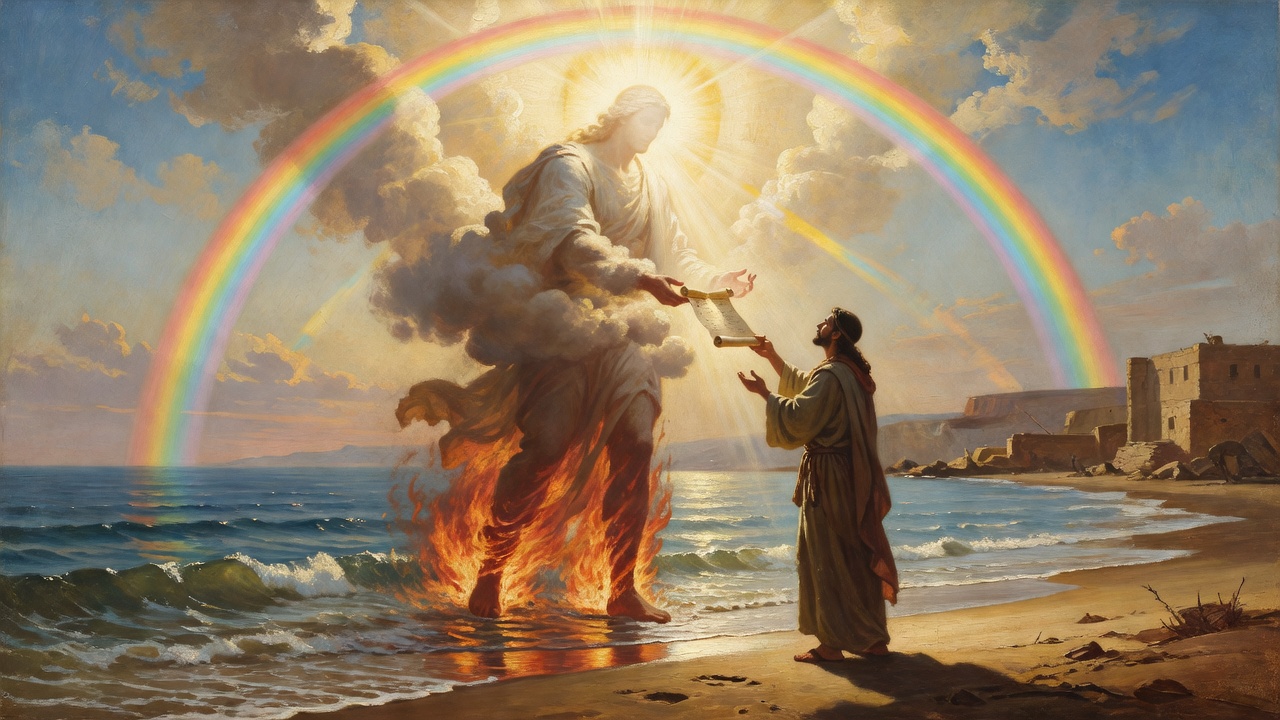
¿Sabías que…?
El ángel, los truenos sellados y el rollo
- Un ángel fuerte desciende del cielo, envuelto en una nube, con un arcoíris sobre la cabeza, el rostro como el sol y las piernas como columnas de fuego. Lleva en la mano un pequeño rollo abierto y pone el pie derecho sobre el mar y el pie izquierdo sobre la tierra.Fuentes: el propio texto bíblico
- Cuando el ángel clama como un león que ruge, siete truenos hacen oír su voz. El narrador está a punto de escribir lo que dijeron, pero una voz del cielo ordena que eso quede sellado y no se escriba. De pie sobre el mar y sobre la tierra, el ángel levanta la mano derecha al cielo y jura por quien vive por los siglos de los siglos, que creó el cielo y todo lo que hay en él, la tierra y todo lo que hay en ella, y el mar y todo lo que hay en él, que ya no habrá más demora, pero que en los días en que el séptimo ángel esté a punto de tocar la trompeta el misterio de Dios se cumplirá, tal como él lo anunció a sus siervos los profetas.Fuentes: el propio texto bíblico
- Una voz del cielo manda al narrador tomar de la mano del ángel el pequeño rollo abierto. El ángel dice que lo coma y advierte que será dulce como miel en la boca, pero amargo en el estómago. El narrador lo come y así lo experimenta, y después le dicen que debe profetizar otra vez sobre muchos pueblos, naciones, lenguas y reyes.Fuentes: el propio texto bíblico
Notas escritas con ayuda de IA a partir de fuentes abiertas (Theographic Bible Metadata, CC BY-SA 4.0; Easton’s Bible Dictionary, dominio público) y revisadas antes de publicarse.
Créditos y licencia de esta traducción
Sahidica - طبعة جديدة من العهد الجديد باللغة القبطية الصعيدية
Sahidica - A New Edition of the New Testament in Sahidic Coptic
copyright © 2000-2006 J Warren Wells
Language: ⲘⲉⲧⲢⲉⲙ̀ⲛⲭⲏⲙⲓ (Coptic)
Dialect: Sahidic
Translation by: J Warren Wells
Coptic: Sahidic NT "Sahidica - A New Edition of the New Testament in Sahidic Coptic"
Copyright (c)2000-2006 by J Warren Wells. All rights reserved.
For more information visit www.sahidica.org .
This edition is available free of charge for use in free electronic
editions of the New Testament as long as the full title and copyright
information are included and credited. For written permission to use
all or any part of this document in print editions, contact the editor
at www.sahidica.org .
This edition is primarily meant for use by teachers and students of
Sahidic Coptic, and to a lesser degree by Coptologists involved in
scholarly research, textual criticism, or New Testament translation.
PURPOSE
Please note: This text is a work in progress. As such, there
is an ongoing effort to standardize the spelling of words in
the text. Be aware that version updates periodically appear.
The primary purpose is to produce a standardized edition of
the Sahidic NT similar to standard Greek editions.
An additional purpose of this text is to allow side-by-side
comparison with the Greek New Testament. To facilitate this
effort, a new version of the Greek text has been developed,
which is meant to better represent the Greek text upon which
the Sahidic was based. This text is entitled "The New Testament
According to the Egyptian Greek Text" [NTAEG]
This text does not include representation of either accents or
supralinear strokes, since these are used inconsistently in the
original texts. There is also a higher degree of standardization
in spelling and punctuation; like today's standard Greek master
texts, but unlike both the original Sahidic texts, and the PHI
and Coptic Society texts. Moreover, as in standard Greek texts,
instances of the Nomina Sacra have been expanded to their full
forms. This is again a departure from earlier versions of the
Sahidic, including the PHI and Coptic Society texts, which are
Both inconsistent in their usage.
Special thanks to David Brakke of Indiana University Bloomington,
Brigitte Comparini of the Packard Humanities Institute, and
Michael Heiser, Academic Editor, at Logos Research Systems; for
their assistance in making this edition possible.
BASIS
Sahidica was initially based (by permission) on the Coptic New Testament,
which is an electronic publication, which was edited by David Brakke.
(PHI-CD 5.3 dated 7/2/91. Los Altos. Packard Humanities Institute. 1991).
During later development, Sahidica was electronically collated against
the Coptic CD I by the St. Shenouda The Archmandrite Coptic Society.
Los Angeles, CA dated April, 1998.
These two editions were reduced to a raw electronic form, which allowed both
to be compared electronically letter by letter with Sahidica in order to
accurately detect and report every single variation and input error in any
of the texts. Though errors are inevitable, the collators of three seperate
editions are highly unlikely to make the same errors. Therefore, this method
helps to insure the integrity of the Sahidica edition.
Throughout the project, Sahidica was also collated against printed editions
of the following coptic manuscripts, which manuscripts date from the third
century and later.
Matt: Pierpont Morgan Library M-569 collated against Bodmer XIX papyrus
Mark:* PPalau Rib. Inv.Nr.182 collated against Pierpont Morgan Library M-569
Luke: PPalau Rib. Inv.Nr.181 collated against Pierpont Morgan Library M-569
John: PPalau Rib. Inv.Nr.183 collated against Pierpont Morgan Library M-569
Acts: Chester Beatty B (Copt.Ms.814) collated against Berlin P.15926 and British Museum MS Or.7594
Paul: Chester Beatty A (Copt.Ms.813) collated against Pierpont Morgan Library M-570 and M-571
James-Jude:** Pierpont Morgan Library M-572 collated against the Pierpont Morgan Library M-573 and M-601***
Revelation: Berlin MS Or.408 ( British Museum Ms Or.3518) collated against British Museum MS Or.6803
* Note: The longer and shorter endings of Mark are based on Horner; cf Kahle (JTS.1951.p49-57)
** Note: 1st Peter was also collated against the Crosby-Schøyen Ms.193.
*** Note: Portions of James and Jude were reconstructed from M-573, M-601, and four other mss.
Note on Interpolations
The short and long endings of Mark are ommited from the PPalau ms 182, but they do appear in most mss.
To better represent the overall Sahidic tradition, both endings are included, but in double brackets.
The pericope of the adultress (John 7:53-8:11) does not appear in any Sahidic ms. Herein it is omitted.
2014-09-16
Fuente: http://ebible.org/copshc/ · eBible.org