Hechos 24
Sahidica - طبعة جديدة من العهد الجديد باللغة القبطية الصعيدية · Toca un versículo para ver sus referencias cruzadas.
1ⲘⲚⲚⲤⲀ ϮⲞⲨ ⲆⲈ ⲚϨⲞⲞⲨ ⲀϤⲈⲒ ⲈϨⲢⲀⲒ ⲚϬⲒ ⲀⲚⲀⲚⲒⲀⲤ ⲠⲀⲢⲬⲒⲈⲢⲈⲨⲤ ⲘⲚ ϨⲈⲚⲠⲢⲈⲤⲂⲨⲦⲈⲢⲞⲤ ⲀⲨⲰ ⲞⲨϨⲢⲎⲦⲰⲢ ϪⲈ ⲦⲈⲢⲦⲨⲖⲖⲞⲤ ⲀⲨⲰ ⲀⲨⲤⲘⲘⲈ ⲈⲠⲀⲨⲖⲞⲤ ⲘⲪⲎⲄⲈⲘⲰⲚ. 2ⲚⲦⲈⲢⲞⲨⲘⲞⲨⲦⲈ ⲆⲈ ⲈⲢⲞϤ ⲀϤⲀⲢⲬⲈⲒ ⲚⲔⲀⲦⲎⲄⲞⲢⲒ ⲚϬⲒ ⲦⲈⲢⲦⲨⲖⲖⲞⲤ. ⲈϤϪⲰ ⲘⲘⲞⲤ ϪⲈ ⲞⲨⲚ ⲞⲨⲚⲞϬ ⲚⲈⲒⲢⲎⲚⲎ ϢⲞⲞⲠ ⲚⲀⲚ ⲈⲂⲞⲖ ϨⲒⲦⲞⲞⲦⲔ. ⲀⲨⲰ ϨⲈⲚ ⲠⲈⲦⲚⲀⲚⲞⲨϤ ⲘⲠⲈⲒϨⲈⲐⲚⲞⲤ ⲈⲂⲞⲖ ϨⲒⲦⲚ ⲦⲈⲔⲠⲢⲞⲚⲞⲒⲀ 3ⲪⲎⲖⲒⲜ ⲠⲈⲔⲢⲀⲦⲒⲤⲦⲞⲤ. ⲤⲈⲦⲀⲒⲞ ⲘⲘⲞⲚ ⲚⲞⲨⲞⲈⲒϢ ⲚⲒⲘ ϨⲘ ⲘⲀ ⲚⲒⲘ. ϨⲚ ⲞⲨⲚⲞϬ ⲚϨⲘⲞⲦ. 4ϪⲈⲔⲀⲀⲤ ⲆⲈ ⲚⲚⲈⲚϮϨⲒⲤⲈ ⲚⲀⲔ ⲈⲠⲈϨⲞⲨⲞ. ϮⲤⲞⲠⲤ ⲘⲘⲞⲔ ⲈⲦⲢⲈⲔⲤⲰⲦⲘ ⲈⲢⲞⲚ ϨⲚ ⲞⲨϢⲰⲰⲦ ⲈⲂⲞⲖ ϨⲚ ⲦⲈⲔⲘⲚⲦϨⲀⲔ. 5ⲀⲚϨⲈ ⲄⲀⲢ ⲈⲠⲈⲒⲢⲰⲘⲈ ⲚⲖⲞⲒⲘⲞⲤ ⲈϤⲦⲞⲨⲚⲈⲤ ⲤⲦⲀⲤⲒⲤ ⲚⲚⲒⲞⲨⲆⲀⲒ ⲦⲎⲢⲞⲨ ⲈⲦϨⲚ ⲦⲞⲒⲔⲞⲨⲘⲈⲚⲎ. ⲈⲠⲤⲀϨ ⲠⲈ ⲚⲐⲀⲒⲢⲈⲤⲒⲤ ⲚⲚⲀⲌⲰⲢⲀⲒⲞⲤ. 6ⲀϤⲠⲈⲒⲢⲀⲌⲈ ⲈϪⲰϨⲘ ⲘⲠⲈⲢⲠⲈ ⲠⲀⲒ ⲚⲦⲀⲚⲀⲘⲀϨⲦⲈ ⲘⲘⲞϤ. 7[—] 8ⲞⲨⲚ ϬⲞⲘ ⲆⲈ ⲞⲚ ⲘⲘⲞⲔ ⲈⲀⲚⲀⲔⲢⲒⲚⲈ ⲘⲘⲞϤ ⲈⲈⲒⲘⲈ ⲈⲦⲂⲈ ⲚⲀⲒ ⲦⲎⲢⲞⲨ ⲈⲦⲚⲔⲀⲦⲎⲄⲞⲢⲒ ⲘⲘⲞϤ ⲚϨⲎⲦⲞⲨ. 9ⲀⲨⲞⲨⲰϢⲂ ⲆⲈ ⲚϬⲒ ⲚⲒⲞⲨⲆⲀⲒ ⲈⲨϪⲰ ⲘⲘⲞⲤ ϪⲈ ⲚⲀⲒ ⲤⲘⲞⲚⲦ ⲚⲦⲈⲒϨⲈ. 10ⲀⲪⲎⲄⲈⲘⲰⲚ ⲆⲈ ϪⲰⲢⲘ ⲈⲠⲀⲨⲖⲞⲤ ⲈϢⲀϪⲈ. ⲀϤⲞⲨⲰϢⲂ ⲆⲈ ⲈϤϪⲰ ⲘⲘⲞⲤ ϪⲈ ⲈⲒⲤⲞⲞⲨⲚ ⲘⲘⲞⲔ ⲈⲒⲤ ϨⲀϨ ⲚⲢⲞⲘⲠⲈ ⲈⲔⲞ ⲚⲢⲈϤϮϨⲀⲠ ⲈⲠⲈⲒϨⲈⲐⲚⲞⲤ. ϨⲚ ⲞⲨⲘⲦⲞⲚ ϬⲈ ⲚϨⲎⲦ ϮⲚⲀϢⲀϪⲈ ϨⲀⲢⲞⲒ. 11ⲈⲨⲚ ϬⲞⲘ ⲘⲘⲞⲔ ⲈⲈⲒⲘⲈ ϪⲈ ⲘⲠⲒⲢ ϨⲞⲨⲞ ⲈⲘⲚⲦⲤⲚⲞⲞⲨⲤ ⲚϨⲞⲞⲨ ϪⲒⲚⲦⲀⲒⲂⲰⲔ ⲈϨⲢⲀⲒ ⲈⲐⲒⲈⲢⲞⲤⲞⲖⲨⲘⲀ ⲈⲞⲨⲰϢⲦ. 12ⲀⲨⲰ ⲘⲠⲞⲨϨⲈ ⲈⲢⲞⲒ ⲈⲒϢⲀϪⲈ ⲘⲚ ⲞⲨⲀ ϨⲘ ⲠⲈⲢⲠⲈ. ⲎⲈⲒⲤⲰⲞⲨϨ ⲚⲞⲨⲘⲎⲎϢⲈ. ⲞⲨⲆⲈ ϨⲚ ⲚⲈⲨⲤⲨⲚⲀⲄⲰⲄⲎ ⲞⲨⲆⲈ ϨⲚ ⲦⲠⲞⲖⲒⲤ. 13ⲞⲨⲆⲈ ⲘⲚ ϢϬⲞⲘ ⲘⲘⲞⲞⲨ ⲈⲦⲀϨⲞ ⲈⲢⲀⲦⲞⲨ ⲚⲚⲈⲦⲞⲨⲔⲀⲦⲎⲄⲞⲢⲒ ⲘⲘⲞⲒ ⲦⲈⲚⲞⲨ ⲚϨⲎⲦⲞⲨ. 14ϮϨⲞⲘⲞⲖⲞⲄⲒ ⲚⲀⲔ ⲘⲠⲀⲒ ϪⲈ ⲔⲀⲦⲀⲦⲈϨⲒⲎ ⲈⲦⲈⲢⲈ ⲚⲀⲒ ⲘⲞⲨⲦⲈ ⲈⲢⲞⲤ ϪⲈ ϨⲀⲒⲢⲈⲤⲒⲤ ⲈⲒϢⲘϢⲈ ⲚⲦⲈⲒϨⲈ ⲘⲠⲚⲞⲨⲦⲈ ⲚⲚⲀⲈⲒⲞⲦⲈ ⲈⲒⲠⲒⲤⲦⲈⲨⲈ ⲈⲚⲈⲦⲤⲎϨ ⲦⲎⲢⲞⲨ ϨⲘ ⲠⲚⲞⲘⲞⲤ ⲘⲚ ⲚⲈⲠⲢⲞⲪⲎⲦⲎⲤ. 15ⲈⲞⲨⲚⲦⲀⲒ ⲘⲘⲀⲨ ⲚⲞⲨϨⲈⲖⲠⲒⲤ ⲈϨⲞⲨⲚ ⲈⲠⲚⲞⲨⲦⲈ. ⲦⲈⲦⲈⲢⲈ ⲚⲀⲒ ϬⲰϢⲦ ϨⲎⲦⲤ. ⲦⲀⲚⲀⲤⲦⲀⲤⲒⲤ ⲈⲦⲚⲀϢⲰⲠⲈ ⲚⲚⲆⲒⲔⲀⲒⲞⲤ ⲘⲚ ⲀⲆⲒⲔⲞⲤ. 16ⲈⲀⲒⲀⲤⲔⲒ ϨⲰ ϨⲘ ⲠⲀⲒ. ⲈⲦⲢⲀⲔⲰ ⲚⲀⲒ ⲚⲞⲨⲤⲨⲚⲈⲒⲆⲎⲤⲒⲤ ⲀϪⲚ ϪⲢⲞⲠ ⲚⲞⲨⲞⲈⲒϢ ⲚⲒⲘ ⲚⲚⲀϨⲢⲘ ⲠⲚⲞⲨⲦⲈ ⲘⲚ ⲚⲢⲰⲘⲈ. 17ⲘⲚⲚⲤⲀ ϨⲀϨ ⲆⲈ ⲚⲢⲞⲘⲠⲈ ⲀⲒⲈⲒ ⲈϨⲢⲀⲒ ⲈⲠⲀϨⲈⲐⲚⲞⲤ ⲈⲒⲈⲒⲢⲈ ⲚϨⲈⲚⲘⲚⲦⲚⲀ ⲘⲚ ϨⲈⲚⲐⲨⲤⲒⲀ. 18ϨⲚ ⲚⲀⲒ ⲀⲨϨⲈ ⲈⲢⲞⲒ ϨⲘ ⲠⲈⲢⲠⲈ. ⲈⲒⲦⲂⲂⲞ ⲘⲘⲞⲒ ⲘⲚ ⲞⲨⲘⲎⲎϢⲈ ⲀⲚ. ⲞⲨⲆⲈ ϨⲚ ⲞⲨϢⲦⲞⲢⲦⲢ ⲀⲚ ⲚϬⲒ ϨⲈⲚⲒⲞⲨⲆⲀⲒ ⲈⲂⲞⲖ ϨⲚ ⲦⲀⲤⲒⲀ. 19ⲚⲀⲒ ⲈϢϢⲈ ⲈⲨϨⲘ ⲠⲈⲒⲘⲀ. ⲚⲤⲈⲔⲀⲦⲎⲄⲞⲢⲒ ⲈϢϪⲈ ⲞⲨⲚⲦⲞⲨ ⲖⲀⲀⲨ ⲚⲘⲘⲀⲒ. 20ⲎⲘⲘⲞⲚ ⲚⲀⲒ ⲚⲦⲞⲞⲨ ⲘⲀⲢⲞⲨϪⲞⲞⲤ. ϪⲈ ⲚⲦⲈⲢⲒⲀϨⲈⲢⲀⲦ ϨⲘ ⲠⲤⲨⲚϨⲈⲆⲢⲒⲞⲚ ⲚⲦⲀⲨϨⲈ ⲈⲀϢ ⲚϪⲒ ⲚϬⲞⲚⲤ ⲚϨⲎⲦ. 21ⲈⲒ ⲘⲎⲦⲒ ϪⲈ ⲈⲦⲂⲈ ⲦⲈⲒⲤⲘⲎ ⲚⲞⲨⲰⲦ ⲚⲦⲀⲒϪⲒϢⲔⲀⲔ ⲈⲂⲞⲖ ⲘⲘⲞⲤ ⲈⲒⲀϨⲈⲢⲀⲦ ϨⲚ ⲦⲈⲨⲘⲎⲦⲈ. ϪⲈ ⲈⲨⲈⲔⲢⲒⲚⲈ ⲘⲘⲞⲒ ⲘⲠⲞⲞⲨ ϨⲒⲰⲦⲦⲎⲨⲦⲚ. ⲈⲦⲂⲈ ⲦⲀⲚⲀⲤⲦⲀⲤⲒⲤ ⲚⲚⲈⲦⲘⲞⲞⲨⲦ. 22ⲪⲎⲖⲒⲜ ⲆⲈ ⲚⲦⲈⲢⲈϤⲤⲰⲦⲘ ⲈⲚⲀⲒ ⲀϤⲚⲈϪ ⲪⲰⲂ ⲈⲠⲀϨⲞⲨ. ⲈϤⲤⲞⲞⲨⲚ ⲚⲦⲈϨⲒⲎ ϨⲚ ⲞⲨⲰⲢϪ. ⲈϤϪⲰ ⲘⲘⲞⲤ ϪⲈ ⲈⲢϢⲀⲚ ⲖⲨⲤⲒⲀⲤ ⲠⲬⲒⲖⲒⲀⲢⲬⲞⲤ ⲈⲒ ϮⲚⲀⲤⲰⲦⲘ ⲈⲢⲰⲦⲚ. 23ⲀϤⲞⲨⲈϨⲤⲀϨⲚⲈ ⲆⲈ ⲘⲠϨⲈⲔⲀⲦⲞⲚⲦⲀⲢⲬⲞⲤ ⲈϨⲀⲢⲈϨ ⲈⲠⲀⲨⲖⲞⲤ ⲀⲨⲰ ⲈⲦⲘⲘⲞⲔϨϤ ⲞⲨⲆⲈ ⲈⲦⲘⲔⲰⲖⲨⲈ ⲚⲖⲀⲀⲨ ⲚⲚⲈϤⲢⲰⲘⲈ ⲈⲦⲘϢⲘϢⲎⲦϤ ⲎⲈⲦⲢⲈⲨⲂⲰⲔ ⲈϨⲞⲨⲚ ⲚⲀϤ. 24ⲘⲚⲚⲤⲀ ϨⲈⲚϨⲞⲞⲨ ⲆⲈ ⲀϤⲈⲒ ⲚϬⲒ ⲪⲎⲖⲒⲜ ⲘⲚ ⲦⲢⲞⲨⲤⲒⲖⲖⲀ ⲦⲈϤⲤϨⲒⲘⲈ ⲈⲨⲒⲞⲨⲆⲀⲒ ⲦⲈ ⲀⲨⲰ ⲀϤⲦⲚⲚⲞⲞⲨ ⲚⲤⲀ ⲠⲀⲨⲖⲞⲤ ⲀϤⲤⲰⲦⲘ ⲈⲢⲞϤ ⲈⲦⲂⲈ ⲦⲠⲒⲤⲦⲒⲤ ⲈϨⲞⲨⲚ ⲈⲠⲈⲬⲢⲒⲤⲦⲞⲤ ⲒⲎⲤⲞⲨⲤ. 25ⲈⲢⲈ ⲠⲀⲨⲖⲞⲤ ⲆⲈ ϢⲀϪⲈ ⲈⲦⲂⲈ ⲦⲆⲒⲔⲀⲒⲞⲤⲨⲚⲎ ⲈⲦⲂⲈ ⲦⲈⲔⲢⲀⲦⲒⲀ ⲘⲚ ⲦⲈⲔⲢⲒⲤⲒⲤ ⲈⲦⲚⲀϢⲰⲠⲈ. ⲚⲦⲈⲢⲈϤⲢϨⲞⲦⲈ ⲆⲈ ⲚϬⲒ ⲪⲎⲖⲒⲜ ⲀϤⲞⲨⲰϢⲂ ϪⲈ ⲂⲰⲔ ⲦⲈⲚⲞⲨ. ⲈⲒϢⲀⲚϨⲈ ⲄⲀⲢ ⲈⲠⲈⲨⲞⲈⲒϢ ϮⲚⲀⲦⲀⲨⲞⲞⲨ ⲚⲤⲰⲔ. 26ϨⲀⲘⲀ ⲦⲈ ⲈϤϨⲈⲖⲠⲒⲌⲈ ϪⲈ ⲈⲢⲈ ⲠⲀⲨⲖⲞⲤ ⲚⲀϮ ϨⲈⲚⲬⲢⲎⲘⲀ ⲚⲀϤ ϪⲈ ⲈϤⲈⲂⲞⲖϤ ⲈⲂⲞⲖ. ⲈⲦⲂⲈ ⲠⲀⲒ ⲚⲈϤⲦⲚⲚⲞⲞⲨ ⲚⲤⲰϤ ⲚϨⲀϨ ⲚⲤⲞⲠ ⲈϤϢⲀϪⲈ ⲚⲘⲘⲀϤ. 27ⲚⲦⲈⲢⲈ ⲦⲈⲢⲞⲘⲠⲈ ⲆⲈ ⲤⲚⲦⲈ ϪⲰⲔ ⲈⲂⲞⲖ ⲚⲦⲈ ⲪⲎⲖⲒⲜ. ⲀϤⲈⲒ ⲈⲠⲈϤⲘⲀ ⲚϬⲒ ⲠⲞⲢⲔⲒⲞⲤ ⲪⲎⲤⲦⲞⲤ. ⲈϤⲞⲨⲰϢ ⲆⲈ ⲚϬⲒ ⲪⲎⲖⲒⲜ ⲈϮ ⲚⲞⲨⲬⲀⲢⲒⲤ ⲚⲚⲒⲞⲨⲆⲀⲒ ⲀϤⲔⲀ ⲠⲀⲨⲖⲞⲤ ⲈϤⲘⲎⲢ.
¿Sabías que…?
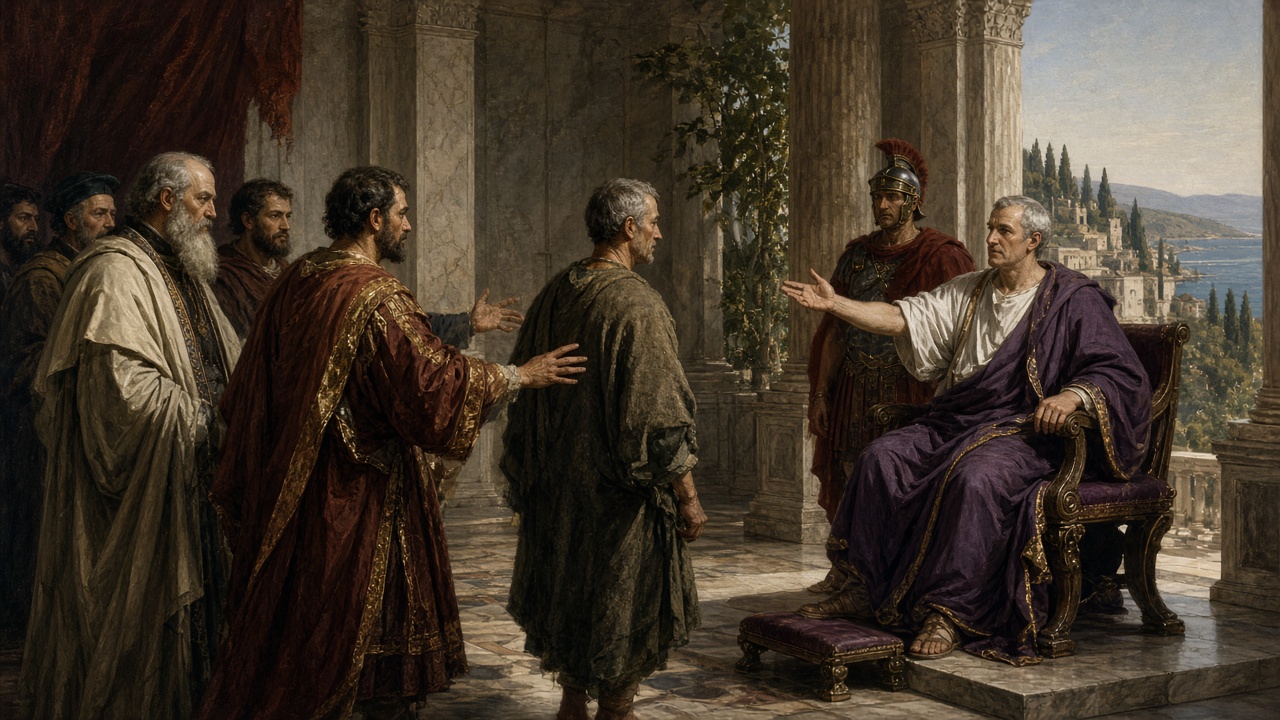
Pablo ante Félix
- El sumo sacerdote Ananías bajó con algunos ancianos y un abogado llamado Tértulo, a quien el Diccionario Bíblico de Easton describe como un abogado romano empleado por los judíos para exponer su causa contra Pablo ante Félix. Tértulo elogió al gobernador y luego dijo que Pablo era una peste que provocaba disensión entre los judíos por todo el mundo, cabecilla de la secta de los nazarenos y un hombre que había intentado profanar el templo. El diccionario relaciona ese elogio inicial con la limpieza que Félix hizo del país, al expulsar a bandidos e impostores.Fuentes: el propio texto bíblico · Tertullus · Felix
- Félix, que estaba bien informado acerca del Camino, aplazó la audiencia y mantuvo a Pablo bajo guarda, aunque le permitió cierta libertad y dejó que sus amigos atendieran sus necesidades. El relato dice que esperaba que Pablo le ofreciera un soborno y por eso lo mandaba llamar con frecuencia; el Diccionario Bíblico de Easton también afirma que al parecer esperaba un soborno y, por ello, tuvo varias entrevistas con él. Después de dos años lo sucedió Porcio Festo —el Diccionario Bíblico de Easton (1897) fecha ese nombramiento en el año 60 d. C.— y, queriendo hacer un favor a los judíos, Félix dejó a Pablo en prisión.Fuentes: el propio texto bíblico · Felix · Portius Festus
- Unos días después, Félix regresó con su esposa Drusila, que era judía, y escuchó a Pablo hablar de la fe en Cristo Jesús y de la justicia, el dominio propio y el juicio venidero; Félix se asustó y lo despidió. El Diccionario Bíblico de Easton (1897) identifica a Drusila como la tercera y la más joven hija de Herodes Agripa I y dice que Félix la indujo a dejar a su esposo, Azizus, rey de Emesa. La misma entrada dice que ella y su hijo perecieron en la erupción del monte Vesubio en el año 79 d. C.Fuentes: el propio texto bíblico · Drusilla
Notas escritas con ayuda de IA a partir de fuentes abiertas (Theographic Bible Metadata, CC BY-SA 4.0; Easton’s Bible Dictionary, dominio público) y revisadas antes de publicarse.
Lugares de este capítulo
- Caesarea · Hoy: Caesarea Maritima · 32.500, 34.892 · versículo 1
- Jerusalem · 31.777, 35.234 · versículos 11, 17
- Asia · 38.400, 28.300 · versículo 18
Solo aparecen lugares identificados con alta confianza (90 % o más según las fuentes académicas reunidas por OpenBible). Mapa de la época: DARE (Digital Atlas of the Roman Empire), CC BY 4.0; mapa actual: © colaboradores de OpenStreetMap; lugares: OpenBible.info (CC BY 4.0).
Créditos y licencia de esta traducción
Sahidica - طبعة جديدة من العهد الجديد باللغة القبطية الصعيدية
Sahidica - A New Edition of the New Testament in Sahidic Coptic
copyright © 2000-2006 J Warren Wells
Language: ⲘⲉⲧⲢⲉⲙ̀ⲛⲭⲏⲙⲓ (Coptic)
Dialect: Sahidic
Translation by: J Warren Wells
Coptic: Sahidic NT "Sahidica - A New Edition of the New Testament in Sahidic Coptic"
Copyright (c)2000-2006 by J Warren Wells. All rights reserved.
For more information visit www.sahidica.org .
This edition is available free of charge for use in free electronic
editions of the New Testament as long as the full title and copyright
information are included and credited. For written permission to use
all or any part of this document in print editions, contact the editor
at www.sahidica.org .
This edition is primarily meant for use by teachers and students of
Sahidic Coptic, and to a lesser degree by Coptologists involved in
scholarly research, textual criticism, or New Testament translation.
PURPOSE
Please note: This text is a work in progress. As such, there
is an ongoing effort to standardize the spelling of words in
the text. Be aware that version updates periodically appear.
The primary purpose is to produce a standardized edition of
the Sahidic NT similar to standard Greek editions.
An additional purpose of this text is to allow side-by-side
comparison with the Greek New Testament. To facilitate this
effort, a new version of the Greek text has been developed,
which is meant to better represent the Greek text upon which
the Sahidic was based. This text is entitled "The New Testament
According to the Egyptian Greek Text" [NTAEG]
This text does not include representation of either accents or
supralinear strokes, since these are used inconsistently in the
original texts. There is also a higher degree of standardization
in spelling and punctuation; like today's standard Greek master
texts, but unlike both the original Sahidic texts, and the PHI
and Coptic Society texts. Moreover, as in standard Greek texts,
instances of the Nomina Sacra have been expanded to their full
forms. This is again a departure from earlier versions of the
Sahidic, including the PHI and Coptic Society texts, which are
Both inconsistent in their usage.
Special thanks to David Brakke of Indiana University Bloomington,
Brigitte Comparini of the Packard Humanities Institute, and
Michael Heiser, Academic Editor, at Logos Research Systems; for
their assistance in making this edition possible.
BASIS
Sahidica was initially based (by permission) on the Coptic New Testament,
which is an electronic publication, which was edited by David Brakke.
(PHI-CD 5.3 dated 7/2/91. Los Altos. Packard Humanities Institute. 1991).
During later development, Sahidica was electronically collated against
the Coptic CD I by the St. Shenouda The Archmandrite Coptic Society.
Los Angeles, CA dated April, 1998.
These two editions were reduced to a raw electronic form, which allowed both
to be compared electronically letter by letter with Sahidica in order to
accurately detect and report every single variation and input error in any
of the texts. Though errors are inevitable, the collators of three seperate
editions are highly unlikely to make the same errors. Therefore, this method
helps to insure the integrity of the Sahidica edition.
Throughout the project, Sahidica was also collated against printed editions
of the following coptic manuscripts, which manuscripts date from the third
century and later.
Matt: Pierpont Morgan Library M-569 collated against Bodmer XIX papyrus
Mark:* PPalau Rib. Inv.Nr.182 collated against Pierpont Morgan Library M-569
Luke: PPalau Rib. Inv.Nr.181 collated against Pierpont Morgan Library M-569
John: PPalau Rib. Inv.Nr.183 collated against Pierpont Morgan Library M-569
Acts: Chester Beatty B (Copt.Ms.814) collated against Berlin P.15926 and British Museum MS Or.7594
Paul: Chester Beatty A (Copt.Ms.813) collated against Pierpont Morgan Library M-570 and M-571
James-Jude:** Pierpont Morgan Library M-572 collated against the Pierpont Morgan Library M-573 and M-601***
Revelation: Berlin MS Or.408 ( British Museum Ms Or.3518) collated against British Museum MS Or.6803
* Note: The longer and shorter endings of Mark are based on Horner; cf Kahle (JTS.1951.p49-57)
** Note: 1st Peter was also collated against the Crosby-Schøyen Ms.193.
*** Note: Portions of James and Jude were reconstructed from M-573, M-601, and four other mss.
Note on Interpolations
The short and long endings of Mark are ommited from the PPalau ms 182, but they do appear in most mss.
To better represent the overall Sahidic tradition, both endings are included, but in double brackets.
The pericope of the adultress (John 7:53-8:11) does not appear in any Sahidic ms. Herein it is omitted.
2014-09-16
Fuente: http://ebible.org/copshc/ · eBible.org