Génesis 11
Chiga Tevaen'Jema Atesuja 1, Aisheve Caña'cho · Toca un versículo para ver sus referencias cruzadas.
Babel'su sefa'tssia tsa'o
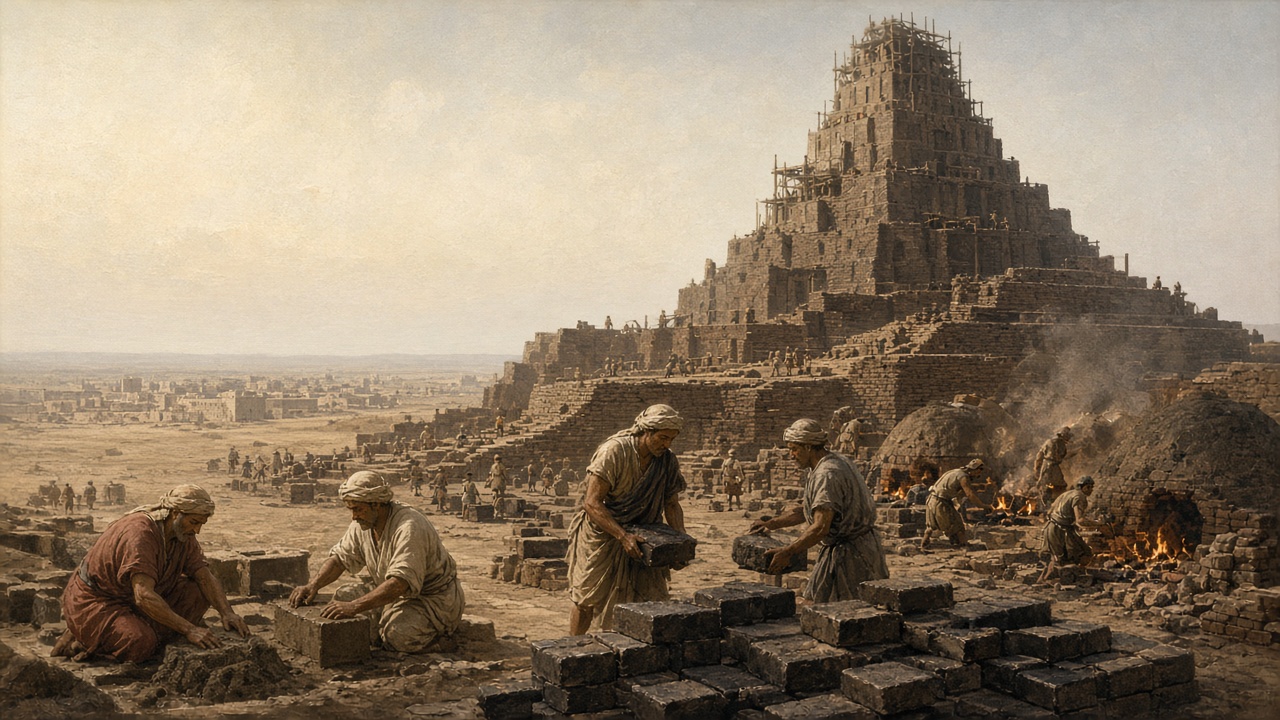
1Nane tsendeccu can'jeinteja poiyi'cco a'i tsu fae aya'faveyi afa'je'fa. 2Tsomba majan a'i chiga sombo'jene sombopa Sinar andeni japa fae'ngatssia andema atte'fa. Attepa tse'tti can'jen'fa. 3Fae a'ta fae'ngae condaseccopa su'fa: “Jinge apichama ladriyove ñoñamba si'ngei'ccu ta'etssia've oque'faya.” Patu me'i'onsi tsesui'ccu tsao'ña'fa. Toya'caen tsu breave an'bian'fa ladriyoma setsaeñe. 4Omboe tsu su'fa: “Jinge rande canqqueve canqquiamba ñoa'me se'fatssia tsa'ove'qque tsao'ñañe sefacconi pporotsse. Tsa'caen tsao'ña'ninda tsu poiyi'cco cca'indeccuja ingima in'jan'faya joccapitssia've. Toya'caen tsa'caen tsomba gi biani attufambe'yi fae'ngae can'jen'faya.”
5Tsa'ma Na'su Chigaja a'i ñoña'cho canqquema atteye ande. Toya'caen tsu a'i ñoña'cho se'fatssia tsa'oma atteye in'jan. 6Attepa Na'su Chigaja asi'ttaen: “Tsendeccuja fae a'iyi tsu. Nane fae aya'fangae tsu afa'je'fa. Tsa'camba fae'ngae in'jamba tsu qquen tsoñe ashaen'fa. Aqquia ashaen'cho tsu. Nane osha'chove in'jan'da tsu tsa'caen tson'faya. 7Jinge andepa tise'pa aya'fama ccaningae cambiamba qqueñañe cuintsu poiyi'cco tisupapora ñotsse pañambe'yi can'faye.”
8Tsa'caen supa tsu Na'su Chigaja poiyi'cco a'ima attufaemba maña poi andeni. Attufaensi tise'pa canqqueve ñoña'jen'choma antte'fa. 9Nane tsa'caen Na'su Chiga tise'pa aya'fama ccaningae cambiansi tsa canqquema inisian'fa Babelve “aya'fa qque'fa'cho” qquen su'chove. Tsene Na'su tise'pama somboensi poi andeni japa cca'tti cca'tti can'jen'fa.
Sem dutssiyendeccu
10Qquen tsu Sem dutssiyendeccu: Na'en andema piccopa sambasi dos canqque'fa pasasi Semjan cien canqque'fave an'bian'ni tsu tise dutssi'ye Arfaxadve isu. 11Omboe Semjan faesu quiniento canqque'fave can'jemba ti'tsse tsu tsandie, pushesu du'shuve an'bian.
12Arfaxadja treinta y cinco canqque'fave an'bian'ni tise dutssi'ye Salave isu. 13Omboe Arfaxadja faesu cuatrociento tres canqque'fave can'jemba ti'tsse tsu tsandie, pushesu du'shuve an'bian.
14Salaja treinta canqque'fave an'bian'ni tise dutssi'ye Heberve isu. 15Omboe Salaja faesu cuatrociento tres canqque'fave can'jemba ti'tsse tsu tsandie, pushesu du'shuve an'bian.
16Heberja treinta y cuatro canqque'fave an'bian'ni tise dutssi'ye Pelegve isu. 17Omboe Haberja faesu cuatrociento treinta canqque'fave can'jemba ti'tsse tsu tsandie, pushesu du'shuve an'bian.
18Pelegja treinta canqque'fave an'bian'ni tise dutssi'ye Reuve isu. 19Omboe Pelegja faesu dosciento nueve canqque'fave can'jemba ti'tsse tsu tsandie, pushesu du'shuve an'bian.
20Reuja treinta y dos canqque'fave an'bian'ni tise dutssi'ye Serugve isu. 21Omboe Reuja faesu dosciento siete canqque'fave can'jemba ti'tsse tsu tsandie, pushesu du'shuve an'bian.
22Serugja treinta canqque'fave an'bian'ni tise dutssi'ye Nacorve isu. 23Omboe Serugja faesu dosciento canqque'fave can'jemba ti'tsse tsu tsandie, pushesu du'shuve an'bian.
24Nacorja veinte y nueve canqque'fave an'bian'ni tise dutssi'ye Taréve isu. 25Omboe Nacorja faesu ciento diez y nueve canqque'fave can'jemba ti'tsse tsu tsandie, pushesu du'shuve an'bian.
26Taréja setenta canqque'fave an'bian'ni tise dutssiyendeccu Abram, Nacor toya'caen Haránme isu.
Taré dutssiyendeccu
27Qquen tsu Taré dutssiyendeccu: Tiseja Abram, Nacor toya'caen Haránmbe yaya. Haránjan Lot quitsa tsu. 28Taré toya canse'ni tsu Haránjan pa Caldea ande'su Ur canqqueni. Nane tisuma isu'cho canqqueni tsu pa.
29Abramjan Saraima pushe. Nacorja Milcama pushe. Nane Milcaja Harán onque'nge tsu. Harán faesu dutssi'ye tsu Isca. 30Saraija du'shuve isuye oshambipa du'shuve me'cco canse.
31Taréja Canaán andeni jaye in'jamba Caldea ande'su Urne sombopa ja. Tisei'ccu tsu tise dutssi'ye Abram'qque ja. Toya'caen tsu tise du'shu Lot, tise china Sarai'qque jaja'fa. Canaán andeni jaye in'jan'ma Harán canqqueni nepipa tse'tti can'jen'fa. 32Taréja dosciento cinco canqque'fave an'biamba pa Harán canqqueni.
¿Sabías que…?
Babel y el camino desde Ur
- En este capítulo, unos viajeros se establecen en una llanura de Sinar y construyen con ladrillo cocido y asfalto, en lugar de piedra y mezcla. Un diccionario considera Sinar, probablemente, como Babilonia o el sur de Mesopotamia, que se extiende casi hasta el golfo Pérsico, dice que allí se construyó la torre de Babel y describe a los primeros habitantes de la tierra como gente que hacía ladrillos y edificaba ciudades.Fuentes: el propio texto bíblico · Shinar
- La ciudad inconclusa recibe el nombre de Babel porque, según el relato, allí el Señor confundió la lengua de todo el mundo y dispersó a la gente. Un diccionario explica el nombre como 'confusión' y sugiere que la torre se pensó, probablemente, como un punto de reunión en la extensa llanura de Sinar, tras una migración desde las tierras altas de Armenia, para que los constructores no se dispersaran.Fuentes: el propio texto bíblico · Babel
- El capítulo termina con Taré saliendo de Ur de los caldeos hacia Canaán, con Abram, Sarai y su nieto Lot, y estableciéndose luego en Harán, donde muere a los 205 años; su hijo Harán ya había muerto en Ur. Un diccionario llama a Ur lugar de nacimiento de ese hijo, la ciudad más grande de Sinar o de la Caldea del norte, y un centro de comercio y poder político, y sitúa Harán, hoy Harran y llamada Charrán en el Antiguo Testamento griego y en Hechos, junto al Belik, afluente del Éufrates en la Alta Mesopotamia, donde Abram permaneció hasta la muerte de Taré.Fuentes: el propio texto bíblico · Terah · Ur of the Chaldees · Haran
Notas escritas con ayuda de IA a partir de fuentes abiertas (Theographic Bible Metadata, CC BY-SA 4.0; Easton’s Bible Dictionary, dominio público) y revisadas antes de publicarse.
Lugares de este capítulo
- Shinar · Hoy: Babylonia · 32.543, 44.422 · versículo 2
- Chaldea · 30.962, 46.104 · versículos 28, 31
- Canaan · 32.767, 35.333 · versículo 31
- Haran · Hoy: Harran · 36.864, 39.033 · versículos 31, 32
Solo aparecen lugares identificados con alta confianza (90 % o más según las fuentes académicas reunidas por OpenBible). Mapa de la época: DARE (Digital Atlas of the Roman Empire), CC BY 4.0; mapa actual: © colaboradores de OpenStreetMap; lugares: OpenBible.info (CC BY 4.0).
Créditos y licencia de esta traducción
Chiga Tevaen'Jema Atesuja 1, Aisheve Caña'cho
New Testament and Genesis in Cofán (EC:con:Cofán)
copyright © 2012 Wycliffe Bible Translators, Inc.
Language: Cofán
Translation by: Wycliffe Bible Translators, Inc.
Cofán
con
Ecuador
Copyright Information
©Wycliffe Bible Translators, Inc. All rights reserved.
This translation text is made available to you under the
terms of the Creative Commons License: Attribution-Noncommercial-No Derivative Works.
( http://creativecommons.org/licenses/by-nc-nd/3.0/ )
In addition, you have permission to port the text to different file formats, as long as you
do not change any of the text or punctuation of the Bible.
You may share, copy, distribute, transmit, and extract portions
or quotations from this work, provided that you include the above copyright
information:
You must give Attribution to the work.
You do not sell this work for a profit.
You do not make any derivative works that change any of the actual words or punctuation of the Scriptures.
Permissions beyond the scope of this license may be
available if you contact
us with your request.
The New Testament
in Cofán
©Wycliffe Bible Translators, Inc. All rights reserved.
This translation is made available to you under the terms of the
Creative Commons Attribution-Noncommercial-No Derivatives license 4.0.
You may share and redistribute this Bible translation or extracts from it in any format, provided that:
You include the above copyright and source information.
You do not sell this work for a profit.
You do not change any of the words or punctuation of the Scriptures.
Pictures included with Scriptures and other documents on this site are licensed just for use with those Scriptures and documents.
For other uses, please contact the respective copyright owners.
2014-04-22
Fuente: http://ebible.org/conNTpo/ · eBible.org