Zacarías 4
Paipel · Toca un versículo para ver sus referencias cruzadas.
Ewe lenien atittin me ekewe irä olif
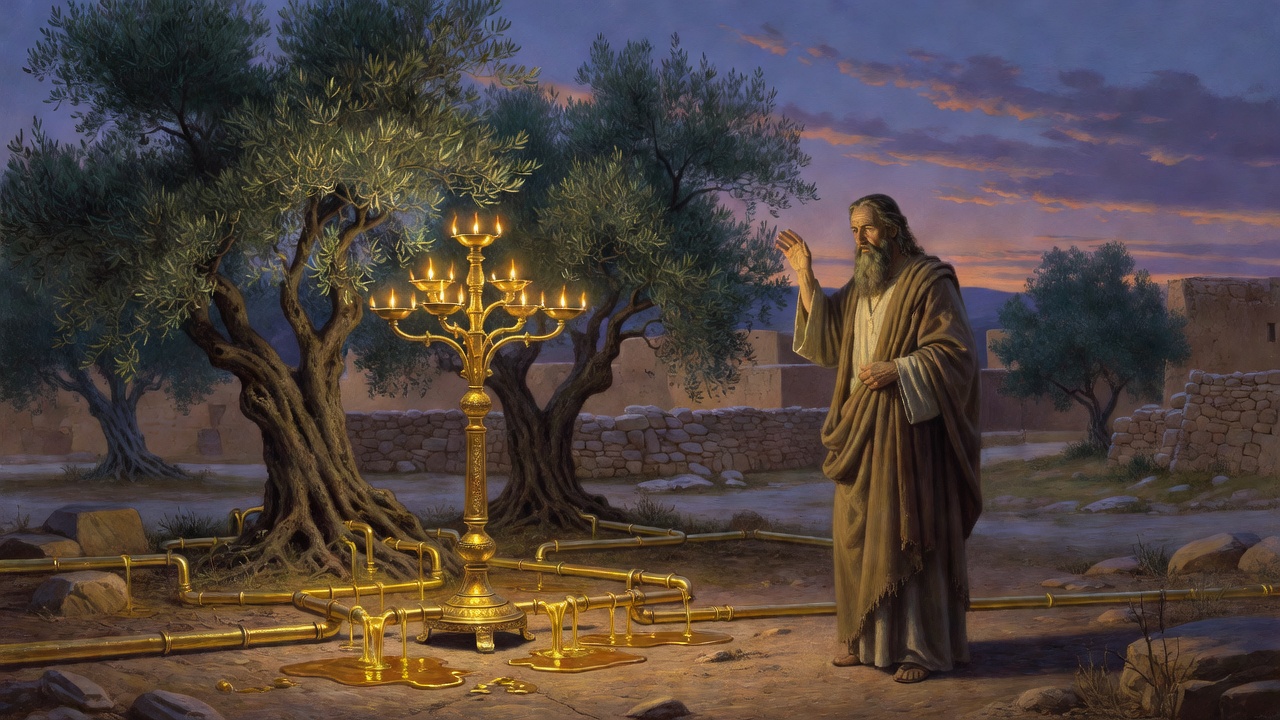
1Iwe, ewe chon läng mi piin kapas ngeniei a feitosefäl o apwöküei, usun eman a apwökü eman seni an möür. 2Iwe, a aisiniei, “Met ka küna?” Nge üa pälüeni, “Üa küna eu lenien atittin seni kolt, nge mi wor eu sepi fän iten noppuk a nom won. Mi pwal wor fisu lamp won ewe lenien atittin, nge fisu paip ra feila ngeni ekewe lamp. 3Iwe, a wor ruofoch irä olif ünükün ewe lenien atittin, efoch a nom pelifichin, nge efoch a nom pelimöngün.” 4Mürin üa aisini ewe chon läng mi piin kapas ngeniei, “Met wewen ekei mettoch, ai samol?” 5Nge ewe chon läng a aisiniei, “Kosap silei wewen ekei mettoch?” Iwe, ngang üa pälüeni, “Apwi, ai samol.” 6Mürin, ewe chon läng a üreniei, “Iei alon ewe Samol mi Lapalap ngeni Serupapel: Esap fis om angang ren pöchökül, esap pwal fis ren manaman, nge epwe fis ren Ngüni. Ngang ewe Samol mi Unusen Manaman üa kapas. 7Are ekewe osukosuk repwe tekia usun chuk, repwe wiliti maasies me mwom. En Serupapel kopwe försefäli ewe Imwenfel, nge lupwen kopwe amasalong ewe föün amüchülan lon lenian, ekewe aramas repwe kökkö fän leüömong, ‘Feiöch, feiöch epwe nonom won.’” 8Iwe, ewe Samol mi Lapalap a pwal kapas ngeniei, 9“Serupapel a föri longolongun ei Imwenfel, i epwe pwal awesala. Are epwe fis ei, nei aramas repwe silei pwe ngang ewe Samol mi Unusen Manaman üa tinuketo rer. 10Iö kana mi esita ewe rän, lupwen ewe angang a popuetä, pun a kükün, repwe meseik, lupwen repwe küna pwe Serupapel a sopwela le aüetä ewe Imwenfel.”
Iwe, ewe chon läng a üreniei, “Ekei fisu lamp mesen ewe Samol mi Lapalap mi nenefetal won unusen fanüfan.” 11Mürin üa aisini ewe chon läng, “Met wewen ekewe ruofoch irä olif mi nom pelifichin me pelimöngün ewe lenien etittin?” 12Üa pwal aissefäl, “Met wewen ekewe ruofoch palen irä olif mi nom ünükün ekewe ruofoch paip seni kolt, ewe ia ewe noppuk a niniwu me ie?” 13Iwe, a aisiniei, “Kosap silei wewen ekei mettoch?” Nge üa pälüeni, “Apwi, ai samol.” 14Mürin a üreniei, “Ikkeiir ekewe ruoman mwän mi kepit ra angang ngeni ewe Samolun unusen fanüfan.”
¿Sabías que…?
El candelabro y Zorobabel
- Zorobabel lideró el primer grupo de exiliados judíos que regresaron de Babilonia y colocó los cimientos del templo reconstruido. En esta visión, el profeta recibe la seguridad de que, a pesar de los grandes obstáculos, Zorobabel completará el templo y colocará la piedra culminante con la plomada en la mano.Fuentes: Zerubbabel · el propio texto bíblico
- La visión del candelabro de oro macizo alimentado con aceite por dos olivos ilustra que la obra de Dios se cumpliría no con ejército ni con fuerza, sino con su Espíritu. Las dos ramas de olivo son identificadas como dos ungidos que están junto al Señor de toda la tierra.Fuentes: el propio texto bíblico
Notas escritas con ayuda de IA a partir de fuentes abiertas (Theographic Bible Metadata, CC BY-SA 4.0; Easton’s Bible Dictionary, dominio público) y revisadas antes de publicarse.
Créditos y licencia de esta traducción
Paipel
The Holy Bible in the Chuukese language of the Federated States of Micronesia
copyright © 1984, 1989, 1991, 2001 Liebenzel Mission
Language: Chuukese
Translation by: Liebenzell Mission
Old Testament © 1989, 2001 Liebenzel Mission
New Testament © 1984, 1991 Liebenzel Mission
This translation is made available to you under the terms of the
Creative Commons Attribution-No Derivatives license 4.0.
You may share and redistribute this Bible translation or extracts from it in any format, provided that:
You include the above copyright and source information.
You do not make any derivative works that change any of the actual words or punctuation of the Scriptures.
Pictures included with Scriptures and other documents on this site are licensed just for use with those Scriptures and documents.
For other uses, please contact the respective copyright owners.
2024-01-24
Fuente: http://ebible.org/chk/ · eBible.org