Salmos 14
Paipel · Toca un versículo para ver sus referencias cruzadas.
Än ekewe aramas umwes me föföringau
Ngeni ewe mi emweni chon köl: Echö än Tafit köl.
1Ekewe mi umwes ra ekieki lon leluker, “Esap wor Kot.” Ir ra fokun ngau,
ra föri sokun föför mi anioput,
esap wor eman a föri mine a pwüng.
2Ewe Samol mi Lapalap a nenetiu seni läng won aramas meinisin,
pwe epwe küna ika a wor eman mi mirit,
ika eman mi kütta Kot.
3Nge ir meinisin ra tokola, ir ra ingaueppök.
Esap wor eman a föri mine a pwüng,
esap fokun wor eman.
4Ewe Samol mi Lapalap a ais, “Ifa usun, esap wor än ekewe chon föföringau mirit?
Ir chokewe mi manau seni mine ra soläni seni nei aramas,
nge resap iotek ngeniei.”
5Nge mürin repwe nom lon niuokus watte,
pun Kot a nom ren ekewe aramas mi pwüng.
6Ekewe chon föföringau ra pinei än ewe chon wöüngau akot,
nge ewe Samol mi Lapalap an lenien op.
7Amwo eman epwe feito seni Sion o amanaua chon Israel.
Ekewe chon Israel repwe fokun pwapwa,
lupwen ewe Samol mi Lapalap epwe aliwini ngeniir wöür.
¿Sabías que…?
La corrupción humana y la esperanza de Sion
- El Salmo 14 describe la negación práctica de Dios como la causa de la corrupción generalizada y del maltrato a los oprimidos, afirmando que Dios sigue siendo un refugio para los justos.Fuentes: el propio texto bíblico
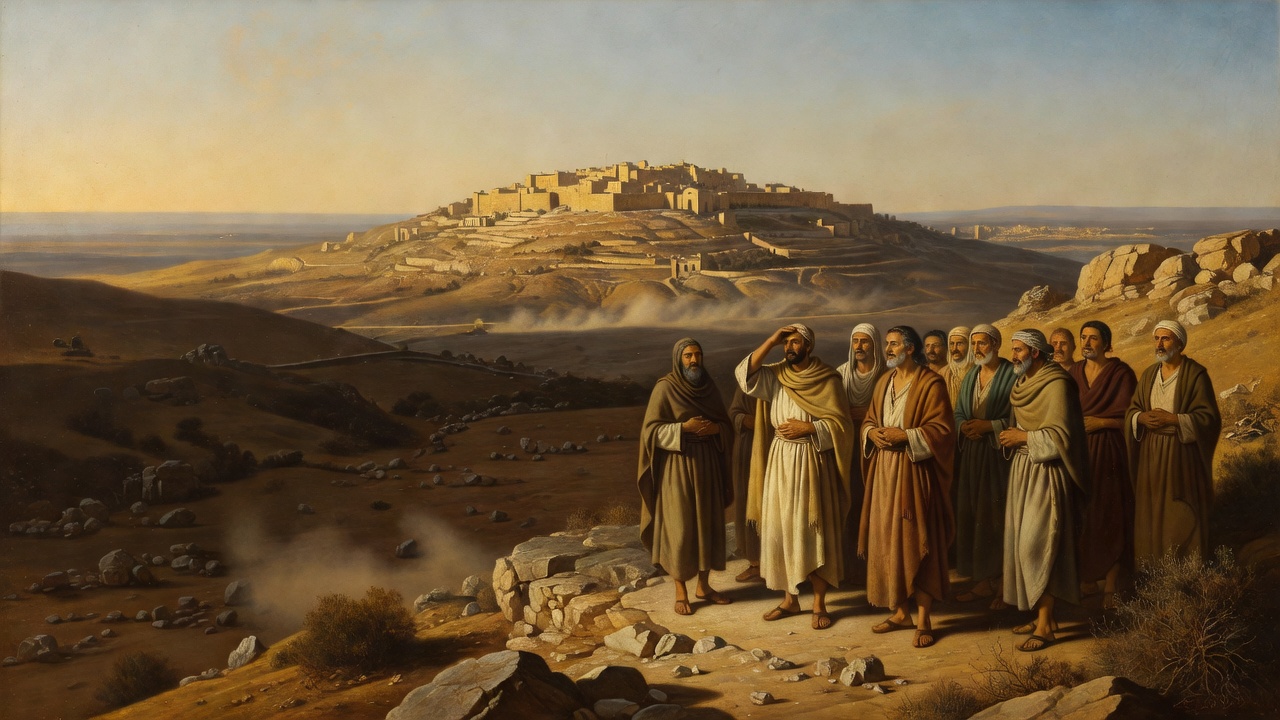
- En el versículo final, se aguarda la liberación procedente de Sion, la colina suroriental de Jerusalén donde el rey David estableció su ciudadela y ciudad real.Fuentes: Zion · el propio texto bíblico
- La mención paralela de Jacob e Israel evoca al patriarca Jacob, el segundo hijo gemelo de Isaac que también recibió el nombre de Israel, cuyos nombres pasaron a representar a toda la nación.Fuentes: Jacob (Israel) · el propio texto bíblico
Notas escritas con ayuda de IA a partir de fuentes abiertas (Theographic Bible Metadata, CC BY-SA 4.0; Easton’s Bible Dictionary, dominio público) y revisadas antes de publicarse.
Lugares de este capítulo
- Zion · Hoy: Jerusalem · 31.777, 35.234 · versículo 7
Solo aparecen lugares identificados con alta confianza (90 % o más según las fuentes académicas reunidas por OpenBible). Mapa de la época: DARE (Digital Atlas of the Roman Empire), CC BY 4.0; mapa actual: © colaboradores de OpenStreetMap; lugares: OpenBible.info (CC BY 4.0).
Créditos y licencia de esta traducción
Paipel
The Holy Bible in the Chuukese language of the Federated States of Micronesia
copyright © 1984, 1989, 1991, 2001 Liebenzel Mission
Language: Chuukese
Translation by: Liebenzell Mission
Old Testament © 1989, 2001 Liebenzel Mission
New Testament © 1984, 1991 Liebenzel Mission
This translation is made available to you under the terms of the
Creative Commons Attribution-No Derivatives license 4.0.
You may share and redistribute this Bible translation or extracts from it in any format, provided that:
You include the above copyright and source information.
You do not make any derivative works that change any of the actual words or punctuation of the Scriptures.
Pictures included with Scriptures and other documents on this site are licensed just for use with those Scriptures and documents.
For other uses, please contact the respective copyright owners.
2024-01-24
Fuente: http://ebible.org/chk/ · eBible.org