Mateo 8
Paipel · Toca un versículo para ver sus referencias cruzadas.
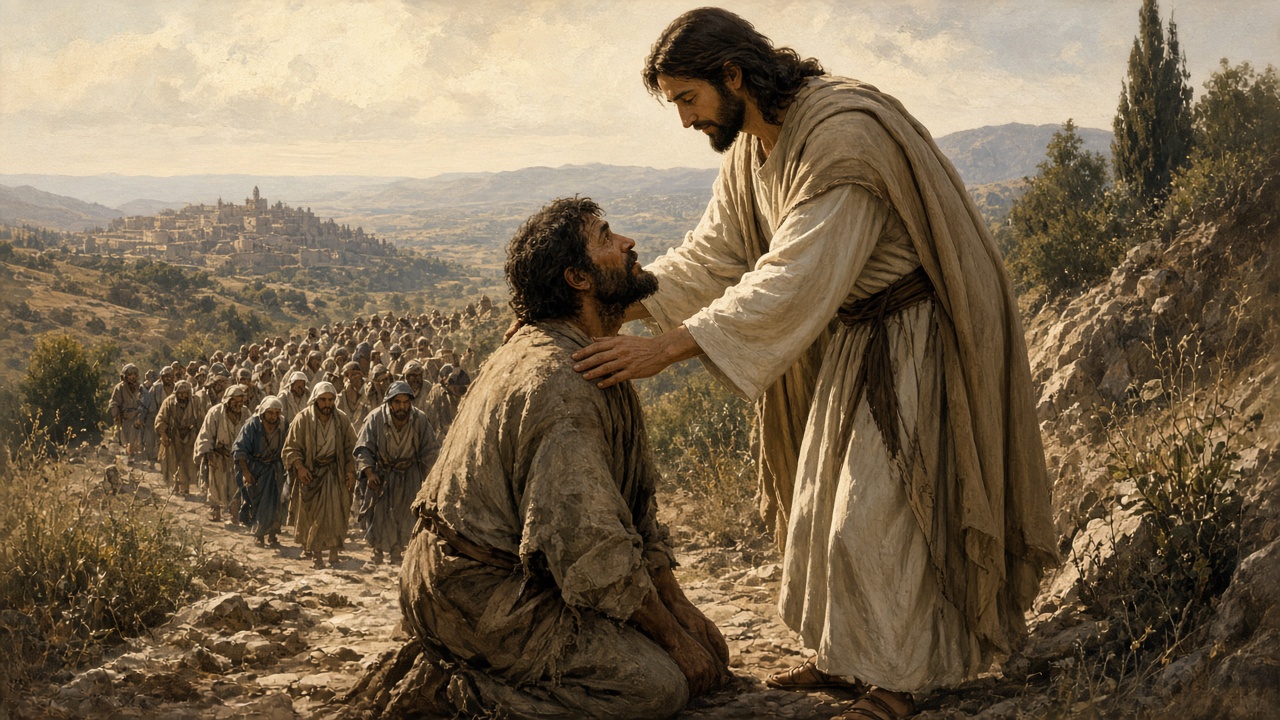
Jesus a apöchöküla eman mi rupun pwötür
1Iwe, lupwen Jesus a feitiu me won ewe chuk, eu mwichen aramas mi chomong a tapwela mürin. 2Iwe, eman mwän mi üri rupun pwötür a feito ren Jesus, a fotopwäsuk me mwan o üreni, “Ai samol, are ka mochen, ka tongeni alimöchüei.” 3Jesus a aitiela pöün, a atapa ewe mwän o apasa, “Ngang üa mochen, kopwe limöch.” Lon ewe chök otun ewe rupun pwötür won ewe mwän a wesila. 4Mürin Jesus a üreni ewe mwän, “Kopwe pii, pwe kosap üreni eman usun mine a fis. Nge kopwe feila ren ewe souasor pwe epwe nenengenuk. Iwe, kopwe eäni ewe asor Moses a allük fän iten limelim, pwe epwe alletätä ngeni aramas pwe ka limöch.”
Jesus a apöchöküla nöün eman meilapen sounfiu chon angang
5Lupwen Jesus a tolong lon ewe telinimw Kapernaum, eman meilapen sounfiun Rom a churi o tüngormau ngeni pwe epwe alisi. 6Iwe, a üreni, “Ai samol, nei chon angang a mwenilong leimw, esap tongeni mwökütüküt, a pwal fokun watte an metek.” 7Jesus a üreni, “Üpwe feila o apöchöküla.” 8Nge ewe meilapen sounfiu a üreni, “Ai samol, ngang üsap eman aramas mi aüchea ngeni om kopwe feito lon imwei. Nge kopwe chök apasa och kapas, iwe, nei we chon angang epwe pöchökületä. 9Pun pwal ngang eman mi nom fän nemenien ekewe meilap seniei, nge mi pwal wor sounfiu ra nom fän nemeniei. Üa üreni eman, ‘Kopwe feila,’ iwe, a feila. Üa pwal üreni eman, ‘Kopwe feito,’ iwe, a feito. Üa üreni nei amanau, ‘Kopwe föri ien me ien,’ iwe, a föri.” 10Iwe, lupwen Jesus a rongorong ekei kapas, a mairü ren o üreni ekewe aramas mi tapwela mürin, “Enlet, üa ürenikemi, üsap fokun küna eman lon Israel a eäni ei sokun lükülük. 11Üpwe ürenikemi, pwe chomong aramas repwe feito seni ötiu me lotou o mot arun chepel ren Apraham, Isaak me Jakop lon ewe kametip lon Mwün Läng. 12Nge chokewe itä ürürün repwe nom lon ewe Mwün Kot repwe koturuwu lon ewe lenien rochopwak ia repwe pupuchör o akarüngi ie.” 13Mürin Jesus a üreni ewe meilapen sounfiu, “Kopwe liwinla le imwom, epwe fis ngonuk usun ka lükü.” Iwe, nöün ewe meilapen sounfiu we chon angang a pöchökületä lon ewe chök otun.
Jesus a apöchöküla chomong aramas
14Iwe, Jesus a feila lon imwen Petrus. Ikenan a küna inen pwülüen Petrus, a eäni eu samaun pwichikar. 15Jesus a atapa pöün, iwe, ewe pwichikar a towu seni. Mürin neminewe a pwätä o angang ngeni. 16Iwe, lekuniolun ewe rän, lupwen akkar a tuputiu, aramas ra uwato ren Jesus chomong aramas mi waan anü. Jesus a atowu ekewe ngününgau ren an kapas o apöchöküla chokewe meinisin mi samau. 17A föri ei an epwe pwönüetä mine ewe soufos Aisea a apasa, “A uwei ach samau o mwärei ach cheuch.”
Weiresin än eman epwe tapwela mürin Jesus
18Lupwen Jesus a küna ewe mwichen aramas mi chomong a nom ünükün, a üreni nöün kewe chon kaiö, “Ousipwe feila epek ewe noom.” 19Iwe, eman Sensen Allük a feito ren o üreni, “Sense, ngang üa molotä ai üpwe etuk ekis meinisin ia kopwe feila ie.” 20Jesus a üreni, “Ekewe foks a wor pwanger fän pwül, ekewe mansüsü a wor faser, nge Nöün Aramas esap wor lenian ia epwe konola ie.” 21Nge pwal eman nöün kewe chon kaiö a üreni, “Ai samol, kopwe akomwen mwüt ngeniei ai üpwe liwinla mwo o peiaseni semei.” 22Jesus a pölüeni, “Kopwe tapweto müri. Kopwe likiti ngeni ekewe mi mäla repwe püsin peiaseni ar somä.”
Jesus a aükätiu eu mölümöl
23Iwe, lupwen Jesus a tötä won efoch wa, nöün kewe chon kaiö ra eti. 24A müttir fis eu mölümöl mi pöchökül lon ewe noom o ekewe no ra nulong leföön ewe wa, pwe a arapakan ngeni an epwe kokola. Nge Jesus a chök möür. 25Iwe, ekewe chon kaiö ra feila ren, ra föngünätä o üreni, “Äm Samol, kopwe amanauakich! Sia arapakan ngeni ach sipwe le mäla!” 26Jesus a üreniir, “Pwota oua niuokus? Pwota iei me lükükisikisimi.” Mürin a ütä o fos ngeni asepwäl me no pwe repwe ükütiu. Iwe, ewe asepwäl a söötiu o a fokun lüala won matau. 27Iwe, ir meinisin ra weitifengeniir o apasa, “Met sokun aramas ätei, pwe asepwäl me no ra mwo nge aleasochisi?”
Jesus a angasa ruoman mwän mi wor anün rochopwak wor
28Lupwen Jesus a tori ewe fanüen Katara mi nom epek ewe noom, ruoman mwän mi feito seni ewe lenien peias ra churi. Ekei mwän anün rochopwak ra wäniir, ra fokun rochongau pwe esap wor eman a tongeni fetal won ewe al. 29Lon ewe chök otun ra puchörütä, “En Nöün Kot, met ka mochen föri ngenikem? Ifa usun, ka feito pwe kopwe ariaföüükem mwen ewe fansoun apwüng?” 30A wor epwi pwiin pik mi chomong, ra mongöfeil ekis toauala seni ewe leni. 31Iwe, ekewe anün rochopwak ra tüngormau ngeni Jesus, “Are kopwe asükeemila, kopwe tinikeemila, pwe aipwe tolong lon ekewe pik.” 32Jesus a üreniir, “Oupwe feila!” Iei mine ekewe anün rochopwak ra towu seni ekewe mwän o tolong lon ekewe pik. Iwe, unusen ewe pwiin pik ra sätiu lepokun ewe achau o turulong lon ewe noom, iwe, ra mop meinisin. 33Mürin ekewe chon foleni ekewe pik ra süla o tolong lon ewe telinimw, iwe, ra apworausa unusen met a fis ngeni ekewe mwän ekewe anün rochopwak ra wäniir. 34Iei mine chon ewe telinimw meinisin ra feila pwe repwe churi Jesus. Iwe, lupwen ra küna, ra tüngormau ngeni an epwe feila seni fanüer we.
¿Sabías que…?
Curaciones, fe y el mar
- Capernaum, la ciudad a la que Jesús entra en este capítulo, era una ciudad de Galilea que no se menciona en el Antiguo Testamento. El Easton's Bible Dictionary (1897) dice que llegó a ser “su propia ciudad” después de que dejó Nazaret, e incluye la súplica del centurión y la curación en la casa de Pedro entre los hechos situados allí.Fuentes: Capernaum · el propio texto bíblico
- Jesús dice que muchos vendrán del oriente y del occidente para compartir el banquete con Abraham, Isaac y Jacob en el reino de los cielos. El Easton's Bible Dictionary (1897) presenta a Abraham como hijo de Taré y heredero de las promesas, a Isaac como el único hijo de Abraham con Sara, y a Jacob —también llamado Israel— como el hijo gemelo menor de Isaac y Rebeca.Fuentes: el propio texto bíblico · Abraham · Isaac · Jacob (Israel)
- Mateo presenta las curaciones de aquella noche como cumplimiento de lo dicho por medio del profeta Isaías: “Él tomó nuestras dolencias y cargó con nuestras enfermedades.” El Easton's Bible Dictionary (1897) identifica a Isaías como hijo de Amoz, que profetizó durante los reinados de Uzías, Jotam, Acaz y Ezequías.Fuentes: el propio texto bíblico · Isaiah
Notas escritas con ayuda de IA a partir de fuentes abiertas (Theographic Bible Metadata, CC BY-SA 4.0; Easton’s Bible Dictionary, dominio público) y revisadas antes de publicarse.
Lugares de este capítulo
- Gadara · Hoy: Umm Qais · 32.656, 35.679 · versículo 28
Solo aparecen lugares identificados con alta confianza (90 % o más según las fuentes académicas reunidas por OpenBible). Mapa de la época: DARE (Digital Atlas of the Roman Empire), CC BY 4.0; mapa actual: © colaboradores de OpenStreetMap; lugares: OpenBible.info (CC BY 4.0).
Créditos y licencia de esta traducción
Paipel
The Holy Bible in the Chuukese language of the Federated States of Micronesia
copyright © 1984, 1989, 1991, 2001 Liebenzel Mission
Language: Chuukese
Translation by: Liebenzell Mission
Old Testament © 1989, 2001 Liebenzel Mission
New Testament © 1984, 1991 Liebenzel Mission
This translation is made available to you under the terms of the
Creative Commons Attribution-No Derivatives license 4.0.
You may share and redistribute this Bible translation or extracts from it in any format, provided that:
You include the above copyright and source information.
You do not make any derivative works that change any of the actual words or punctuation of the Scriptures.
Pictures included with Scriptures and other documents on this site are licensed just for use with those Scriptures and documents.
For other uses, please contact the respective copyright owners.
2024-01-24
Fuente: http://ebible.org/chk/ · eBible.org