Isaías 23
Paipel · Toca un versículo para ver sus referencias cruzadas.
Kapasen osuni usun Tirus me Siton
1Iei än Kot kapas usun Tirus: Oupwe kekechü, ämi säla won ekewe sein amömö, pun Tirus a tala. Iwe, esap chüen wor imw won, esap pwal chüen wor lenien ilen sip. Ei pworaus a torikemi, lupwen oua sai seni ewe fanü Saipiros. 2Oupwe ngüngüres, ämi chon amömö mi nom aroset. Nöümi chon angang ra sai won matau mi watte, 3ra uwato remi wiich seni Sihor me resin ewe chanpupu Nil. Leniemi a eu lenien amömö fän iten chon fanüfan meinisin. 4Kopwe itengau, Siton en telinimwen lematau mi pöchökül, pun ewe matau a apasa, “Üsap cheuchen fam, üsap pwal nöünöü. Üsap foleni alüal, üsap pwal foleni föpwül.” 5Ekewe chon Isip mwo nge repwe fokun riaföü, lupwen repwe rongorong pworausen talan Tirus. 6Oupwe saila Tarsis, oupwe kekechü ämi mi nonom aroset. 7Ifa usun, iei ämi telinimw mi uren pwapwa, a nom seni ekewe fansoun lom? Iei ewe telinimw aramasan ra sai toau pwe repwe nonom ekis meinisin? 8Iö a ekiekietä ei feiengau won Tirus, ewe telinimw mi ineti mwärin king? An chon amömö ra samol pwal aramas mi iteüöch me won unusen fanüfan. 9Iwe, ewe Samol mi Unusen Manaman a ekiekietä ewe feiengau, pwe epwe awesi ar lamalamtekia ren mine ra föri, epwe pwal atekisona chokewe mi iteüöch won fanüfan. 10Oupwe föri tanipi won fanüemi, ämi chon Tarsis, pun esap chüen wor lenien ilen sip. 11Iwe, Kot a aitiela pöün won matau o achecha ekewe mwü. Ewe Samol mi Lapalap a allük pwe ekewe imw mi pöchökül lon Kanaan repwe tala. 12Iwe, a apasa, “Esap chüen wor ämi mwänek, ämi chon Siton mi nom lon riaföü. Ikamwo oupwe sai won sip o saila Saipiros, ousap pwal tongeni kinamwe me ie.”
13Nengeni ewe fanü Papilon. Sap chon Asiria, nge chon Papilon ra föri pwe Tirus epwe eu lenien manmwacho. Ra aüetä ar imwen maun mi tekia, ra ataela ekewe imwen maun mi pöchökül a atatakisi unusen ewe telinimw. 14Oupwe kekechü, ämi säla won ekewe sein amömö, pun ämi telinimw mi pöchökül a tala. 15Lon ena fansoun aramas repwe manlükala Tirus lon fik ier, iei ükükün ierin manauen eman king. Nge lesopolan ekewe fik ier epwe fis ngeni Tirus usun mine a mak lon ewe köl usun eman fefin mi amömö inisin fän iten lisowu,
16“Kopwe angei noum kitar o fetalfeil lon ewe telinimw,
en fefin mi amömö inisum fän iten lisowu, aramas ra malükükala.
Kopwe ngiöch le köl o eäni chomong köl,
pwe ekewe mwän repwe chechemenuk.”
17Iwe, mürin ekewe fik ier ewe Samol mi Lapalap epwe föri pwe Tirus epwe kaüsefäl. Epwe liwinsefäliti an angangen amömö ngeni ekewe mwü won unusen fanüfan. 18Iwe, chon ewe telinimw repwe eäni asor ngeni ewe Samol mi Lapalap winnen ar amömö, nge resap ionifengeni o iseis chök. Iwe, ren winner kewe repwe atufichi chokewe mi angang ngeni ewe Samol mi Lapalap, pwe repwe kamö ener mongö mi chomong me üfer mi ling.
¿Sabías que…?
El Oráculo Sobre Tiro y Sidón
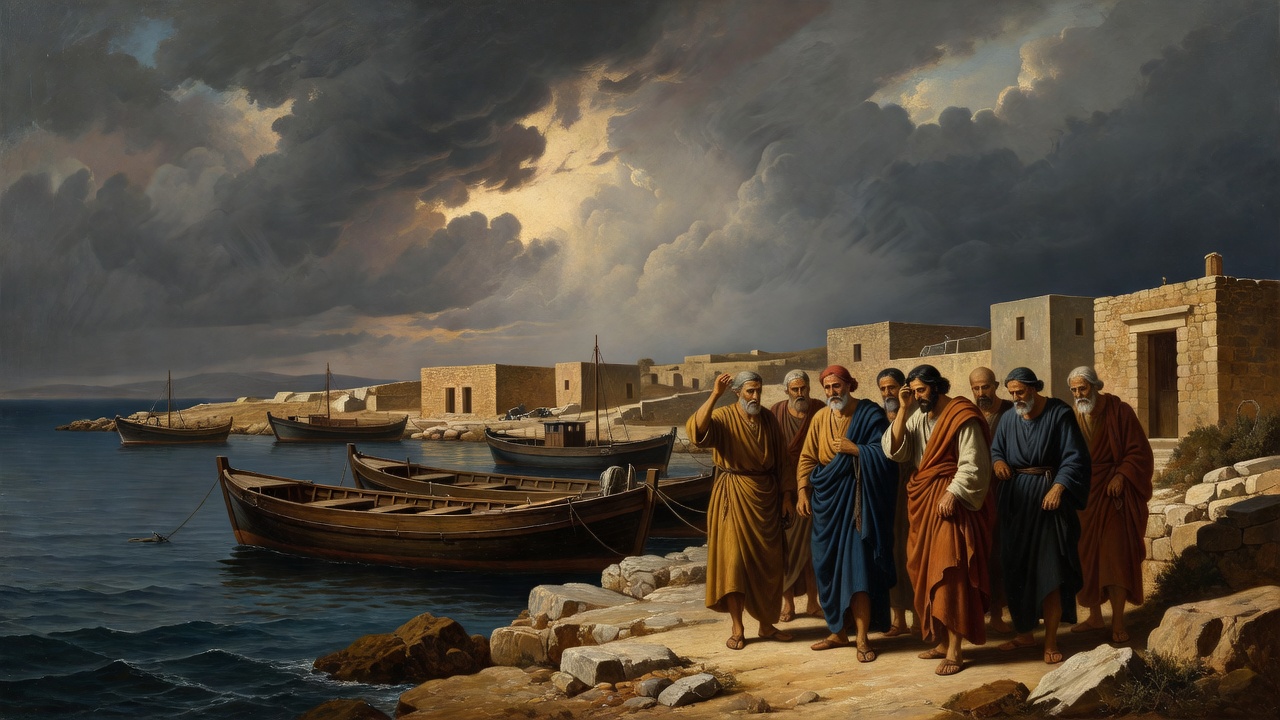
- Tiro y su vecina más antigua, Sidón, eran prominentes ciudades portuarias fenicias en la costa del Mediterráneo. Célebres por su vasta red comercial, los mercaderes fenicios navegaban por el mar y fundaban colonias por toda la cuenca mediterránea, llegando hasta Tarsis, en España.Fuentes: Tyre · Sidon · Tarshish · el propio texto bíblico
- En el vocabulario geográfico del Antiguo Testamento, la isla de Chipre era llamada Quitim. Situada a unas sesenta millas de la costa siria, constituía un enclave comercial fenicio y un punto de escala clave donde los marineros recibían noticias antes de alcanzar tierra firme.Fuentes: Cyprus · el propio texto bíblico
- El nombre Sijor en este capítulo se refiere al río Nilo. Los comerciantes fenicios transportaban la cosecha agrícola de Egipto por vía marítima, convirtiendo el grano egipcio en una fuente primordial de riqueza para los almacenes de Tiro.Fuentes: Nile · Shihor · Tyre · el propio texto bíblico
Notas escritas con ayuda de IA a partir de fuentes abiertas (Theographic Bible Metadata, CC BY-SA 4.0; Easton’s Bible Dictionary, dominio público) y revisadas antes de publicarse.
Lugares de este capítulo
- Cyprus · 35.000, 33.000 · versículos 1, 12
- Tyre · 33.271, 35.196 · versículos 1, 3, 4, 5, 8, 10, 15, 17
- Sidon · Hoy: Sandikli archaeological site in Sidon · 33.561, 35.372 · versículos 2, 4, 12
- Nile · Hoy: Nile River · 31.465, 30.367 · versículos 3, 10
- Egypt · 30.129, 31.308 · versículo 5
- Canaan · 32.767, 35.333 · versículo 11
- Assyria · 36.359, 43.153 · versículo 13
- Babylon · 32.543, 44.422 · versículo 13
- Chaldea · 30.962, 46.104 · versículo 13
Solo aparecen lugares identificados con alta confianza (90 % o más según las fuentes académicas reunidas por OpenBible). Mapa de la época: DARE (Digital Atlas of the Roman Empire), CC BY 4.0; mapa actual: © colaboradores de OpenStreetMap; lugares: OpenBible.info (CC BY 4.0).
Créditos y licencia de esta traducción
Paipel
The Holy Bible in the Chuukese language of the Federated States of Micronesia
copyright © 1984, 1989, 1991, 2001 Liebenzel Mission
Language: Chuukese
Translation by: Liebenzell Mission
Old Testament © 1989, 2001 Liebenzel Mission
New Testament © 1984, 1991 Liebenzel Mission
This translation is made available to you under the terms of the
Creative Commons Attribution-No Derivatives license 4.0.
You may share and redistribute this Bible translation or extracts from it in any format, provided that:
You include the above copyright and source information.
You do not make any derivative works that change any of the actual words or punctuation of the Scriptures.
Pictures included with Scriptures and other documents on this site are licensed just for use with those Scriptures and documents.
For other uses, please contact the respective copyright owners.
2024-01-24
Fuente: http://ebible.org/chk/ · eBible.org